

 Free Consultation
 PCI-DSS Compliant
 GDPR Ready
 ISO 27001
 NDA Protected
 AI Services
 AI App Development
 Generative AI Development
 AI Chatbot Development
 AI Integration Services
 AI Consulting Services
 AI For Fintech
 AI Financial Assistant Solution
 AI Insurance Agent Development
 Tech Stack
 OpenAI / GPT-4
 Claude / Anthropic
 Gemini / Google AI
 Llama / Open Source
 LangChain / LlamaIndex
 Pinecone / Pgvector
 AWS / Azure AI


 Fintech Solution
 Core Fintech
 App Development
 Neobank Solutions
 eWallet Solutions
 Lending Software
 Banking Solutions
 BNPL Solutions
 BNPL Solutions
 Insurance App
 Wealth Management
 Crypto & DeFi
 Blockchain Development
  Payroll Software
 DeFi Solutions
 Crypto Wallet
 Crypto On/Off Ramp
 Crypto Exchange
 Trading Platform
 Payments
 Compliance
 Regulations & Compliance
 Fraud Detection
 Lending Ecosystem
 P2P Lending Platform
 Mortgage Software
 Engagement
 Fintech Outsourcing

 Mobile Development
 Mobile App Dev
 iOS App Development
 Android App Development
 React Native
 Flutter Development
 Web Solution
 Node.js Development
 React.js Development
 Angular Development
 App Services
 UI/UX Design
 App Maintenance
 By Stage
 MVP Development
 Industry Solutions
 Healthcare App Dev
 Education App Dev
 Travel App Dev
 Real Estate App Dev
 Logistics Software
 Social Media App

 Hire Mobile Developers
 Hire iPhone Developers
 Hire Android Developers
 Hire React Native Devs
 Hire Flutter Developers
 Hire Web Developers
 Hire Node.js Developers
 Hire Angular Developers
 Hire PHP Developers
 Hire Laravel Developers
 How It Works
 Pre-Vetted Developers
 Ready In 48 Hours
 NDA From Day One
 Replace Guarantee
 Company
 About Us
 Our Work Process
 Portfolio
 Case Studies
 Blog / Insights
 Careers
 Contact Us
 Awards
 Recognition


 Offices


Key Takeaways:
- The global digital wallet market is skyrocketing, estimated to touch $145.35 billion by 2030.
- A digital wallet is an application that allows a user to carry out transactions using their smartphone, without directly exposing their bank accounts.
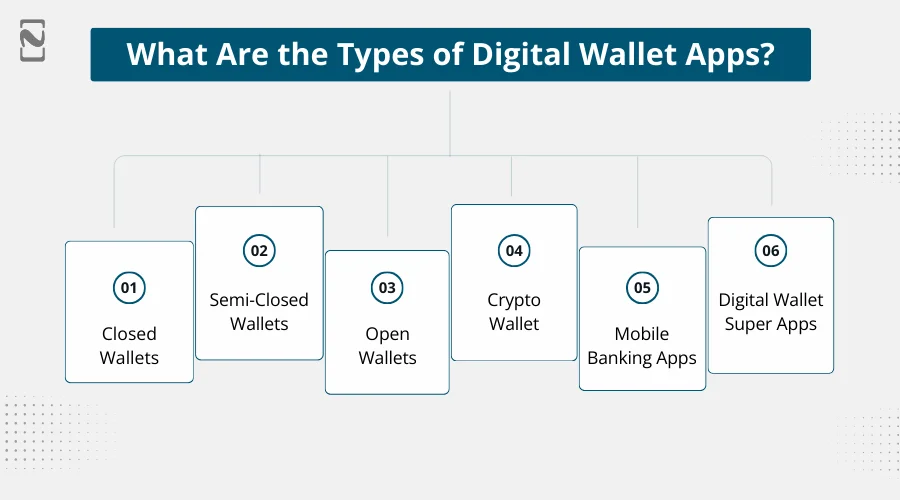
- There are 6 types of digital wallets – Closed Wallets, Semi-Closed Wallets, Open Wallets, Crypto Wallets, Mobile Banking wallets, and Digital Wallet Superapps.
- To create a digital wallet app, you have a 6-stage development process, starting with idea discovery, touching through app design, development, testing, deployment, and maintenance.
- Core compliance you must take care of to secure a digital wallet includes PCI-DSS for card data, GDPR/CCPA for privacy, Biometric Authentication, and Tokenization.
- Nimble AppGenie can give you complete control over your idea and help you with digital wallet app development with their in-house expert developers and years of experience.
In recent years, digital wallets like Venmo, PayPal, and Google Pay have become household names and have changed the way we handle money.
Digital Wallets are not only helpful in simplifying payments, but are also a very convenient way to manage and handle your regularly used passes and cards.
Also known as eWallets and mWallets, these are primarily used as contactless and cashless payment methods, allowing users to go wallet-free and manage their finances easily.
While these digital wallets serve as a great tool for an average user, it is also a great business opportunity, as one of the easiest ways to enter the lucrative fintech market is to build a digital wallet of your own.
If you are interested in launching your own digital wallet or are just curious about how a digital wallet is created and how it works, then you are at the right place.
In this post, let us take a look at everything you need to know about digital wallet development and how an eWallet is created. But before we jump into the technicalities, let us quickly round up some digital wallet app market statistics to understand it better.
Let’s begin!
Digital Wallet App Market Statistics
If you are not living under a rock in 2026, you already know what a digital wallet is.
Digital wallet app statistics show amazing numbers in the digital wallet industry that just keep growing.
Revenue is rising, the number of users is going up every quarter, and digital wallet applications are being used more and more.
To better understand this digital wallet market, let’s have a look at some digital wallet app market statistics:
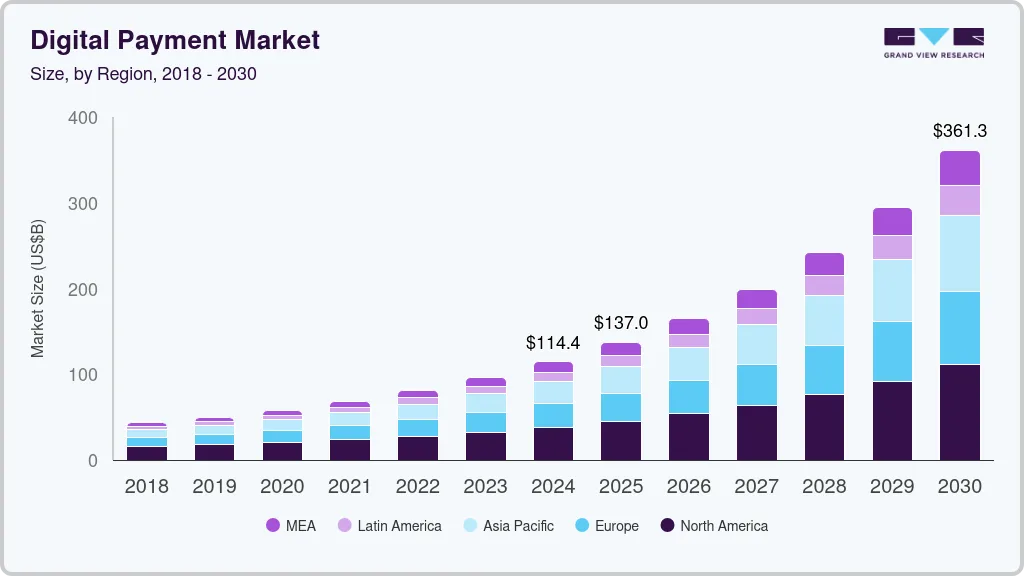
Digital Payments Market to Hit $361.30 Billion by 2030
With advancements in mobile payment technologies, digital transactions for shopping have become more convenient. As per the latest projections, the digital payments market is set to grow from $114.41 billion in 2024 to $361.30 billion by 2030, reflecting the sector’s rapid expansion.
Digital Wallet Market Size Expected to Surpass $145 billion by 2030
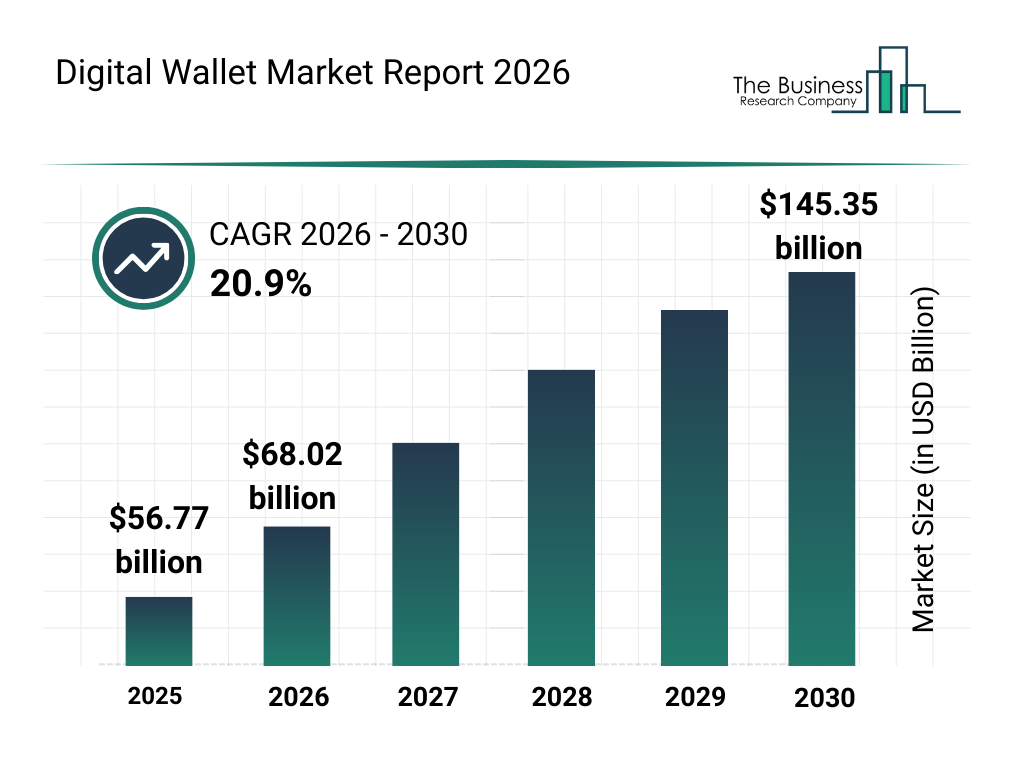
The digital wallet sector, a significant subset of digital payments, is showing exponential growth. From a valuation of $56.7 billion in 2025 to $145.35 billion by 2030, growing at a CAGR of approximately 20.9%.
Over 6 billion digital wallet App Users Predicted by 2030
The number of global digital wallet app users continues to climb. From around 4.5 billion users in 2025, this number is expected to reach over 6 billion by 2030, fueled by increasing adoption in emerging markets, according to a study from Juniper Research.
Use of Apps Like Apple Pay and Google Pay to Triple by 2027
Popular platforms such as Apple Pay, Google Pay, and Samsung Pay are seeing substantial adoption. Their use is projected to triple between 2023 and 2027, reflecting heightened demand for seamless and secure payment solutions.
Digital Wallet Transactions to Reach $20 Trillion by 2030
Digital wallet transaction volumes are expected to reach an astounding $20 trillion globally by 2030, driven by innovations in blockchain and fintech solutions.
The statistics shared are highly motivating for any individual planning to enter the market. However, it is really crucial to understand how you want to become a part of this growing market of digital wallets.
In the next section, let us take a look at different types of digital wallets to help you identify the correct opportunity for you to leverage.
What Are the Types of Digital Wallet Apps?
You can create a digital wallet app, understanding its diversified types. There are different types of digital wallets, varying based on their working and core functionalities. Now, if you want to create a digital wallet app, it is essential to understand the various types.
Here are the types of digital wallets you must know:
Type 1: Closed Wallets
First, we have the closed wallets.
These are “closed” as they can only be used to make payments to a specific party.
For instance, a brand like McDonald’s could create its own digital wallet app. Users can only pay via these apps at McDonald’s outlets. A great example of this is Amazon Pay.
Who is this for?
This form of digital wallet app is recommended for branded retail stores and e-commerce platforms.
A good reason to invest in this form of digital wallet is that it will give the brand a huge boost in terms of reputation, reliability, and customer loyalty. Not to mention the increased revenue generation you get through it.
Read Also: Exploring Closed-Loop Payment Systems
Type 2: Semi-Closed Wallets
One step further from closed, we have the semi-closed wallets.
Users can pay via a semi-closed wallet to pay at partnered merchants and locations. The trick here is that these wallets are restricted to these specific vendors and locations.
Zelle’s business model shows us how effectively you can use a semi-closed wallet to generate millions.
Who is this for?
This is a great business venture opportunity for fintech companies, financial institutions, e-commerce companies, or tech companies.
This is a good idea for startups and entrepreneurs.
Type 3: Open Wallets
Let’s talk about a more familiar form of digital wallet application, the open wallet.
Being open-looped, these can be used anywhere and everywhere, the condition being that the other party is also using the same platform or a compatible one.
Open wallets offer many amazing features in addition to all the functionality of the previous types. It can be used to manage bank accounts, ATM withdrawals, send money, and so on.
Who is this for?
Open wallets offer a great opportunity for businesses that plan to enter the fintech market with a full-fledged wallet that can be used by any type of user, from businesses to individuals. These wallets also open a door to further opportunities to scale in the fintech market.
Read Also: Exploring Open-Loop Payment Systems
Type 4: Crypto Wallet
Next up, we have a crypto wallet. With this one, we broke the loop wallet as it’s working differently.
These types of digital wallets enable the user to buy, sell, transfer, and trade cryptocurrencies like Bitcoin and Ethereum.
Create a crypto wallet if you are a cryptocurrency-based company. This solution can help your digital currency take off in the market, just like Ethereum did.
Who is this for?
A business or an individual with an interest in the cryptomarket or who wants to enter the growing and promising market of decentralized financial services can start with a cryptocurrency wallet.
Type 5: Mobile Banking Apps
These are mobile applications that are used to manage bank accounts, debit cards, credit cards, and other financial products. The Bank of America app is a popular mobile banking app.
Who is this for?
In the coming years, every financial institution and bank will create a mobile banking application. This is a response to growth in the fintech industry.
Now, if you fall into this category, you should go for it.
Type 6: Digital Wallet Super Apps
If you are familiar with the concept of a Super App, you know what we are talking about.
This is an all-in-one digital wallet. Here, the user gets the functionality of a banking app, cash advance, NFC mobile payment, and much more.
N26 and Bolt, for example, are popular examples of digital wallet super apps.
Who is this for?
There are no specific businesses that should go for this. Rather, super app development suggests platforms that handle a lot of similar niche companies.
Super apps combine everything into one, delivering the end-user superior value.
With so many types of digital wallets, it is important to make a decision, and based on the decision, you can start building your mobile wallet. Check out the next section to learn more about the steps of digital wallet app development.
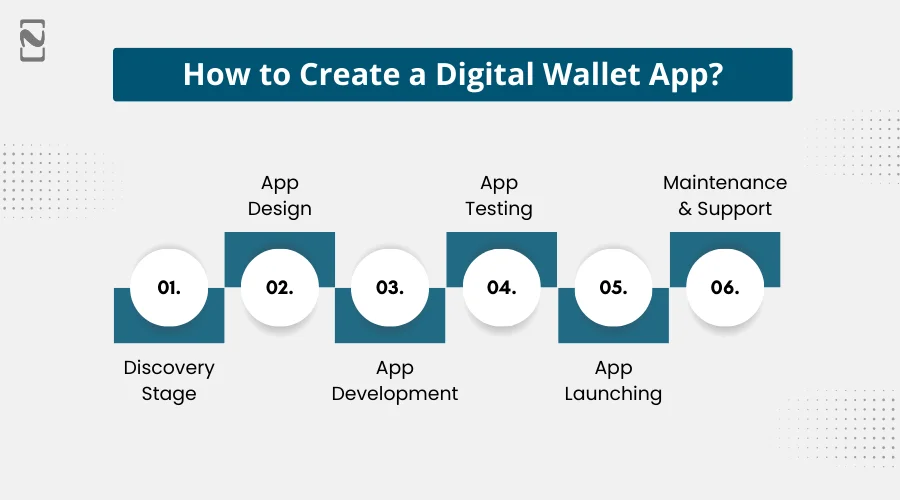
How to Create a Digital Wallet App?
Building an eWallet is both a technical and creative process. Irrespective of what type of digital wallet you plan to build, the steps remain similar.
To help you better understand the same before you venture out, let’s go through each step and discuss it in detail.
Step 1: Discovery Stage
The first step in developing a digital wallet application is the discovery phase.
In this part, you have to deal with all things research-related, as you’ll see below. So, let’s discuss each one of these in detail.
-
Market Research and User Persona
This is something that a lot of people get wrong.
App market research is the gateway to becoming the next big name. Your target audience base is super important because your features, app market strategy, development prospects, and everything else are based around them.
For this reason, conducting in-depth research for the user base is very crucial.
-
Legal Compliances
Lastly, since we are dealing with finances, there is some legal compliance and licensing that the business might need to deal with.
Fintech is one of the world’s most regulated and supervised industries due to the importance of the data it handles.
Getting this done before you develop a digital wallet application is a must.
-
Finalize the Features
Based on the user persona and your value proposition, the app features will be finalized.
As we have already discussed in the blog earlier, the features play an important role in the success of any platform, including digital wallet applications.
Therefore, choose the ones that best fit your user base and the app concept.
-
Choosing an App Development Platform
Lastly, with everything else set and done, we need to decide on the development platform.
For those who are unfamiliar with the concept, you need to decide whether you are creating an Android application or going for iOS app development.
If you are looking to target an audience from both platforms, you can consider a hybrid app.
Choosing the right platform is important as it affects the feature set, audience base, development cost, and design.
For instance, Android app development can prove to be more expensive than the other two. However, it does introduce more custom features.
Step 2: App Design
It’s time to deal with the digital wallet app design.
The idea here is to create a design that resonates with your target users and is easy to use, while also being equally awe-inspiring and aesthetically pleasing.
To do this, here are some steps that you can follow:
-
Choose a Design Approach
The first thing you need to do is choose a design approach. This is much like choosing a software development methodology before creating software.
Once you are done with this, we will move to the next step…
-
Creating Wireframes and Prototypes
To turn the design’s concept into a real thing, we need to take it through app wireframing and mobile app prototyping.
There are several development stages of mobile app wireframes that enable designers to add more weight, elements, and features at each step, bringing an idea to life.
On the other hand, prototypes help test these designs and get approval from clients.
Both of these have important roles to play.
-
User Experience
A big thing that requires attention during the UI/UX design process is User Experience.
When it comes to fintech apps like digital wallets, UX plays an important role in driving user attraction and user retention. By designing a good experience, you can take your platform from 0 to 100 quickly.
Here, you can take inspiration from the top digital wallet apps.
Step 3: App Development
Finally, it’s time to create a digital wallet application.
This is by far the most technical and time-consuming step. After all, all the source code is written here, and developers give their all to bring your idea to reality.
For that reason, it is highly recommended that you maintain a good communication channel with the development team.
Moving on, let’s look at the different things that you need to deal with in this step.
-
Tech Stack
The first thing you need to do is choose a digital wallet app tech stack.
Technology stack refers to the set of technologies used for digital wallet applications. There are a lot of options from the frontend to AI in digital payments that you get here.
They are, as mentioned below:
| Layer | Technology |
| Frontend | React Native, Flutter, or Swift (for iOS) and Kotlin (for Android) |
| Backend | Node.js, Python (Django), Ruby on Rails |
| Database | MySQL, PostgreSQL, MongoDB |
| API Integration | RESTful APIs, GraphQL |
| Authentication | OAuth 2.0, JWT (JSON Web Tokens) |
| Payment Gateway | Stripe, PayPal, Braintree |
| Cloud Storage | Amazon S3, Google Cloud Storage |
| Security | SSL, Encryption, Two-factor authentication |
| Push Notifications | Firebase Cloud Messaging, Apple Push Notifications |
| Monitoring | Sentry and New Relic |
| Deployment | Docker and Kubernetes |
| Version Control | Git |
| Development Environment | Visual Studio Code, Xcode, Android Studio |
Though these are the most common options, there are a lot more top software development tools that you can use here.
-
Team Structure
Now that we are done with the tech stack, it’s time to hire mobile app developers.
However, it is not as simple as it sounds. If you are going for a big project like this one, you need an entire team.
Here, the team structure matters a lot. This gets us to the question: What is the ideal team structure for the digital wallet app project?
Well, here’s an overview of it:
- Project Manager
- UI/UX Designers
- Mobile App Developers
- Frontend Developer
- Backend Developers
- QA / Testers
- Fintech Security Experts
- Payment Gateway Specialist
- Database Admin
Now, there are various ways to assemble a team. You can choose between in-house and outsourcing.
However, in recent times, it has become a trend to find fintech development outsourcing partners, as it makes the work a lot easier on the client side. Not to mention a lot cheaper as well.
-
Frontend Development
Though we are already done with the app design process, it is time to integrate it with the digital wallet application.
Here, technologies like CSS, React, JS, etc, are used to make it possible. Front-end developers make the design responsive and connect it to the back end.
This makes the digital wallet app features come to life.
-
Backend Development
The real coding work is done here.
In digital wallet app back-end development, we deal with things like fintech APIs, database integration, eWallet APIs, and servers.
Though it might sound simple, it takes the most time in the development process. The reason is that it is important to create a secure connection between different components.
Any leaks or errors here could compromise the entire platform.
-
Payment Gateway
Now, to breathe life into the digital wallet application, developers will integrate a payment gateway.
Like any other integration process in a digital wallet solution, payment gateway integration takes a lot of time.
It is this gateway that enables online payments, P2P payments, and more. It is for this reason that you need to choose the right payment gateway.
Now that we are done with this, let’s move to the next step of digital wallet app development.
Step 4: App Testing
Mobile app testing is more important than anything else, especially when we are talking about how to build a digital wallet.
There are so many working components in these solutions that it has to be checked many times for any errors, bugs, or leaks.
Therefore, the QA and testing team will cross-check everything before sending it off for deployment.
Step 5: App Launching
Once the team gets the green light from the QA team, it’s time to deploy the app.
The app deployment process entirely depends on the development platform. That is to say, when you publish an app to the App Store, the process is a bit more complex, and the guidelines are strict.
On the other hand, when you submit an app to the Google Play Store, it’s a lot more flexible in guidelines and also easier.
Hybrid apps have to go through both of them. In any case, regardless of the platform, 2 weeks are required for the app to go live.
But our work here is not done.
Step 6: Maintenance & Support
Even though we are done with the digital wallet application, there’s work to be done.
Following the launch, it’s time to start app maintenance and support services. This helps solve recurring issues and prepare for sudden app issues.
This is more than just a step, rather a process on its own that will go on till the app is live in the market.
With that, we are done with our guide on how to create a digital wallet app. It’s time to answer the big question: how much does it cost to develop a digital wallet application?
What Features to Have in a Digital Wallet App?
The digital wallet app plays a great role in delivering value to the target users. Thus, make your digital wallet application stand out from the rest.
So, in this section, we will be going through the essential features of digital wallets:
| User Panel | Vendor Panel | Admin Panel |
| Registration and Login | Product/Service Management | User Management |
| Product/Service Browsing | Order Processing | Dashboard Overview |
| Shopping Cart/Order Management | Inventory Management | Content Management |
| Payment Gateway | Analytics and Sales Reports | Permission Settings |
| Wishlist/Favorites | Payment and Invoicing | Analytics and Reporting |
| Order Tracking | Profile Customization | Transaction and Order Management |
| Reviews and Ratings | Customer Interaction | Customer Support Tools |
| Messaging/Support | Discounts/Promotions | System Configuration |
| Notifications | Shipping and Fulfillment. | Security and Compliance |
| Registration and Login | Settings and Permissions | Communication Tools |
| Product/Service Browsing | Product/Service Management | User Management |
Apart from the essential, i.e., basic digital wallet app features, there are some advanced ones that one should consider during the app development process.
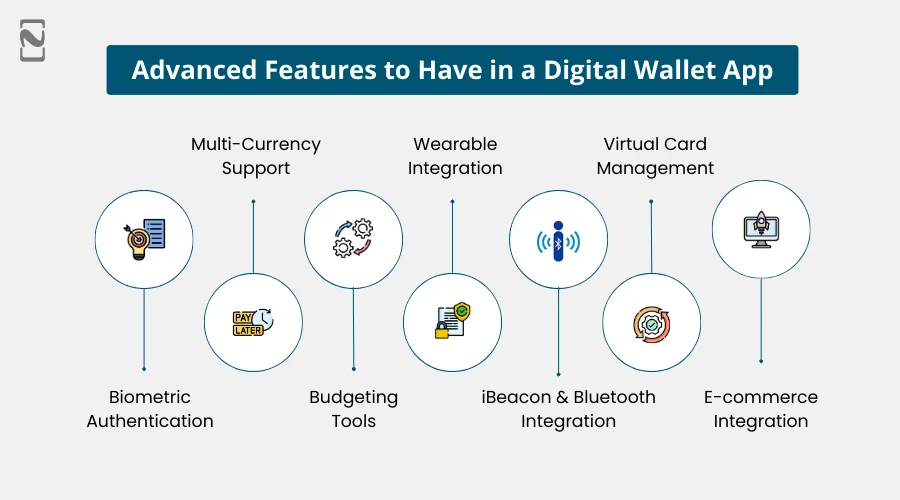
Advanced Features to Have in a Digital Wallet App
Every digital wallet application has essential features.
If you want your platform to stand out from the rest, you’ll want to consider some advanced features as well.
In this section of the blog, we shall be going through the top advanced features.
1. Biometric Authentication
Authentication, like PIN and password are basic feature of e-wallet apps.
To take this a step further, you can include biometric authentication features in the platform. It enables access via facial scan, fingerprint scanner, or retina scanner.
The digital wallet app here uses the built-in scanners and sensors of the app to make this possible.
2. Multi-Currency Support
Globalization has made the entire world a big family. Today, you might be buying groceries in the USA, paying in dollars, and tomorrow you might be in Dubai for a business trip.
That’s why including multi-currency support in your digital wallet apps can be super beneficial.
As a feature, it can lead to international exposure and a better user experience among travelers.
3. Budgeting Tools
This is a feature that you can find in the best fintech apps.
You see, budgeting has been a big issue in today’s generation. People are having a hard time keeping track of their spending and saving up money.
Digital mobile wallet applications fitted with budgeting tools can push the edge when it comes to productivity and user experience.
4. Wearable Integration
Wearable devices like the Apple Watch, Samsung Smart Watch, and products from other parties have made it among the masses.
These devices have made it easier to receive notifications and interact with smartphones without touching them.
Using IoT in digital wallet technology, you can create solutions that enable payment approval via the smartwatches themselves. How cool is that?
5. iBeacon and Bluetooth Integration
iBeacon is a Bluetooth-driven technology that was developed by Apple.
Integrating this into your digital wallet application can reap several benefits. This includes:
- Proximity-Based Payments
- Personalized Offers and Notifications
- Location-Based Services
- Automatic Check-ins and Loyalty Programs
All in all, this is a technology that is used by major platforms to make the digital wallet app user experience better and more fulfilling. So it’s something that you should consider as an advanced feature for your platform.
6. Virtual Card Management
One of the key features and selling points of the digital wallet app is virtual card management.
So, what is it? In layman’s terms, users can add their credit or debit cards to the app and never carry them physically.
For instance, NFC payment apps enable users to make payments via their cards from their phones. This is what makes it a great feature in your app.
7. E-commerce Integration
E-commerce is changing how we shop, and it can be a great thing for many reasons.
For starters, Mobile Commerce is one of the largest industries in the world, generating billions. And by offering a solution here, digital wallets can capture more revenue.
So, these are some advanced features that you should consider including in your digital wallet application. With that out of the way, it’s time to discuss how to develop a digital wallet in the section below.
How Much Does it Cost to Create a Digital Wallet App?
The cost to build a digital wallet app ranges between $15,000 and $70,000 based on factors like app platform, tech stack, feature set, complexity, and more.
A simple digital wallet app with basic features and an average design would cost you between $15,000 and $30,000. On the other hand, a more complex one with advanced features will range between $30,000 and $70,000.
If you are looking for a more accurate app development cost estimation, it is highly recommended that you consult a company having expertise in eWallet app development.
What are Some Challenges in Creating a Digital Wallet App?
Before we discuss how to secure your e-wallet application, it’s a good idea to learn about the common app development challenges for an e-wallet app.
So let’s get right into it:
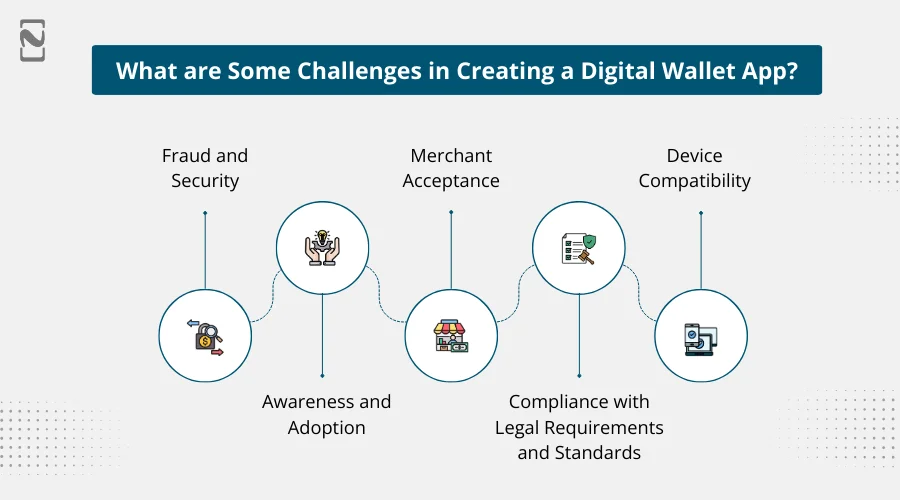
1. Fraud and Security
Even though digital wallet applications and infrastructure are in an advanced state, it is still young in the grand scheme of things.
This gives us a lot of security issues, leading to billions lost in cyber fraud each year. And with time, the number is slowly rising.
Solution: This can be resolved with multi-level security protocols, encryption, biometric authentication, and real-time monitoring, among other solutions.
2. Awareness and Adoption
So one of the big issues is awareness and adoption.
There are still parts of our society that frown upon the entire digital wallet and fintech scenario, not putting their trust in it.
Mainly, they don’t understand the usefulness of the digital wallet application.
Solution: There is no technical solution to this, but rather a social one. Platforms can release educational content, campaigns, and materials to educate the masses about the benefits of their solutions.
3. Merchant Acceptance
Retail stores are the places where digital wallet applications and digital payment solutions are used the most.
However, smaller and more conservative ones still find it difficult to invest in merchant service providers. This sabotages a lot of the market and the potential revenue they could be generating.
Solution: The service provider can offer incentives to merchants in a bid to lure them to use digital wallet application integration in their systems.
4. Compliance with Legal Requirements and Standards
This is a problem that digital wallet app companies themselves face in the market.
With different countries having their own unique compliance standards and legal requirements, there is a lot of overlay that digital wallet businesses have to deal with.
If you want to create a digital wallet mobile app, this is an important thing to deal with.
Solution: To solve this, you should invest in RegTech and legal experts. This can take you a long way as a business.
5. Device Compatibility
The mobile phone market is fragmented.
There is a small fraction of people who upgrade their smartphones every year. However, the majority of people are still using outdated OS and hardware.
This creates an issue as the new digital wallet app is focused on the latest standards.
Solution: You can ask developers to use versatile frameworks for development. It is also advised to create a responsive design that can fit different device screens.
Who Should Invest in Creating a Digital Wallet App?
In the 21st century, digital payment solutions have completely changed the way we handle money. However, this is not the result of app innovation alone.
Rather, today’s fintech scenario comes as a consequence of several levels of development over many years.
Thus, today, we have an entire infrastructure built around online payments, enabling effortless payment via mobile wallets.
The point here is that due to these developments, several industries enjoy the perks. For instance, the retail and e-commerce markets are the largest, responsible for 30% of digital wallet usage.
In this section of the blog, we shall be looking at industries that benefit from digital payment solutions.
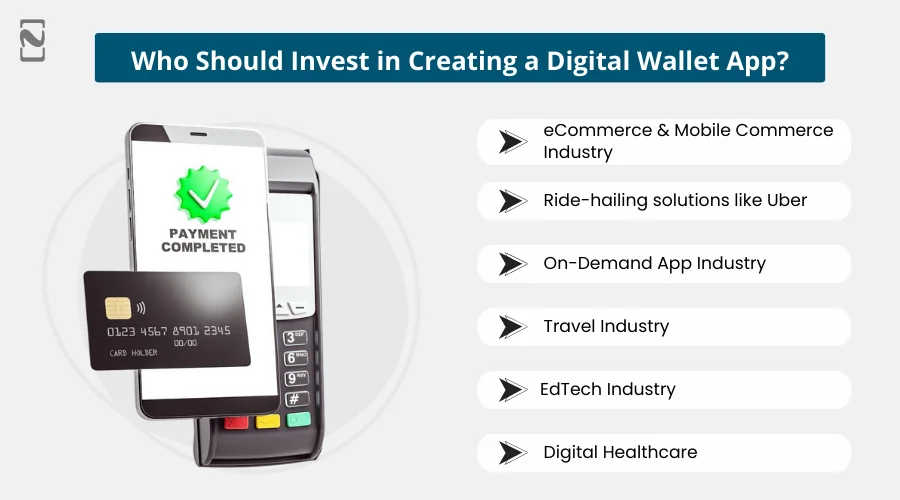
1. eCommerce & Mobile Commerce Industry
If you use eCommerce apps like Noon or Amazon, you already know how useful digital wallet functionality can be.
It was so highly in demand that Amazon created its digital wallet app. After all, introducing digital payment to these platforms is super beneficial for users as well as businesses.
The former can make easier payments, deciding to shop much more quickly. On the other hand, the latter one gets more revenue, while also gaining insight into the financial flow of the platform, among other things.
2. Ride-hailing Solutions like Uber
Taxi apps like Uber, Lyft, Cab, etc, are using digital wallet solutions to generate billions.
Payment gateways in taxi apps can make it much easier for the user to make a payment and for the company to handle it.
This is one of the major industries that has been reaping the fruit of fintech integration.
3. On-Demand App Industry
On-demand apps have become super popular in the market.
From food delivery apps like DoorDash to grocery delivery and on-demand laundry service apps, the list goes on.
In any case, any on-demand app can create a digital wallet or integrate it into its app for added advantages.
For instance, easier payments, delivery people don’t have to deal with payments, better offers, and much more.
4. Travel Industry
It is no secret that the travel industry is one of the world’s largest.
And there are a number of scams that tourists fall prey to in monetary matters. Well, travel apps for tourism are coming with digital payment functionality to deal with this problem.
Even if you don’t use the integrated solution and stick to your usual digital wallet, it is still much safer for you, while also giving higher user engagement to travel platforms.
5. EdTech Industry
The growth of Edtech following the pandemic and the boost it got is remarkable.
Today, Edtech has become a common practice, with every other person buying online courses. This is where digital wallets and online payment apps come in.
6. Digital Healthcare
Lastly, we have digital healthcare examples.
Digital healthcare includes a range of solutions, from online appointment booking apps.
The role of digital wallets here is to make payments for services easier and quicker.
So, these are some of the top industries that can benefit from digital wallet integration and applications alike. With that out of the way, let’s answer a major “how to create a digital wallet” question.
Security Compliance for Digital Wallet App
When it comes to fintech apps of any sort, ensuring impregnable security becomes super important. The same is the case for digital wallet applications.
The widespread use of the digital wallet application and the development of infrastructure around it have led to the creation of multiple security compliances.
Therefore, let’s look at methods to ensure digital wallet security.
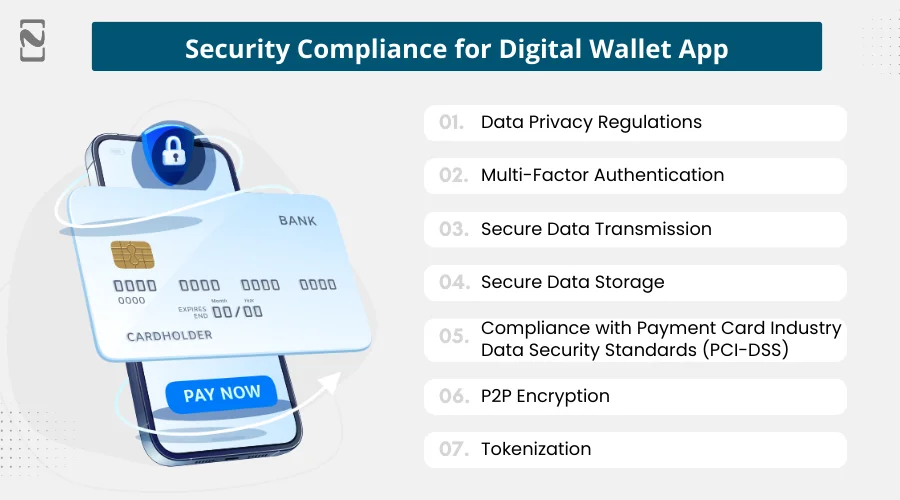
► Data Privacy Regulations
We are living in the 21st century, where everything exists in the form of data, from your life events to financial details. So it’s no surprise that people don’t want their data mangled.
This is why it is important to comply with data privacy regulations. This includes the likes of GDPR compliance (General Data Protection Regulation) and CCPA (California Consumer Privacy Act).
Depending on your market, there can be different regulations you need to follow, but for the majority of America and Europe, these two will do.
► Multi-Factor Authentication
With the recent rise in financial fraud, many of the top authorities have mandated multi-factor authentication.
So, the first layer is the PIN or Password that you have created. Now, to add an extra layer, a digital wallet might have internal or extra layers that require another PIN or OTP to enable transactions.
This is a general idea; we can also cover biometric authentication if required for multi-factor authentication.
► Secure Data Transmission
One of the biggest security issues in digital wallet applications is communication security.
This can happen when either side has compromised security or the connection isn’t secure. This is why secure data transmission is important.
For this, one can use encryption protocols like TLS or SSL.
► Secure Data Storage
Data storage has to be the single largest security concern in fintech apps. After all, this is the first area targeted by hackers and fraudsters.
To secure it, a good method is to use cloud storage.
In addition to the extra security, it also enables cross-device data synchronization, which is a highly valued feature in digital wallet applications.
► Compliance with Payment Card Industry Data Security Standards (PCI-DSS)
This is an important compliance standard for any platform that deals with credit card information, which digital wallet applications do.
PCI DSS compliance helps digital wallet applications secure their network, protect cardholder data, and implement security measures. In addition to this, it also mandates regular monitoring, network testing, and information security policy maintenance.
To learn more, you should read this: How to develop a PCI DSS-compliant app?
► P2P Encryption
P2P encryption refers to the application of end-to-end encryption in peer-to-peer transactions.
As all encryption does, this technology ensures data transmission is secure. It does this by encoding data before sending it to the other party, and decoding it once it is there.
This means that if any unauthorized party tries to mess with the data mid-path, they can’t access it.
► Tokenization
Lastly, we have a rather new technology known as Tokenization.
It refers to the process of creating a digital version of financial assets on the blockchain. Fintech deals with credit cards, debit cards, and banking information.
It is a super secure technology that has seen wide application not just in digital wallets but also in mobile banking apps.
Digital Wallet App Monetization Strategies
These are methods that enable the platform to generate revenue via various paths.
Let’s look at some common ones below:
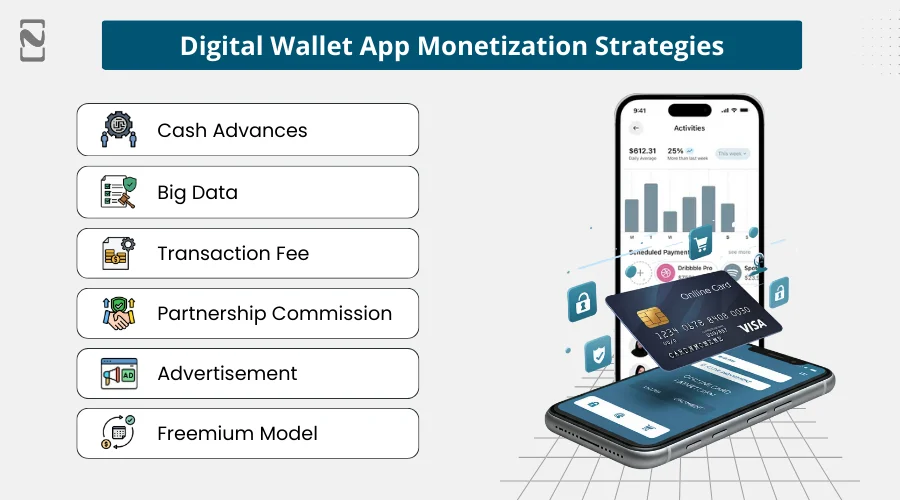
- Cash Advances: This might not be the conventional digital wallet monetization method that you see, but recently, a lot of digital wallet solutions have doubled as cash advance apps. This can help your business generate millions in revenue.
- Big Data: Fintech apps generate a lot of revenue. This data can be converted to be monetized, as there’s a lot of demand for this form of package.
- Transaction Fee: Since we are dealing with a lot of transactions, we charge a small percentage or a fixed fee for every transaction. This is the most common app monetization method for digital wallets.
- Partnership Commission: You can partner with top eCommerce platforms and retail chains, offering discounts to users in exchange for a part of the revenue. This is yet another great strategy.
- Advertisement: Platforms that are used by millions of users are a great place for advertising. Because a lot of companies are willing to spend big sums on mobile app ads.
- Freemium Model: Lastly, we have the popular freemium model. Here, the business offers a free app that has all the basic functionality. However, to access advanced features, users need to pay a subscription fee. We also know them as subscription-based apps.
These are the common digital and ewallet monetization methods. With that out of the way, let’s look at some digital wallet app best practices.
Best Practices to Create a Successful Digital Wallet App
The goal of creating a digital wallet app is to generate money, make a name for the business, and secure a good place in the market.
So, how do you do this?
Well, some things require special attention if you want to create a successful digital wallet app.
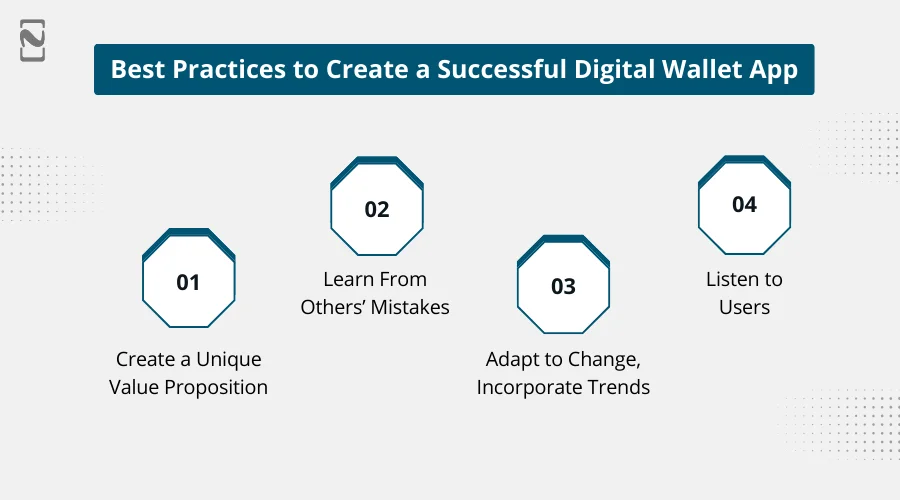
1. Create a Unique Value Proposition
What is my digital wallet app idea offering to users?
This is the first question you must ask yourself as a business owner or someone considering building a digital
Now, you can be an e-commerce company or a retail chain that wants to introduce a wallet app for easier payment and drive a loyalty program. Or you can be a startup that wants to create an innovative app like Moneylion or Robinhood.
In either case, you need to deliver something unique if you want to make the app successful among people.
2. Learn From Others’ Mistakes
There are millions of digital wallet apps floating around in the market.
And to the ballpark, they have already made all the mistakes and mess-ups that you are to make. So a good strategy is to analyze them, look at their client feedback, and not do what they are doing wrong.
As a general rule of thumb, while we learn from the good options of the top digital wallet apps, we also learn from the downsides of the worst ones.
3. Adapt to Change, Incorporate Trends
The digital wallet market is like the sea, and if you want to scale it, you need to adapt to the changing tide, which comes in the form of trends.
For instance, some of the latest digital wallet app trends at the time of writing this blog are:
- Contactless payments via NFC
- Digital gift cards
- Mobile loyalty programs
- Biometric Authentication
- Tokenization
- More Focus on Cyber Security
- In-app payments
- Buy Now, Pay Later Apps like AfterPay
By integrating these trends into your platform, you can become the next big thing in the market.
4. Listen to Users
We can’t stress this enough: always focus on what your users want.
There are various ways to get user feedback. Based on this, you can design new features, change designs, remove extra functions, and introduce new concepts, leading to better user retention.
Following these tips, you can create an app, best digital wallet apps like PayPal, Venmo, or Zelle, in no time.
Bonus Read: Learn the Cost to Develop an App like PayPal, Venmo, and Zelle
How Can Nimble AppGenie Be the Perfect Partner to Create a Digital Wallet App?
If you want to create a digital wallet app with the potential to compete against big names like PayPal and Venmo, you need a good idea, passion, and developers who believe in your dream.
That’s where Nimble AppGenie comes in.
As a market-leading fintech software development company, we are honored to be recognized by top platforms like Clutch and many more.
Our team of developers has experience working on top digital wallet platforms that went on to rule the market.
This includes the largest digital bank in Africa that enables users to trade cryptocurrencies while delivering all the advantages you expect from a digital wallet.
Nimble AppGenie also rolled out CUT. A digital wallet application that has been disrupting the market in China and Myanmar with its amazing features like multicurrency support, currency exchange, in-app wallet, QR code, and much more.
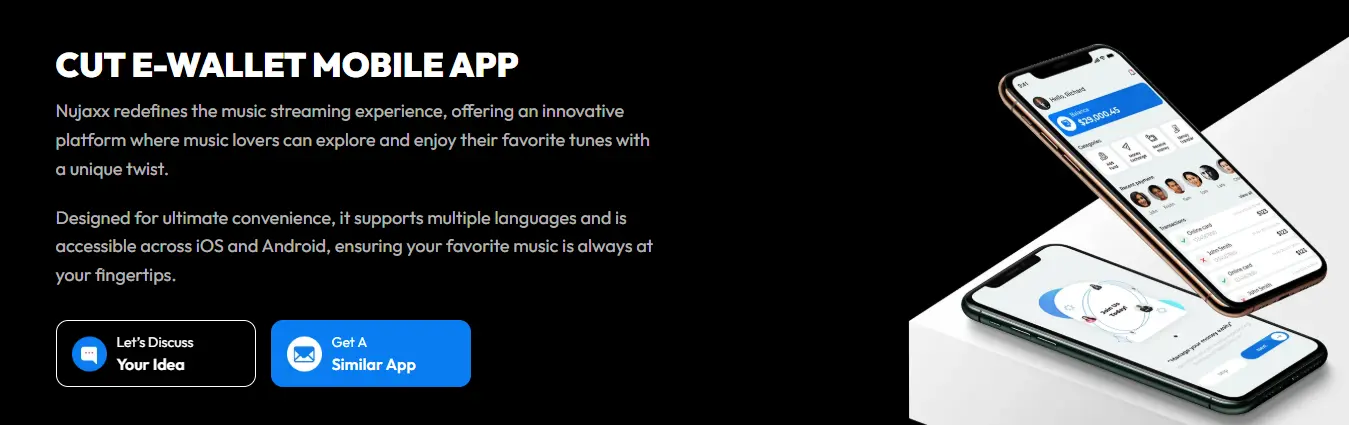
Our work speaks for itself. And so are our clients who are making millions with their future-ready digital wallet solutions.
If you are looking for a fintech app development company that can give your amazing ideas a digital life, we have the technology, work ethic, and passion to do it.
Contact our team today, and let’s create the next big thing.
Conclusion
Digital wallets have become a part of people’s day-to-day lives. Though the masses seem satisfied with current platforms like PayPal, Venmo, or Cash App, there’s always room for improvement and a market to be captured.
Time and time again, we have seen digital wallets disrupt the market with their unique value proposition and use of the latest technologies. BNPL, Cash Advances, and all are rooted in digital wallet solutions.
Now, if you have a unique idea for a digital wallet that you think can take over the market, it’s the right time to partner with an e-wallet solution provider and bring it to life. Done right, you can generate millions (or even billions) while creating a lasting brand.
FAQs
The steps on how a digital wallet works are as follows:
- User registration and account creation
- User Authentication
- Bank Account/Card Linking
- Support for Various Transaction Types
- Transaction Authorization & Processing
- Transaction Confirmation
- Transaction History
For businesses, digital wallet applications offer many benefits. Some of these are:
- Increased sales
- Better customer loyalty
- Ease of introducing marketing campaigns
- Insight into finances
- Reduce operating costs
To create a digital wallet app that stands out from the rest, here are some tips that you can follow:
- Learn from the best e-wallet apps in the market
- Always embed trends in new features
- Keeping the app secure
- Create unique value among users
To market a digital wallet app effectively, you can use the following methods:
- Define your target audience
- Conduct market research
- Develop a unique value proposition
- Define your success criteria
- Register your domain & create a landing page
- Using social media
- Reach out to influencers
Here are the steps to follow to make a digital wallet application:
- Come up with an idea
- Market research
- Finalize feature
- Choose a platform and tech stack
- App design
- App development process
- App testing
- Deployment
There are various e-Wallet app monetization strategies that you can use. Some of these are, as mentioned below:
- Big Data
- Transaction Free
- Partnership Commission
- Advertisement
- Freemium Model

Niketan Sharma, CTO, Nimble AppGenie, is a tech enthusiast with more than a decade of experience in delivering high-value solutions that allow a brand to penetrate the market easily. With a strong hold on mobile app development, he is actively working to help businesses identify the potential of digital transformation by sharing insightful statistics, guides & blogs.
Table of Contents




No Comments
Comments are closed.