

 Free Consultation
 PCI-DSS Compliant
 GDPR Ready
 ISO 27001
 NDA Protected
 AI Services
 AI App Development
 Generative AI Development
 AI Chatbot Development
 AI Integration Services
 AI Consulting Services
 AI For Fintech
 AI Financial Assistant Solution
 AI Insurance Agent Development
 Tech Stack
 OpenAI / GPT-4
 Claude / Anthropic
 Gemini / Google AI
 Llama / Open Source
 LangChain / LlamaIndex
 Pinecone / Pgvector
 AWS / Azure AI


 Fintech Solution
 Core Fintech
 App Development
 Neobank Solutions
 eWallet Solutions
 Lending Software
 Banking Solutions
 BNPL Solutions
 BNPL Solutions
 Insurance App
 Wealth Management
 Crypto & DeFi
 Blockchain Development
  Payroll Software
 DeFi Solutions
 Crypto Wallet
 Crypto On/Off Ramp
 Crypto Exchange
 Trading Platform
 Payments
 Compliance
 Regulations & Compliance
 Fraud Detection
 Lending Ecosystem
 P2P Lending Platform
 Mortgage Software
 Engagement
 Fintech Outsourcing

 Mobile Development
 Mobile App Dev
 iOS App Development
 Android App Development
 React Native
 Flutter Development
 Web Solution
 Node.js Development
 React.js Development
 Angular Development
 App Services
 UI/UX Design
 App Maintenance
 By Stage
 MVP Development
 Industry Solutions
 Healthcare App Dev
 Education App Dev
 Travel App Dev
 Real Estate App Dev
 Logistics Software
 Social Media App

 Hire Mobile Developers
 Hire iPhone Developers
 Hire Android Developers
 Hire React Native Devs
 Hire Flutter Developers
 Hire Web Developers
 Hire Node.js Developers
 Hire Angular Developers
 Hire PHP Developers
 Hire Laravel Developers
 How It Works
 Pre-Vetted Developers
 Ready In 48 Hours
 NDA From Day One
 Replace Guarantee
 Company
 About Us
 Our Work Process
 Portfolio
 Case Studies
 Blog / Insights
 Careers
 Contact Us
 Awards
 Recognition


 Offices



TL;DR
- A digital wallet (also known as a mobile wallet or eWallet) is a virtual tool that securely stores your payment information, allowing you to make transactions without a physical card or cash.
- There are 6 major types: mobile, cryptocurrency, desktop, web, wearable, and bank-provided wallets, plus a closed/semi-closed/open classification based on where they can be used.
- Digital wallets already account for 56% of global e-commerce value and 33% of point-of-sale value as of 2025, per Worldpay’s 2026 Global Payments Report.
- Security depends on tokenization, encryption, and biometric authentication – your actual card number is never shared with the merchant.
- Nimble AppGenie builds custom eWallet and digital wallet platforms for fintechs and enterprises – see our work below.
Digital wallets have discreetly replaced physical ones for most routine spending, which naturally raises the question: what exactly is a digital wallet, and how is it different from an app that stores your card?
What is a Digital Wallet?
A digital wallet, mobile wallet, or eWallet app, is a virtual tool that securely stores your payment information and passwords.
It allows you to make payments quickly and easily without the need for physical cards or cash.
Digital wallets are becoming increasingly popular due to their convenience and security features.
Think of a digital wallet as a digital version of your physical wallet.
You can store credit card information, bank account details, and even cryptocurrency. This information is encrypted, making it safer than carrying multiple cards.
There are several types of digital wallets, each catering to different needs.
For instance, a mobile wallet is a digital wallet designed for use on smartphones, allowing you to make payments with just a tap on your device.
Popular mobile wallets include Apple Pay, Google Pay, and Samsung Pay.
Businesses are also leveraging digital wallets to streamline their payment processes. By integrating eWallet solutions, businesses can offer faster, more secure payment options to their customers, enhancing the overall shopping experience.
How Does A Digital Wallet Work?
Now that you know what a digital wallet, let’s see how does it work.
A digital wallet works by securely storing your payment information and allowing you to make transactions without the need for physical cards.
Here’s a simple step-by-step explanation:
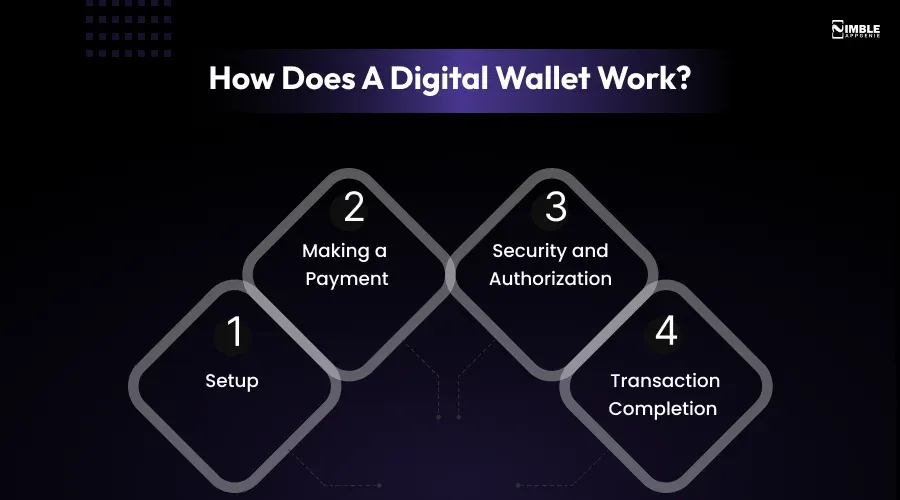
1. Setup
First, you need to download a digital wallet app, such as Apple Pay, Google Pay, or Samsung Pay.
Once installed, you add your payment information, such as credit or debit card details. The app may ask you to verify your identity through an SMS or email verification.
2. Making a Payment
When you’re ready to make a payment, simply open the digital wallet app on your device.
Depending on the type of transaction, you might use Near Field Communication (NFC) technology to tap your phone against a compatible point-of-sale terminal.
Alternatively, for online purchases, you can select the digital wallet option at checkout.
3. Security and Authorization
Digital wallets use advanced encryption and tokenization to protect your payment information.
Instead of sharing your actual card number, the digital wallet generates a unique, encrypted token for each transaction.
In addition to this, many digital wallets require biometric authentication, such as a fingerprint or facial recognition, ensuring that only you can authorize the payment.
Biometrics, 2FA, and encryption are part of a broader set of eWallet security best practices that every wallet, consumer or business, must have.
4. Transaction Completion
Once the transaction is authorized, the merchant receives the encrypted token, which is then processed by the payment network.
The payment is completed in a matter of seconds, and you receive a confirmation on your device.
Technology Behind Digital Wallets
Digital wallets rely on several advanced technologies to provide secure and convenient payment solutions. Here are some key technologies that power digital wallets:
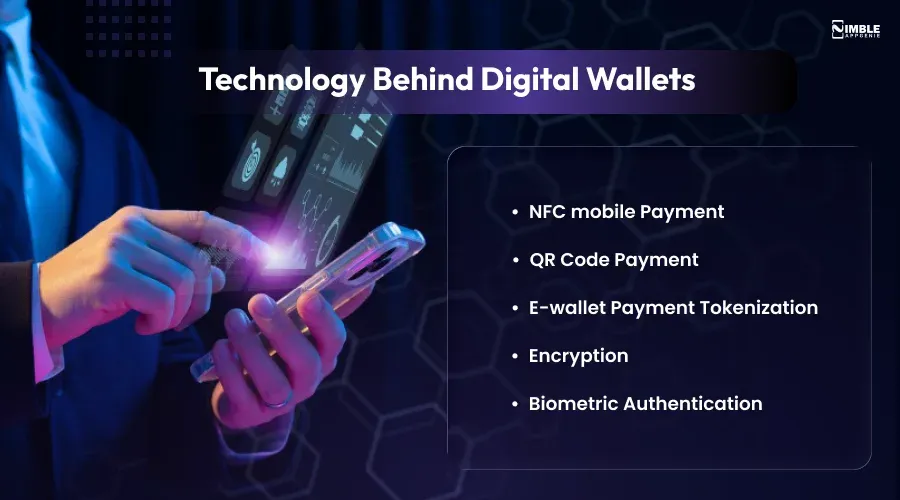
- NFC mobile Payment: Near Field Communication (NFC) allows devices to communicate with each other when they are close together. In digital wallets, NFC enable’s payments by allowing you to tap your smartphone against a compatible payment terminal. This technology ensures a quick and secure transaction process.
- QR Code Payment: QR codes are another popular method for digital wallet transactions. When making a payment, a QR code is generated that contains your payment information. You can scan this code using your smartphone to complete the transaction. QR code payment is widely used in various regions due to its simplicity and compatibility with many devices. These codes can be created using any QR code maker, making it easy for businesses to implement and manage this payment method.
- E-wallet Payment Tokenization: Tokenization enhances security by replacing your actual card information with a unique, encrypted token during transactions. This means that your sensitive data is never exposed, reducing the risk of fraud and unauthorized access.
- Encryption: Digital wallets use encryption to protect your data. Encryption converts your information into a code that can only be deciphered with a specific key, ensuring that your payment details remain confidential and secure.
- Biometric Authentication: Many digital wallets require biometric authentication, such as fingerprints or facial recognition, to authorize transactions. This adds an extra layer of security, ensuring that only you can approve payments from your digital wallet.
Are Digital Wallets Safe?
Yes, digital wallets are secure.
We use advanced security measures like encryption and tokenization to protect your payment information.
Many digital wallets also offer two-factor authentication (2FA) and real-time transaction alerts to detect and prevent unauthorized access.
Moreover, technologies like NFC payment for contactless transactions ensure your information is transmitted.
Types of Digital Wallets
Understanding the different types of digital wallets helps clarify how they work and where they are used.
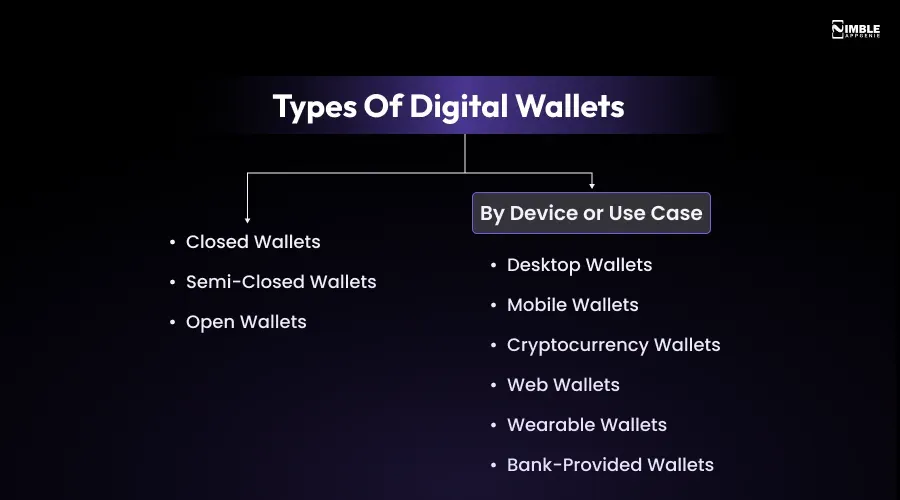
- Closed Wallets: Issued by specific companies for use only within their own ecosystem; Amazon Pay is a classic example. Funds can’t be transferred or withdrawn elsewhere. These are the basis of closed-loop payment systems.
- Semi-Closed Wallets: Usable at a broad range of merchants that have partnered with the wallet provider; however, cash can’t be withdrawn – PhonePe and Paytm are common examples.
- Open Wallets: Generally issued by or in partnership with banks, providing the most flexible payments, ATM withdrawals, and fund transfers. Examples include Google Pay and PayPal, operating within open-loop payment systems that work with any Mastercard or Visa merchant.
By Device or Use Case
- Desktop Wallets: Installed on a computer, desktop wallets are best for online transactions with strong security but less convenience for in-store purchases.
- Mobile Wallets: Designed for smartphones, Google Pay, Apple Pay, and Samsung Pay allow you to pay by tapping your phone on a compatible terminal.
- Cryptocurrency Wallets: Purpose-built for managing digital currencies like Ethereum and Bitcoin, either hot (online) or cold (offline).
- Web Wallets: Accessed via a browser from any internet-connected device, widely used for online shopping.
- Wearable Wallets: Built into smartwatches or other wearables for quick, on-the-go payments directly from your wrist.
- Bank-Provided Wallets: Offered directly by banks (like Chase Pay), integrating smoothly with your accounts and usually including rewards or cashback.
For a ranked comparison of the top options available right now, see our guide to the best digital wallet apps, including Apple Pay, Samsung Pay, Google Pay, Cash App, Venmo, and Amazon Pay, each covered in depth there rather than repeated here.
Some Popular Digital Wallets
Digital wallets have become an essential tool for managing finances in today’s digital age.
So, it doesn’t surprise anyone that the market is filled with top digital wallets. Let’s have a look at them to better understand the same.
Here are some of the most popular digital wallets:
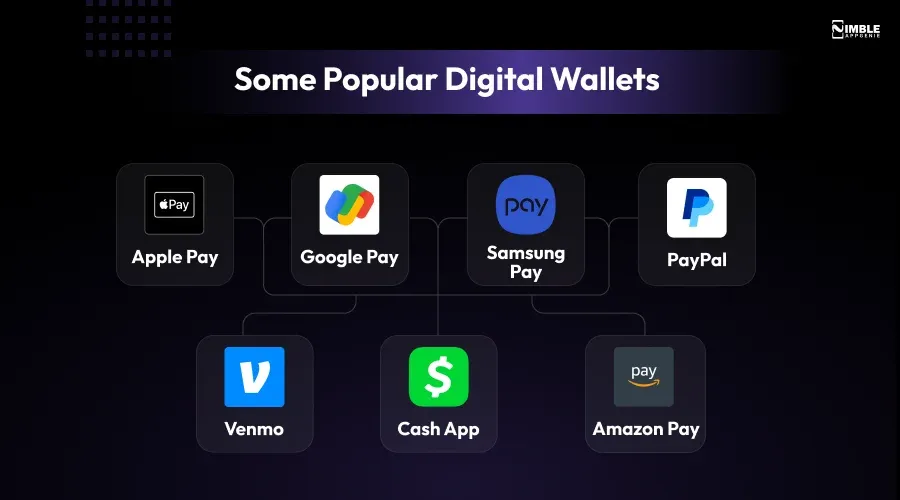
1] Apple Pay
Apple Pay is a mobile wallet designed for iPhone users.
It allows you to make secure payments in stores, apps, and on websites using your iPhone, iPad, Apple Watch, or Mac.
With its strong security features and ease of use, Apple Pay is a favorite among Apple device users.
2] Google Pay
Google Pay, available on both Android and iOS devices, lets you make payments quickly and securely.
It supports payments in stores and online purchases, and it also integrates with various loyalty programs and gift cards.
3] Samsung Pay
Samsung Pay is known for its versatility, supporting both NFC and MST (Magnetic Secure Transmission) technologies.
This means it can be used at almost any payment terminal, making it one of the most widely accepted digital wallets.
4] PayPal
PayPal is a well-established digital wallet that supports online payments, money transfers, and in-store purchases.
With its wide acceptance and robust security features, PayPal is a popular choice for both personal and business transactions.
5] Venmo
Venmo, owned by PayPal, is a mobile wallet focused on peer-to-peer payments.
It’s widely used for splitting bills, paying friends, and making small purchases. Venmo also offers a social feed where you can see your friends’ transactions.
6] Cash App
Cash App, developed by Square, allows you to send and receive money, pay bills, and invest in stocks and Bitcoin.
It’s known for its user-friendly interface and seamless integration with other financial services.
7] Amazon Pay
Amazon Pay enables customers to use their Amazon account to make purchases on other websites.
It offers a secure and convenient checkout experience by leveraging the payment information already stored in your Amazon account.
Pros and Cons
Digital wallets offer numerous benefits but also come with certain limitations.
Understanding these pros and cons can help you make an informed decision about integrating digital wallets into your financial routine.
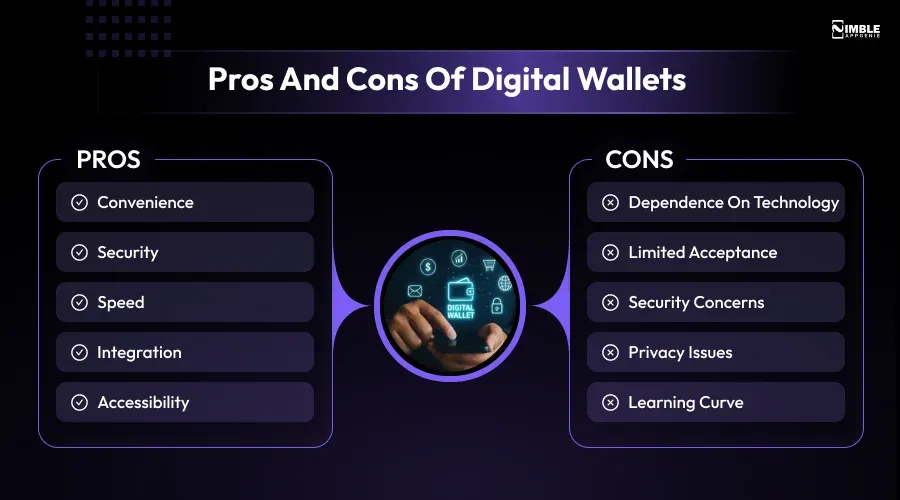
► Pros
- Convenience: Digital wallets allow you to make payments quickly and easily without carrying physical cards or cash. This convenience extends to online shopping, in-store purchases, and even peer-to-peer transfers.
- Security: With features like encryption, tokenization, and biometric authentication, digital wallets offer enhanced security for your financial information. They also reduce the risk of card theft and fraud.
- Speed: Transactions with digital wallets are typically faster than traditional payment methods. You can complete a purchase with a simple tap or scan, saving time at the checkout.
- Integration: Digital wallets often integrate with loyalty programs, gift cards, and rewards, making it easier to manage all your financial activities in one place.
- Accessibility: With a digital wallet, you can access your funds and make payments anytime and anywhere, as long as you have your device with you.
► Cons
- Dependence on Technology: Digital wallets require a smartphone or compatible device, and a reliable internet connection. If your device runs out of battery or you lose connectivity, you may face difficulties making payments.
- Limited Acceptance: Not all merchants accept digital wallets. While acceptance is growing, there are still places where you may need to rely on traditional payment methods.
- Security Concerns: Although digital wallets are generally secure, they are not immune to cyber threats. Users must ensure their devices are protected with strong passwords and updated software to mitigate risks.
- Privacy Issues: Using digital wallets involves sharing your payment data with third-party providers. This raises concerns about how your data is stored and used, and potential breaches of privacy.
- Learning Curve: Some users, particularly those not tech-savvy, may find it challenging to set up and use digital wallets. This can be a barrier to adoption for older generations or less tech-oriented individuals.
Do I Need a Digital Wallet? Significance in Day-To-Day Life
In today’s fast-paced digital world, having a digital wallet can significantly enhance your daily life. Here are some key benefits for customers and end users:
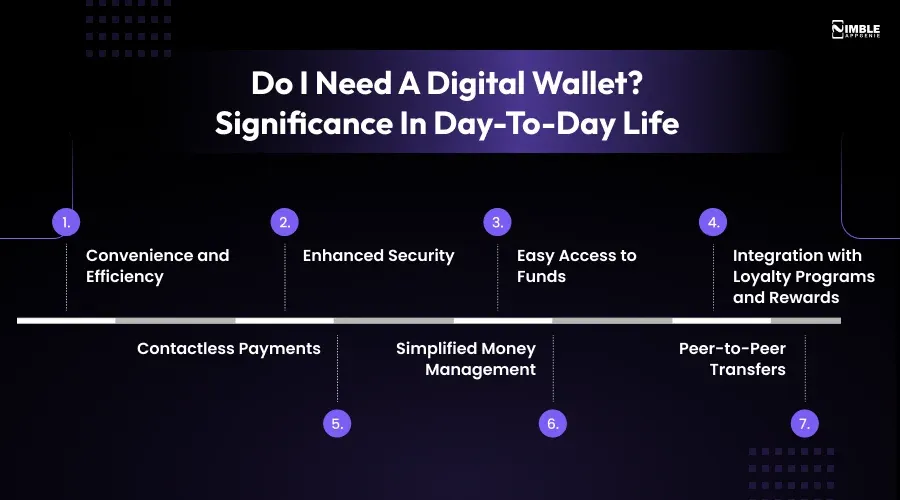
1. Convenience and Efficiency
Digital wallets streamline the payment process, allowing you to make quick transactions without the hassle of carrying physical cards or cash.
Whether you’re shopping online or in-store, a digital wallet simplifies the checkout process, saving you time and effort.
2. Enhanced Security
One of the standout digital wallet features is enhanced security.
Digital wallets use advanced encryption and tokenization to protect your payment information, reducing the risk of fraud and theft.
Biometric authentication, such as fingerprint or facial recognition, adds an extra layer of protection, ensuring that only you can authorize transactions.
3. Easy Access to Funds
With a digital wallet, your payment information is always at your fingertips.
This means you can access your funds and make payments anytime, anywhere, as long as you have your device with you.
This accessibility is particularly useful for managing finances on the go.
4. Integration with Loyalty Programs and Rewards
Businesses can also benefit from utilizing digital wallets to accept and manage multiple payment methods within one platform. The integration of features like storing credit card and bank details, as well as organizing gift cards, enhances the customer experience significantly.
5. Contactless Payments
Digital wallets support contactless payment methods, which have become increasingly important in the wake of the COVID-19 pandemic.
By minimizing physical contact during transactions, you reduce the risk of virus transmission and contribute to a safer shopping environment.
6. Simplified Money Management
Digital wallets provide a centralized platform for managing your finances. You can track your spending, monitor your account balances, and even set up budgeting tools.
This holistic view of your financial activity helps you make informed decisions and stay on top of your finances.
7. Peer-to-Peer Transfers
Sending and receiving money from friends and family has never been easier.
With digital wallets, you can quickly transfer funds to anyone, regardless of where they are. This feature is perfect for splitting bills, paying rent, or sending gifts.
Is Building a Digital Wallet a Good Business Venture?
Digital wallet development can open the door to real opportunities for fintech businesses to increase revenue and market share. Latest facts and figures to consider are below:
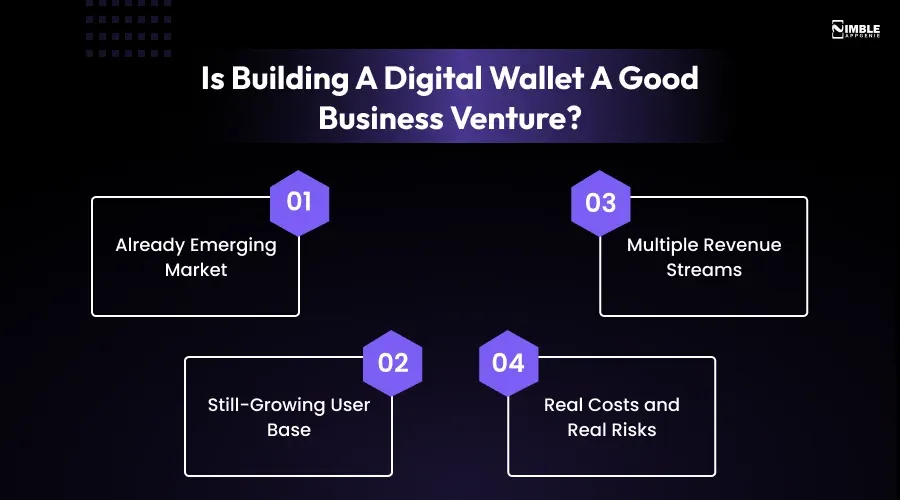
1. Already Emerging Market
Digital wallets account for 33% of point-of-sale value and 56% of global e-commerce value in 2025 – over $13.8 trillion in combined spending – according to Worldpay’s 2026 Global Payments Report.
The broader digital wallet market reached $225.1 billion in 2025 and is predicted to be valued at $788.5 billion by 2034, per IMARC Group. This is already the leading global payment method by value.
2. Still-Growing User Base
Global digital wallet users are likely to grow from 3.4 billion in 2022 to 5.2 billion by 2026, per Juniper Research. This means the addressable market is still expanding even as the format evolves.
3. Multiple Revenue Streams
Wallets can monetize through merchant partnerships, transaction fees, premium features, and more. See our full breakdown of eWallet monetization strategies for the complete list.
4. Real Costs and Real Risks
Development costs have become more manageable, but launching successfully still requires solving for market research, compliance, and UX from day one. For what it actually costs, see our cost to develop a digital wallet app guide. For the risks, see why digital wallet startups fail before assuming market size alone ensures success.
For the complete business case – market entry strategy, licensing, and monetization in depth – see our complete guide on how to start an eWallet business.

Nimble AppGenie, Your Fintech Development Partner
At Nimble AppGenie, we specialize in providing cutting-edge fintech solutions tailored to your business needs.
As a leading digital wallet development company, we have successfully delivered over 350 projects to 250 satisfied clients, achieving an impressive 98% client satisfaction rate.
Our expertise spans various fintech domains, including the development of digital wallets, banking apps, and payment solutions.
Some of our notable projects include SatPay and Cut Wallet. These projects showcase our commitment to innovation, security, and user-centric design.
Nimble AppGenie is recognized by prestigious platforms such as TopDevelopers, GoodFirms, Clutch.co, and DesignRush, underscoring our reputation for excellence in the fintech industry.
Ready to elevate your fintech offerings?
Hire dedicated developers from Nimble AppGenie today and transform your business with state-of-the-art fintech solutions.

Conclusion
Digital wallets are improving the way we handle money, offering convenience, efficiency, and security. Whether you are a consumer looking for a simpler way to pay or a business aiming to improve your payment systems, digital wallets offer a modern solution already used for major global e-commerce spending.
Investing in digital wallet technology can improve customer loyalty and open new revenue streams for businesses – as long as the decision is grounded in the market’s latest numbers rather than dated assumptions.
FAQs
A digital wallet is a virtual tool that securely stores your payment information, allowing you to make transactions without physical cards or cash.
A digital wallet works by encrypting your payment details and using technologies like NFC and QR codes for secure transactions.
Yes, digital wallets use advanced security measures such as encryption, tokenization, and biometric authentication to protect your information.
Digital wallets include mobile wallets, desktop wallets, cryptocurrency wallets, wearable wallets, web wallets, and bank-provided wallets.
Yes, developing a digital wallet offers numerous opportunities, including high demand, diverse revenue streams, and enhanced customer loyalty. Explore how to start a digital wallet startup for more insights.
Yes, PayPal is a digital wallet that allows you to make online payments, transfer money, and store multiple payment methods securely.
Yes, Google Pay is a digital wallet that enables you to make payments, store payment information, and manage loyalty programs on your smartphone.
To create a digital wallet, download a digital wallet app, such as Apple Pay or Google Pay, from your device’s app store. Follow the app’s instructions to add your payment information and verify your identity.
Using a digital wallet offers convenience, enhanced security, quick transactions, integration with loyalty programs, and the ability to make payments, simplifying your financial management.

Niketan Sharma, CTO, Nimble AppGenie, is a tech enthusiast with more than a decade of experience in delivering high-value solutions that allow a brand to penetrate the market easily. With a strong hold on mobile app development, he is actively working to help businesses identify the potential of digital transformation by sharing insightful statistics, guides & blogs.
Table of Contents




No Comments
Comments are closed.