 Free Consultation
 App Services
 UI/UX Design
 App Maintenance
 By Stage
 MVP Development
 Company
 About Us
 Our Work Process
 Portfolio
 Case Studies
 Blog / Insights
 Careers
 Contact Us
 Awards
GlobalPayment Gateway

StripeAvailable
Stripe powers online payments with support for 135+ currencies and built-in fraud protection. We integrate Stripe for fast checkout, subscription billing, and global card processing.

 PCI-DSS Compliant
 GDPR Ready
 ISO 27001
 NDA Protected
 AI Services
 AI App Development
 Generative AI Development
 AI Chatbot Development
 AI Integration Services
 AI Consulting Services
 AI For Fintech
 Financial AI Assistant Solution
 Insurance AI Agent Solution
 Insurance Automation Software Solution
 Tech Stack
 OpenAI / GPT-4
 Claude / Anthropic
 Gemini / Google AI
 Llama / Open source
 LangChain / LlamaIndex
 Pinecone / Pgvector
 AWS / Azure AIExplore AI Services


 Fintech Solution
 Core Fintech
 App Development
 Neobank Solutions
 eWallet Solutions
 Lending Software
 Banking Solutions
 BNPL Solution
 BNPL Solutions
 Insurance App
 Wealth Management
 Crypto & DeFi
 Blockchain Development
  Payroll Software
 DeFi Solutions
 Crypto Wallet
 Crypto On/Off Ramp
 Crypto Exchange
 Trading Platform
 Payments
 API Integrations
 Compliance
 Regulations & Compliance
 Fraud Detection
 Lending Ecosystem
 P2P Lending Platform
 Mortgage Software
 Engagement
 Fintech Outsourcing

 Mobile Solutions
  Mobile App Dev
 iOS App Development
 Android App Development
 React Native
 Flutter Development
 Web Solutions Web Development
 Node.js Development
 React.js Development
 Angular Development
  Industry Solutions
 Healthcare App Dev
 Education App Dev
 Travel App Dev
 Real Estate App Dev
 Logistics Software
 Social Media App

 Mobile Developers
 Hire Developers
 Hire Mobile Developers
 Hire iPhone Developers Hire Android Developers
 Hire React Native Devs
 Web Developers Hire Web Developers
 Hire Node.js Developers
 Hire Angular Developers
 Hire PHP Developers
 Hire Laravel Developers
 How It Works
 Pre-Vetted Developers
 Ready In 48 Hours
 NDA From Day One
 Replace Guarantee
 Recognition


 Offices


Our company is trusted by the leading fintech leaders worldwide. These people have trusted us with their resources, and we proved them right. Here is the list of top leaders:
Every fintech team faces this decision early: build integrations in-house, route everything through a BaaS aggregator, or handle financial API integration directly with best-in-class providers. Each path trades off differently on speed, cost, and long-term control. Here's how they compare.
| Build In-House | BaaS Aggregator | Direct API Integration (Our Approach) | |
|---|---|---|---|
| Time to launch | 4–8 months | Lowest - bundled pricing | Moderate - scoped per API |
| Ongoing control | Full control, full maintenance burden | Limited - locked into aggregator's roadmap | Full control, we own maintenance |
| Compliance ownership | Entirely yours | Partially abstracted by provider | Mapped to your specific regulatory markets |
| Best for | Large, well-funded engineering orgs | Early-stage MVPs testing product-market fit | Scaling products needing reliability and control without a full in-house team |
Most fintech products outgrow BaaS aggregators once they need multi-region compliance or custom transaction logic. Direct API integration gets you the speed of an aggregator with the control of building in-house.
Our team integrates third-party API for fintech, and we facilitate seamless, secure money transfers and transaction handling. Here are the categories of fintech APIs we integrate:

Choosing between Stripe and Adyen? Stripe is faster to implement for US/EU-first products; Adyen suits platforms needing unified acquiring across multiple regions from day one. We also handle credit card API integration beyond your core processor - Visa Direct and Mastercard Send for real-time payouts and disbursements.

Sumsub and Trulioo both cover global identity checks. Sumsub tends to fit faster-growing startups needing flexible workflows, while Trulioo suits teams prioritizing deep watchlist and sanctions coverage.

Coinbase's API suits products that require custodial wallet infrastructure out of the box; for non-custodial control, a direct blockchain node integration offers greater flexibility at the cost of additional engineering work.

Marqeta and Galileo both support virtual and physical card issuance. Marqeta's real-time processing suits high-transaction-volume products, while Galileo's bundled compliance tooling suits teams without in-house compliance staff.
Our team integrates third-party API for fintech, and we facilitate seamless, secure money transfers and transaction handling. Here are the categories of fintech APIs we integrate:
Stripe powers online payments with support for 135+ currencies and built-in fraud protection. We integrate Stripe for fast checkout, subscription billing, and global card processing.

PayPal lets users pay via linked bank accounts, cards, or wallet balance across 200+ markets. We integrate PayPal Checkout and Payouts for apps needing trusted, familiar global payments.

Visa Direct enables real-time push payments to cards for payouts and remittances. We use it to power instant, secure fund disbursements across 190+ countries.

Mastercard Send delivers near real-time payments to cards worldwide for payouts and P2P transfers. We integrate it for fast, secure cross-border disbursement flows.

Flutterwave connects businesses to payment options across Africa, including cards, mobile money, and bank transfers. We integrate it for products scaling across African markets.

Paystack processes card, bank, and mobile money payments across Nigeria, Ghana, and South Africa. We integrate it for fintech products targeting West African users.

M-Pesa is East Africa's leading mobile money platform, used for transfers, bill pay, and merchant payments. We integrate M-Pesa for products serving Kenya, Tanzania, and beyond.

Adyen unifies payments across cards, wallets, and local methods on a single platform for global merchants. We integrate Adyen for products needing multi-region acquiring.

Braintree, a PayPal company, processes cards, PayPal, and Venmo payments with strong fraud tools. We integrate it for apps needing flexible, developer-friendly checkout.

Razorpay processes payments across cards, UPI, netbanking, and wallets for the Indian market. We integrate it for fintech products targeting Indian consumers and merchants.

Square combines online and in-person payment processing with built-in point-of-sale tools. We integrate Square for products needing unified online and offline commerce.

Worldpay processes payments across 146 countries and 126 currencies for enterprise merchants. We integrate it for large-scale platforms needing global payment coverage.

Connects businesses to mobile money and banking rails across 40+ African markets through a single API, eliminating the need to manage multiple local telco relationships.

Provides open banking connectivity to UAE and Saudi bank accounts for payments and data access, suitable for licensed and compliant MENA fintech products.

Interbank card network for CEMAC-region banks, useful for products issuing or accepting cards across Central Africa.

Enables fast, low-fee bank-to-bank payments directly from South African bank accounts.

Provides mobile money services across 14 African markets, expanding coverage beyond M-Pesa's core East African footprint.

Sumsub verifies user identity through document checks, biometrics, and liveness detection in one flow. We integrate Sumsub for fast, flexible onboarding with fraud prevention built in.

Trulioo verifies identities against data sources in over 195 countries for global KYC compliance. We integrate it for platforms needing deep watchlist and sanctions coverage.

Persona offers configurable identity verification workflows for KYC, KYB, and fraud checks. We integrate it for products needing flexible, no-code verification logic.

Onfido verifies government IDs and facial biometrics to confirm real users in seconds. We integrate Onfido for products needing fast, secure identity checks at scale.

Jumio combines ID verification, biometric authentication, and AML screening in one platform. We integrate Jumio for regulated fintech products needing end-to-end compliance.

Coinbase Commerce lets businesses accept cryptocurrency payments directly, without a middleman. We integrate it for products offering custodial crypto payment options.

BitPay processes cryptocurrency payments and converts them to local currency for merchants. We integrate BitPay for products needing simple, compliant crypto checkout.

Circle issues USDC, a fully-reserved stablecoin, and provides APIs for digital dollar payments. We integrate Circle for products needing fast, low-cost stablecoin transfers.

Ramp Network lets users buy and sell crypto directly within an app using cards or bank transfers. We integrate Ramp for products needing built-in fiat-to-crypto on/off ramps.

Marqeta issues virtual and physical cards with real-time transaction processing and controls. We integrate Marqeta for products needing high-volume, programmable card issuing.

Galileo provides card issuing with built-in compliance tooling and account management. We integrate Galileo for teams needing card programs without in-house compliance staff.
Identity verification is usually the first integration point in any fintech build, and the one most likely to stall a launch if it's rushed. We integrate KYC and KYB providers - document verification, liveness checks, sanctions/PEP screening, and business entity verification - directly into your onboarding flow, with sandbox testing against real provider environments before anything touches production.


 Provider evaluation and selection (matched to your target geography's compliance requirements)Webhook handling for asynchronous verification resultsSandbox integration and test-case validation against provider documentationFallback and manual-review flows for edge cases and failed auto-verificationAudit logging built for regulatory review
Digital lending platforms depend on a chain of APIs working in sync - bank statement analysis, credit bureau, e-signature, disbursement rails, and income verification all need to fire in the right order without adding friction to the borrower's experience. We integrate this complete lending API stack, including:


Every integration is built with compliance logging and audit trails from day one, since lending is one of the most heavily scrutinized categories in fintech.
Not sure which providers fit your stack? Compare the top fintech APIs for startups to see how Stripe, Plaid, Onfido, and others stack up by use case and pricing.
As a top fintech app development company, we discover your app, identify the prospective errors in your system, understand your requirements, and then proceed with the complete API integration procedure. Here’s a step-wise process that we opt for:

We understand your project requirements after viewing and analyzing your requirements. Next, we discover the different types of APIs your app or platform requires. We select the right API stack for your platform and discuss it with you.

Our team first sets up a sandbox for your app or platform, which helps to have an isolated and simulated environment to build, test, and debug the code safely without affecting the live systems or real data. Thus, we’ll not impact the live app interface and its functionality.
We validate every sandbox response against production schemas before go-live. Sandbox-to-production drift is the most common cause of post-launch payment failures, and it's almost always preventable with this one check.

In this step, we perform a thorough test for every API that we include in your app. It helps us to minimize and eliminate bugs while building an API for your platform. With thorough testing, we ensure that your user experience has impactful functionality.

Here, we establish an automated, real-time communication between two systems. Here, three primary configurations were established, including event triggers, payload structures, and reliable delivery & security protocols. Then we build a complete integration for your app.
We build idempotency handling and retry logic into every webhook integration, so duplicate events never trigger a double charge or a double-posted transaction.

After building, we deploy the API in the live app and platform. We deploy the API to production with monitoring it actively. Here, we confirm that all live transactions do process correctly before finally handling it to your team.

This is the last stage, where we hand over the app after API integration in mobile app, and full integration documentation was provided. Additionally, after the handover, your team can maintain and extend the integration independently.
Connect payments, banking, KYC, compliance, and more with secure, scalable integrations tailored to your business.
Fintech API integration costs depend on how many APIs you're connecting, how regulated your target markets are, and how much custom logic sits between your product and each provider. Here's what our projects typically look like; your exact quote depends on the specifics of your stack.
| Tier | What's Included | Typical Timeline | Starting At |
|---|---|---|---|
| Single API Integration | One payment gateway or KYC provider, sandbox-to-production setup, basic error handling, and logging | 3–5 weeks | $8,000 |
| Multi-API Stack | 5–10 integrated APIs (payments, KYC, and AML), unified adapter layer, webhook idempotency handling, and staging environment | 6–12 weeks | $18,000–$35,000 |
| Enterprise / Regulated Stack | Multi-region compliance (FCA, RBI, CBUAE), core banking/BaaS integration, dedicated architecture review, and ongoing SLA support | 3–5 months | Custom Quote |

Each additional provider adds integration, testing, and reconciliation work, though a shared adapter layer makes each additional API cheaper than the first.

Multi-region compliance (FCA, RBI, CBUAE simultaneously) is the single biggest cost driver at the enterprise tier.

Legacy systems, custom routing/fraud rules, and cross-provider reconciliation all add engineering time beyond a standard integration.
Most fintech products land in the Multi-API Stack tier. If you are not sure where yours falls, a scoped quote takes 24–36 hours and gives you an exact number instead of a range.

If you are developing a fintech app, whether it's an eWallet app, Neobank app, crypto wallet app, remittance app, or payment platform, we integrate the diversified types of APIs based on your requirements. Here’s what we do as a top fintech API integration services:
For eWallet app development, you'll typically need Stripe or Braintree for card and wallet payments (including Apple Pay and Google Pay support), Flutterwave or M-Pesa for regional mobile money, and Sumsub for identity verification.
For Neobank app development, we integrate Marqeta or Galileo for card issuing, Lean for open banking connectivity, and Sumsub or Trulioo for KYC.
For crypto wallet development, we integrate Coinbase Commerce or BitPay for payment acceptance, Circle for USDC stablecoin transfers, Ramp Network for fiat on/off-ramps, and Sumsub for KYC.
For payment gateway integrations, we typically recommend Stripe or Adyen as the core processor, with Visa Direct or Mastercard Send for real-time payouts.
You can build a remittance app on Flutterwave, OnAfriq, M-Pesa, Airtel Money, Paystack, and Smile ID.
For African fintech products, we integrate Flutterwave, Paystack, M-Pesa, and OnAfriq, along with GIMAC, Airtel Money, and Ozow EFT.
Every API integration we deliver is built to the compliance standards that your product operates under. Here, security is built into the integration architecture. As a fintech API integration service, we build security into the integration architecture, and we do not add it afterwards. In every fintech app, we offer compliant-ready API integrations. Here are the standards we cover:

PCI-DSS Level 1, 3D Secure 2 (3DS2), Card Tokenisation
KYC, AML, VASP Compliance
FCA (UK), CBUAE (UAE), RBI (India), BEAC, BCEAO, SAMA (Saudi Arabia)
If you are still confused about connecting with us for fintech API integration, here are our case studies to go through:
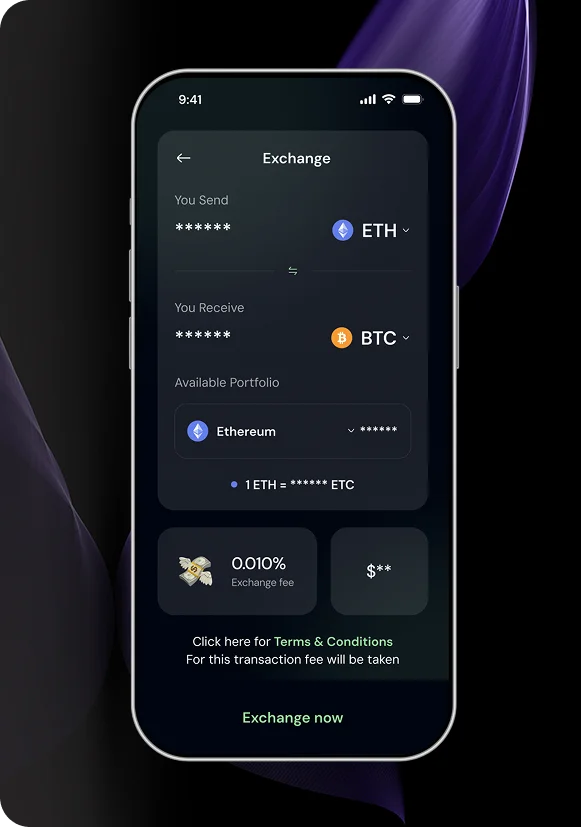
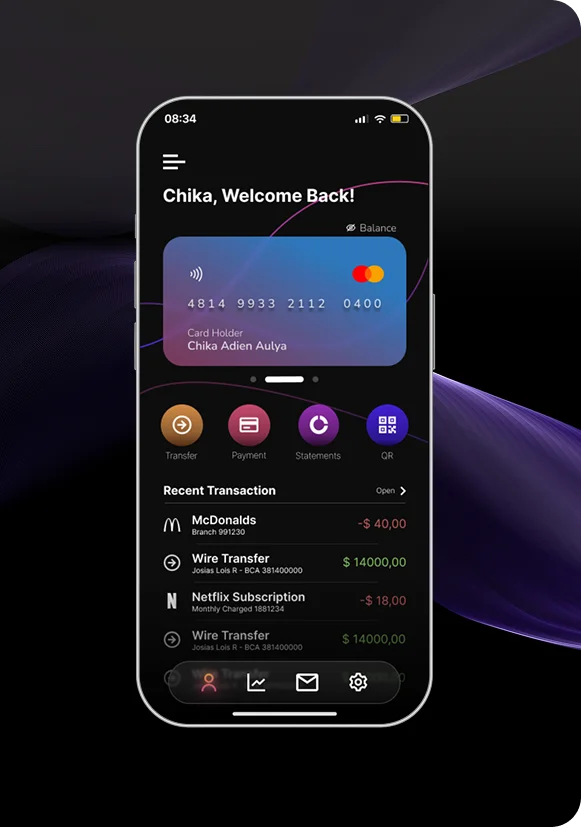
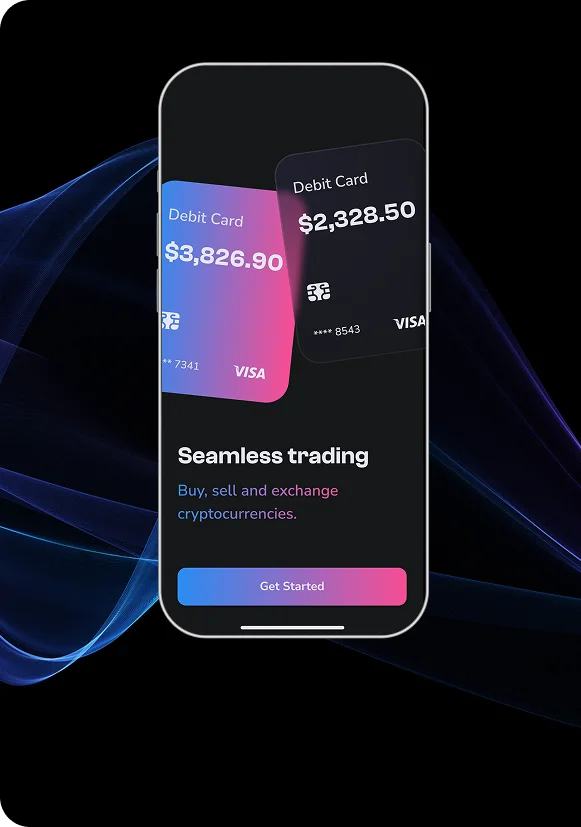
An app where users can find multiple draft platforms to play and engage with the top players.
There are many reasons to choose Nimble AppGenie for API integration, such as being already integrated in production, offering compliance-ready solutions, with compliance and security integration, and with post-integration support. Here’s why you need to choose Nimble AppGenie:
Most integration edge cases are pre-solved
Few competitors specialize here
We handle 5–10 simultaneous integrations without a fragmented handoff
SDK updates and version maintenance included, not a separate contract
See our process section

Get a scoped integration plan - API selection, timeline, and cost estimate - back in 24–36 hours.

Fintech API integration services act as a digital bridge that enables different financial software systems and applications to communicate and share data successfully with other apps. These services connect your product to external providers, payment processors, KYC vendors, banking data, and more through a secure, standardized connection.
We start with a discovery call to understand your product and requirements, then scope the right API stack for your use case. From there, our team handles sandbox setup, testing, and production deployment; see our full 6-step process above for details.
We integrate Sumsub, Trulioo, Veriff, Onfido, Jumio, Persona, and Smile ID, among others. We help you choose the right KYC provider based on your target markets and compliance requirements, then handle the full integration.
Yes. We integrate blockchain-based payment systems for fast, global transactions, working with established crypto exchanges (Coinbase, Binance, Quidax) as well as enterprise banking APIs where fiat on/off-ramps are needed.
Yes. Using programmable card issuance APIs (Visa, Mastercard), you can create, manage, and distribute physical or virtual payment cards directly from your own systems; no need to rely on a third-party card issuer's interface.
Yes. We don't stop at go-live; we provide ongoing maintenance as provider APIs and SDKs evolve, so your integrations keep working as the underlying services change.
Timeline depends on scope: a single API integration typically takes 3–5 weeks, a multi-API stack (5–10 APIs) runs 6–12 weeks, and enterprise integrations spanning multiple regulatory regions take 3–5 months. See our pricing breakdown above for what's included at each tier.
Cost depends on how many APIs you're integrating and how regulated your target markets are. A single API integration (one payment gateway, for example) typically starts around $8,000. Most fintech products need a multi-API stack: payments plus KYC plus AML, which runs $18,000–$35,000. Enterprise integrations spanning multiple regulatory regions are scoped individually.
It depends on your scale and timeline. Unified API providers (like Plaid or TrueLayer) get you to market faster and reduce the number of vendor relationships you manage, which works well for most startups and mid-stage products. Direct integrations with individual banks or processors give you more control over pricing and data, but require more engineering time and ongoing maintenance per provider. We help you evaluate this trade-off during discovery based on your growth plans and compliance requirements.
Yes. Open banking integrations connect your product to bank account data and payment initiation under frameworks like PSD2 in the EU and the FCA's Open Banking standard in the UK. We handle the provider integration (TrueLayer, Plaid, or direct bank connections depending on your target market) along with the consent management flow required for compliance.
Yes. Processor migrations are typically run in parallel; the new integration goes live in shadow mode alongside your existing processor, transactions are validated against both systems, and traffic cuts over once parity is confirmed. This avoids a hard cutover that risks failed transactions during the switch.
A fintech API (application programming interface) is a set of rules that lets your product connect to and exchange data with an external financial system - a bank, payment processor, or KYC provider - without you having to build that infrastructure yourself. In practice, this covers everything from checking an account balance to verifying a user's identity to processing a card payment. If you're asking what an API in banking specifically does: your app sends a request, like "verify this account," the bank or provider's system processes it, and sends back a structured response your product can act on.
We integrate the full lending stack: credit bureau and alternative credit data APIs, automated underwriting engines, e-signature providers, bank statement and open banking verification, and disbursement and repayment processing. This includes the routing logic needed for real-time loan placement decisions when a product compares offers or routes applications across multiple lenders.
Nimble AppGenie is committed to delivering results that satisfy our client’s needs and their business objectives. Here are testimonials from our clients about their experiences of working with us.

Exceptional service tailored to our unique business needs. The team’s expertise brought my idea to life, making to process seamless. Their dedication to quality is commendable. Highly recommended for their professionalism and results.


(Managing Director of Xparking, USA)
“Nimble AppGenie delivered a standout website that has attracted significant traffic. Their collaborative and organized approach made the development process smooth. Their expertise shines in the end product, making them the go-to web development company in London.

(CEO of StepbyStepFitness, UK)
We hired Nimble AppGenie for web development services related to our edtech platform, Glu Learning. They integrated well with our team to solve all the problems and deliver remarkable solutions. Their team have great command of both client side and server side technology. We highly appreciate and recommend their services.

(CEO of GLU Learning, United Arab Emirates)
"Our journey with Nimble AppGenie is defined by their consistent availability, reliability, and efficiency. As we look towards expansion, I'm confident our partnership will grow even stronger. And we are eagerly anticipating the next chapter with them.

(CEO of DafriBank, South Africa)
For the last year, we have been working closely with the Nimble team to develop our app. Nimble has provided consistent customer care, good communication, solutions to issues, and an end product that we're all really happy with.

(Founder and President of skiMate)


10685-B Hazelhurst Dr. #24641 Houston, TX 77043, USA


27 Old Gloucester Street, London, WC1N 3AX, United Kingdom

401 Bay Street, Toronto, ON M5H 2Y4, Canada

Central One District C1 Building, Level 1, DWTC District, Dubai, UAE


CTO, Nimble AppGenie

