
 Free Consultation
 PCI-DSS Compliant
 GDPR Ready
 ISO 27001
 NDA Protected
 AI Services
 AI App Development
 Generative AI Development
 AI Chatbot Development
 AI Integration Services
 AI Consulting Services
 AI For Fintech
 Financial AI Assistant Solution
 Insurance AI Agent Solution
 Insurance Automation Software Solution
 Tech Stack
 OpenAI / GPT-4
 Claude / Anthropic
 Gemini / Google AI
 Llama / Open source
 LangChain / LlamaIndex
 Pinecone / Pgvector
 AWS / Azure AI


 Fintech Solution
 Core Fintech
 App Development
 Neobank Solutions
 eWallet Solutions
 Lending Software
 Banking Solutions
 BNPL Solution
 BNPL Solutions
 Insurance App
 Wealth Management
 Crypto & DeFi
 Blockchain Development
  Payroll Software
 DeFi Solutions
 Crypto Wallet
 Crypto On/Off Ramp
 Crypto Exchange
 Trading Platform
 Payments
 API Integrations
 Compliance
 Regulations & Compliance
 Fraud Detection
 Lending Ecosystem
 P2P Lending Platform
 Mortgage Software
 Engagement
 Fintech Outsourcing

 Mobile Solutions
  Mobile App Dev
 iOS App Development
 Android App Development
 React Native
 Flutter Development
 Web Solutions
 Node.js Development
 React.js Development
 Angular Development
 App Services
 UI/UX Design
 App Maintenance
 By Stage
 MVP Development
 Industry Solutions
 Healthcare App Dev
 Education App Dev
 Travel App Dev
 Real Estate App Dev
 Logistics Software
 Social Media App

 Mobile Developers
 Hire Developers
 Hire Mobile Developers
 Hire iPhone Developers
 Hire React Native Devs
 Web Developers
 Hire Node.js Developers
 Hire Angular Developers
 Hire PHP Developers
 Hire Laravel Developers
 How It Works
 Pre-Vetted Developers
 Ready In 48 Hours
 NDA From Day One
 Replace Guarantee
 Company
 About Us
 Our Work Process
 Portfolio
 Case Studies
 Blog / Insights
 Careers
 Contact Us
 Awards
 Recognition


 Offices


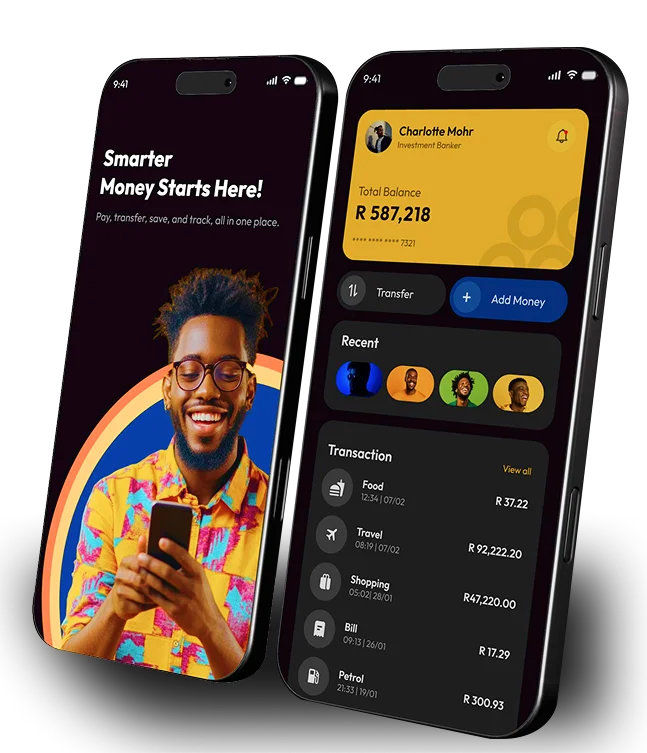
Trusted By Global Brands and Enterprises
Our proven expertise helps enterprises worldwide build reliable, scalable digital solutions that enhance performance, streamline operations, and drive sustainable business growth.



Why Africa Needs a Different Fintech Stack
Africa’s fintech ecosystem operates under different infrastructure, payment, and financial-access realities. Building for these markets requires a stack designed around local rails, user behavior, and regulatory complexity, not simply adapted from Western models.
More than 60% of sub-Saharan Africa's adult population remains unbanked. Yet mobile penetration is surpassing 80% in key markets. That gap is what drives African fintech growth and makes it unlike that in North America or Europe.
Payments here run through M-Pesa, MTN MoMo, Flutterwave, and Paystack. Credit scoring uses alternative data, rather than FICO models. Banking happens via USSD codes on feature phones, not apps on smartphones. Infrastructure is Android-first, low-bandwidth, and often offline. Businesses entering or operating in African financial markets need fintech software developed for these realities, not adapted from Western templates.

Building a Fintech Product for the African Market?
Talk to our team about your compliance requirements, local payment integrations, and architecture needs.
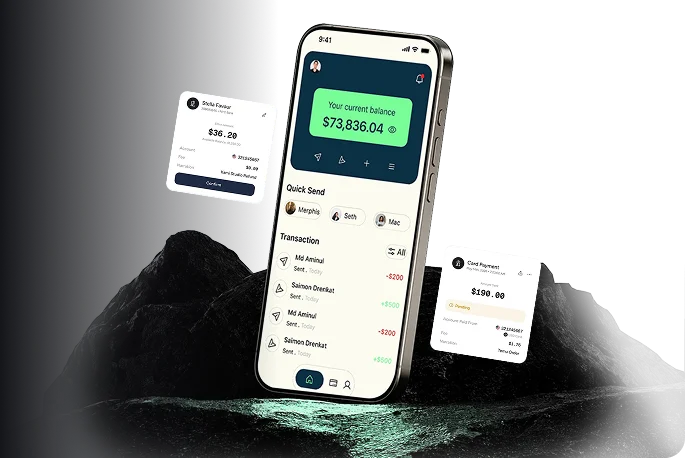
Fintech Development Across African Markets
Each country in Africa operates under a different regulatory framework and fintech ecosystem. Here's what you need to know about the markets we serve.

 Fintech Software Development in Nigeria
The Central Bank of Nigeria (CBN) governs payment system licensing, and all platforms should align with the Nigeria Data Protection Regulation (NDPR). Key integrations include NIBSS Instant Pay (NIP) for interbank transfers, USSD-based account access for unbanked populations, and POS agent networks. We build CBN-compliant digital banking, lending, and mobile money platforms for the Lagos market and beyond.

 Fintech Software Development in Kenya
Kenya's fintech ecosystem is created around M-Pesa. The Safaricom M-Pesa Daraja API is the gateway for most mobile money transactions, and any serious fintech product operating in Kenya should integrate it. The Central Bank of Kenya (CBK) regulates digital credit providers and payment services under its Digital Credit Provider (DCP) framework. We build M-Pesa-integrated platforms, lending systems, and mobile banking solutions that meet CBK requirements.

 Fintech Software Development in South Africa
South Africa leads African markets in open banking readiness and enterprise fintech adoption. The South African Reserve Bank (SARB) governs financial services, while the Financial Sector Conduct Authority (FSCA) oversees market conduct. Data protection falls under POPIA (Protection of Personal Information Act). We develop SARB-aligned digital banking, payment platforms, and investment for Cape Town and Johannesburg-based businesses.

 Fintech Software Development in Ghana
SME lending, cross-border remittances, and mobile wallet adoption drive Ghana's fintech growth. Vodafone Cash and MTN MoMo dominate mobile money. The Bank of Ghana (BoG) regulates payment services, while the Data Protection Act governs data handling. The Ghana Interbank Payment and Settlement Systems (GHIPSS) offers the interoperability infrastructure. We develop BoG-compliant payment, lending, and agent banking platforms for the Accra market.

 Fintech Software Development in Egypt
Egypt's fintech sector is expanding fast, fueled by government-backed digital finance initiatives and a large unbanked population. The Central Bank of Egypt (CBE) governs fintech licensing and digital payment regulations. InstaPay, launched under CBE, is the country's primary real-time payment infrastructure. We build CBE-compliant mobile payment, digital banking, and financial inclusion platforms for the Cairo market.
Country-Specific Compliance Requirements
Regulatory alignment is non-negotiable in African fintech. Below is a quick reference for the five markets we serve.
Nigeria
NigeriaKenya
KenyaSouth Africa
South AfricaGhana
GhanaEgypt
EgyptFintech Solutions Built for African Market Infrastructure
We design and build advanced fintech platforms tailored for African markets, helping businesses navigate fragmented regulatory landscapes while enabling digital transformation, seamless transactions, and scalable financial services for startups, enterprises, and banks.

Digital Banking for Africa's Mobile-First Users
We build digital banking platforms that go beyond app-based access. In markets where smartphone penetration is limited, USSD-based banking offers customers account access from any mobile device. We also integrate WhatsApp banking, increasingly common in Nigeria and South Africa, alongside standard mobile apps. Features include KYC verification, customer onboarding, local regulatory reporting, and multi-channel transaction access. If you are building a digital banking product or a neobank, our Neobank App Development services cover the comprehensive stack from architecture to compliance.

Mobile Money Platforms
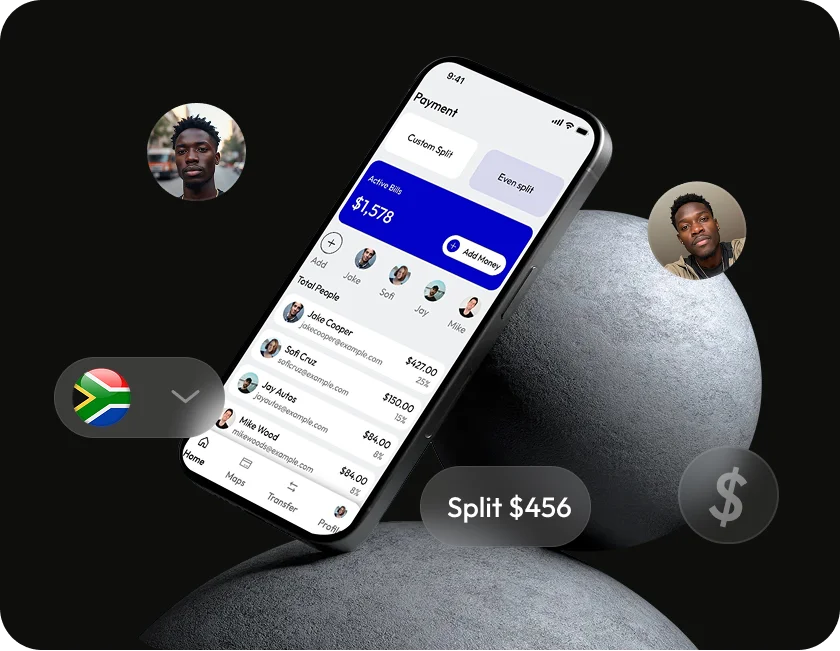
We build mobile wallet platforms that support P2P transfers, QR payments, local payment gateway connectivity, and bill payments. For M-Pesa ecosystems, particularly in Kenya, we integrate the Daraja API directly. For Nigeria, we build Flutterwave and Paystack integrations alongside NIBSS connectivity. Multi-wallet structures support different currencies and mobile money providers within a single platform. Explore our eWallet App Development services for detailed technical capabilities.

Alternative Data Underwriting for African Microfinance
Traditional credit bureau data covers a fraction of Africa's population. We build lending platforms that use alternative credit scoring - mobile money transaction history, airtime usage, and utility payment behavior to assess creditworthiness. This enables digital lenders and microfinance institutions to serve unbanked customers who don't qualify under traditional models. Our lending platforms cover automated approvals, loan origination, regulatory reporting, and repayment tracking. Read more about fintech business models and lending structures in our Complete Guide to Fintech Business Models.

African Diaspora Remittance Corridors
Africa has some of the highest remittance inflow corridors in the world - Nigeria, Kenya, Ghana, and Egypt all rank among the top recipients globally. We build remittance platforms aiming at the African diaspora in the US, UK, and EU, supporting transparent FX rates, real-time transfers, and compliance checks across sending and receiving jurisdictions. Integration with local mobile money systems ensures last-mile delivery without needing a banking account.

Agent Banking Systems for Rural African Financial Inclusion
Agent banking drives financial inclusion in rural Africa. We build agent management systems that manage agent onboarding, commission management, POS devices, and transparent reconciliation. These platforms support branchless banking operations across Kenya's mobile money agent network, Nigeria's CBN-licensed agent banking framework, and similar models in South Africa and Ghana.

Mobile-First Insurance Access for African Markets
We build insurtech platforms for the African market, covering mobile-first claims submission, digital policy distribution, and underwriting automation. Given low insurance penetration across the continent, our platforms are designed for mass-market accessibility - simple interfaces, low-data environments, and integration with mobile money for premium collection.

Mobile Money Risk & Anomaly Monitoring
AI-driven fraud detection is important for high-volume mobile money environments. We build real-time transaction monitoring systems that analyze behavioral patterns, trigger automated responses, and flag suspicious activity. Our systems comply with AML and KYC requirements set by CBK, CBN, CBE, SARB, and BoG, including sanctions screening and suspicious activity reporting.
Need a Fintech Platform That Meets African Compliance Standards?
From CBN licensing to M-Pesa integration to POPIA compliance - we've done it. Let's talk about your project.
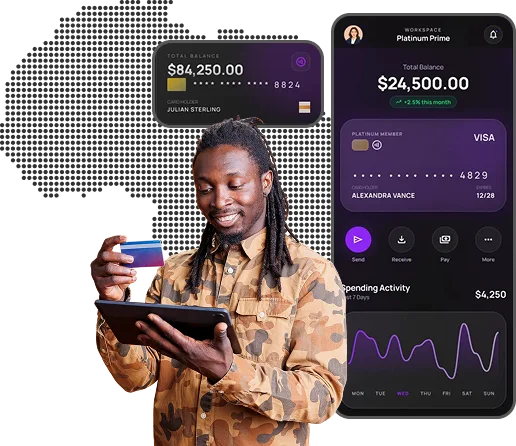
African Fintech Platforms We Can Replicate
Africa has produced some of the world's most innovative fintech companies. If you are looking to create something inspired by proven models in the market, below is what we can build:
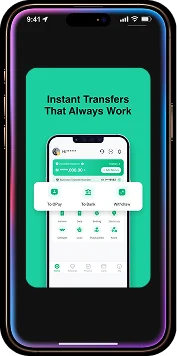
OPay-Inspired Digital Payment Platform
OPay-style platforms combine merchant payments, mobile money, financial services, and ride-hailing payments. We build these multi-service payment ecosystems with Flutterwave/Paystack integrations, CBN payment service licensing alignment, and agent network support.
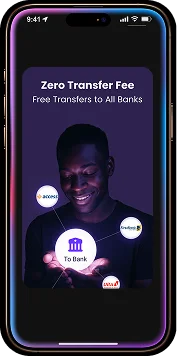
PalmPay-Style Mobile Money Platform
PalmPay serves underbanked users with bill payments, airtime top-ups, and peer-to-peer transfers. We build a similar mobile money ecosystem with NIBSS integration, USSD access for feature phone users, and tiered KYC for low-income users.

Kuda-Inspired Digital-Only Bank
Kuda's model, a digital-only bank with mobile loans, smart savings, and zero-fee banking, is the template for West Africa's neobank generation. We build Kuda-like platforms with CBN microfinance bank licensing alignment, AI-powered credit decisions, and automated savings features.

Okash-Inspired Micro-lending App
Okash popularized instant mobile lending in Kenya and Nigeria. We build similar micro-lending platforms with mobile wallet disbursement, automated loan decisions, alternative credit scoring, and regulatory compliance for CBK and CBN digital lending frameworks.
Africa-Optimized Technology Stack
Our fintech technology choices are driven by what works in African infrastructure, not what looks good in a product deck. Here's what we use and why.
 Mobile Money and Local Payment APIs
Mobile Money and Local Payment APIs M-Pesa Daraja API (Safaricom, Kenya) MTN MoMo API (Ghana, Nigeria, Uganda) Flutterwave and Paystack (Pan-African payment processing) NIBSS Instant Pay (Nigeria interbank transfers) GHIPSS interoperability system (Ghana) Africa's Talking API (SMS banking and USSD gateways) InstaPay API (Egypt real-time payments)
 USSD and Offline Banking Infrastructure
USSD and Offline Banking Infrastructure Telco USSD gateways for feature phone banking access SMS gateways for transaction alerts and authentication Offline transaction queuing for low-connectivity environments SIM toolkit integrations Session management for USSD banking flows Development Stack
Development Stack Frontend: React.js, Next.js, Flutter, React Native Backend: Node.js, Java (Spring Boot), Python (Django/FastAPI), Go Mobile: Swift (iOS), Kotlin (Android), Flutter, React Native Cloud: AWS, Azure, GCP, Docker, Kubernetes Databases: PostgreSQL, MongoDB, Redis, Firebase Security: OAuth 2.0, JWT, SSL/TLS, MFA, PCI-DSS, RBAC AI and Analytics: TensorFlow, Apache Kafka, real-time risk engines, Power BI Blockchain: Ethereum, Hyperledger, Web3.js, smart contractsCompliance and Security Across African Fintech Jurisdictions
African fintech operates across various regulatory jurisdictions simultaneously. A single platform serving Kenya, Nigeria, and Ghana should align with CBK, CBN, and BoG requirements, each with different licensing thresholds. AML reporting rules and data protection standards. We engineer compliance from day one, not as an afterthought.
Regulatory Alignment Across African Jurisdictions
We align platform architecture with the specific requirements of each target market. For Kenya: CBK payment service licensing, Digital Credit Provider registration, M-Pesa API compliance. For Nigeria: CBN payment service licensing, NDPR data governance, NIBSS integration protocols. For Ghana: BoG payment system guidelines, Data Protection Act. For South Africa: SARB regulations, FSCA conduct requirements, POPIA data protection. For Egypt: CBE licensing, digital payment regulations.
Data Protection and Privacy Compliance
NDPR (Nigeria), Kenya's Data Protection Act, POPIA (South Africa), Ghana's Data Protection Act, and CBE data regulations each impose different requirements on data residency, breach notification, and consent management. We build data governance frameworks that manage these differences within a single multi-country platform.
Secure Payment Infrastructure
Every platform we build includes end-to-end encryption, multi-factor authentication, fraud detection engines, secure API gateways, and continuous penetration testing. PCI-DSS compliance is standard for any platform handling card payments.
AML, KYC, and Transaction Monitoring
We integrate automated KYC verification (biometric verification, identity document checks, liveliness detection), real-time suspicious activity reporting systems, and AML screening against OFAC and regional sanctions lists. Tiered KYC supports low-income user onboarding under simplified due diligence frameworks, which is a regulatory provision in Kenya, Nigeria, and Ghana, particularly for financial inclusion platforms.
Audit Trails and Regulatory Reporting
We build comprehensive audit logging, automated compliance reporting, and role-based access controls for regulatory inspections. For platforms operating under CBK, CBN, or SARB oversight, we build the reporting infrastructure needed for periodic returns and compliance submissions.
How We Build and Deploy Fintech Software for African Markets
Every African market has different regulators, payment rails, and infrastructure realities. Here's the exact process we follow to build fintech products that work across Nigeria, Kenya, South Africa, Ghana, and Egypt.

Discovery and Regulatory Audit
We start by understanding your target markets, business model, and user segments. We then run a regulatory audit covering licensing requirements, data protection obligations, country-specific integration requirements, and KYC/AML thresholds. This shapes every decision that follows.

UX Design and Localization
We design for African users - local language support, low-literacy interfaces, USSD flow design, and low data UI. We test with real users in target markets before development begins.

Architecture and Cross-Border Validation
We build cloud-native, API-first architecture with offline capability where needed. For multi-country platforms, we validate cross-border payment flows, multi-currency settlement, and country-specific data residency requirements at the architecture stage.

Development with Telco and Banking API Integrations
We run iterative development sprints integrating local payment processors (Flutterwave, Paystack, NIBSS), mobile money APIs (M-Pesa, MTN MoMo), telco networks (Africa's Talking, Safaricom), and banking APIs simultaneously. We don't treat integrations as a final step.

Compliance Testing and Offline Simulation
Before launch, we simulate offline conditions and low-connectivity, test transaction integrity across all integrated systems, and validate regulatory compliance against each country's needs. Security testing includes encryption validation, penetration testing, and fraud detection testing under a realistic load.

Deployment and Ongoing African Market Support
We deploy with scaling, monitoring, and maintenance built in. Ongoing support covers compliance updates, performance optimization, regulations changes, and technical support for multi-country operations. Already building? Our core Fintech App Development services page covers the full technical scope of what we deliver.
Why Choose a Fintech Development Partner with Africa-Specific Expertise
Generic fintech development approaches often fail in African markets. Partnering with a team that understands the continent’s unique regulatory requirements, payment infrastructure, and mobile-first user behavior can significantly improve product adoption, regulatory readiness, and market success.
Market-Specific Technical Knowledge
We understand NIBSS Instant Pay, M-Pesa's Daraja API, Africa's Talking USSD gateways, and the integration needs for each country-specific system. We have worked with regulatory frameworks of CBK, CBN, BoG, SARB, and CBE. Generic fintech developers don't.
Infrastructure Reality
We build for low-bandwidth environments, USSD access requirements, Android-first user bases, and offline transaction queuing. This is not optional in African fintech; it determines whether your product actually works for your target users.
Compliance-First Development
African fintech compliance is complex and evolving. We build regulatory alignment into architecture, not as a post-development add-on. This diminishes rework, audit risk, and time to licensing approval.
End-to-End Delivery
From regulatory audit and product strategy through to architecture, integration, development, testing, and post-launch support - we manage the full lifecycle. No handoffs between vendors. No gaps in accountability.
Ready to Build Your Africa Fintech Platform?
From M-Pesa integrations to CBN compliance, our team has the specific expertise your project needs.
FAQs Related to Fintech Software in Africa
Our experts answered some frequently asked questions related to Fintech software development services in Africa.

Africa's fintech infrastructure runs on mobile money, USSD systems, and agent networks rather than traditional internet banking. Most platforms need to integrate with M-Pesa, MTN MoMo, Flutterwave, or NIBSS. Compliance requirements vary by country: CBN in Nigeria, CBK in Kenya, SARB in South Africa, BoG in Ghana, and CBE in Egypt. Development also needs to account for low-bandwidth environments and Android-first user bases.
Fintech platforms operating in Nigeria must comply with Central Bank of Nigeria (CBN) licensing requirements for the relevant service type - payment service provider, microfinance bank, or digital lender. Data handling must comply with the Nigeria Data Protection Regulation (NDPR). AML and KYC requirements follow CBN guidelines, and platforms handling interbank transfers need NIBSS Instant Pay integration.
M-Pesa integration in Kenya uses Safaricom's Daraja API. Key integrations include STK Push for customer-initiated payments, C2B (Customer to Business) for merchant payments, B2C (Business to Customer) for disbursements, and account balance queries. The integration requires Safaricom API credentials, a registered paybill or buy-goods number, and a secure callback URL. M-Pesa is also available in Tanzania, Uganda, and Ethiopia through separate API frameworks.
Development timelines depend on platform complexity, the number of target markets, and compliance requirements. A single-market mobile wallet with mobile money integration typically takes 3 to 5 months. A multi-country digital banking platform with USSD support and multi-regulator compliance generally takes 6 to 10 months. Regulatory licensing timelines in the target country are separate from development timelines.
Fintech software development for African markets typically ranges from $25,000 for a basic single-market mobile wallet to $300,000 or more for an enterprise-grade multi-country digital banking platform. Cost is driven by the number of markets, compliance complexity, integration requirements (number of APIs and payment systems), and feature scope.
Yes. USSD banking is a core part of our Africa fintech capability. We design USSD flow architectures, integrate with telco USSD gateways via Africa's Talking and direct telecom partnerships, and build session management systems for USSD-based transactions. USSD is essential for reaching customers in rural markets and for markets where smartphone penetration remains low.
We run a country-specific regulatory audit before development begins, identifying licensing requirements, data protection obligations, KYC/AML thresholds, and mandatory integrations for each target market. Platform architecture is then designed to handle country-specific rules within a single codebase, different KYC tiers per country, country-specific regulatory reporting modules, and data residency controls where required.
Our standard African payment integrations include M-Pesa (Safaricom Daraja API), MTN MoMo, Airtel Money, Flutterwave, Paystack, NIBSS Instant Pay (Nigeria), GHIPSS (Ghana), Africa's Talking (USSD and SMS), and InstaPay (Egypt). We also integrate with local bank APIs in each market for direct account-to-account transfers.
Success Stories Client Testimonials
Nimble AppGenie is committed to delivering results that satisfy our client’s needs and their business objectives. Here are testimonials from our clients about their experiences of working with us.

Exceptional service tailored to our unique business needs. The team’s expertise brought my idea to life, making to process seamless. Their dedication to quality is commendable. Highly recommended for their professionalism and results.


Uri. S
(Managing Director of Xparking, USA)
“Nimble AppGenie delivered a standout website that has attracted significant traffic. Their collaborative and organized approach made the development process smooth. Their expertise shines in the end product, making them the go-to web development company in London.

Francis Ejiegbu
(CEO of StepbyStepFitness, UK)
We hired Nimble AppGenie for web development services related to our edtech platform, Glu Learning. They integrated well with our team to solve all the problems and deliver remarkable solutions. Their team have great command of both client side and server side technology. We highly appreciate and recommend their services.

Ryan Williams
(CEO of GLU Learning, United Arab Emirates)
"Our journey with Nimble AppGenie is defined by their consistent availability, reliability, and efficiency. As we look towards expansion, I'm confident our partnership will grow even stronger. And we are eagerly anticipating the next chapter with them.

Dr. Christian Herbert Ayiku
(CEO of DafriBank, South Africa)
For the last year, we have been working closely with the Nimble team to develop our app. Nimble has provided consistent customer care, good communication, solutions to issues, and an end product that we're all really happy with.

Daisy Girifalco
(Founder and President of skiMate)
Our Presence

Houston, USA

10685-B Hazelhurst Dr. #24641 Houston, TX 77043, USA


London, UK 
27 Old Gloucester Street, London, WC1N 3AX, United Kingdom

Toronto, Canada
401 Bay Street, Toronto, ON M5H 2Y4, Canada

Dubai, UAE
Central One District C1 Building, Level 1, DWTC District, Dubai, UAE
Accreditations & Technology Partners


Niketan Sharma
CTO, Nimble AppGenie
