


You have finally created your dream app. Your social media app is live. Users are signing up, posts are going out, and engagement is picking up. But now comes the question every app creator faces: how do you turn all this activity into real revenue?
Developing your social media app is exciting, but creating a profitable business is a completely different challenge. Social media platforms are incredibly popular, with over 5.6 billion users worldwide in 2025. That’s a massive audience. But having users isn’t enough if you don’t know how to monetize them.
The good news is that successful social media apps make money from multiple monetization models, and many of these methods are proven to work. If you want to monetize your social media app, this blog is a must-read.
In this blog, we will discuss the 10 ways your social media app can generate revenue, explaining why each method works, how businesses use it in practice, and real examples from top apps.
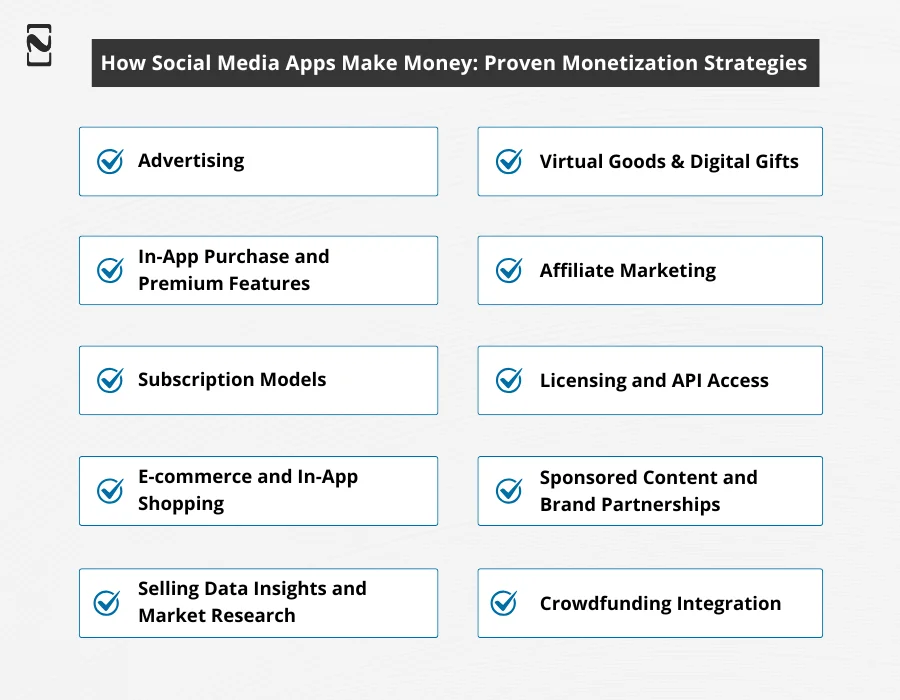
How Social Media Apps Make Money: Proven Monetization Strategies
In this section, we’ll explore the top 10 monetization strategies used by top social media platforms and explain how you can apply them to your app.
1. Advertising
Advertising is where most social media applications make a lot of money. If you are looking to monetize your social media app in a fast and effective manner, this is the first mobile app monetization strategy to consider. Every major app like Facebook and Instagram earns billions from ads alone, and there is a reason for that.
Here is how it works :
Social media apps attract huge revenue, sometimes billions, of active users. That target audience is valuable to businesses because it comes with rich behavioral data. For example, what users like, share, click on, and where they live.
As a business, your job is to package that audience into ad space that brands are willing to pay for. We can provide banner ads, sponsored posts, or short video ads, all designed to integrate into the user experience without feeling intrusive.
Why does this work so well?
The real magic of advertising lies in its scalability. Once you know the value of each user to advertisers, growing your user base directly increases revenue. The more users you have, the more impressions you can sell, and the more you can charge for target campaigns.
Social networking apps like Facebook and Instagram charge huge amounts of money because advertisers trust that their ads are reaching the right audience at the right time. If you run the right ads, this model offers reliable, long-term revenue while supporting growth and user engagement.
2. In-App Purchases and Premium Features
Another way social media apps make money is through in-app purchases. Once your social media application has active and engaged users, you can monetize it with in-app purchases or premium features.
Instead of depending only on ads, you can implement this strategy. It allows your business to earn directly from users who want extra value, convenience, or exclusivity.
Here is how it works :
You can provide the best social media app features, perks, and digital goods that will boost the user experience. This could be a premium account with advanced analytics or special visibility, virtual currency, or coins to unlock features.
Also, this can be boosts and promotions that help posts or profiles stand out. Users who are deeply engaged and invested in your platform are often willing to pay for these advantages.
Why does this work so well?
The power of in-app purchases comes from targeting your most active users. Unlike advertising, which depends on a huge audience, this strategy monetizes engagement.
If you pay users more often, and if your premium features are valuable enough, they can create a steady, recurring revenue stream. Social networking apps like LinkedIn monetize with premium accounts.
But TikTok earns money from the coins used to reward creators. If done right, in-app purchases can turn loyal users into consistent revenue without affecting the free experience for everyone else.
3. Subscription Models
Once your social media platform has a good user base, subscription models can provide predictable, recurring revenue. Instead of depending on one-time purchases or ads alone, you can charge users a monthly or yearly fee for access to exclusive features or premium content.
Here is how it works :
You can provide different subscription tiers with benefits that make the user feel the payment is worth it. This could be an ad-free experience, early access to content, advanced analytics, or special tools for active users. The key is to create a social media app with features that users truly value and can not easily get elsewhere.
Why does this work so well?
Subscriptions are really best because they create a steady cash flow. Unlike ads, which fluctuate with user engagement and market trends, subscription revenue is recurring and predictable.
Apps like YouTube Premium or LinkedIn Premium use subscriptions to convert loyal users into a reliable income. This provides businesses with stability while providing users with enhanced value.
A beautifully designed subscription model ensures your app continues to generate revenue as your user base grows. This makes it a long-term business strategy.
4. E-commerce and In-App Shopping
The next method of how social media apps make money is through e-commerce and in-app shopping. Once your social media app has strong engagement, you can add e-commerce and in-app shopping to unlock a great revenue stream.
Instead of sending users elsewhere to buy products, your app becomes the place where discovery and purchase happen together. From a business point of view, this shortens the buying journey and increases conversion rates.
Here is how it works :
Many brands list their products directly inside your social media app, and users can browse, click, and purchase without leaving the app. Your mobile app earns money by taking a commission on each sale, charging listing fees, or providing paid promotional placements to sellers.
Apps like TikTok Shop have proven how effective this model can be when content and commerce work together.
Why does this work so well?
Social media already influences buying decisions. When users discover products while scrolling, purchases feel natural rather than forced. For your business, this creates revenue that scales with engagement, not just impressions. The more time users spend on your app, the more opportunities there are to sell.
5. Selling Data Insights and Market Research
As your social media app grows, it begins generating something extremely valuable, which is data. This data can become a strong revenue source when used responsibly.
Brands and companies are always looking for insights into trends, behaviours, and preferences, and your social media app is in a perfect position to offer that information.
Here is how it works :
Instead of selling personal user data, your app can offer aggregated and anonymous insights. This might include trend reports, audience behaviour analysis, engagement patterns, or content performance insights.
You can pay for these reports to understand what is working, what is trending, and how they can improve their marketing strategy. Apps like Snapchat and Meta offer detailed analytics and trend insights to advertisers and enterprise clients.
Why does this work so well?
Data insights are highly valuable because they help businesses to make better decisions. Once your analytics system is in place, selling insights becomes a scalable revenue stream with relatively low ongoing costs. It also strengthens your position as a data-driven app rather than just a social network.
6. Virtual Goods and Digital Gifts
Virtual goods and digital gifts are a powerful way to monetize a social media app, especially if your platform includes live streaming, creator content, or interactive features.
It works by encouraging small, frequent purchases that add up to significant revenue over time. This is how social media apps make money.
Here is how it works :
Users buy virtual items such as gifts, stickers, badges, or coins using real money. These digital items can then be used to support creators, stand out in live chats, or unlock special interactions.
Your app earns revenue by selling the virtual currency and taking a percentage of every transaction. Platforms like TikTok and Twitch have built massive revenue streams using this approach.
Why does this work so well?
Virtual goods feel affordable and fun, which lowers the barrier to spending. Since there’s no physical inventory, profit margins are very high.
Users are more likely to make repeat purchases, especially when digital gifts are tied to social recognition or creator support. For businesses, this creates a steady flow of microtransactions that scale with engagement.
7. Affiliate Marketing
Social media apps make money through affiliate marketing. It is a really simple but effective way for a social media app to generate revenue without selling its own products. This monetization strategy allows your app to earn commissions by promoting third-party products or services that match your audience’s interests.
Here is how it works :
Your app integrates affiliate links or product recommendations into posts, videos, or shopping features. When users click those links and make a purchase, your app earns a percentage of the sale.
This works best for lifestyle, fashion, tech, or content discovery, where users already look for inspiration and recommendations. Apps like WeChat and Instagram successfully use affiliate partnerships to turn content engagement into revenue.
Why does this work so well?
Affiliate marketing is low risk and easy to scale. You don’t need to manage inventory, shipping, or customer support. As long as your app drives traffic and conversions, revenue will grow naturally. It also blends well with content that makes monetization feel organic rather than forced.
8. Licensing and API Access
As your social media app matures, the value of your platform goes beyond users and content—it also lies in your technology and data infrastructure. Licensing and API access allow your business to monetize that technology by letting other companies build on top of your platform.
Here is how it works :
You offer paid access to certain features, tools, or data through APIs. Third-party developers, brands, or businesses pay to integrate your login system, content feeds, analytics, or publishing tools into their own products. This model is commonly used by apps like X, Meta, and LinkedIn, which charge businesses for advanced API access.
Why does this work so well?
Licensing and API access create a high-margin revenue stream. Once the infrastructure is built, the cost of serving additional partners is relatively low. It also positions your app as a platform, not just a product, increasing long-term business value and market influence.
9. Sponsored Content and Brand Partnerships
Sponsored content and brand partnerships are some of the most natural ways for a social media app to earn money once it has an active and engaged audience. Instead of showing traditional ads, your app works directly with brands to promote their products or campaigns through content that fits naturally into the platform.
Here is how it works :
Brands pay your app to feature their products in posts, videos, stories, or challenges that match your app’s tone and audience. These promotions often look like regular content, which helps them feel less disruptive.
Your business can charge brands per campaign, per post, or based on performance metrics like reach and engagement. Social media apps like Signal and TikTok generate massive revenue by helping brands connect with audiences through sponsored creator content.
Why does this work so well?
Sponsored content works because it blends marketing with storytelling. Brands are willing to pay premium prices for authentic exposure to targeted audiences, and your app earns revenue without harming user experience. It’s the best monetization method that scales as your platform grows.
10. Crowdfunding Integration
Crowdfunding integration is a smart monetization strategy for social media apps that are built around strong communities, creators, or shared causes. Instead of charging users directly for features, your app earns money by enabling people to financially support ideas, projects, or creators they believe in.
Here is how it works :
Your app allows users or creators to launch crowdfunding campaigns directly on the platform. Other users can contribute money to support these campaigns, whether it’s funding a creative project, launching a product, or supporting a cause.
Your business earns revenue by taking a small percentage from each successful campaign or transaction. Platforms like Patreon and GoFundMe show how powerful community-driven funding can be when trust and engagement are high.
Why does this work so well?
Crowdfunding works because people are more willing to spend money when they feel emotionally connected. For your app, this model creates revenue without relying on ads or subscriptions, while also increasing engagement and loyalty.
How Nimble AppGenie Can Help You Monetize Your Social Media App?
Developing a social media app is not just about features. It is about creating a platform where social media apps make money while users stay engaged and satisfied. That’s where Nimble AppGenie helps.
As an experienced social media app development company, we focus on building apps with monetization at their core. From ads and subscriptions to AI-powered engagement tools, we help you choose the right revenue model based on your audience and business goals.
We help you :
- Turn your app idea into a clear, revenue-ready business model.
- Launch a fast, secure platform built to handle real user growth.
- Increase engagement using smart, AI-powered personalization.
- Avoid costly mistakes that cause social media startups to fail.
Case Study: Monetization-Driven Social Media Application
1. Client Profile
A mid-sized consumer brand aiming to build its own social media platform to engage a niche community of users. The client wanted to create a space where content creators and users could interact, share, and discover content.
While also generating sustainable revenue from the platform. They were looking for a partner who could combine the best technology with a monetization strategy to scale their app successfully.
2. Business Problem
User engagement was inconsistent, monetization was unclear, and content management relied heavily on manual workflows.
a. Solutions
- Designed a revenue-focused app structure.
- Implemented AI-driven content discovery.
- Added in-app purchases and subscription features.
- Optimized user journeys for smooth monetization.
b. Measurable Impact
- 68% increase in daily active users.
- 47% conversion to paid features.
- 35% improvement in session duration.
- Reduced dependence on ads with diversified revenue streams.
This real-world example shows how the right technology and strategy can turn engagement into income.
Conclusion
Are you ready to turn your social media app into a revenue-generating platform? Developing a mobile app is just the beginning. The real success comes from monetizing it smartly. With strategies like in-app purchases, subscriptions, virtual gifts, and sponsored content, you can transform engagement into consistent income.
Additionally, using AI in social media apps allows you to personalize feeds, improve user experience, and boost retention. This makes every interaction more available.
By planning your monetization strategy carefully and focusing on features users like, you can transform your social media app from a simple platform into a sustainable, revenue-generating business.
FAQs

Niketan Sharma, CTO, Nimble AppGenie, is a tech enthusiast with more than a decade of experience in delivering high-value solutions that allow a brand to penetrate the market easily. With a strong hold on mobile app development, he is actively working to help businesses identify the potential of digital transformation by sharing insightful statistics, guides & blogs.
Table of Contents
No Comments
Comments are closed.