

 Free Consultation
 PCI-DSS Compliant
 GDPR Ready
 ISO 27001
 NDA Protected
 AI Services
 AI App Development
 Generative AI Development
 AI Chatbot Development
 AI Integration Services
 AI Consulting Services
 AI For Fintech
 AI Financial Assistant Solution
 AI Insurance Agent Development
 Tech Stack
 OpenAI / GPT-4
 Claude / Anthropic
 Gemini / Google AI
 Llama / Open Source
 LangChain / LlamaIndex
 Pinecone / Pgvector
 AWS / Azure AI


 Fintech Solution
 Core Fintech
 App Development
 Neobank Solutions
 eWallet Solutions
 Lending Software
 Banking Solutions
 BNPL Solutions
 BNPL Solutions
 Insurance App
 Wealth Management
 Crypto & DeFi
 Blockchain Development
  Payroll Software
 DeFi Solutions
 Crypto Wallet
 Crypto On/Off Ramp
 Crypto Exchange
 Trading Platform
 Payments
 Compliance
 Regulations & Compliance
 Fraud Detection
 Lending Ecosystem
 P2P Lending Platform
 Mortgage Software
 Engagement
 Fintech Outsourcing

 Mobile Development
 Mobile App Dev
 iOS App Development
 Android App Development
 React Native
 Flutter Development
 Web Solution
 Node.js Development
 React.js Development
 Angular Development
 App Services
 UI/UX Design
 App Maintenance
 By Stage
 MVP Development
 Industry Solutions
 Healthcare App Dev
 Education App Dev
 Travel App Dev
 Real Estate App Dev
 Logistics Software
 Social Media App

 Hire Mobile Developers
 Hire iPhone Developers
 Hire Android Developers
 Hire React Native Devs
 Hire Flutter Developers
 Hire Web Developers
 Hire Node.js Developers
 Hire Angular Developers
 Hire PHP Developers
 Hire Laravel Developers
 How It Works
 Pre-Vetted Developers
 Ready In 48 Hours
 NDA From Day One
 Replace Guarantee
 Company
 About Us
 Our Work Process
 Portfolio
 Case Studies
 Blog / Insights
 Careers
 Contact Us
 Awards
 Recognition


 Offices



Key Takeaways:
- Loan servicing software manages everything that happens after a loan is disbursed: EMI collection, interest calculation, repayment tracking, delinquency, and borrower communication.
- It is different from loan origination software (pre-funding) and broader loan management software (full lifecycle).
- Core features include amortization engines, automated payment processing, delinquency workflows, compliance reporting, and a borrower self-service portal.
- Custom development typically costs $25,000–$150,000+ depending on scope, and takes 4–9 months.
- Nimble AppGenie builds custom loan servicing software for banks, NBFCs, and fintech lenders, with compliance and scalability built in from day one.
Loan servicing software is the system that takes over the moment a loan is funded – it runs EMI collection, repayment tracking, interest calculation, delinquency management, repayment tracking, and borrower communication for the rest of the loan’s life. Get this right, and servicing becomes the part of your lending business that secretly protects your margins.
This guide breaks down what loan servicing software actually does, which features matter, what it costs to build, and how to plan a development roadmap that won’t blow your budget or your timeline.
What is Loan Servicing Software?
Loan servicing software is a digital solution used by financial institutions to manage the ongoing administration of loans after disbursement. It handles EMI collection, repayment tracking, interest calculation, customer communication, and delinquency management, ensuring loans remain compliant and current throughout their term.
It’s easy to confuse this with other systems, so below is the quick distinction:
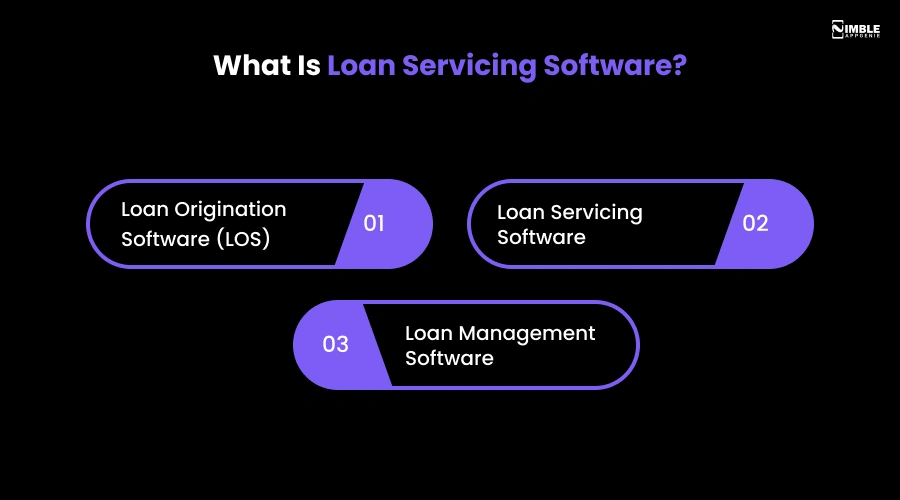
- Loan Origination Software (LOS): It handles everything before funding – application, underwriting, credit checks, disbursement, and approval. Our loan origination software guide covers this stage in detail.
- Loan Servicing Software: It takes over the moment funds are disbursed and runs the loan until it is paid off or closed.
- Loan Management Software (LMS): An umbrella system that usually includes both origination and servicing in one platform. If you are deciding whether to build one unified system, our guide on how to develop loan management software walks through that broader build.
Many lenders begin with a combined LMS and only need to go deep on servicing once loan volume grows, and manual repayment tracking starts breaking down.
Why Loan Servicing Software Matters More Than Founders Expect
Origination gets the attention because it is where the loan gets sold. But servicing is where the loan actually gets paid back or doesn’t. A disconnected or manual servicing process creates real, measurable issues.
- Missed or misapplied payments that damage borrower trust and create reconciliation headaches.
- Compliance reporting that takes days instead of minutes because data lives in spreadsheets.
- Delinquency detected too late (usually at 60-90 days), by which point recovery odds have already dropped.
- No visibility into portfolio health until a report is manually pulled together.
A well-built servicing system fixes all four by keeping payment, repayment, and compliance data in one connected place – automatically.
Must-Have Features in Loan Servicing Software
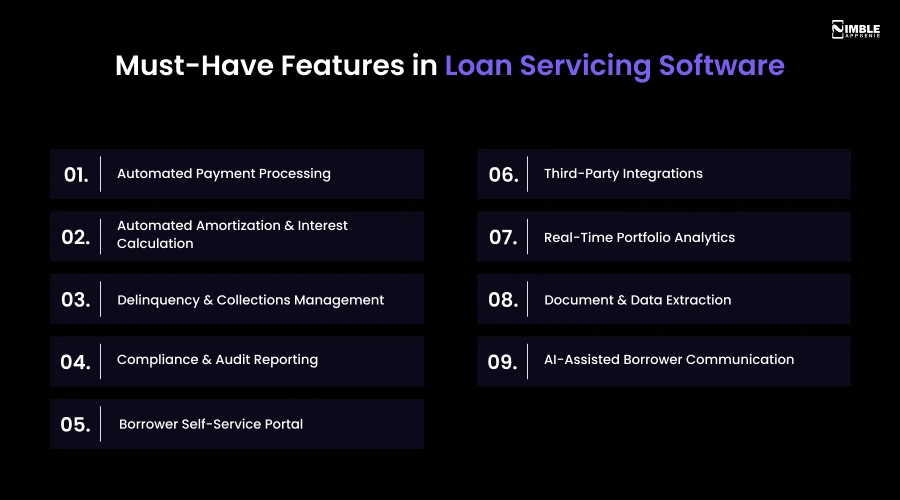
1. Automated Payment Processing
ACH, UPI, card, or wallet-based collections, with automatic handling of partial payments, retries, and failed payments. This is generally the single biggest source of manual work in a servicing team, and the first thing worth automating.
2. Automated Amortization & Interest Calculation
The engine that calculates interest, repayment schedules, and principal splits for every loan type you support, so this needs to be built and tested meticulously, not bolted on later.
3. Delinquency & Collections Management
Automatic days-past-due (DPD) tracking, configurable collection strategies, and tiered escalation workflows. The earlier delinquency is flagged, the better the recovery rate – this is not a feature to leave for “phase two”.
4. Compliance & Audit Reporting
Built-in reporting for regulatory frameworks relevant to your market (Reg Z, Metro 2 credit-bureau reporting, GDPR, or local lending regulations), plus a full audit trail on every account action.
5. Borrower Self-Service Portal
Let borrowers check balances, make payments, view repayment schedules, and request modifications without calling support. This alone can cut support ticket volume significantly.
6. Third-Party Integrations
APIs into your loan origination system, credit bureaus, core banking platform, and payment processors. Our guide to fintech APIs covers what to look for when connecting these systems.
7. Real-Time Portfolio Analytics
Dashboards showing delinquency trends, portfolio performance, and roll rates without requiring a data team to pull a report every time leadership asks a question.
8. Document & Data Extraction
For lenders dealing with high document volume – hardship applications, loan modification requests, income verification – intelligent document processing can extract and validate data automatically instead of manual review.
See our guide on building an intelligent document processing platform for how this fits into a servicing workflow.
9. AI-Assisted Borrower Communication
Automated payment reminders, routine borrower queries, and delinquency alerts are handled without a human agent, escalating only edge cases. If you are exploring this, our breakdown of AI chatbots in fintech customer service is a useful next read.
For microfinance lenders specifically, our AI microfinance software guide covers predictive delinquency flagging and multilingual repayment chatbots built for thin-file borrowers.
Loan Servicing Software Development Cost
Cost depends heavily on scope, the loan types supported, and the number of systems you are integrating with.
Here’s a realistic cost range for loan service software development in 2026:
| Project Scope | Estimated Cost | Estimated Timeline |
| MVP (single loan type, basic collections) | $25,000 – $45,000 | 3–4 months |
| Mid-tier (multiple loan types, integrations, portal) | $45,000 – $90,000 | 5–7 months |
| Enterprise-grade (multi-entity, compliance-heavy, AI features) | $90,000 – $200,000+ | 8–14 months |
These figures move based on how much of your servicing logic is custom (non-standard loan products, unusual amortization rules) versus configurable, and how many legacy systems you need to connect to.
Loan Servicing Software Development Roadmap
Follow the steps below to build loan servicing software for your lending business.
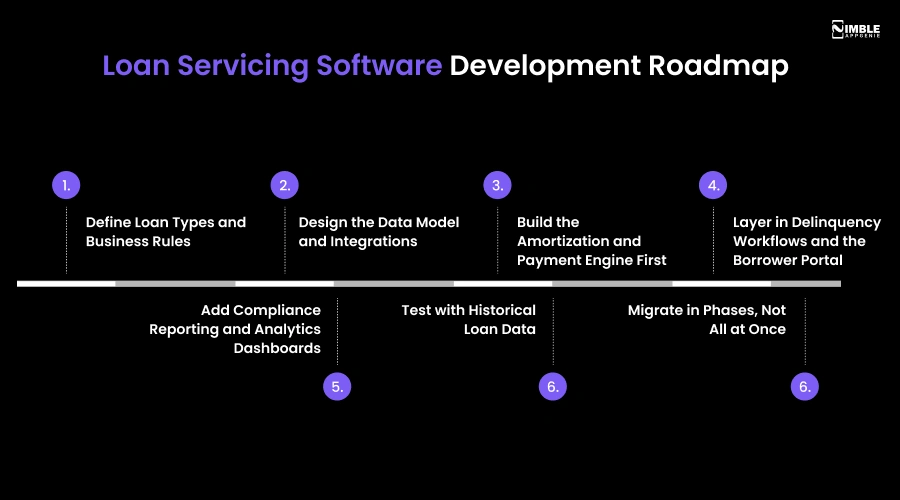
- Define Loan Types and Business Rules: Every repayment structure, modification policy, and penalty rule needs to be mapped before a line of code is written.
- Design the Data Model and Integrations: Decide how servicing connects to your LOS, credit bureaus, and core banking system.
- Build the Amortization and Payment Engine First: This is the base everything else sits on – get it wrong and every downstream feature inherits the bug.
- Layer in Delinquency Workflows and the Borrower Portal: These typically come next once payment logic is solid.
- Add Compliance Reporting and Analytics Dashboards: Build these in from the start rather than retrofitting them under audit pressure later.
- Test with Historical Loan Data: Run old accounts through the new system and compare results against your existing records before going live.
- Migrate in Phases, Not All at Once: Move a small portfolio segment first, confirm accuracy, and then scale up.
Build Loan Servicing Software With Nimble AppGenie
Nimble AppGenie, a fintech software solutions provider that designs and builds custom loan servicing software for banks, NBFCs, and fintech leaders. Our team builds full-stack amortization engines, delinquency workflows, borrower portals, compliance reporting, and automated payment processing tailored to your loan products rather than forcing your business into a rigid template.
If you are also evaluating origination or full lifecycle management, our lending software development services cover the comprehensive picture from application to payoff.
Whether you are replacing a legacy servicing stack or building your first system from scratch, our fintech developers can walk you through scope, cost, and a realistic timeline based on your loan portfolio.
Conclusion
Loan servicing software is where lending businesses actually protect their margins, not at origination, but in the months and years after a loan is funded.
Lenders who invest in automated collection, solid amortization logic, and early delinquency detection are the ones who retain borrowers and avoid compliance headaches down the line.
If you are planning to build or upgrade your service system, get the payment engine and compliance reporting right first, before everything else on that foundation.
FAQs

Niketan Sharma, CTO, Nimble AppGenie, is a tech enthusiast with more than a decade of experience in delivering high-value solutions that allow a brand to penetrate the market easily. With a strong hold on mobile app development, he is actively working to help businesses identify the potential of digital transformation by sharing insightful statistics, guides & blogs.
Table of Contents




No Comments
Comments are closed.