

 Free Consultation
 PCI-DSS Compliant
 GDPR Ready
 ISO 27001
 NDA Protected
 AI Services
 AI App Development
 Generative AI Development
 AI Chatbot Development
 AI Integration Services
 AI Consulting Services
 AI For Fintech
 AI Financial Assistant Solution
 AI Insurance Agent Development
 Tech Stack
 OpenAI / GPT-4
 Claude / Anthropic
 Gemini / Google AI
 Llama / Open Source
 LangChain / LlamaIndex
 Pinecone / Pgvector
 AWS / Azure AI


 Fintech Solution
 Core Fintech
 App Development
 Neobank Solutions
 eWallet Solutions
 Lending Software
 Banking Solutions
 BNPL Solutions
 BNPL Solutions
 Insurance App
 Wealth Management
 Crypto & DeFi
 Blockchain Development
  Payroll Software
 DeFi Solutions
 Crypto Wallet
 Crypto On/Off Ramp
 Crypto Exchange
 Trading Platform
 Payments
 Compliance
 Regulations & Compliance
 Fraud Detection
 Lending Ecosystem
 P2P Lending Platform
 Mortgage Software
 Engagement
 Fintech Outsourcing

 Mobile Development
 Mobile App Dev
 iOS App Development
 Android App Development
 React Native
 Flutter Development
 Web Solution
 Node.js Development
 React.js Development
 Angular Development
 App Services
 UI/UX Design
 App Maintenance
 By Stage
 MVP Development
 Industry Solutions
 Healthcare App Dev
 Education App Dev
 Travel App Dev
 Real Estate App Dev
 Logistics Software
 Social Media App

 Hire Mobile Developers
 Hire iPhone Developers
 Hire Android Developers
 Hire React Native Devs
 Hire Flutter Developers
 Hire Web Developers
 Hire Node.js Developers
 Hire Angular Developers
 Hire PHP Developers
 Hire Laravel Developers
 How It Works
 Pre-Vetted Developers
 Ready In 48 Hours
 NDA From Day One
 Replace Guarantee
 Company
 About Us
 Our Work Process
 Portfolio
 Case Studies
 Blog / Insights
 Careers
 Contact Us
 Awards
 Recognition


 Offices


Key Takeaways:
- The cost to build an app like Google Fit can range between $30,000-$250,000. However, this cost can fluctuate depending on the complexity of your project requirements.
- The factors affecting the Google Fit app development cost are app functionality, wearable device & health sensor integration, platform selection, API integration, app design, security & compliance, and location of development team.
- You can optimize the cost to develop an app like Google Fit by starting with core features, modular app design, delaying advanced AI features, optimizing cloud usage, and building a cross-platform app.
- The Google Fit-like app makes money through a subscription-based model, freemium with paid features, in-app ads, sponsorships, usage-based pricing, and licensing or B2B access.
- Fitness app development like Google Fit involves multiple stages, like product research, UI/UX design, MVP app development, wearable API integration, testing, and launch. Each step contributes to the overall cost to create an app like Google Fit, which is why you can break the budget into these phases for better planning.
- The experience of the development team can also influence the success and efficiency of building a fitness app like Google Fit. Nimble AppGenie follows a structured approach that includes proper planning, scalable architecture, and secure data handling.
The cost to develop an app like Google Fit generally falls between $30,000 to $250,000+. This range depicts the difference between a simple Google Fit-like app and a full-fledged app that supports wearable integrations, advanced analytics, and personalized health insights.
For many organizations, clearly knowing this cost range is often the first step in evaluating whether the product idea is commercially practical.
If you are a fitness startup founder, health and wellness entrepreneur, gym owner, or fitness brand planning to invest in fitness tracking app development like Google Fit, it is vital to recognize that the final investment depends on many factors.
These typically include the features, the complexity of integrating wearables, technologies, platform choice, development team’s location, and so on. Instead of treating the budget as a single estimate, you should approach the Google Fit-like app development cost as a structured breakdown.
In this blog, we will explain how much does it cost to build an app like Google Fit. Looking at development phases, technology requirements, and operational needs helps decision-makers understand where the investment goes and how to plan a realistic product roadmap.
So, let’s begin!
Quick Cost Snapshot: Google Fit App Development Cost
The cost to develop an app like Google Fit typically ranges between $30,000 and $250,000+, depending on the app’s features, wearable integrations, and data analytics capabilities.
Let’s have a quick snapshot of the estimated cost to make a fitness application like Google Fit based on the scope of the fitness application.
| App Type | Estimated Cost | Development Time |
| Basic Google Fit-like App (MVP) | $30,000 – $60,000 | 3 – 4 months |
| Advanced Google Fit-like App | $70,000 – $150,000 | 4 – 7 months |
| Enterprise-Level Google Fit-like Platform | $150,000 – $250,000+ | 8 – 10 months |
You can first build an MVP fitness app that includes must-have features like activity tracking, step counting, and basic health analytics. Later, you can expand the platform with wearable integrations, AI-powered insights, and advanced fitness dashboards.
What is a Google Fit App?
Google Fit is a health and fitness tracking app that helps users monitor their daily physical activities, health metrics, and overall wellness through their mobile phones and wearable devices.
The app collects data like steps taken, distance traveled, calories burned, heart rate, and workout activity. This allows users to better understand their fitness progress in one centralized dashboard.
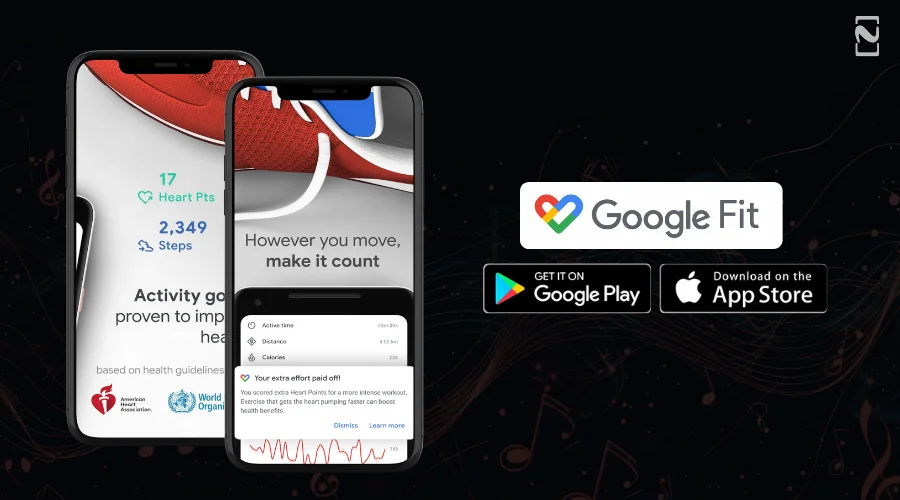
Google Fit works by using smartphone sensors and wearable integrations to track movement and health data in real time. It can connect with devices like smartwatches, fitness bands, and other health apps.
It enables users to combine data from multiple sources. This integration makes it easier to build a complete picture of a person’s daily activity and health patterns.
What is the Formula to Estimate the Cost to Develop an App Like Google Fit?
The formula to calculate the Google Fit-like app development cost is given below:
| Total Google Fit App Development Cost = Development Hours × Hourly Rate |
This formula helps you know how project scope directly affects the final budget. The more features, integrations, and complexity involved, the more development hours are required.
For instance, if a fitness application needs 1,200 development hours and the average development rate is $50 per hour, the estimated cost would be 1,200 × $50 = $60,000.
However, the total development hours depend on many factors like UI/UX design, frontend and backend development, wearable fitness app integration, testing, and deployment.
For one of the best fitness apps like Google Fit, additional time is often needed for health data processing, sensor integrations, wearable connectivity, and analytics dashboards. These factors increase development effort but also make the app more valuable for users.
Due to this, you can treat this formula as a baseline estimation method before breaking the project into detailed cost components like features, integrations, infrastructure, and ongoing maintenance.
Google Fit-like Fitness App Development Cost Breakdown
Once you estimate the overall budget using the fitness app development cost formula, the next step is to understand how the cost is distributed across different stages of development. Building an app like Google Fit involves multiple technical phases, each contributing to the final project cost.
Let’s have a look at the breakdown of the development effort required for a Google Fit-like application.
| Development Stage | Estimated Cost |
| Product Research & Planning | $3,000 – $8,000 |
| UI/UX Design | $5,000 – $15,000 |
| Frontend Mobile App Development | $15,000 – $40,000 |
| Backend Development & APIs | $10,000 – $30,000 |
| Wearable & Health API Integrations | $8,000 – $20,000 |
| Testing & Quality Assurance | $5,000 – $12,000 |
| Deployment & Launch | $2,000 – $5,000 |
Each of these stages plays a crucial role in creating an app like Google Fit. Thus, it is advisable to understand this breakdown because it makes it easier to plan budgets and evaluate development proposals. Also, you should prioritize features of a fitness tracking app like Google Fit for the first product version.

What Are the Key Factors that Affect the Cost to Build an App Like Google Fit?
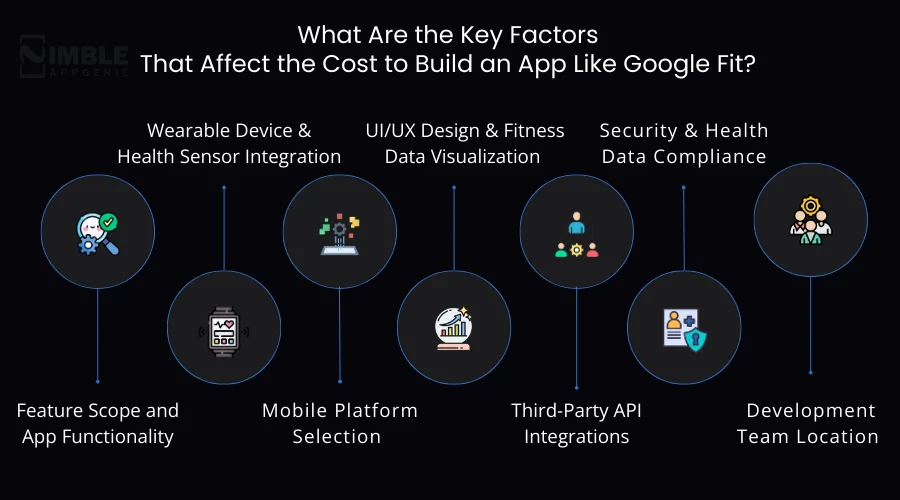
The key factors that affect the cost to make an app like Google Fit are:
- Feature Scope and App Functionality
- Wearable Device and Health Sensor Integration
- Mobile Platform Selection
- UI/UX Design and Fitness Data Visualization
- Third-Party API Integrations
- Security and Health Data Compliance
- Development Team Location
Understanding these factors helps founders, startups, and health-tech companies plan a realistic development budget. Let’s get to know about the factors that influence the cost to develop an app like Google Fit.
1. Feature Scope and App Functionality
The fitness app features set is one of the biggest factors affecting development cost. A simple fitness tracker needs fewer development hours than a full health platform. You can simply start with an MVP and then add advanced features as the product grows.
| Feature Complexity | Example Features | Estimated Cost Impact |
| Basic Features | Step tracking, activity logging, and goal setting | $8,000 – $15,000
|
| Moderate Features | Workout tracking, calorie monitoring, analytics dashboards | $15,000 – $30,000 |
| Advanced Features | AI insights, personalized fitness coaching, predictive analytics | $30,000 – $40,000+ |
2. Wearable Device and Health Sensor Integration
Apps like Google Fit are designed to work with fitness trackers, smartwatches, and health monitoring devices. If you integrate wearable technology, you need API connections and compatibility testing. The more devices your app supports, the more development effort is required.
| Integration Type | Example Devices | Estimated Cost Impact |
| Smartphone sensors only | Built-in phone sensors for steps and activity | $3,000 – $8,000 |
| Single wearable integration | Fitbit or smartwatch connection | $8,000 – $15,000 |
| Multiple device integrations | Multiple wearables and health devices | $15,000 – $35,000 |
3. Mobile Platform Selection
Choosing the right platform is vital for minimizing the cost. Businesses may develop the app for Android, iOS, or both platforms. It is best to support more fitness mobile apps that need additional testing and optimization.
| Platform Strategy | Description | Estimated Cost Impact |
| Android App | Built only for Android devices | $20,000 – $60,000 |
| iOS App | Built only for Apple devices | $25,000 – $65,000 |
| Cross-Platform App | Single codebase for both platforms | $40,000 – $100,000 |
4. Third-Party API Integrations
Fitness tracking apps like Google Fit connect with external services such as Google Fit API, Apple HealthKit, wearable devices, and GPS tracking systems. These integrations allow the app to collect activity data and sync health metrics from multiple sources.
Many modern platforms also use APIs to support AI in fitness apps that enable crucial features. Since each integration requires development, testing, and maintenance, it can increase the cost of the step counter app development.
| API Type | Example Integration | Estimated Cost Impact |
| Mapping APIs | Google Maps for route tracking | $3,000 – $8,000 |
| Health APIs | Apple HealthKit or Google Health Connect | $5,000 – $12,000 |
| Multiple integrations | Wearables, health data, analytics tools | $12,000 – $25,000 |
5. UI/UX Design and Fitness Data Visualization
Fitness tracking applications show large amounts of health data like steps, calories burned, and workout progress. Designing clear dashboards and visualizations improves usability but requires more design effort.
If you keep the complex fitness app design, then the cost to develop an app like Google Fit will increase.
| Design Complexity | Interface Elements | Estimated Cost Impact |
| Basic UI | Simple screens and activity stats | $3,000 – $8,000 |
| Interactive dashboards
|
Charts, progress indicators, activity insights | $8,000 – $15,000
|
| Advanced UX
|
Personalized dashboards and advanced visualizations | $15,000 – $25,000
|
6. Security and Health Data Compliance
Fitness tracking app development like Google Fit, collects sensitive health information. It includes activity data, heart rate, sleep patterns, and location tracking. Due to this, you must build strong HIPAA/GDPR compliance and follow strict data protection regulations.
| Security Level | Implementation Scope | Estimated Cost Impact |
| Basic App Security | User authentication, secure login, and basic data protection. | $2,000 – $6,000 |
| Advanced Data Security | End-to-end encryption, secure APIs, and protected health data storage. | $6,000 – $15,000 |
| Regulatory Compliance | HIPAA/GDPR compliance, secure health data management, and monitoring systems. | $15,000 – $35,000 |
7. Development Team Location
The hourly rates of a dedicated development team fluctuate based on their location and experience. This directly affects the total development budget and time. The table below showcases the different teams’ location hourly rates.
| Team Location | Average Hourly Rate | Estimated Project Cost Impact |
| Asia | $20 – $50 per hour | Lower development cost |
| Europe | $50 – $120 per hour | Medium development cost |
| North America | $120 – $200+ per hour | Higher development cost |
By considering all these cost factors like features, integrations, security, scalability, and maintenance, you can clearly see where the budget goes and make better decisions for creating an app like Google Fit.
What Are the Cost Optimization Strategies for Google Fit App Development?
Keeping the Google Fit-like app development cost under control is mostly about timing and focus. Most businesses overspend not because developing a fitness app like Google Fit is inherently expensive, but because they try to implement too many features too early.
By planning what to build first and what can wait, costs remain predictable and easier to manage.
Let’s have a look at the table to reduce development cost without slowing progress.
| Strategy | How It Helps Control Cost | Fitness App Example |
| Start With Core Features | Limits early development effort | Focus on activity tracking, basic health metrics, and wearable fitness app integration first |
| Modular App Design | Prevents expensive rework later | Build workout tracking, nutrition, and social features as separate modules |
| Delay the Advanced AI fitness tracking app features | Avoids complex work before validation | Start with basic tracking, then add AI-powered personal coaching later |
| Optimize Cloud Usage | Stops infrastructure costs from growing quietly | Monitor server usage and storage from day one |
| Build for One Platform First | Reduces design and testing effort | Launch on Android or iOS first, then expand to the other |
| Continuous User Feedback | Prioritizes features based on actual demand | Add only functionalities that users engage with the most. |
When you follow these strategies, you can launch a Google Fit-like app faster, test the market effectively, and scale features slowly without overspending.
If you focus on major features first, leverage modular design, and delay advanced AI fitness tracking app features makes sure that both time and budget are used efficiently.
Remember, the cost optimization is not about cutting corners; it’s about building smart, prioritizing what delivers value, and iterating based on real user feedback.
This approach not only keeps development predictable but also lays a strong foundation for adding advanced AI-driven features, integrations, and personalization as the app grows.
What are the Monetization Models that Affect the Cost to Make an App like Google Fit?
Subscription-based, freemium with paid features, in-app ads, sponsorships, usage-based pricing, and licensing can affect the cost to create an app like Google Fit. The way you plan to make money from your Google Fit-like app can directly impact development costs.
If you define the monetization models in the starting phase, it will help align features, billing logic, and infrastructure accordingly. Here is the table showing how different fitness app monetization strategies affect the cost.
| Monetization Model | How It Works | Best Fit For | Cost Impact |
| Subscription-Based | Users pay monthly or yearly for access to advanced features | Health enthusiasts and frequent users | Adds $8K–$20K for billing, user tiers, and access control |
| Freemium With Paid Features | Core features are free; advanced AI-powered coaching or analytics are paid | Startups testing the market | Adds $5K–$15K for feature limits and upgrade logic |
| In-App Ads | Displays targeted ads to free users; premium users get an ad-free experience | Apps with large user bases | Adds $3K–$10K for ad integration and management |
| Sponsorship & Brand Partnerships | Collaborate with fitness brands for featured workouts or challenges | Fitness brands or influencer campaigns | Adds $5K–$12K for integration and promotional features |
| Usage-Based Pricing | Users pay per report, AI insight, or personalized recommendation | Data-driven or analytics-heavy apps | Adds $4K–$10K for tracking usage and billing |
| Licensing or B2B Access | Sell AI insights or analytics dashboards to gyms, corporate wellness programs, or health platforms. | Enterprise clients | Adds $15K–$40K for API integrations, security, and documentation |
Key takeaway: Choosing the right monetization model early in fitness and wellness app development ensures the app architecture, features, and AI functionalities are built to support revenue generation without unnecessarily inflating costs.
How Nimble AppGenie Helps You Build a Fitness App Like Google Fit?
Nimble AppGenie helps you plan and develop a fitness tracking app like Google Fit. Being the best fitness app development company, we focus on creating a fitness app with features like step tracking, workout monitoring, sleep data, and health dashboards.
When you estimate the cost to develop an app like Google Fit, we assist you in defining the required features, integrations, and platform scope early in the process. This makes it easier to plan development time, technology stack, and long-term product updates.
Besides, our expert team develops Android and iOS fitness apps with wearable integrations, cloud-based data storage, and secure health data management.
After that, we can integrate the app with fitness APIs, smartwatches, and health platforms to deliver real-time activity tracking and personalized insights.
This approach helps you launch a high-performing fitness app that supports user growth, data analytics, and new health features as the product evolves.
If you are planning to create a Google Fit-like app, book a free consultation!
Why Nimble AppGenie Stands Out?
- 8+ years of proven experience in fitness app development
- Wearable and health API integration expertise
- Clear cost planning before development begins
- End-to-end support from idea to launch
- Post-launch maintenance & support
Real-time Case Study: “PT You” by Nimble AppGenie
Client:
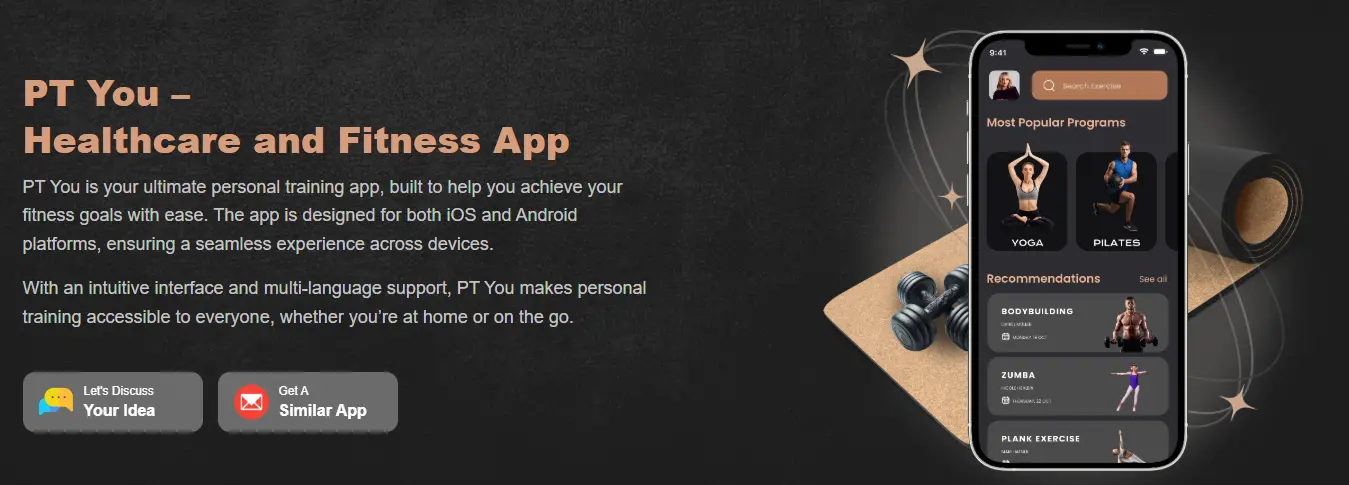
PT You, a healthcare and fitness app.
Business Requirements:
The client wanted to build a fitness tracking app that could help users follow workout routines, monitor their fitness progress, and access training guidance from anywhere.
The goal was to create a mobile app that works on both iOS and Android, supports multiple languages, and makes fitness tracking simple for beginners as well as regular gym users.
Client’s Challenges:
The client needed real-time workout tracking and accurate progress monitoring without slowing down the app. Another challenge was creating a simple interface that works smoothly across different devices and screen sizes.
Solutions We Offered:
Our team at Nimble AppGenie developed a cross-platform fitness app with customizable workout plans, progress tracking, nutrition advice, and in-app trainer support.
Development Timeline:
8 dedicated professionals worked on the project for around 6 months.
Results Attained:
Within the first few months after launch, the app achieved good numbers of downloads and around 35% improvement in user retention. This shows strong engagement and consistent usage.
Conclusion
Building a fitness tracking app needs clear planning, the right feature scope, and a realistic budget. But the cost to develop an app like Google Fit mainly depends on multiple factors, like AI integrations, features, or customization you want.
The best way to start is by launching a focused MVP with core features. After validating user demand, you can gradually add advanced features to the app.
Thus, if you follow the right roadmap, you can develop a top-notch fitness app that grows with user needs and take the business to new heights.
FAQs

Niketan Sharma, CTO, Nimble AppGenie, is a tech enthusiast with more than a decade of experience in delivering high-value solutions that allow a brand to penetrate the market easily. With a strong hold on mobile app development, he is actively working to help businesses identify the potential of digital transformation by sharing insightful statistics, guides & blogs.
Table of Contents




No Comments
Comments are closed.