

 Free Consultation
 PCI-DSS Compliant
 GDPR Ready
 ISO 27001
 NDA Protected
 AI Services
 AI App Development
 Generative AI Development
 AI Chatbot Development
 AI Integration Services
 AI Consulting Services
 AI For Fintech
 AI Financial Assistant Solution
 AI Insurance Agent Development
 Tech Stack
 OpenAI / GPT-4
 Claude / Anthropic
 Gemini / Google AI
 Llama / Open Source
 LangChain / LlamaIndex
 Pinecone / Pgvector
 AWS / Azure AI


 Fintech Solution
 Core Fintech
 App Development
 Neobank Solutions
 eWallet Solutions
 Lending Software
 Banking Solutions
 BNPL Solutions
 BNPL Solutions
 Insurance App
 Wealth Management
 Crypto & DeFi
 Blockchain Development
  Payroll Software
 DeFi Solutions
 Crypto Wallet
 Crypto On/Off Ramp
 Crypto Exchange
 Trading Platform
 Payments
 Compliance
 Regulations & Compliance
 Fraud Detection
 Lending Ecosystem
 P2P Lending Platform
 Mortgage Software
 Engagement
 Fintech Outsourcing

 Mobile Development
 Mobile App Dev
 iOS App Development
 Android App Development
 React Native
 Flutter Development
 Web Solution
 Node.js Development
 React.js Development
 Angular Development
 App Services
 UI/UX Design
 App Maintenance
 By Stage
 MVP Development
 Industry Solutions
 Healthcare App Dev
 Education App Dev
 Travel App Dev
 Real Estate App Dev
 Logistics Software
 Social Media App

 Hire Mobile Developers
 Hire iPhone Developers
 Hire Android Developers
 Hire React Native Devs
 Hire Flutter Developers
 Hire Web Developers
 Hire Node.js Developers
 Hire Angular Developers
 Hire PHP Developers
 Hire Laravel Developers
 How It Works
 Pre-Vetted Developers
 Ready In 48 Hours
 NDA From Day One
 Replace Guarantee
 Company
 About Us
 Our Work Process
 Portfolio
 Case Studies
 Blog / Insights
 Careers
 Contact Us
 Awards
 Recognition


 Offices



TL;DR
- Market: Cash App has 59M monthly transacting actives, but its growth now comes from lending, card, and BNPL, not P2P fees.
- Cost: $40K–$250K+, depending on scope, compliance, and integrations.
- Timeline: 3-4 months for an MVP; 4–9 months for a full platform, including licensing and bank onboarding.
- The hardest part is licensing and the sponsor-bank model, not the app itself.
- Build first: wallet, P2P transfers, bank linking, KYC/AML. Defer investing, crypto, and lending.
Cash App turned a P2P transfer app into a full financial platform: debit card, wallet, short-term loans, and investing. Founders keep asking what it takes to build one.
This guide covers what Cash App does and how it earns, the features to build, system architecture, licensing in the US and UK, cost, tech stack, monetization, and timeline.
What Is Cash App and How Does It Work?
Cash App, built by Block, Inc., allows users to send money with a $Cashtag, hold a balance, buy stocks or Bitcoin, and spend with the Cash Card.
- In June 2026, it had 59 million monthly transacting actives.
- Q2 2026 gross profit reached $1.97B, up 31%, driven mainly by Cash App Borrow, Cash App Card, and BNPL products.
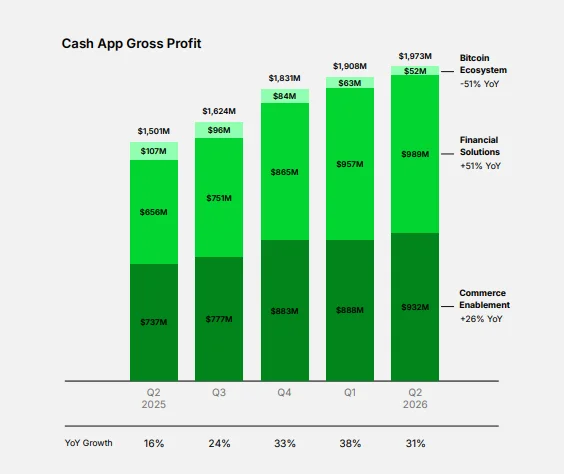
- User growth was only 3 to 4%.
With millions of active users, Cash App is an open-loop payment system that has set a standard for modern digital payment solutions and serves as a benchmark for fintech startups building similar apps.
Core Functionality of Cash App
Cash App offers distinct financial services and eWallet app features that go beyond simple money transfers:
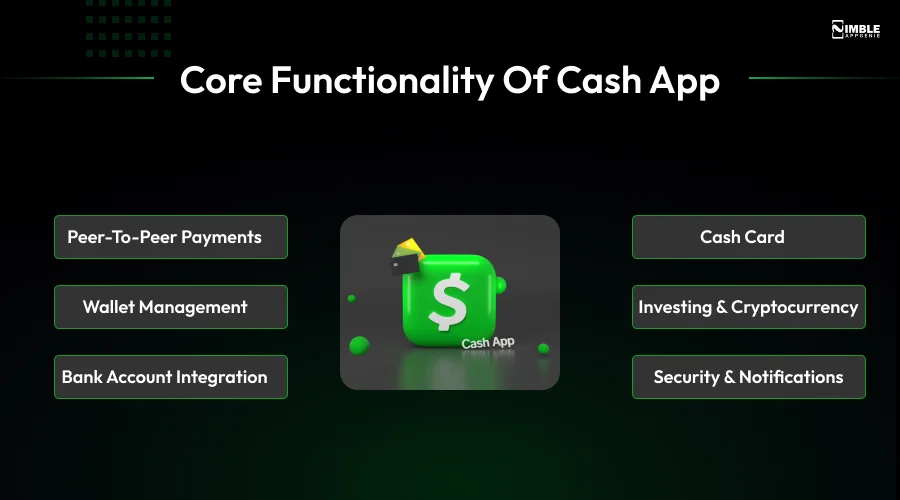
- Peer-to-peer payments: Instantly send or receive money using a $Cashtag, phone number, or email.
- Wallet management: Store funds securely in the app and manage balances.
- Bank account integration: Link bank accounts or debit cards for deposits, withdrawals, and payments.
- Cash Card: A debit card linked to the app for direct purchases or ATM withdrawals.
- Investing & Cryptocurrency: Buy and sell stocks or Bitcoin directly through the platform.
- Security & Notifications: Real-time alerts, encryption, and authentication protect user transactions.
How Does Cash App Work?
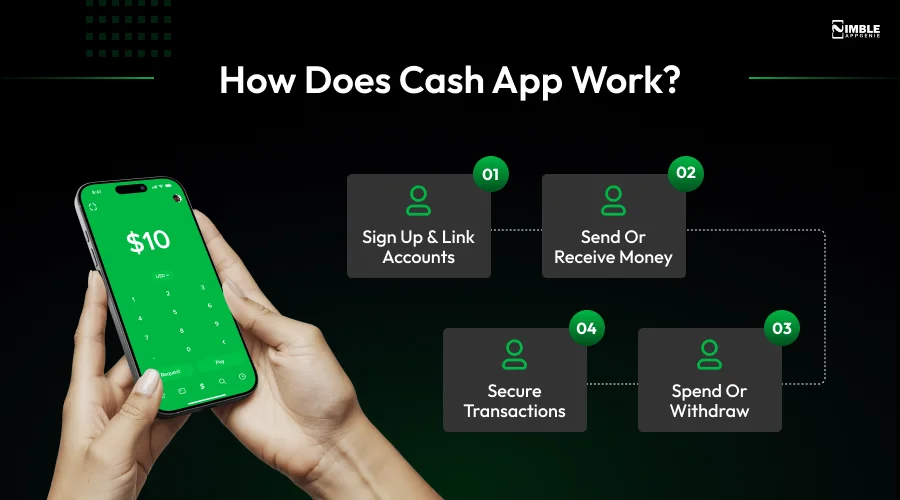
- Sign Up & Link Accounts: Users register on the app and connect a bank account or debit card.
- Send or Receive Money: Using a $Cashtag, phone number, or email, funds are transferred instantly.
- Spend or Withdraw: Users can spend money via the Cash Card, transfer funds to their bank, or invest in stocks/crypto.
- Secure Transactions: Multi-layer security, encryption, and fraud detection ensure safe and reliable payments.
How Cash App Makes Money
P2P transfers bring users in; card interchange, lending, and instant-deposit fees earn revenue.
Cash App Card, Cash App Borrow, and BNPL products drove Cash App’s 2026 gross profit growth, while Bitcoin gross profit declined.
That’s why a plain P2P wallet rarely generates revenue on its own – the money is in what users do after the transfer, not the transfer itself.
Payment App Market Size, Growth, and Industry Statistics
- The RTP network processed about 142 million transactions in Q2 2026, while FedNow processed close to 5 million – both instant-payment rails expanding faster, per Stripe’s payment research.
- US consumers, governments, and businesses made 236.6 billion noncash payments in 2024, worth $140.01 trillion – up 31.9 billion payments since 2021, according to the Federal Reserve’s 2025 Payments Study.
- In the UK, Faster Payments processed over 5 billion transactions worth more than £4.2 trillion in 2024, and Faster Payments/remote banking overall reached 6.2 billion payments in 2025 – now the UK’s second most-used payment method behind debit cards, per UK Finance’s 2026 Payment Markets Report.
These figures point to a fast-growing digital payment industry and real opportunities for startups and enterprises looking to build payment platforms like Cash App.
Should You Build One?
If you have a card, lending, or niche-market angle, build a Cash App-style platform. A plain P2P wallet competes with free incumbents and rarely earns on its own – the figures above make clear that the money has moved to lending and card products, not transfers.
Why Should Businesses Build an App Like Cash App?
As the statistics show, businesses are increasingly investing in payment apps to offer smooth financial services, enhance customer experience, and grab a huge market share of the swiftly scaling digital payments market.
Below are some key reasons why businesses should consider during Cash-like app development:
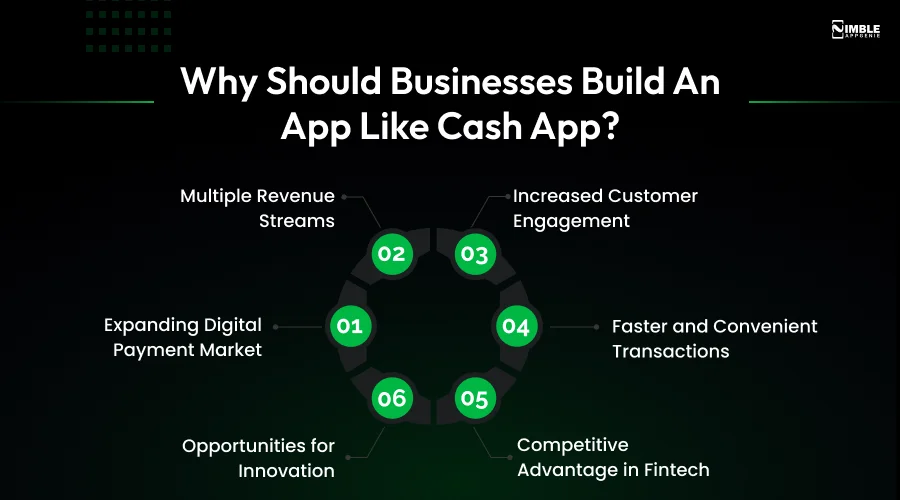
1. Expanding Digital Payment Market
As we discussed, the increasing growth of mobile payments and contactless transactions has surged the demand for secure, convenient payment platforms.
Businesses entering the market can benefit from a huge and consistently growing user base.
2. Multiple Revenue Streams
Payment apps generate revenue via distinct channels like premium services, transaction fees, investment services, cryptocurrency trading, and card payments. These varied revenue models make payment platforms more profitable.
3. Increased Customer Engagement
Mobile payment applications keep users well-connected to a brand through notifications, frequent transactions, and financial services. This continuous interaction boosts customer engagement and loyalty.
4. Faster and Convenient Transactions
Apps like Cash App enable users to send and receive money promptly. Businesses that provide such smooth financial services can notably improve user convenience and experience.
5. Competitive Advantage in Fintech
Building a feature-rich payment app assists businesses in creating a robust presence in the fintech industry and competing with leading platforms like Venmo and PayPal.
6. Opportunities for Innovation
Payment apps enable companies to integrate advanced technologies, like AI-powered fraud detection, biometric authentication, personalized financial services, and blockchain payments.
What are the Core Features Required for Cash App Development?
Building an app like Cash App is not enough; you should ensure seamless peer-to-peer payments, user engagement, and security.
Include the following core features for your app:
| Core Feature | Description | Why It’s Important |
| User Registration & Authentication | Secure signup using email, phone number, or social accounts with multi-factor authentication. | Ensures only legitimate users access the app and protects sensitive financial data. |
| Digital Wallet | Allows users to store, send, and receive money within the app. | Core for P2P transactions; provides convenience and instant fund access. |
| Bank Account & Card Integration | Link debit/credit cards or bank accounts for easy deposits and withdrawals. | Essential for smooth transfers and broader financial functionality. |
| Peer-to-Peer (P2P) Money Transfers | Send or receive money using $Cashtag, phone number, or email. | The primary functionality that defines the app’s usability and value. |
| Cash Card / Debit Card | A physical or virtual debit card connected to the wallet for spending. | Offers flexibility for payments and withdrawals, increasing user engagement. |
| Investing Features | Buy and sell stocks, ETFs, or cryptocurrencies directly in the app. | Provides additional revenue streams and keeps users engaged within the platform. |
| Instant Notifications & Alerts | Real-time updates for transactions, balances, and security events. | Enhances trust and keeps users informed of account activity. |
| Security & Fraud Prevention | End-to-end encryption, fraud detection, KYC/AML compliance. | Critical for regulatory compliance and building user trust. |
| Bill Payments & QR Payments | Ability to pay bills or scan QR codes to make payments. | Expands app utility beyond P2P transfers. |
| Transaction History & Reports | View past transactions, generate reports, and track spending. | Provides transparency and helps users manage finances effectively. |
| In-App Chat & Support | Customer support chat or helpdesk integrated within the app. | Improves user experience and resolves issues quickly. |
| Multi-Currency & International Transfers | Support for multiple currencies and cross-border payments. | Expands app reach and user base globally. |
Advanced Features to Include in an app like Cash App
After incorporating the core features, you can also add advanced features to boost engagement, improve user experience, and make your app stand out in the competitive fintech market.
| Advanced Features | Description | Why It’s Important |
| AI-Powered Fraud Detection | Uses machine learning and pattern analysis to detect suspicious transactions in real-time. | Extends basic security, prevents fraud, and builds user trust. |
| Personalized Offers & Rewards | Provides cashback, discounts, or loyalty programs tailored to individual users. | Increases engagement, retention, and encourages frequent app use. |
| Advanced Analytics & Insights | Offers intelligent spending trends, budgeting recommendations, and financial insights. | Helps users manage finances more effectively and adds value beyond basic transaction history. |
| Automated Savings & Recurring Payments | Allows users to schedule payments, automate bill payments, or set recurring investments. | Enhances convenience and keeps users actively engaged with the app. |
| Enhanced Crypto & Investment Features | Enables crypto wallets, recurring stock purchases, or fractional shares. | Attracts investors and differentiates the app from competitors. |
| Social & Community Features | Features like bill splitting, group requests, or social payment sharing. | Improves user interaction and adoption through social functionality. |
| Advanced Multi-Currency & Cross-Border Options | Real-time currency exchange rates, global wallets, and automatic currency conversion. | Expands global reach and makes the app useful for international users. |
Advanced features are optional and are added post-launching the core MVP to increase engagement, revenue, and global usability.
Step-By-Step Process: How to Build a Payment App Like Cash App?
A peer-to-peer payment app like Cash app development needs a strategic approach covering planning, design, security, technology, and compliance.
Below is a step-by-step payment app development process to help you understand the roadmap from idea to launch.
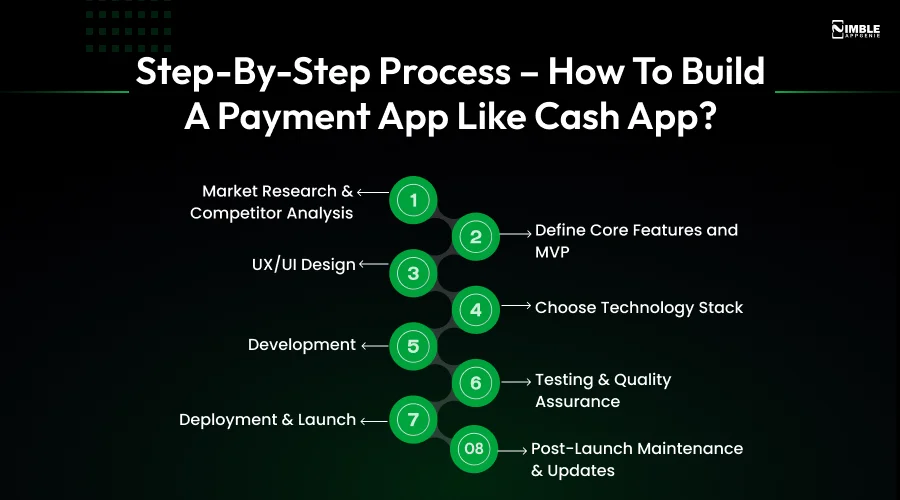
Step 1: Market Research & Competitor Analysis
- Identify your target audience and their needs.
- Analyze competitors like Cash App, Venmo, PayPal, and Zelle.
- Determine unique value propositions, such as AI fraud detection, crypto support, or social payment features.
Why it matters: Thus, you can ensure your app handles the real user issues and outshines competitors.
Step 2: Define Core Features and MVP
Decide on essential features for the minimum viable product (MVP):
- User registration & authentication
- Bank/card integration
- Digital wallet & P2P transfers
- Security & compliance (KYC/AML)
- You can add optional advanced features later, such as AI-powered fraud detection, crypto trading, or personalized rewards.
Why it matters: An MVP launch reduces development cost and validates your app idea with real users.
Step 3: UX/UI Design
- Create wireframes, prototypes, and app flows.
- Focus on simple navigation, minimal clicks, and intuitive dashboards.
- Include branding elements and design for both Android and iOS.
Why it matters: A smooth UX keeps users engaged and motivates repeat usage.
Step 4: Choose Technology Stack
- Choose the stack from the recommended table mentioned later in this blog.
- Confirm your sponsor bank and vendors first, since their APIs shape the design.
Why it matters: The right technology guarantees performance, scalability, and security.
Step 5: Development
- Build the ledger and transfer engine first, then bank linking and KYC.
- Integrate vendor APIs behind your own interfaces.
Why it matters: Structured development reduces bugs and ensures faster time-to-market.
Step 6: Testing & Quality Assurance
- Test reconciliation, failed transfers, duplicate requests, and dispute flows.
- Run security and penetration tests before beta.
Why it matters: QA ensures security, reliability, and user trust; critical for fintech apps.
Step 7: Deployment & Launch
- Publish on Google Play and the Apple App Store.
- Launch with transaction limits, then raise them as fraud data builds.
Why it matters: Proper deployment and marketing are vital for app visibility and user acquisition.
Step 8: Post-Launch Maintenance & Updates
- Ship security patches and regulatory updates on a fixed cadence.
- Scale infrastructure and add advanced features based on user data.
Why it matters: Continuous improvement keeps users satisfied and ensures long-term growth.
| Tip: For fintech apps, compliance, security, and scalability should be integrated from day one, not added later. |
MVP Scope: Build, Buy, Defer
| Capability | Decision |
| P2P transfers, $Cashtag, wallet ledger | Build |
| KYC, card issuing, bank linking | Buy (vendor APIs) |
| Fraud rules | Buy first, then build custom rules |
| Investing, crypto, lending, BNPL | Defer to post-MVP |
Architecture of a Payment App Like Cash App
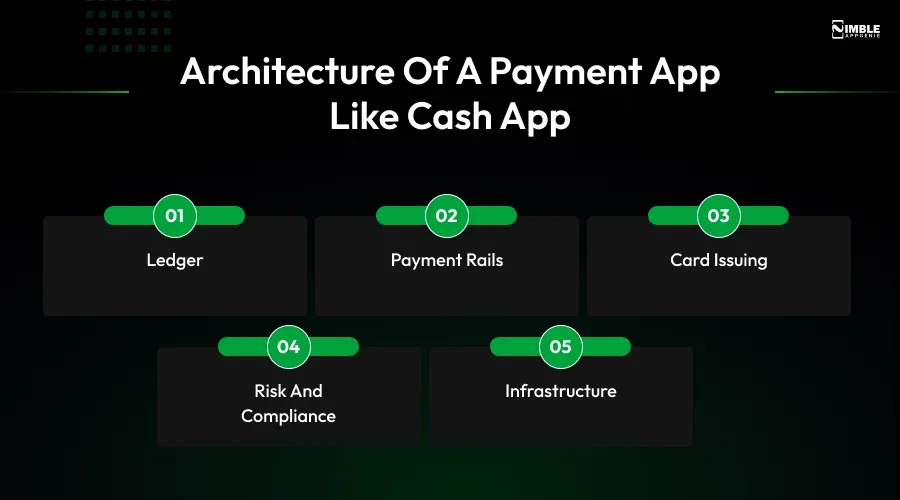
- Ledger: Double-entry, daily reconciliation, idempotent writes against bank statements.
- Payment rails: ACH, RTP/FedNow, push-to-card in the US; Faster Payments in the UK.
- Card issuing: A card processor plus a sponsor bank.
- Risk and compliance: KYC, sanctions screening, transaction monitoring, case management.
- Infrastructure: Microservices on cloud infrastructure, with full audit logging.
Development Timeline to Build an App Like Cash App
The timeline depends on feature complexity, security requirements, third-party integrations, and regulatory compliance. On average, eWallet app development takes 4 to 9 months, depending on scope.
| Development Stage | Estimated Timeline |
| Market Research & Planning | 1 – 2 Weeks |
| UI/UX Design | 2 – 3 Weeks |
| Backend & Frontend Development | 8 – 14 Weeks |
| Payment Gateway & API Integration | 3 – 5 Weeks |
| Testing & Quality Assurance | 3 – 4 Weeks |
| Deployment & App Store Launch | 1 – 2 Weeks |
| Post-Launch Maintenance & Updates | Ongoing |
These stages add up to 18-30 weeks. Licensing and sponsor-bank onboarding add 1-2 months; that’s how a full platform develops in 4-9 months overall. An MVP alone can be built in 3-4 months.
Key Factors That Affect Development Time
Several factors can impact the timeline when you build a payment app:
- Number of features (basic wallet vs advanced investment features)
- Third-party integrations, including banking APIs and payment gateways
- Security and compliance requirements such as KYC, AML, and encryption
- Platform choice (Android, iOS, or cross-platform development)
A well-planned development process helps businesses launch a secure and user-friendly payment application that can compete with platforms like Cash App.
Recommended Tech Stack to Develop an App Like Cash App
The tech stack determines your app’s scalability, security, and performance under high-volume financial transactions:
| Layer | MVP | At Scale |
| Mobile | Flutter or React Native | Native Swift and Kotlin for hot paths |
| Backend | Node.js or Java (Spring Boot) | Java or Go microservices |
| Database | PostgreSQL | PostgreSQL with ledger partitioning |
| Cloud | AWS | Multi-region (AWS, Azure, or GCP) |
| Bank linking | Plaid | Plaid plus direct bank APIs |
| KYC | Jumio, Onfido, or Trulioo | Multi-vendor orchestration |
| Notifications & analytics | Firebase, Twilio, Mixpanel, Datadog | Same |
Plaid links accounts; it doesn’t move money. Your BaaS partner and sponsor bank take care of money movement.
How Much Does It Cost to Develop an App Like Cash?
The cost to build a peer-to-peer payment app similar to Cash App can range from $40,000 to $250,000+, depending on functionality and complexity.
| App Complexity | Estimated Cost |
| Basic Payment App (MVP: wallet, P2P, bank linking, KYC) | $40,000 – $60,000 |
| Moderate Payment App (card, rewards, analytics) | $60,000 – $120,000 |
| Advanced Fintech App (investing, crypto, lending) | $120,000 – $250,000+ |
Factors that Affect the Development Cost
Several elements can influence the final fintech app development cost:
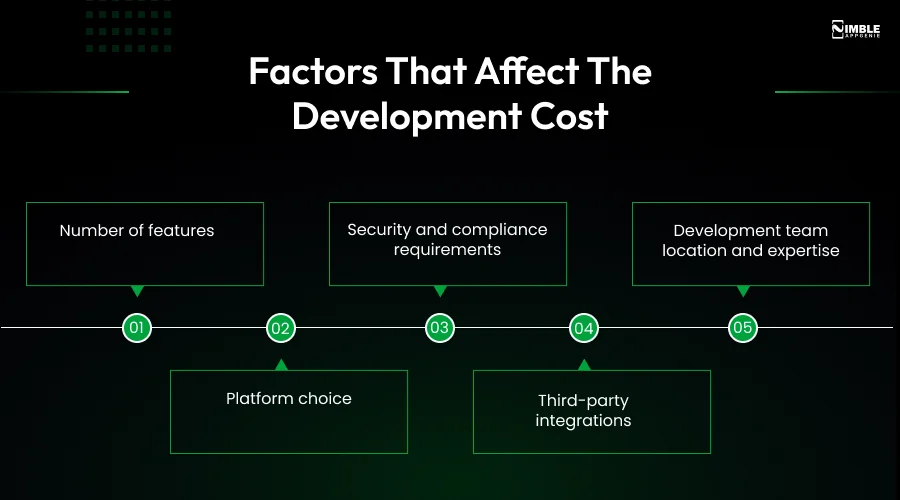
- Number of features such as cryptocurrency trading, investment services, or multi-currency support
- Platform choice, whether the app is built for Android, iOS, or both
- Security and compliance requirements, including KYC, AML, and fraud detection
- Third-party integrations, such as banking APIs and payment gateways
- Development team location and expertise
Costs After Launch
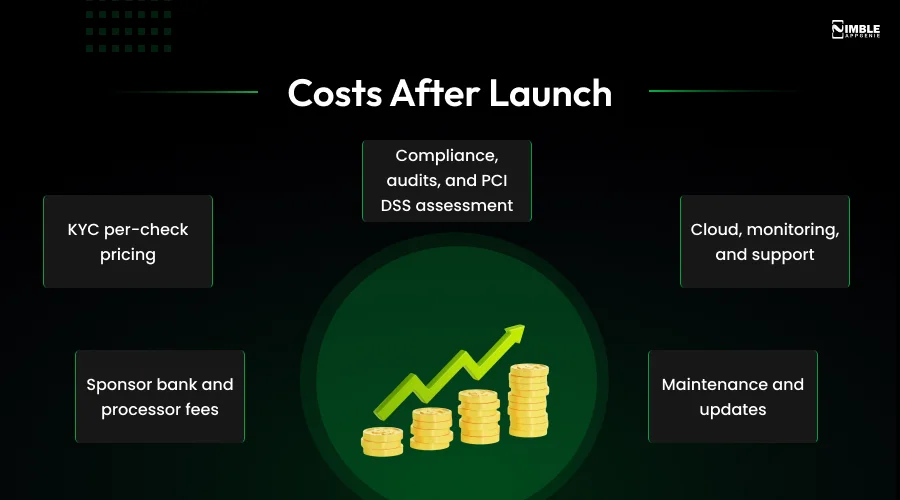
- Sponsor bank and processor fees
- KYC per-check pricing
- Compliance, audits, and PCI DSS assessment
- Cloud, monitoring, and support
- Maintenance and updates
Security and Compliance Requirements for a Payment App Like Cash App
Payment apps handle sensitive financial data, so robust security measures and compliance with financial regulations in every market you operate in are crucial.
Key Security Measures for Payment Apps
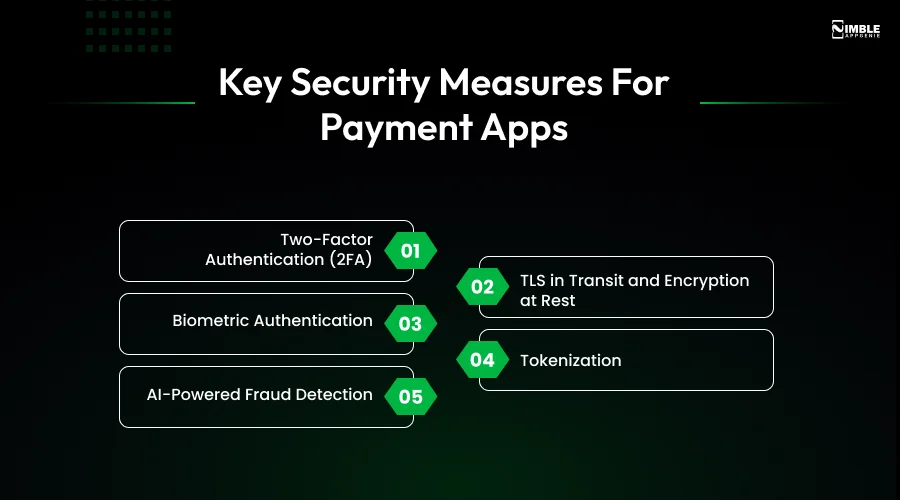
1. Two-Factor Authentication (2FA)
An extra layer requiring identity verification via OTP, biometric authentication, and an authenticator app.
2. TLS in Transit and Encryption at Rest
More accurate than a generic “end-to-end encryption” claim, since server-side fraud monitoring still needs to read transactions.
3. Biometric Authentication
Fingerprint login and facial recognition for secure, convenient access.
4. Tokenization
Replacing sensitive card information with secure payment tokens to decrease the risk of data breaches.
5. AI-Powered Fraud Detection
Machine learning that identifies unusual transaction patterns in real time.
Important Compliance Standards
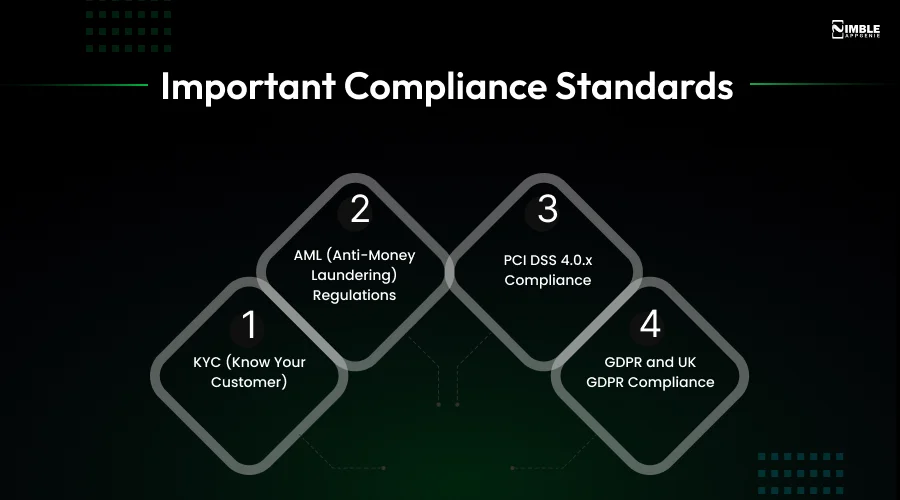
- KYC (Know Your Customer): Verifies user identity to control financial fraud and identity theft.
- AML (Anti-Money Laundering) Regulations: Helps detect and prevent illegal financial activities.
- PCI DSS 4.0.x Compliance: Ensures secure handling of payment and credit card information.
- GDPR and UK GDPR Compliance: Protects user data privacy in the EU and UK.
Monetization Strategies for an App Like Cash App
Recently, Cash App’s growth has come from card, lending, and BNPL – not transfer fees. Understand these eWallet monetization strategies before choosing your model.
| Model | What It Takes |
| Lending (Borrow-style) | Credit risk system, lending license, capital |
| Card interchange | Card issuing processor, sponsor bank |
| Instant deposit fees | Push-to-card or RTP rails |
| BNPL | Merchant network, underwriting |
| Brokerage and crypto commissions | Broker-dealer partner |
| Transaction fees, subscriptions, partnerships, ads | Traffic and engagement first |
| Tip: Start with core methods, such as transaction fees and card services in the MVP, then add subscriptions and trading commissions as the user base grows. |
Key Challenges in Developing an App Like Cash App
Building a Cash App-like peer-to-peer payment platform is not as simple as it seems; it involves multiple technical, regulatory, and operational challenges.
Businesses should overcome these challenges to build a user-friendly digital payment application.
For that, they should focus on regulatory compliance, reliable infrastructure, and security to develop fintech platforms that outshine leading payment apps like Cash App and Venmo.
Below are some of the major challenges faced during payment app development, with solutions to overcome them.
| Challenge | Solution |
| Regulatory Compliance | You should implement strong compliance frameworks such as KYC (Know Your Customer), AML (Anti-Money Laundering), and PCI DSS standards. Partner with identity verification providers to simplify compliance processes. |
| Security and Fraud Prevention | Use end-to-end encryption, biometric authentication, multi-factor authentication (MFA), and AI-powered fraud detection systems to safeguard financial data and prevent unauthorized access. |
| Banking and Payment API Integration | Integrate reliable financial APIs such as Plaid, Stripe, and PayPal to ensure flawless banking connectivity and secure payment processing. |
| Handling High Transaction Volumes | Build the app on a scalable cloud infrastructure like AWS or Google Cloud and use a microservices architecture to support high-volume real-time transactions. |
| User Trust and Data Privacy | Businesses should implement strong data protection policies, transparent privacy controls, and secure data storage systems to build user confidence in the platform. |
| Cross-Platform Performance | Use frameworks like React Native or Flutter and conduct extensive testing to ensure smooth performance across iOS, Android, and web platforms. |
Implement the right technologies and compliance measures to create reliable fintech apps that deliver smooth digital experiences and foster lasting user trust.
How Can Nimble AppGenie Help Develop an App Like Cash App?
As a trusted fintech software development company, Nimble AppGenie has delivered true results for global clients by developing custom digital wallet and e‑wallet platforms that manage transactions, support multiple currencies, and feature user‑centric design.
Case Study: PayByWallet – A Digital Wallet Solution
Challenge: Instant P2P transfers, high-level security, multi-currency support, and regulatory compliance.
Solution: Secure wallet platform with real-time P2P transfers; fraud detection, KYC, and AML; bank APIs and payment gateways; Android and iOS apps built with Flutter.
Results: 3-month launch; 20% lower operational costs through automation; 50,000+ transactions in the first month; 99.9% transaction success rate.
Why Choose Nimble AppGenie for Your Payment App
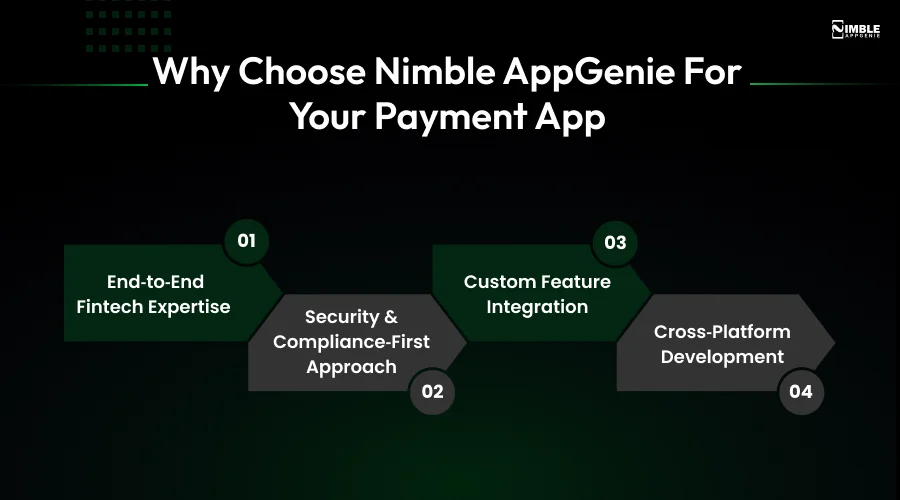
- End‑to‑End Fintech Expertise: From onboarding, design, and compliance planning to integration, launch, and ongoing support, Nimble AppGenie covers the full app development life cycle.
- Security & Compliance‑First Approach: The team of app developers implements essential security standards like PCI DSS, KYC & AML compliance, and robust encryption for secure financial data handling.
- Custom Feature Integration: Whether it’s AI‑powered fraud detection, multi‑currency wallets, investment modules, or real‑time dashboards, the fintech app development company creates future‑ready payment apps.
- Cross‑Platform Development: Using modern frameworks such as React Native and Flutter, the company builds high‑performance apps for both Android and iOS.
By partnering with Nimble AppGenie, businesses can leverage real success examples to build not only secure and scalable payment solutions but also fintech apps that deliver high user engagement and market differentiation.
Conclusion
The digital payments industry continues to grow rapidly, driven by apps like Cash App that simplify peer-to-peer transfers, digital wallets, and investment options.
For startups and fintech businesses, building a Cash App-like app offers an opportunity to capture a share of this expanding market.
By focusing on core and advanced features, robust security, smooth user experience, and regulatory compliance, you can create a payment app that meets user expectations while standing out in a competitive landscape.
Leveraging market insights, development best practices, and emerging trends like AI-powered fraud detection and cryptocurrency integration can ensure your app is future-ready and scalable.
FAQs
Yes, if you don’t copy code or trademarks and you’re properly licensed. In the US, that means state money transmitter licenses or a sponsor-bank partner; in the UK, FCA authorization or a regulated partner. KYC, AML, and PCI DSS apply either way.
Common technologies include: Frontend: React Native, Flutter, Swift (iOS), Kotlin (Android). Backend: Node.js, Java, Python, Ruby on Rails. Database: PostgreSQL, MongoDB. Cloud & DevOps: AWS, Google Cloud, Azure. Security: PCI DSS-compliant frameworks, encryption libraries, and tokenization services.
Essential APIs include payment gateway APIs (Stripe, PayPal, Visa, Mastercard) for transactions, banking APIs for deposits and withdrawals, KYC/AML verification APIs for user authentication, and notification APIs (SMS, email, push).
On average, developing a secure, feature-rich payment app takes 4–9 months, depending on scope, complexity, platform choice, and integrations. An MVP with core features can be built in 3–4 months.
Use cloud infrastructure for reliability, implement microservices for flexible feature expansion, tighten security and compliance as your user base grows, integrate analytics to monitor transactions and behavior, and continuously adopt emerging trends like AI fraud detection or blockchain payments.
Peer-to-peer payment apps are highly secure when they use encryption, two-factor and biometric authentication, tokenization of card and transaction data, and AI/ML-based fraud detection. Compliance with PCI DSS, KYC, and AML regulations is essential for legal and secure operation.
The cost ranges from $40,000 to $250,000+, depending on the number of features, security and compliance requirements, platform choice, and third-party integrations like banking and payment APIs.

Niketan Sharma, CTO, Nimble AppGenie, is a tech enthusiast with more than a decade of experience in delivering high-value solutions that allow a brand to penetrate the market easily. With a strong hold on mobile app development, he is actively working to help businesses identify the potential of digital transformation by sharing insightful statistics, guides & blogs.
Table of Contents




No Comments
Comments are closed.