


The fitness industry has completely changed in the last five years. Earlier, fitness mostly meant gym memberships, personal trainers, and offline diet consultations. But today, the way people work out, track progress, and receive guidance has moved into a digital ecosystem.
Users now want personalized workout guidance, progress tracking, and motivation, all from their mobile phones. Workout planner apps like Muscle Booster, Strava, and Fitbit have captured this demand by offering customized workout plans backed by AI and interactive workout content.
Muscle Booster has gained massive traction because it solves a universal problem. People don’t know what workout to do, how to track their improvements, or how to stay motivated.
For businesses, this shift presents a powerful opportunity to develop an app like Muscle Booster. The demand for health and fitness is growing, and users are willing to pay for convenience. If you too want to become the next industry leader in the fitness sector, then this blog is a must-read.
In this blog, we will discuss the steps to develop a workout planner app like Muscle Booster, its core features, monetization strategies, and the budget required to build a robust fitness solution.
So, let’s begin!
What is the Muscle Booster App?
A muscle booster is a workout planner app that allows users to plan or create their workout routine to build muscle, lose weight, or improve overall health. It works like a virtual personal trainer. Besides, it is one of the best fitness apps for beginners or intermediate trainees.
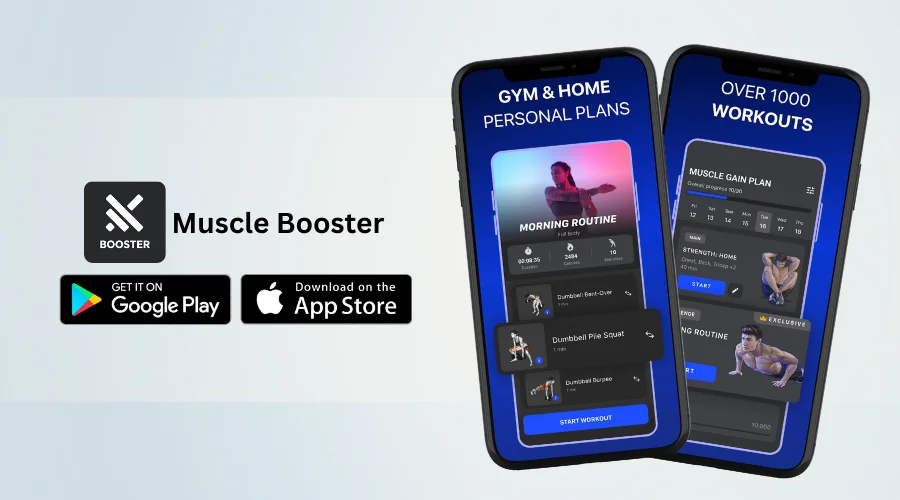
Muscle Booster tries to provide personalized training programs based on users’ data and goals rather than a one-size-fits-all routine. Additionally, if a user does not have equipment or a gym setup, they can choose variety and flexibility due to the extensive exercise library.
Is a Workout Planner App Still Worth Building?
Before you invest in any workout planner app development, you need clarity on one question: Is there still demand? The answer for the fitness app market is a strong yes. Let’s justify this statement with the following fitness app statistics.
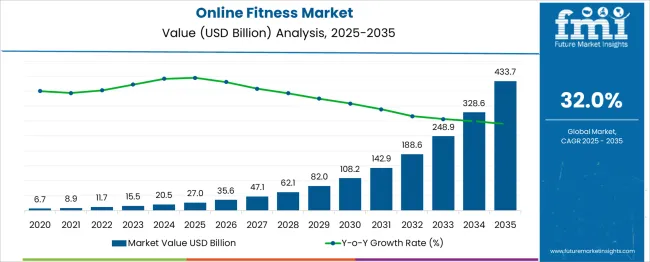
The global market size of the fitness industry is forecasted to reach $433.7 billion by 2035. North America dominated the global fitness app market in 2024, accounting for the largest revenue share of 39.93%. This shows that people are shifting towards home workouts and guided training.
Wearable apps like Strava, Apple Fitness+, Nike Training Club, and so on are making people more aware of their daily activity. This increases the demand for mobile applications.
AI personalization is becoming mainstream. It means people expect more customized workout plans rather than generic ones.
But why is now the time to build a workout planner app?
- Subscriptions are normalized.
- Fitness influencers are pushing digital coaching.
- Remote and home workout adoption has increased home workout adoptions.
The opportunity is not just in developing a fitness app but in creating a personalized digital coaching ecosystem. This is exactly where apps like Muscle Booster succeed.
Must-have Features in an App Like Muscle Booster
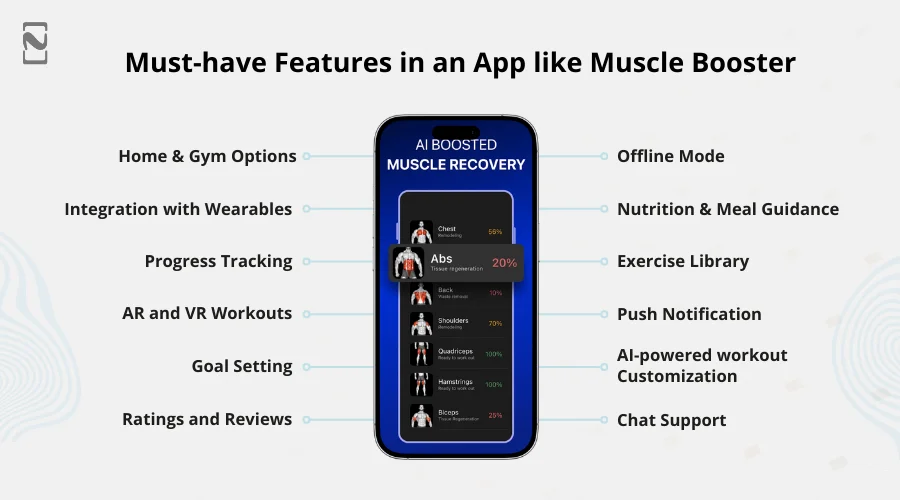
Features can make or break your workout planner app. So, it is vital to do a thorough analysis to choose the best features for your app. We have jotted down some crucial fitness app features that you can take into consideration while developing a muscle booster-like app.
1] Home and Gym Options
Another feature you can integrate into your app is home and gym options. While a gym gives users lots of equipment and space, it’s not the only place to work out. Your app can help users to follow their plans, which is especially designed for their living room or any other space.
2] Offline Mode
Users do not require any wifi or mobile data to use the app. They can simply download the workout videos and can exercise anytime, anywhere, at home or in the gym.
3] Integration with Wearables
You might have seen that many apps like Google Fit or Fitbit use wearable fitness technology. They integrate their apps with other wearable devices.
So, to be in the race and stand out, you can also provide an integration with a wearables feature to track data from other apps and devices.
4] Nutrition and Meal Guidance
When you develop an app like Muscle Booster, you should provide a nutrition and meal guidance feature in it. Users get tips and meal plans to match their fitness goals.
Your app can suggest what to eat before and after workouts. This helps users build muscle, lose fat, or stay healthy while complementing their exercise routine.
5] Progress Tracking
Users can easily track their progress. For example, they can track their exercise, weight, and body changes over time. With this, they can see improvements and stay motivated by knowing exactly how much progress they’ve made toward their fitness goals.
6] Exercise Library
Your workout planner app should definitely provide a collection of exercises with clear instructions and videos. They can learn proper form and try new workouts. This ensures variety, safety, and better results in every session.
7] AR and VR Workouts
If you want to stand out from apps like Muscle Booster or Fitbit, you should provide an AR/VR workout feature.
Users can follow exercises in 3D, seeing correct form in real time, track movements, and get instant feedback for better performance. AR VR in fitness apps makes workouts even more interactive and immersive.
8] Push Notification
The push notification feature is mandatory for every fitness app. Users can get reminders and motivational messages. It allows users to stay on track, complete workouts, and maintain healthy habits. This keeps their fitness goals in focus every day.
9] Goal Setting
Users can define specific fitness targets, like lifting certain weights or running specific distances. Your workout planner app, like Muscle Booster, can create step-by-step plans, help prioritize goals, and motivate users to achieve them.
10] AI-powered workout Customization
AI in fitness apps is very common. When you develop an app like Muscle Booster, it is vital to integrate this feature. It creates a custom workout plan with the help of AI that fits users’ fitness goals and needs. It also updates the user’s plan as they progress, so it always fits their requirements.
11] Ratings and Reviews
With this feature, users can share their experience and rate workouts within the workout planner app. This helps new users choose the best plans and gives feedback to improve the Muscle Booster-like app’s features and content.
12] Chat Support
If a user has any query or doubt, they can get help through live chat. Whether it’s about exercise, nutrition, or app issues, support is available to guide users quickly and make their fitness journey smoother.
Steps to Develop an App like Muscle Booster
To create an app like Muscle Booster, it’s vital to follow a clear roadmap that covers each development stage. We’ve outlined a step-by-step process to build your workout planner app similar to Muscle Booster.
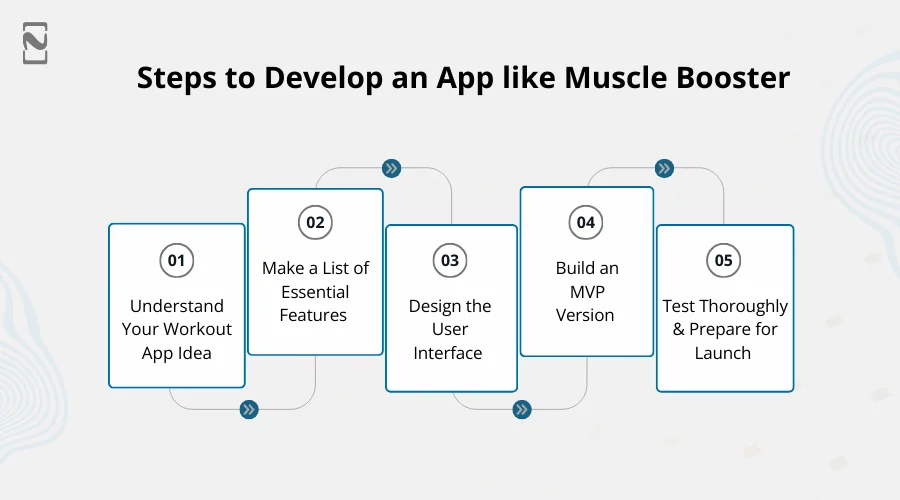
Step 1: Understand Your Workout App Idea
First of all, you have to clearly define what your workout planner app will do. Muscle Booster focuses on fitness, exercises, and tracking progress. So, you have to decide your app’s main features and goals.
Now, think about your target audience. What type of people are you going to target? Are they beginners, gym-enthusiasts, or professional athletes? Also, just decide whether you want to build a particular workout app for women or target everyone.
Besides, you should thoroughly research your competitors to see what works and what’s missing in their apps. This will help you fill the gap and help you stand out.
Step 2: Make a List of Essential Features
Now, list all the core features your Muscle Booster-like app should have. You should include exercise guides, workout timers, progress trackers, diet logs, reminders, and social sharing. But first, you should decide whether you want a free version, a premium version, or both.
Additionally, your priority should be the most essential features first. Now, create user stories like simple sentences describing what a user should be able to do. For example, “I want to track my daily workout.”
This will guide developers and designers. Clear planning ensures your workout planner app is organized, user-friendly, and avoids feature overload.
Step 3: Design the User Interface
Design is about how the app looks and feels. So, you should create simple, clean layouts with clear buttons, readable fonts, and appealing colors. Also, create a mobile app wireframe and sketch screens for each feature to show what users see and tap.
Don’t forget to focus on usability. Users should be able to easily navigate from workouts to progress charts without confusion. For that, you can use design tools like Figma or Adobe XD.
Also, you can add small motivational touches like badges or streak counters to encourage engagement. Good mobile app design keeps users coming back, reduces confusion, and makes your workout planner app enjoyable.
Step 4: Build an MVP Version
Now, to develop an app like Muscle Booster, it is vital to first build an MVP app. It will help you test your workout planner app idea with real users. To validate your app idea, it is vital to do a thorough market study and then define the must-have features that solve real users’ issues.
After your MVP shows promise, you should focus on making your app personalized as Muscle Booster does. You can add AI-based workout recommendations, custom training plans, and adaptive exercise difficulty. These features help users feel like the app understands their needs.
Step 5: Test Thoroughly and Prepare for Launch
Before you launch the workout planner app, it is vital to do mobile app testing. This means checking for bugs, fixing navigation issues, and making sure every button works properly. Additionally, you should test on multiple devices to ensure everything looks and works well.
Once testing is complete, prepare your app store listing, create eye-catching screenshots, and write a clear app description. You should also plan a small marketing campaign to attract your first users. A clean launch sets a strong foundation and increases your chances of success.
Cost to Build an App like Muscle Booster
The cost to develop an app like Muscle Booster typically ranges from $25,000 to $80,000 for a basic version. For a full-featured Muscle Booster-like app, the development cost falls around $100,000 to $200,000.
It is totally dependent on factors like app complexity, features, technology integrations, development team, and so on.
| App Complexity | Cost Estimation |
| Simple Muscle Booster-like App | $25,000-$80,000 |
| Intermediate Muscle Booster-like App | $80,000-$150,000 |
| Highly Complex Muscle Booster-like App | $200,000+ |
Let’s say you want to implement AI/ML technology, voice integration, and wearable device integration, then the cost to make a fitness app like Muscle Booster will increase your budget. So, it is best to first decide your budget and make a proper strategy, then only invest.
Monetization Strategies for Workout Planner Apps like Muscle Booster
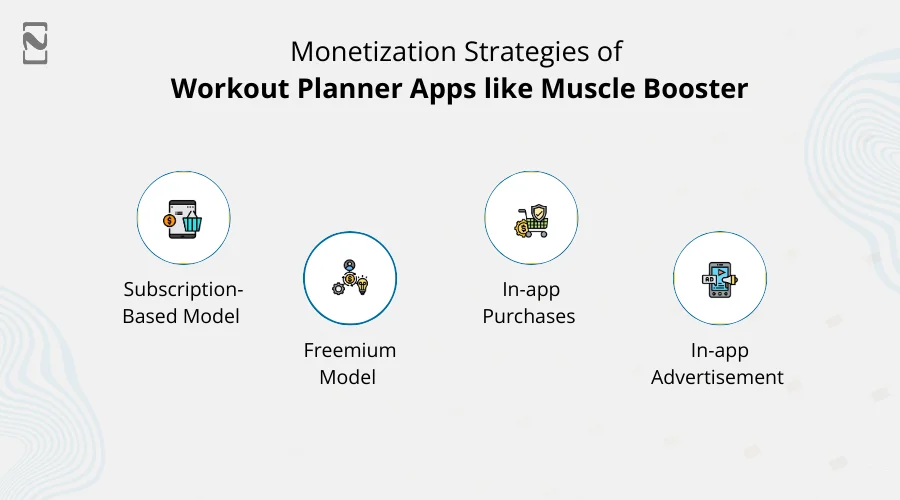
When you develop an app like Muscle Booster, one of the most important things to figure out is how the app will make money. You want something that feels natural to users but still brings in huge revenue. Below are the vital fitness app monetization strategies that you must take into account.
-
Subscription-Based Model
Subscription-based app monetization model is the most common and reliable revenue strategy for a fitness app like Muscle Booster. You can provide monthly, quarterly, or yearly plans with discounted prices for long-term commitments.
You can begin with a 7-day free trial period that gives users a preview of their personalized workout plan. This helps them understand the value before they subscribe.
-
Freemium Model
You can provide limited core features for free and unlock premium features behind a paywall. It is the most effective approach for making huge revenue. In this, users can access basic workouts or limited features for free.
However, advanced features remain locked behind a premium upgrade. This model encourages users to try the app first, experience its benefits, and then upgrade when they’re ready.
-
In-App Purchases
Workout planner apps like Peloton or Muscle Booster often provide optional paid add-ons. You can provide one-time purchases that include specialized training programs, targeted workout challenges, exclusive video content, or meal plans.
However, these extras are not required. They give users multiple ways to personalize their fitness journey while adding a revenue stream for the workout planner app.
-
In-App Advertisement
Lastly, you can generate revenue from the workout planner app like Muscle Booster by running in-app ads. For users who prefer to use only the free version, you can display lightweight and non-intrusive ads.
This monetization strategy ensures you’re still earning money from users who are not ready to subscribe. Just make sure the ads don’t interfere with the workout flow or overall usability of the mobile application.
Challenges While Developing a Workout Planner App
Fitness app development comes with many challenges. Developers might come across many challenges while developing a workout planner app. Below are some common challenges and their solutions you must check out.
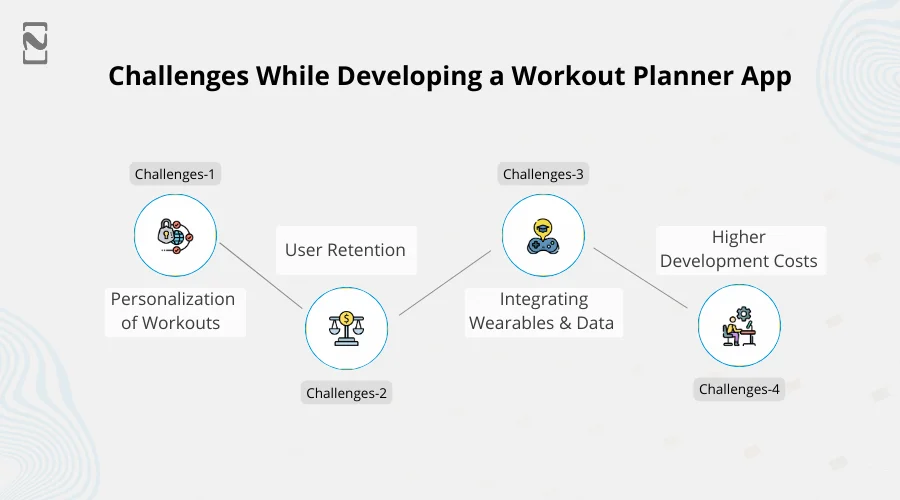
► Personalization of Workouts
It is quite complex to create workout plans that fit everyone’s fitness level, goals, and body type. A generic plan may not work for everyone. This can lead to lower user engagement.
Solution:
A dedicated development team can leverage AI and ML to customize workouts based on user data, goals, and progress. Your workout planner app can update plans automatically as users improve. This ensures each workout is safe, effective, and motivating.
► User Retention
If your workout planner app like Muscle Booster, is not engaging and seems boring, then users lose motivation and stop using it after a few weeks.
Solution:
So, it is vital to add gamification, challenges, reminders, progress tracking, and AR/VR experiences in your app. Besides, you can provide regular alerts, rewards, and social sharing to keep users engaged and motivated. This increases user retention for your app.
► Integrating Wearables and Data
Another challenge developers might face is collecting and syncing data from multiple devices, like smartwatches, heart rate monitors, and step trackers. If it is not comparable, users might get frustrated.
Solution:
Mobile app developers can use standardized APIs and test with popular wearable devices. It is vital to ensure smooth integration, accurate data syncing, and implement strong API security with encryption and authentication to protect user data across all devices.
► Higher Development Costs
Developing a feature-rich workout planner app like Muscle Booster with AR/VR, wearable integrations, and nutrition guidance can be quite costly.
Solution:
You can use scalable cloud services, modular app architecture, and third-party SDKs for features like AI and AR/VR. This can somehow reduce the Muscle Booster app development cost.
Choose Nimble AppGenie to Develop an App like Muscle Booster
Picking the right app development team is one of the most essential tasks when developing an app like Muscle Booster. Nimble AppGenie is the best choice. Founded in 2017, we have been providing fitness app development services to clients all over the world.
We have over 8+ years of experience in creating top-notch and high-performance fitness and workout apps with the latest technologies. From mediation, yoga, to wellness and fitness applications, our developers are proficient in making every type of fitness app.
Additionally, Nimble AppGenie pays close attention to performance and makes sure the app loads fast, handles large content files, and stays stable as your user base grows.
Therefore, if you want a development partner that understands both fitness tech and user behavior, we’re the reliable fit. So, book your free consultation now!
Final Thoughts
The fitness industry is booming at a high pace, and now is the perfect time to develop an app like Muscle Booster. You now understand the fitness and workout industry market size and the huge opportunity it shows.
Through this blog, you have learned how to build a workout planner app like Muscle Booster, features to add, monetization models, and challenges you will face while developing a workout app.
No matter if you want a simple MVP version or a full-featured fitness app, it is best to have a clear roadmap or strategy that can help you take your business to new heights.
FAQs
You can earn money from your fitness application in the following ways:
- In-app purchase
- Subscription model
- In-app advertising
- Freemium model

Niketan Sharma, CTO, Nimble AppGenie, is a tech enthusiast with more than a decade of experience in delivering high-value solutions that allow a brand to penetrate the market easily. With a strong hold on mobile app development, he is actively working to help businesses identify the potential of digital transformation by sharing insightful statistics, guides & blogs.
Table of Contents
No Comments
Comments are closed.