

 Free Consultation
 PCI-DSS Compliant
 GDPR Ready
 ISO 27001
 NDA Protected
 AI Services
 AI App Development
 Generative AI Development
 AI Chatbot Development
 AI Integration Services
 AI Consulting Services
 AI For Fintech
 AI Financial Assistant Solution
 AI Insurance Agent Development
 Tech Stack
 OpenAI / GPT-4
 Claude / Anthropic
 Gemini / Google AI
 Llama / Open Source
 LangChain / LlamaIndex
 Pinecone / Pgvector
 AWS / Azure AI


 Fintech Solution
 Core Fintech
 App Development
 Neobank Solutions
 eWallet Solutions
 Lending Software
 Banking Solutions
 BNPL Solutions
 BNPL Solutions
 Insurance App
 Wealth Management
 Crypto & DeFi
 Blockchain Development
  Payroll Software
 DeFi Solutions
 Crypto Wallet
 Crypto On/Off Ramp
 Crypto Exchange
 Trading Platform
 Payments
 Compliance
 Regulations & Compliance
 Fraud Detection
 Lending Ecosystem
 P2P Lending Platform
 Mortgage Software
 Engagement
 Fintech Outsourcing

 Mobile Development
 Mobile App Dev
 iOS App Development
 Android App Development
 React Native
 Flutter Development
 Web Solution
 Node.js Development
 React.js Development
 Angular Development
 App Services
 UI/UX Design
 App Maintenance
 By Stage
 MVP Development
 Industry Solutions
 Healthcare App Dev
 Education App Dev
 Travel App Dev
 Real Estate App Dev
 Logistics Software
 Social Media App

 Hire Mobile Developers
 Hire iPhone Developers
 Hire Android Developers
 Hire React Native Devs
 Hire Flutter Developers
 Hire Web Developers
 Hire Node.js Developers
 Hire Angular Developers
 Hire PHP Developers
 Hire Laravel Developers
 How It Works
 Pre-Vetted Developers
 Ready In 48 Hours
 NDA From Day One
 Replace Guarantee
 Company
 About Us
 Our Work Process
 Portfolio
 Case Studies
 Blog / Insights
 Careers
 Contact Us
 Awards
 Recognition


 Offices



Key Takeaways:
- A fitness app like ClassPass works as a subscription-based marketplace where users can book classes from multiple gyms and studios using credits.
- Must-have fitness app features include class search, booking system, subscription management, payment integration, studio dashboards, and admin controls.
- The popular fitness app monetization strategies are monthly subscriptions, commission per booking, and featured studio listings.
- The fitness app development process typically includes market validation, business model planning, MVP development, UI/UX design, backend setup, testing, and launch.
- The cost to build a fitness app like ClassPass usually ranges from $25,000 to $200,000, depending on app complexity and marketplace features.
- Nimble AppGenie delivers the best multi-vendor architecture and real-time fitness app development booking system for long-term scalability.
Gym owners and fitness startups are losing revenue because traditional memberships no longer meet customer expectations. Today’s users want flexible access to multiple studios, easy booking, and subscription-based payments, all in one place.
That is why many founders are now looking to build a fitness app like ClassPass. It is a marketplace where users can discover, book, and pay for classes through a subscription model.
The opportunity is growing really fast. As per Allied Market Research, the online fitness market is forecasted to hit $250.7 billion by 2032, driven by mobile adoption and demand for flexible workout options.
Users prefer booking yoga, HIIT, pilates, and gym sessions through apps instead of committing to one studio. This shift has created a huge demand for fitness marketplace app development and subscription-based fitness booking platforms.
Therefore, if you are planning to build a fitness class booking app like ClassPass, you need more than just basic features. You need the right business model, multi-vendor system, smart pricing structure, and scalable technology.
In this blog, we will discuss the ClassPass-like app development process, including key features, cost factors, challenges, and revenue models.
So, let’s begin!
What is the ClassPass App?
ClassPass is a subscription-based fitness class booking marketplace. It connects users with multiple gyms, studios, and trainers through one single app. Instead of buying a membership from one gym, users pay a monthly fee and receive credits.
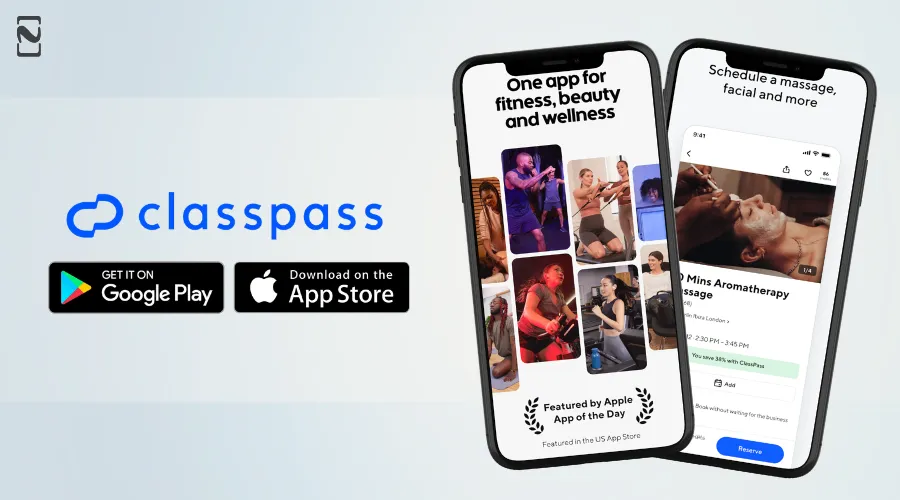
Also, users can use these credits to book different classes at various fitness centres. This model solves two major problems. They get flexibility, and studios fill empty slots.
- How Does the Credit System Work?
Users buy a monthly subscription plan. Each plan offers a set number of credits. Popular classes during peak hours require more credits, while off-peak sessions cost fewer credits. This demand-based system helps balance bookings.
- Multi-vendor Marketplace Structure
The app works as a fitness aggregator platform. Multiple studios list their classes, set availability, and manage schedules. The platform manages bookings, payments, and commissions.
- Revenue Model
A ClassPass-like app earns through monthly subscription fees, commission per booking, and featured studio promotions. This is why many founders are investing in fitness marketplace app development. It creates recurring revenue and scalable growth.
Why to Build a ClassPass-like Fitness App in 2026: Market Opportunity
The demand for subscription-based fitness services continues to grow as users shift from traditional gym memberships to on-demand class booking apps.
These changing habits are creating huge opportunities for founders planning fitness class booking app development in 2026. Let’s take a look at some vital fitness app statistics showing this market’s growth:
- The market size of the fitness app industry is forecasted to hit $33.58 billion by 2033.
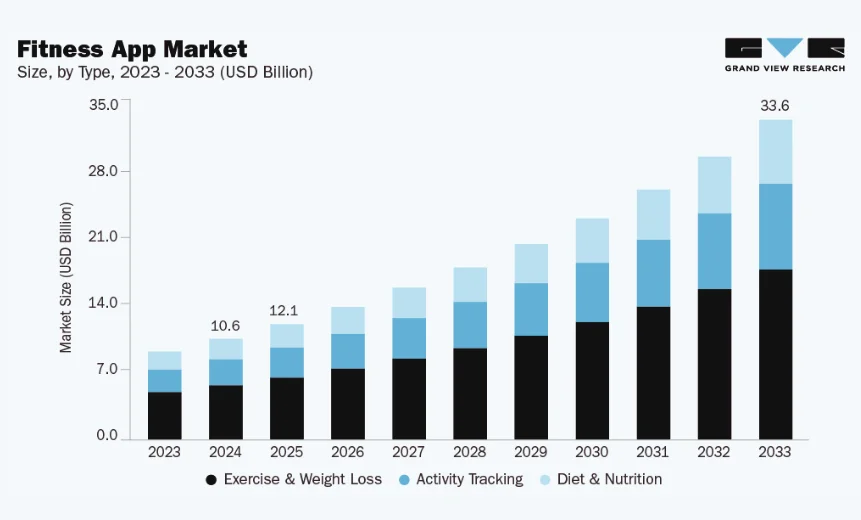
- If we look at the US alone, the fitness applications market was projected to be $3.76 billion in 2024 and is expected to reach $10.65 billion by 2032.
- The fitness apps revenue is worth $9.22 billion in 2026, and it will hit $9.89 billion by 2030. 12.63% will be the user penetration in 2026.
- 248 million all-time reservations, ClassPass users have booked.
- There are more than 200,000 health and fitness applications. This ecosystem is enabled by mobile phones.
These fitness application statistics show that there is a real demand and strong growth opportunities for creating a fitness application like ClassPass.
Must-have Features Required to Build a Fitness App Like ClassPass
If you are confused about what features to add to an app like ClassPass, then you should check out the table below. It usually has three main panels: User, Trainer, and Admin.
Each panel supports a different part of the platform. Let’s take a look at the must-have fitness app features for a scalable and subscription-based fitness booking solution.
1. User Panel
| Features | Why It Matters |
| User registration | It enables a personalised booking experience. |
| Class search and filters | It helps users to quickly find relevant fitness sessions. |
| Credit-based subscription | It supports a recurring revenue model. |
| Class-booking system | It has the core functionality of a fitness booking app |
| Payment integration | It ensures seamless transactions. |
| Booking history | It improves user convenience. |
| Rating and reviews | It builds trust in the marketplace. |
| Push notifications | It reduces missed bookings |
2. Trainer Panel
| Features | Why it Matters |
| Studio registration | It expands the fitness marketplace network. |
| Class management | It keeps schedules accurate. |
| Availability and capacity control | It prevents overlooking. |
| Booking management | It helps the studio manage attendance. |
| Earnings dashboards | It boosts financial visibility. |
3. Admin Panel
| Features | Why it matters |
| User management | It maintains the platform’s security. |
| Studio Management | It makes sure the utility controls. |
| Subscription and credit control | It keeps the business model balanced. |
| Communion management | It supports revenue operations. |
| Payment monitoring | It presents payment errors or issues |
| Reports and analytics | It supports business decisions. |
Advanced AI Features to Integrate in a ClassPass-Like App
When you add advanced AI features to a fitness class booking app, it can improve user experience, automate operations, and help your app grow faster. These features are not required for an MVP, but they become vital as the platform scales. Let’s take a look:
| Advanced Features | Why it Matters |
| Personalized class recommendations | It suggests classes based on user activity and preferences that increase bookings. |
| Demand-based credit pricing | It adjusts credit costs based on popularity and peak hours. |
| User behaviour analytics | It tracks booking and cancellation patterns to boost retention. |
| Demand forecasting | It predicts busy time slots to help studios plan better. |
| AI chat support | It manages booking and subscription queries instantly |
| Personalized subscription suggestions | It suggests suitable credit plans based on usage history. |
| Studio performance insights | It gives studios AI-based suggestions to improve class occupancy. |
| Smart cancellation prediction | It identifies users likely to cancel and sends notifications or incentives. |
| Dynamic waitlist management | It automatically fills cancelled spots with waitlisted users. |
How to Develop an App Like ClassPass?
To build an app like ClassPass, you have to figure out your USP and validate the idea to check the market fit. Following the proper roadmap helps you create high-performing fitness applications.
Here is the step-by-step ClassPass-like app development process.

Step 1: Market Research & Niche Validation
First of all, do proper market research of user behavior, competitor apps, and demand for subscription-based fitness services. Just find out which workout types, areas, or user segments are really underserved.
Additionally, you can analyze ClassPass and similar best fitness apps to understand pricing models and studio partnerships. This step makes sure your fitness app targets real market needs and avoids adding unnecessary features.
When you validate the niche, you can easily estimate potential revenue, studio interest, and user adoption. This makes your fitness marketplace app development strategy precise and investment-ready.
Step 2: Define Business Model
Now, decide how your fitness app will make money. You have to select between a credit-based subscription, a pay-per-class subscription, or a hybrid approach. Also, define monthly plans, credit allocation, cancellation policies, and studio commissions.
If you have clear fitness app ideas, it will ensure that your app’s backend manages subscriptions correctly from day one. The best model also helps attract investors and studios, as they can see predictable revenue potential.
You have to set up this foundation in the beginning. It can avoid costly adjustments later during the development of your ClassPass-like fitness app.
Step 3: Feature Planning and MVP Development
Now, list all must-haves and advanced features, and separate MVP app features from future upgrades. You can add must-have features like booking, credit subscriptions, search, and different panels.
Besides, adding the advanced features is also vital to stand out. But these can be added later. You should prioritise features to make sure that MVP is lean but functional, reduces development costs, and allows early validation.
This method guarantees your fitness class booking app meets market demand and gives users what they need.
Step 4: Create a UI/UX Design for Flow
UI/UX design should make your app’s booking classes intuitive and visually appealing. You can create easy navigation, clear class information, simple credit dedication flow, and easy-to-use studio dashboards.
Additionally, admin dashboards should highlight major metrics very clearly. The best fitness app design reduces drop-offs, increases repeat bookings, and boosts subscriptions. When you make an app like ClassPass, a visually appealing design directly impacts user retention.
Step 5: Develop the Backend Infrastructure
Now, backend infrastructure is vital to develop a fitness app like ClassPass. It is a robust backend to manage users, studios, and admin operations simultaneously. The dedicated development team can add real-time slot availability and credit tracking.
Additionally, Multi-vendor architecture ensures studios can update schedules, track bookings, and view revenue analytics independently. A scalable backend prevents downtime as users and studios grow.
Proper backend planning guarantees that your fitness marketplace app can operate smoothly in cities, manage high booking volumes, and support subscription and credit-based revenue.
Step 6: Test and Launch ClassPass-like App
Lastly, do not forget to test your app to find bugs. You can test the app with different mobile testing app methods, like functional, usability, and performance.
Just test class booking flows, credit deduction, studio dashboards, and admin panels. Also, you have to validate the fitness app under peak load conditions.
After the testing is done, you can simply launch in a target city or a limited studio network to gather feedback and fix issues quickly. Besides, you have to timely update and maintain the app for smooth performance and user retention.

Tools and Tech Stacks Required for Classpass-Like App Development
Building a fitness app like ClassPass requires a technology stack that can support real-time booking, subscription management, payments, and multi-vendor operations.
Choosing the right technology is vital to build an app like ClassPass that can support multiple studios and growing user demand. Here’s a widely used fitness app tech stack for this type of platform:
| Component | Technologies |
| Mobile app development | Flutter, React Native, Swift, Kotlin |
| Frontend development | React.js, Angular |
| Backend development | Node.js, Laravel, Django |
| Database | PostgreSQL, MongoDB, MySQL |
| Cloud hosting | AWS, Google Cloud, Microsoft Azure |
| Payment integration | Stripe, PayPal, RazorPay |
| Authentication and security | OAuth, JWT, Firebase, Auth |
| Real-time Booking System | WebSockets, Firebase |
| Push notifications | Firebase Cloud Messaging, OneSignal |
| Maps and location services | Google Maps API |
| Analytics and monitoring | Google Analytics and Mixpanel |
How Much Does it Cost to Build an App Like ClassPass?
The cost to develop an app like ClassPass ranges from $25,000 to $200,000. The reason it varies this much is that you are creating a subscription-based fitness class booking marketplace, not just a simple booking app.
The final ClassPass app development cost depends on the number of features and platform complexity. Also, whether you are building an MVP or a full fitness booking marketplace app can affect the cost to make a fitness app.
The table below shows the cost to build an app like ClassPass of different versions.
| App Version | Estimated Cost |
| MVP fitness app like ClassPass | $20,000-$50,000 |
| Mid-level marketplace app like ClassPass | $50,000-$120,000 |
| Complex ClassPass-like app | $120,000-$200,000+ |
Many factors affect the cost to develop an app like ClassPass. The biggest one is the multi-vendor marketplace system, which requires separate panels for users, studios, and admins.
Another major factor is the credit-based subscription model, which needs secure payment and pricing logic. However, if you add AI features, real-time booking systems, and analytics dashboards, it can also increase the ClassPass-like app development cost and time.
Factors Affecting the Cost to Build an App like ClassPass

- Application complexity
- Features & Functionaries
- Technology stack
- Payment gateway integration
- AI feature integration
- Third-party API integrations
- Skilled development team
- Ongoing support and maintenance
What are the Monetization Strategies for a Fitness App like ClassPass?
Your fitness membership app like ClassPass, can generate revenue in many ways while keeping both users and fitness studios engaged.
It is vital to choose the right revenue models to ensure the app is sustainable and scalable. Below are the popular fitness app monetization strategies you must take into consideration.
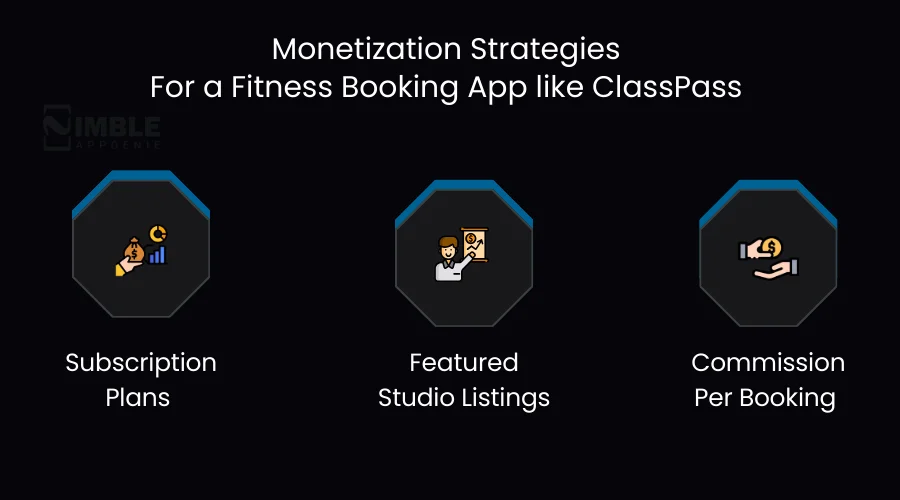
1] Subscription Plans
You can provide users with different subscription plans, like monthly or yearly. Basically, the subscription packages have a set number of credits or classes. This can create a predictable revenue stream. Also, it ensures consistent engagement with the platform.
2] Featured Studio Listings
You can allow studios to pay for premium placement or promotional slots within the app. This boosts their visibility, encourages more partnerships, and adds a revenue layer. It is one of the best app monetization ways to earn huge revenue from the fitness app.
3] Commission Per Booking
To earn money from your Classpass-like app, you can charge a small commission on each class booked through the app. This aligns revenue directly with platform usage and provides continuous income as user activity grows.
What are the Challenges You Face While Creating an App like ClassPass?
Building a fitness class booking marketplace app like ClassPass is not the same as creating a simple fitness app. You must solve various technical and product-level challenges before launching the app.
If these are not handled during development, your ClassPass-like app may face booking errors, payment issues, or scaling problems later. Let’s take a look at the challenges you need to address and their possible solutions.

1. Building a Real-Time Class Booking System
Your fitness class booking app like ClassPass, must show real-time seat availability. If two users try to book the last slot at the same time, your app can make double bookings if not designed properly. It is one of the biggest challenges you face during development.
How to fix this:
You can utilize the booking-lock logic and real-time database updates to control seat availability. Also, the backend should confirm a slot before finishing a payment.
2. Designing a Credit-Based Subscription System
Unlike a normal booking app, a ClassPass-like app requires a credit-based subscription model where each class costs a different number of credits. This needs a custom logic for subscriptions, credit deduction, refunds, and plan upgrades.
How to fix this:
The mobile app developers can create a flexible credit management system. The system enables admins to change credit values depending on class demand, location, or studio type.
3. Developing a Multi-Vendor Marketplace Structure
Your fitness apps like ClassPass, require three connected systems. They are a user app, studio dashboards, and an admin panel. Synchronising schedules, bookings, and payments on all three panels is quite complex during development.
How to fix this:
You have to design the app architecture in advance and develop separate models for users, trainers, and admins to keep the fitness app stable and scalable.
4. Payment and Commission Distribution Logic
Your ClassPass-like app should manage subscriptions, class bookings, studio payouts, and commissions. The payment flow mistake may cause a revenue tracking app.
How to fix this:
Developers can create automated commission calculation and payout tracking inside the admin system. Also, you can keep transaction records clear and traceable.

Why Choose Nimble AppGenie to Develop a Fitness App like ClassPass?
If you are planning to build a fitness app like ClassPass, Nimble AppGenie is the one-stop destination. We help founders design the credit-based booking flow, studio onboarding system, and admin commission management panel that make a fitness app work smoothly.
Our skilled team focuses on making a booking infrastructure that can manage multiple gyms, trainers, locations, and thousands of bookings at the same time. We integrate AI in fitness app features to help you know user preferences and boost user experience.
Additionally, we help you identify the right MVP features for a ClassPass-like app, so you can launch faster with essential features. This reduces development risk and keeps the product aligned with the business model.
With 8+ years of hands-on experience in gym management software development and booking platform architecture, Nimble AppGenie assists you from product planning to launch to build a custom subscription-based app like ClassPass that is ready to scale.
Why Nimble AppGenie stands out:
- Experienced in fitness marketplace app development
- Build a scalable ClassPass-like booking platform
- Strong multi-vendor subscription system expertise
- Custom credit-based booking app solutions
- End-to-end fitness app development support
Final Thoughts
Creating a fitness app like ClassPass is about solving real scheduling and access problems for both users and studios. The success of your solution depends on how smoothly bookings, subscriptions, and partner management work together in one app.
Instead of copying existing fitness apps, you should focus on making a simple booking experience and a flexible credit model that fits your target market.
However, it is advisable to consult with an experienced fitness app development company to make this process faster and more structured, especially when you create an app like ClassPass.
With the right technology foundation and business plan, a ClassPass-like app can grow into a high-performing fitness booking platform that supports long-term expansion.
FAQs
The ClassPass makes money through credit systems, unused credits, high-margin users, a studio partnership model, etc.
You can integrate fitness app features like credit-based subscription, class-booking system, payment integration, booking history, personalized class recommendations, etc.
The estimated time to make an app like ClassPass fluctuates depending on the project complexity, features, tech stack, and customization. Usually, it can take 3-7 months to build an app like ClassPass.
Yes, you can create your own fitness app like ClassPass by choosing the right features, business model, and experienced development team for launch.

Niketan Sharma, CTO, Nimble AppGenie, is a tech enthusiast with more than a decade of experience in delivering high-value solutions that allow a brand to penetrate the market easily. With a strong hold on mobile app development, he is actively working to help businesses identify the potential of digital transformation by sharing insightful statistics, guides & blogs.
Table of Contents




No Comments
Comments are closed.