

 Free Consultation
 PCI-DSS Compliant
 GDPR Ready
 ISO 27001
 NDA Protected
 AI Services
 AI App Development
 Generative AI Development
 AI Chatbot Development
 AI Integration Services
 AI Consulting Services
 AI For Fintech
 AI Financial Assistant Solution
 AI Insurance Agent Development
 Tech Stack
 OpenAI / GPT-4
 Claude / Anthropic
 Gemini / Google AI
 Llama / Open Source
 LangChain / LlamaIndex
 Pinecone / Pgvector
 AWS / Azure AI


 Fintech Solution
 Core Fintech
 App Development
 Neobank Solutions
 eWallet Solutions
 Lending Software
 Banking Solutions
 BNPL Solutions
 BNPL Solutions
 Insurance App
 Wealth Management
 Crypto & DeFi
 Blockchain Development
  Payroll Software
 DeFi Solutions
 Crypto Wallet
 Crypto On/Off Ramp
 Crypto Exchange
 Trading Platform
 Payments
 Compliance
 Regulations & Compliance
 Fraud Detection
 Lending Ecosystem
 P2P Lending Platform
 Mortgage Software
 Engagement
 Fintech Outsourcing

 Mobile Development
 Mobile App Dev
 iOS App Development
 Android App Development
 React Native
 Flutter Development
 Web Solution
 Node.js Development
 React.js Development
 Angular Development
 App Services
 UI/UX Design
 App Maintenance
 By Stage
 MVP Development
 Industry Solutions
 Healthcare App Dev
 Education App Dev
 Travel App Dev
 Real Estate App Dev
 Logistics Software
 Social Media App

 Hire Mobile Developers
 Hire iPhone Developers
 Hire Android Developers
 Hire React Native Devs
 Hire Flutter Developers
 Hire Web Developers
 Hire Node.js Developers
 Hire Angular Developers
 Hire PHP Developers
 Hire Laravel Developers
 How It Works
 Pre-Vetted Developers
 Ready In 48 Hours
 NDA From Day One
 Replace Guarantee
 Company
 About Us
 Our Work Process
 Portfolio
 Case Studies
 Blog / Insights
 Careers
 Contact Us
 Awards
 Recognition


 Offices



Key Takeaways:
- The current crowdfunding app market is estimated to touch $28.29 Billion by 2028.
- Crowdfunding apps allow users to democratically decide what ideas they want to support and how they want to do it.
- Donations, Rewards, Debt, and Equity are the types of crowdfunding solutions that you can build.
- To ensure that the fundraising app is safe and secure, ensure that encryption and KYC are implemented successfully.
- Nimble AppGenie can help you with crowdfunding app development with a 7-step solution that offers the right balance between performance and experience.
The internet has become an ultimate social environment where people stay connected and leave an impact on each other in more ways than one.
One of the most unique ways is crowdfunding, empowering people to fight the lack of funds in achieving their objectives. The democratization truly brings together people on the same page, allowing them to chip in their contributions.
However, it simplifies this noble process; people do need a platform, which gives rise to the need for crowdfunding app development.
Building a crowdfunding platform is definitely a great idea in 2026, as it opens doors to generating a lot of traffic and giving support to several new ideas.
If you see potential in having a crowdfunding platform of your own and want to take the first step, then this is the post for you.
In this one, let us break down the entire concept, along with different types of working models, and how to develop a crowdfunding platform of your own.
We will also be discussing other factors related to crowdfunding app development, including cost, features, technologies required, and more.
So without further ado, let’s get started!
What is a Crowdfunding App? Understanding the Concept
You might have heard of crowdfunding as a monetization strategy for earning money and raising capital to execute an idea.
A crowdfunding app or a website is a platform that serves as a mediator between businesses, entrepreneurs, and people interested in extending monetary support. The demand for crowdfunding apps has certainly grown.
If we talk about the market value, the current crowdfunding app market is estimated to be at $28.29 Billion by 2028, making things appear more and more on the growing side.
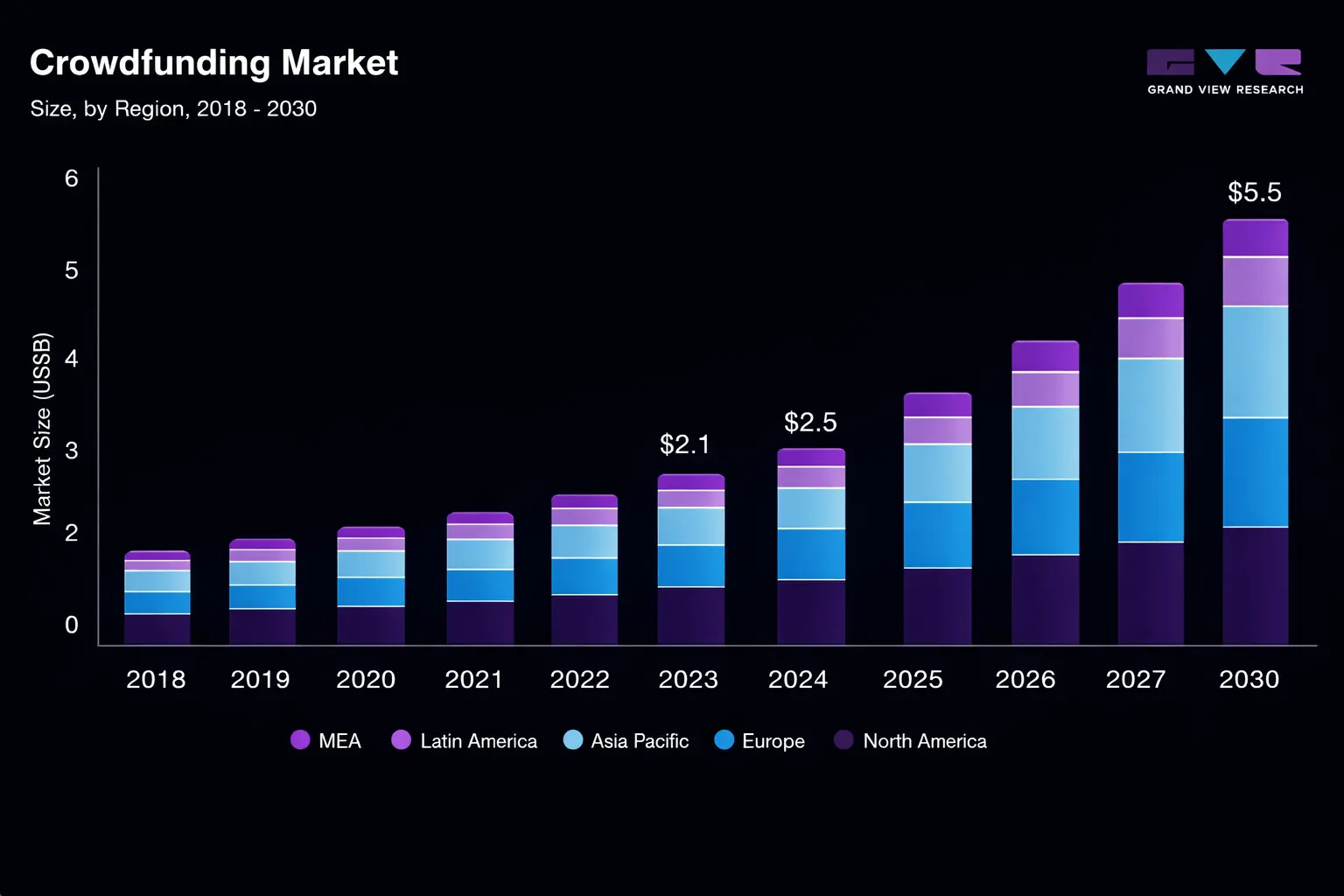
Crowdfunding platforms simplify raising capital to a huge extent, as instead of approaching a handful of investors or banks, project creators can appeal directly to the public.
What makes the concept so fascinating and real for the users is the fact that it is democratic. It means anyone can contribute any amount, be it $1, $10, or $1,000.
The funding goal, project timeline, and perks for contributors can all be tailored to fit the project. Plus, it builds a community around an idea, allowing businesses to test their ideas in the early stages.
Types of Crowdfunding Apps
- Debt-Based Crowdfunding
- Equity-Based Crowdfunding
- Reward-Based Crowdfunding
- Donation-Based Crowdfunding
Platforms like Kickstarter, GoFundMe, Patreon, and others are the perfect example of different crowdfunding apps and how they have changed the way crowdfunding is executed on different levels.
In case you are wondering how it all falls into place, check out the next section, where we have discussed the steps.
How Do Crowdfunding Apps Work?
Crowdfunding, as a concept, generally makes it possible for early-stage entrepreneurs and nonprofits to raise the capital necessary to venture into a more sophisticated stage of their business.
The crowdfunding app plays a pivotal role in enabling the whole process. How? Well, there are a series of steps that go into completing the transaction.
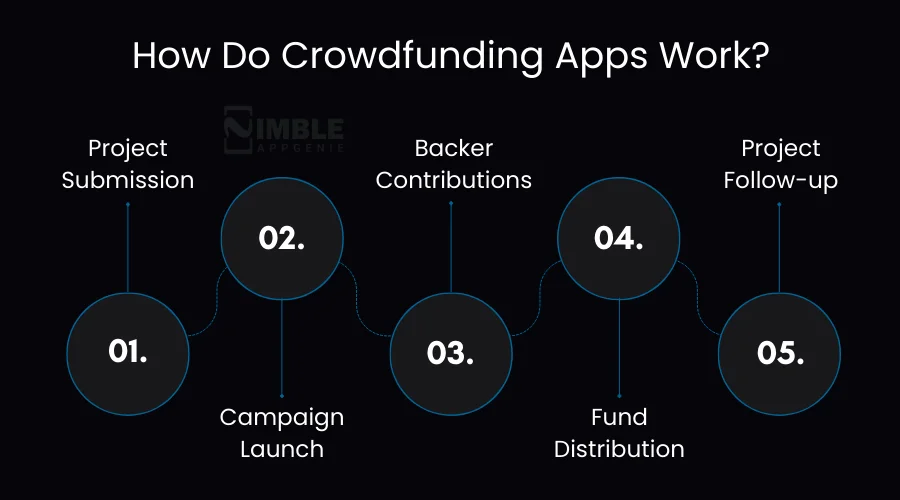
Check them out below –
1. Project Submission
The journey starts with project creators signing up and submitting their ideas.
They provide details like project descriptions, funding goals, and timelines. Some apps may require approval, while others are more open-ended.
2. Campaign Launch
Once approved (if needed), the campaign goes live.
This is where creators can showcase their ideas using videos, images, and descriptions to attract potential backers.
It’s all about making a compelling pitch.
3. Backer Contributions
Visitors (backers) who are interested in the project can contribute money.
Depending on the type of crowdfunding app used (which we’ll get to next), backers might receive perks, equity, or even just the satisfaction of supporting a cause they believe in.
4. Fund Distribution
After reaching the funding goal, or by the end of the campaign, funds are transferred to the project creator.
Some apps allow for flexible funding, where the creator gets to keep the money even if the goal isn’t reached, while others use an all-or-nothing model.
5. Project Follow-up
Communication doesn’t stop once the funds are raised.
Project creators keep backers in the loop about progress and deliver rewards or updates on product development.
The goal of any crowdfunding app is to streamline this process by providing tools for both project creators and backers while ensuring a smooth, secure, and reliable experience.
With the rise of internet literacy and the way people are interested in contributing to make things better, crowdfunding app development is definitely a great way to play your part in strengthening the entire ecosystem.
What are the Key Features of a Successful Crowdfunding App?
Once you have understood and decided to go for crowdfunding app development, the first thing to do is identify the key features you want in your app.
Crowdfunding has different approaches, and each approach requires a dedicated set of features. These different crowdfunding platforms are used for different purposes. Hence, you need a solution that offers features to different types of users.
Check out the following list of features classified into different categories as per the users and types of features required.
► Features for Project Creators
Here are the key features for project creators in a crowdfunding app designed for managing and launching projects:
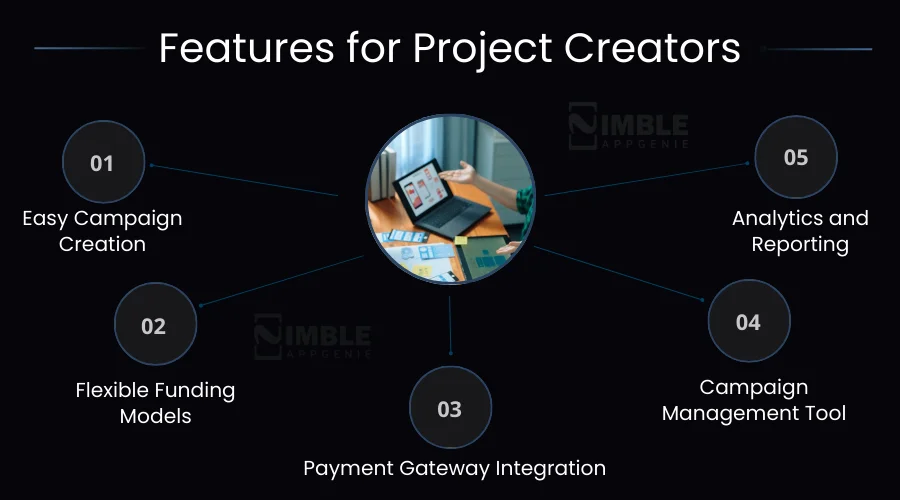
1. Easy Campaign Creation
A simple and intuitive campaign creation process is essential. Project creators should be able to set up their campaigns with ease, including adding descriptions, images, and videos to showcase their projects. Make sure your app guides users through every step of the setup process.
2. Flexible Funding Models
Offer different funding options, such as all-or-nothing or flexible funding, depending on the project’s needs. This flexibility can help project creators choose a model that aligns with their specific goals.
3. Payment Gateway Integration
Integrating reliable and secure crowdfunding payment gateway options is a must. Payment gateway integration also ensures that transactions are smooth and hassle-free, allowing project creators to receive funds easily and backers to contribute without any issues.
4. Campaign Management Tool
Project creators need tools to manage their campaigns efficiently. This includes tracking progress, managing rewards, and responding to backers. A strong campaign management tool can keep everything organized and on track.
5. Analytics and Reporting
Data-driven insights are invaluable. Provide creators with detailed reports and analytics on campaign performance, backer demographics, and funding trends. This will help them make informed decisions and improve future campaigns.
► Features for Backers
Here are key features for backers in an app designed to support projects (such as crowdfunding or backing projects):
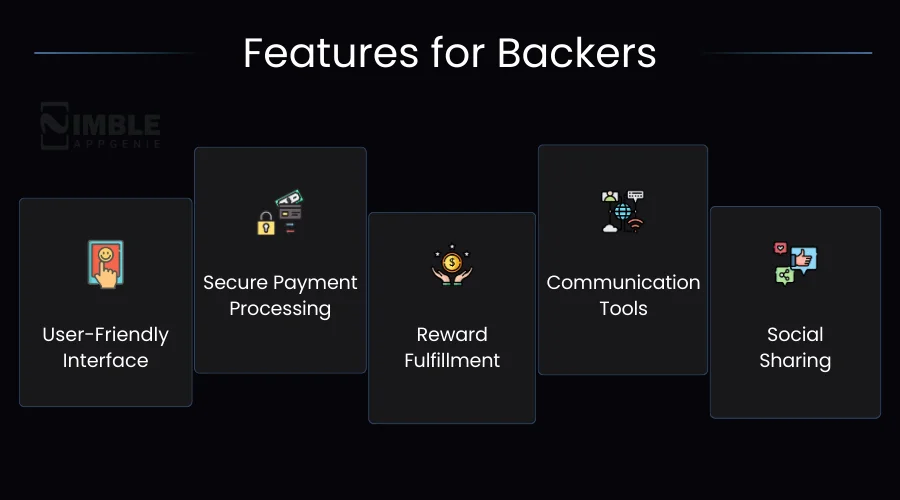
6. User-Friendly Interface
A clean, intuitive interface can make all the difference. Backers should be able to easily browse projects, understand the funding goals, and contribute with just a few clicks.
7. Secure Payment Processing
Backers need assurance that their payments are processed safely. Robust crowdfunding app security features like SSL encryption and secure payment gateways will build trust and encourage contributions.
8. Reward Fulfillment
For rewards-based crowdfunding apps, managing and fulfilling rewards is key. Backers should be able to track when they’ll receive their perks, and creators should be able to update them on delivery status.
9. Communication Tools
Direct communication between project creators and backers helps build a community. Integrated messaging or comment sections allow for transparent interactions and keep backers updated on the project’s progress.
10. Social Sharing
Backers love to share the projects they support. Adding social media sharing features can help campaigns gain more visibility and attract additional backers.
► Crowdfunding App Additional Features
Here are some additional features for a crowdfunding app to enhance both the user experience for project creators and backers:
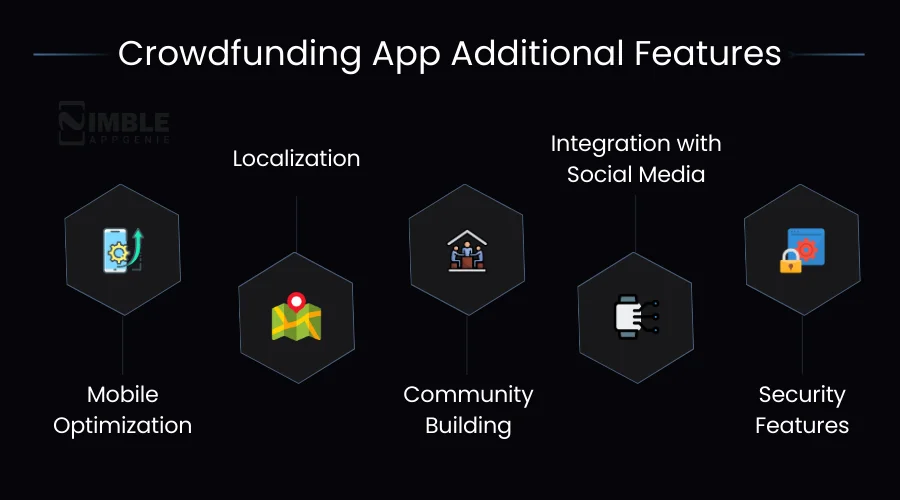
11. Mobile Optimization
In today’s mobile-first world, having a mobile crowdfunding app is essential. Ensure the app is optimized for smartphones and tablets so users can browse and contribute on the go.
12. Localization
If you plan to target a global audience, your mobile app should include localization features such as multi-language support and currency conversion. This opens up your app to international backers.
13. Community Building
Crowdfunding is about more than just money; it’s about creating a community around a cause. Adding features that encourage community interaction, like forums or discussion boards, can keep users engaged long-term.
14. Integration with Social Media
Social media integration allows project creators to link their campaigns directly to social media platforms, driving traffic and increasing visibility. It’s a simple but effective way to expand the reach of any campaign.
15. Security Features
Financial app security is a top concern for both creators and backers. Implement two-factor authentication, encrypted data storage, and other financial app security features to protect user information and build trust.
Incorporating these key features into your app will help you develop a crowdfunding application that’s user-friendly, secure, and effective at driving success for campaigns. It is crucial to define your ideology with the crowdfunding solution that you wish to go for.
Technology Stack for Crowdfunding App Development
To incorporate these features into your app, you will require different tools, tech, and frameworks. Choosing the right technology stack is crucial when you want to develop a crowdfunding app.
Before choosing a tech stack for a financial app, you must consider factors like overall performance, scalability, and security.
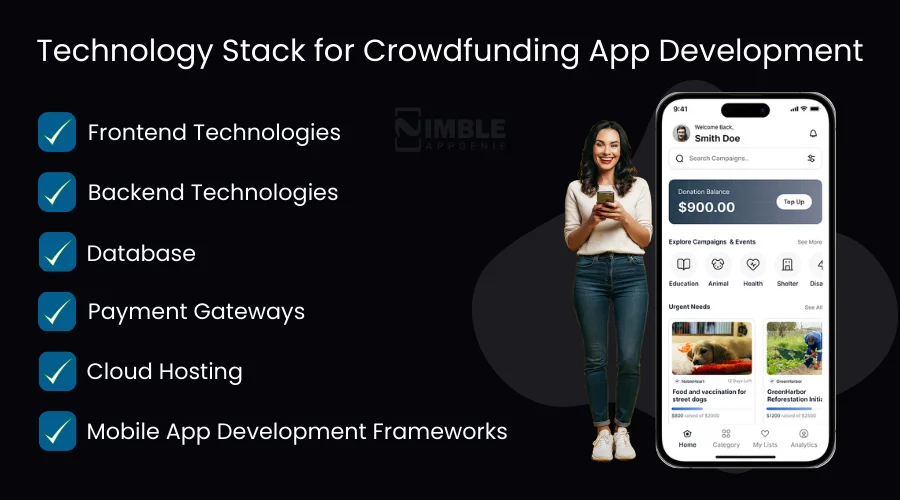
Let’s break down the essential components of a successful crowdfunding app’s technology stack:
1] Frontend Technologies
- HTML5, CSS3, and JavaScript: The basic building blocks of any web app.
- React.js, Angular.js, or Vue.js: These JavaScript frameworks provide dynamic and responsive interfaces that are fast and user-friendly.
- Flutter or React Native: For mobile crowdfunding app development, these frameworks allow for cross-platform development, ensuring that your app works seamlessly on both iOS and Android.
2] Backend Technologies
- Node.js, Ruby on Rails, or Django: These are popular backend frameworks that support fast development and handle multiple requests at once, ensuring your app remains responsive.
- Express.js: Often paired with Node.js, this framework helps manage the backend logic, making your app scalable and efficient.
- Java, .NET, or Python: Depending on your project’s needs, these programming languages offer robust performance for more complex platforms.
3] Database
- MySQL, PostgreSQL, or MongoDB: These databases handle structured and unstructured data efficiently, making them perfect for storing user profiles, campaign data, and transactions.
- Redis: For caching and faster data access, Redis can be used to enhance the performance of your app.
4] Payment Gateways
- Stripe or PayPal: Give gateways provide secure and flexible payment processing options. They support multiple currencies and transaction types, which is essential for crowdfunding apps.
- Braintree: A choice option for international payments, Braintree offers features like recurring billing and mobile payments.
- Cryptocurrency Integration: For modern crowdfunding apps, you might consider integrating cryptocurrency payments for added flexibility.
5] Cloud Hosting
- Amazon Web Services (AWS): AWS offers cloud hosting solutions with high scalability and security, making it perfect for handling large amounts of traffic and data.
- Google Cloud: Another excellent cloud hosting provider, Google Cloud provides high availability and integration with other Google services.
- Microsoft Azure: Azure offers comprehensive cloud solutions with strong security and compliance features.
6] Mobile App Development Frameworks
- React Native: Known for its high performance and native-like feel, React Native enables faster mobile app development with a single codebase for both iOS and Android.
- Flutter: Flutter provides beautiful, fast, and compiled apps from a single codebase, making it a great choice for mobile crowdfunding app development.
These are tech requirements and suggested technologies you can use to develop a crowdfunding app. Just like any other app, it should feel seamless and must offer a simple yet unique user experience.
In the quest for achieving the best results, each part plays a role in ensuring your platform runs securely, whether you’re building a rewards-based crowdfunding app, an equity-based crowdfunding app, or something in between.
How to Develop a Crowdfunding App? 7-Step Process
Till now, you have understood what a crowdfunding app is, how it works, what features it should have, and what technologies are required to develop a crowdfunding app.
Now it is time to put all that into practice by following a series of steps that can help you achieve your final goal of having a solid crowdfunding app of your own.
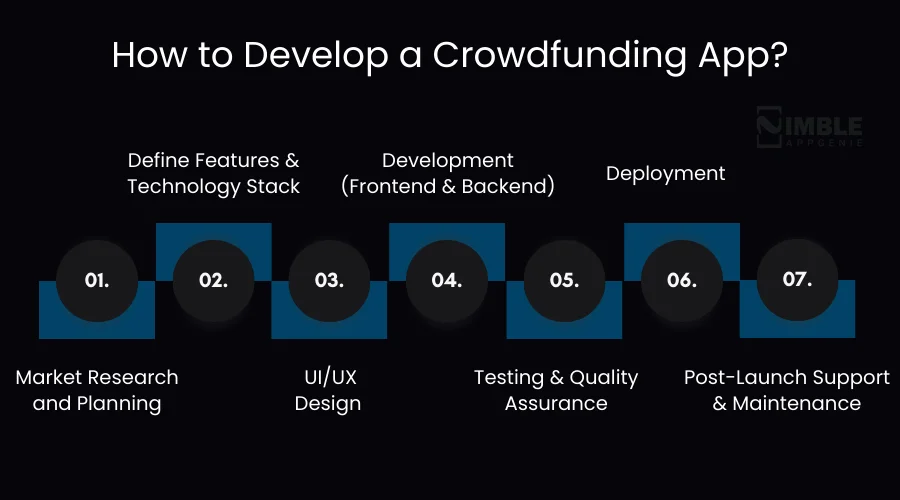
There are 7 steps that generally go into completing a crowdfunding app development process. Keep on reading to learn more about each of these steps –
Step 1: Market Research and Planning
Before you dive into development, it’s essential to conduct thorough mobile app market research.
This step involves identifying your target audience, understanding your competitors, and defining your app’s unique selling proposition (USP).
Ask yourself:
- Who will use the app?
- What type of crowdfunding model will it focus on?
- What features will set it apart from existing top crowdfunding apps?
Planning also includes deciding on the app’s business model and revenue streams, such as charging a percentage of funds raised or offering premium features to project creators.
Step 2: Define Features and Technology Stack
Once the research is complete, it’s time to map out the features of the crowdfunding app.
This includes user-friendly interfaces for both project creators and backers, payment gateway integration, security features, and the ability to share campaigns on social media.
At this stage, you should also finalize the tech stack for crowdfunding apps (as outlined in the previous section) and ensure that it aligns with your app’s goals.
Step 3: UI/UX Design
This step focuses on creating wireframes, prototypes, and designs for the app’s interface.
The goal is to ensure the app is intuitive, easy to navigate, and visually appealing.
Your design should cater to both mobile and web users to ensure a seamless experience across all devices.
Remember, mobile optimization is a key factor in crowdfunding app development, especially as more users access apps via their smartphones.
Step 4: Development (Frontend and Backend)
This is where the actual coding happens. The development process is split into two main parts:
- Frontend Development: Using technologies like React.js or Flutter, developers create a user interface where users will interact with the platform.
- Backend Development: This involves setting up the server, database, and APIs using backend technologies such as Node.js, Django, or Ruby on Rails. This ensures that all data is processed securely and efficiently.
Throughout this stage, crowdfunding app developers also implement payment gateway integration and security features such as data encryption and two-factor authentication.
Step 5: Testing and Quality Assurance
No app is complete without thorough fintech app testing.
This stage ensures that your crowdfunding app is free from bugs, secure, and delivers a seamless experience across devices.
Testing covers functionality, usability, performance, security, and compatibility.
You should also test the payment gateway integration to ensure backers can contribute easily and securely.
A thorough quality assurance process ensures that when you launch, your app will be ready to handle real users without a hitch.
Step 6: Deployment
After successful testing, your app is ready for deployment.
This involves launching the app on app stores (for mobile apps) or going live on the web.
Deployment doesn’t just stop at launch; it also involves setting up hosting environments using services like AWS or Google Cloud to handle the app’s traffic and ensure uptime.
Step 7: Post-Launch Support and Maintenance
Once the app is live, ongoing app support and maintenance services are critical.
This includes monitoring the app for performance issues, fixing bugs that might arise post-launch, and updating the app with new features or improvements based on user feedback.
Post-launch support ensures your app remains competitive and continues to meet users’ needs as trends and technology evolve.
This structured development process, from market research to post-launch maintenance, is the blueprint for creating a successful crowdfunding app.
Keep in mind that while these steps do seem typical to complete with diligence, having a crowdfunding app development company do it for you is the best way to achieve the best results.
How Much Does it Cost to Develop a Crowdfunding App?
The total cost can range from $30,000 to $200,000+, depending on the choices you make throughout the process.
This cost can vary widely depending on several factors, such as app complexity, required features, and the development team you choose.
Whether you’re building a simple donation-based app or a more advanced hybrid platform, understanding the key cost drivers is essential.
Here’s a breakdown of the main factors influencing the cost of crowdfunding app development:
| Factors | Details | Estimated Cost |
| App Complexity | Basic App: Core features like campaign creation and payment integration. | $30,000 – $50,000 |
| Medium Complexity: Added features such as analytics, multiple gateways, and social media integration. | $50,000 – $100,000 | |
| Complex App: Custom solutions with advanced functionality like multi-language support and AI tools. | $100,000 – $200,000+ | |
| Features and Functionality | Basic features like secure payments and user management. | $30,000 – $50,000 |
| Advanced features like real-time analytics, reward management, and mobile optimization. | $50,000 – $100,000 | |
| Technology Stack | Standard stack (React.js, Node.js, AWS) vs. more advanced technologies like blockchain or AI integration. | Varies based on choice |
| Development Team | Freelancers (lower cost but harder to manage) vs. agencies or in-house teams (more expensive but full-cycle). | $15 – $200 per hour |
| Developer Location | Developer rates vary: North America/Europe ($100 – $200/hour) vs. Eastern Europe/Asia ($30 – $100/hour). | Varies by region |
| Ongoing Maintenance | Post-launch support, updates, and server hosting (15-20% of development cost annually). | Ongoing (15-20% of initial cost) |
With all these factors out of the way, you clearly have an idea of what decisions can increase or decrease the cost to develop a crowdfunding application. Being a business owner planning to enter the crowdfunding market, you must be clear that the estimate is for the app infrastructure.
There are still some key challenges that you may come across. Check out the next section to learn more about these challenges.
What are the Challenges in Crowdfunding App Development?
Building a successful crowdfunding app comes with its fair share of challenges.
While it’s an exciting venture, you’ll need to tackle certain obstacles head-on to ensure the app’s success.
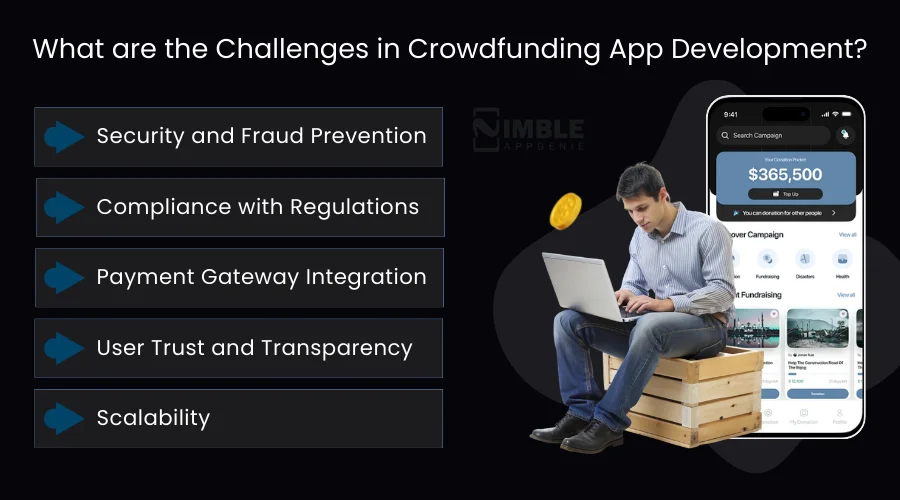
Let’s explore the common challenges crowdfunding app developers face:
♦ Security and Fraud Prevention
With money being exchanged online, ensuring data security and protecting users from fraud is critical.
Implementing robust security features like encryption, biometric authentication, two-factor authentication, and secure payment gateways can help safeguard transactions.
♦ Compliance with Regulations
Financial compliance with regulations is a big challenge. Different regions have their own laws governing crowdfunding for equity-based apps.
Navigating these legal requirements and ensuring your app complies with regulations such as KYC (Know Your Customer) and AML (Anti-Money Laundering) is essential.
♦ Payment Gateway Integration
Seamless crowdfunding payment gateway integration is key to ensuring smooth transactions for both project creators and backers.
However, integrating multiple payment gateways and supporting various currencies can be complex and costly.
♦ User Trust and Transparency
Crowdfunding apps rely on building trust between creators and backers.
Providing transparency through clear campaign details, progress updates, and secure payment processes is necessary to gain user confidence.
♦ Scalability
As your app grows and attracts more users, ensuring it can scale smoothly without performance issues is crucial.
This requires an efficient backend architecture and cloud hosting solutions like AWS or Google Cloud to handle high traffic volumes.
Addressing these challenges from the outset can help you create a crowdfunding app that’s secure, compliant, scalable, and competitive in a growing market.
Who Can Help Me With Crowdfunding App Development?
The challenges clearly show that you need a dedicated crowdfunding app development service to deliver the best results without sacrificing performance.
If you are wondering who can help you, we have the right suggestion for you: Nimble AppGenie.
One of the leading names in crowdfunding app development, the experts are highly professional and have enough hands-on experience to deliver a balanced solution that doesn’t compromise on performance.
With 8+ years of experience in delivering mobile app development to every niche, the company has enough expertise to deliver a high-quality crowdfunding app on-demand.
All you have to do is reach out!
Final Thoughts
Developing a successful crowdfunding app requires a strategic approach that combines innovative features, a robust technology stack, and an understanding of your target audience.
Whether you’re looking to build a crowdfunding app for donations, rewards, equity, or a hybrid model, careful planning and attention to detail are essential. By studying successful crowdfunding platforms like Kickstarter and GoFundMe, you can gain valuable insights into what makes a platform thrive.
To stand out in this competitive market, we focus on offering a user-friendly interface, secure payment gateway integration, and scalable infrastructure. Don’t forget to address key challenges such as security, compliance, and user trust right from the beginning.
Now, if you want to create such an app for yourself, it’s highly recommended that you consult a fintech app development company that can make your app a reality.
FAQ’s

Niketan Sharma, CTO, Nimble AppGenie, is a tech enthusiast with more than a decade of experience in delivering high-value solutions that allow a brand to penetrate the market easily. With a strong hold on mobile app development, he is actively working to help businesses identify the potential of digital transformation by sharing insightful statistics, guides & blogs.
Table of Contents




No Comments
Comments are closed.