


In a Nutshell:
- AI diet and nutrition app development helps you deliver personalized meal plans, track calories, and adapt suggestions based on user habits and wearable device data.
- Must-have features like food photo recognition, AI chat guidance, and predictive health insights make tracking nutrition simple, engaging, and actionable.
- The cost to develop an AI diet and nutrition app varies between $30,000 and $250,000+, depending on AI complexity, advanced features, and integrations.
- An AI diet and nutrition app makes money from subscriptions, smart grocery ordering, pay-per-insight health reports, and premium AI meal suggestions.
- Nimble AppGenie offers custom AI development services to build an AI-powered diet and nutrition app in USA for startups and enterprises.
Imagine opening a diet app that suggests a breakfast customised specifically to your metabolism, recent workouts, and sleep patterns. All this in real-time. That’s the promise of AI in diet and nutrition.
Today, more people are seeking ways to eat healthy food. But not everyone has the time or knowledge to plan meals that actually work for their bodies.
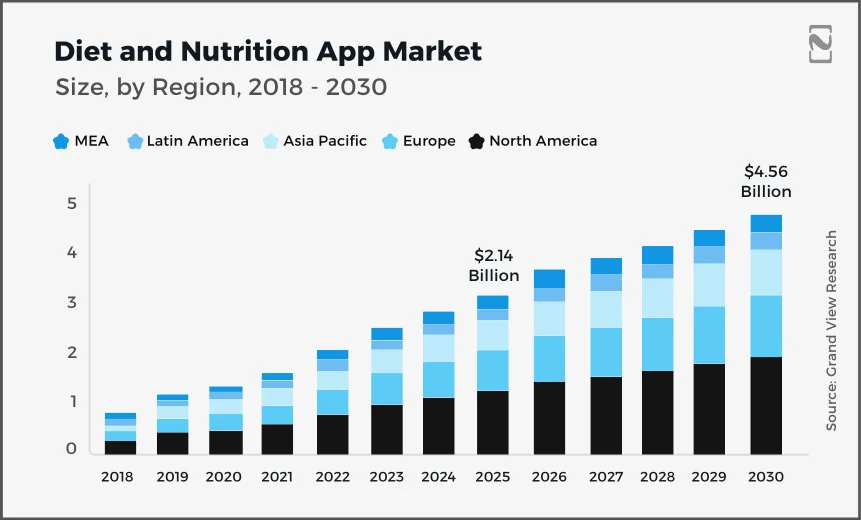
The market size of diet and nutrition apps was worth $2.14 billion in 2025 and is forecasted to hit $4.56 billion by 2030. Yet, many traditional diet and health apps fail to keep users engaged. About 66% stop using them within 90 days.
This gap has created a great opportunity for businesses that want to develop an AI diet and nutrition app. By leveraging AI, these apps can analyze user habits, suggest personalized meals, and provide real-time feedback. It acts like a personal nutrition coach.
In this guide, we’ll discuss the process to develop an AI diet and nutrition app, covering must-have AI features, essential technologies, cost considerations, and real-world examples. By the end, you’ll know what it takes to build an app that users will love and actually stick with.
So, let’s begin!
What is an AI Diet and Nutrition App?
An AI diet and nutrition app is a smart health application that uses AI to give personalized nutrition guidance. These apps learn from users’ habits, preferences, health data, and lifestyle patterns to deliver custom recommendations.
Additionally, AI diet and nutrition applications can track what users eat, analyze their activity levels, monitor body metrics, and sync with wearable devices to understand overall health.
Based on this data, AI can suggest meal plans, estimate calories and nutrients, and adjust recommendations over time. All automatically. Isn’t this good?
How AI nutrition apps differ from traditional diet plans:
| Traditional Apps | AI diet Apps |
| Fixed rules, static meal plans, heavy manual input. | Adaptive, personalized, and capable of learning from user behaviour. |
What benefits do users and healthcare providers get from this app:
- Users: They get meal recommendations customized to their objectives, reduce manual tracking, and receive real-time feedback.
- Healthcare provider and wellness brands: They gain scalable, data-driven insights and improve client outcomes without manual intervention.
Overview of an AI Nutrition App Market Growth
The diet and nutrition app market is growing very rapidly. It is driven by rising health awareness, smartphone adoption, and the demand for personalized nutrition solutions. Let’s take a closer look at diet and fitness app statistics below.
1. Market Expansion and User Adoption
If we look at a global scale, around 1.4 billion people use diet and nutrition apps and use them 3 to 4 times daily. They spend roughly around 12 minutes per day on meal tracking.
Retention shows promise, with 45% of users continuing after 30 days and 70% reporting improved eating habits after three months.
2. AI is Driving Market Growth
The AI in the personalized nutrition market is forecasted to reach $4.26 Billion by 2032. Over 52% of users prefer AI-powered platforms for meal planning and macronutrient optimizations.
MacroAI has launched an AI-powered feature called diet score to help users check their diet correctly. A nutritional study is conducted to analyse AI-powered diet plans on the basis of popular diet trends.
Therefore, the numbers make it clear that users want smart and AI-powered nutrition solutions and not static diet apps.
Why is AI Essential for Modern Diet and Nutrition Application?
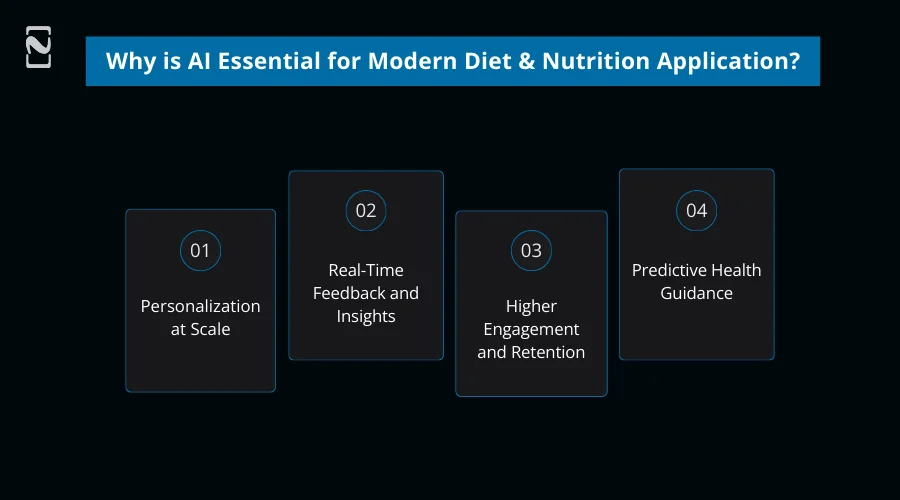
AI is vital because it allows applications to offer personalized, adaptive, and real-time nutrition guidance that traditional apps cannot. It helps users stay engaged and achieve their goals. Let’s now understand this in detail.
1. Personalization at Scale
Every user has unique dietary needs, activity levels, and preferences. The best meal planning apps with AI features can create a custom meal plan for multiple users at once. It is something impossible with static apps.
2. Real-Time Feedback and Insights
Instead of generic advice, AI can suggest meals, flag nutrient deficiencies, or recommend healthier options as users log their meals or sync wearable data.
3. Higher Engagement and Retention
Personalized and adaptive recommendations make your app feel like a personal nutrition coach. This increases the chance of higher user retention with daily interactions.
4. Predictive Health Guidance
Advanced AI can forecast user progress, highlight potential nutritional gaps, and suggest interventions. This helps users to achieve goals faster.
So, if you are looking to develop an AI diet and nutrition app, it is best to integrate these AI functionalities into it. It’s essential to create an app that users will rely on and return to.
What are the Core Features of an AI Diet and Nutrition App Development?
When you develop an AI diet and nutrition app, the features you include are what make users stick with the app and achieve their goals. AI transforms a static diet tracker into a smart, adaptive, and interactive nutrition coach. Below are the AI diet app features that modern users expect:
| Core Feature | What It Does | Why It Matters |
| User Profile & Goal Setup | Users enter personal details, dietary preferences, and goals. | It forms the foundation for personalized nutrition and makes relevant recommendations. |
| Meal Logging | It allows manual or simple meal entry. | It is vital for tracking intake and monitoring progress. |
| Calorie & Macro Tracking | It calculates daily calories, protein, carbs, and fats. | It helps users to stay within goals and make informed choices. |
| Nutrition Database | It offers a database of foods with nutritional values. | It allows accurate tracking and healthier decision-making. |
| Progress Tracking | It visualizes weight, calories, and goal trends. | It motivates users by showing tangible results over time. |
| Basic Meal Recommendations | It suggests general meals or snacks based on goals. | It offers guidance without needing users to plan everything manually. |
| Water Intake Tracker | It allows tracking daily water consumption. | Encourages hydration, which is critical for overall health. |
| Push Notifications | It sends reminders for meals, water, and goals. | It keeps users engaged and consistent with their plan. |
| Activity Integration | It syncs basic data from fitness trackers (steps, exercise). | It connects activity with nutrition, improving holistic tracking. |
| Reports & Summaries | It provides weekly or monthly summaries of nutrition and progress. | It helps users analyze habits, adjust goals, and stay motivated. |
Advanced Features to Add in an AI Nutrition and Diet App
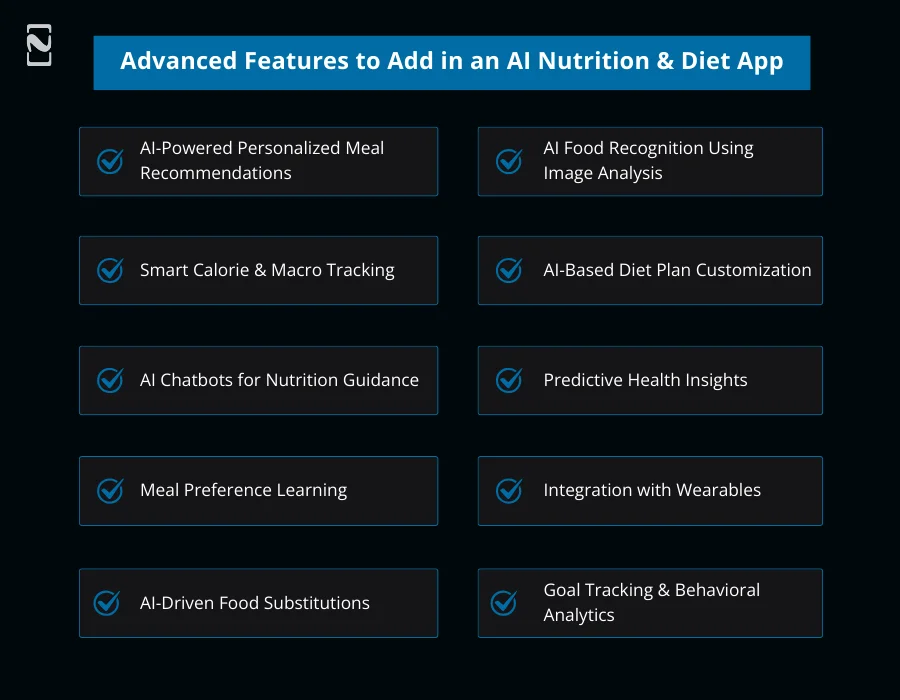
Advanced AI nutrition app features add extra value beyond the basics, like smart meal suggestions, predictive insights, and interactive guidance. This helps users stay motivated, track progress more accurately, and reach goals faster. Let’s take a look:
1] AI-Powered Personalized Meal Recommendations
AI recommends meals customized to a user’s goals, preferences, and lifestyle.
How it works: Machine learning analyzes user data like past meals, activity levels, allergies, and preferences to suggest breakfast, lunch, and dinner options.
Why it matters: Users no longer waste time manually planning meals. Personalized nutrition using AI makes the app feel like a real nutrition coach. This increases user engagement and satisfaction.
2] AI Food Recognition Using Image Analysis
Users can simply snap a photo of their meal, and AI identifies ingredients and estimates calories.
How it works: Computer vision models detect foods, portion sizes, and nutritional content from images.
Why it matters: It eliminates tedious logging, improves accuracy, and helps users track nutrition effortlessly. It is a major pain point with many traditional apps.
3] Smart Calorie & Macro Tracking
An AI calorie counter app automatically tracks calories, macros, and micronutrients based on meals.
How it works: Machine learning predicts nutrient content by learning from historical entries and standard databases.
Why it matters: Accurate tracking is automatic and easy, letting users focus on progress rather than manual calculation.
4] AI-Based Diet Plan Customization
The personalized nutrition app adapts diet plans as users progress toward their goals.
How it works: Predictive algorithms adjust meal types, portion sizes, and timing based on behavior, preferences, and feedback.
Why it matters: Keeps users motivated with realistic, evolving plans — avoiding frustration from rigid, generic diets.
5] AI Chatbots for Nutrition Guidance
Users get instant answers to questions like “What should I eat after my workout?”
How it works: NLP-powered chatbots interpret queries and respond with personalized recommendations using the user’s health profile.
Why it matters: Offers 24/7 guidance, creating a supportive experience without needing a human dietitian, improving trust and retention.
6] Predictive Health Insights
AI shows users potential outcomes, e.g., “If you follow this plan, you’ll reach your weight goal in X weeks.”
How it works: Predictive analytics uses historical trends, activity, and nutrition data to forecast results.
Why it matters: Motivates users by showing measurable progress and realistic expectations, increasing the smart diet app with AI usage.
7] Meal Preference Learning
The app learns which meals users enjoy and adjusts recommendations accordingly.
How it works: Reinforcement learning tracks skipped meals or favorites and updates future suggestions.
Why it matters: Makes recommendations feel personal and relevant, improving daily engagement.
8] Integration with Wearables
You can integrate wearable technology into your AI nutrition and diet app. This will sync with smartwatches, fitness trackers, and smart scales to monitor activity, sleep, and vitals.
How it works: AI combines wearable data to adjust nutrition recommendations in real time.
Why it matters: Ensures recommendations match actual activity and lifestyle, making guidance actionable and accurate.
9] AI-Driven Food Substitutions
AI suggests healthier alternatives for meals that users cannot or do not want to eat.
How it works: Ingredient databases and user profiles guide smart substitutions to keep meals aligned with goals.
Why it matters: It helps users stick to plans without feeling restricted. This increases user satisfaction and adherence.
10] Goal Tracking & Behavioral Analytics
The AI diet application tracks weight, macros, and nutrient goals that highlight patterns and trends.
How it works: AI analyzes behavior over time and sends nudges or adjustments to keep users on track.
Why it matters: Users get actionable insights, stay motivated, and see measurable progress. This reduces drop-offs.
How to Develop an AI Diet and Nutrition App: Step-by-Step Process
You can build an AI diet and nutrition app by understanding the proper roadmap. This is the same step-by-step approach we use for clients to develop an AI diet and nutrition app or scale an existing one. Below, we will walk you through each stage of the AI diet app development process.
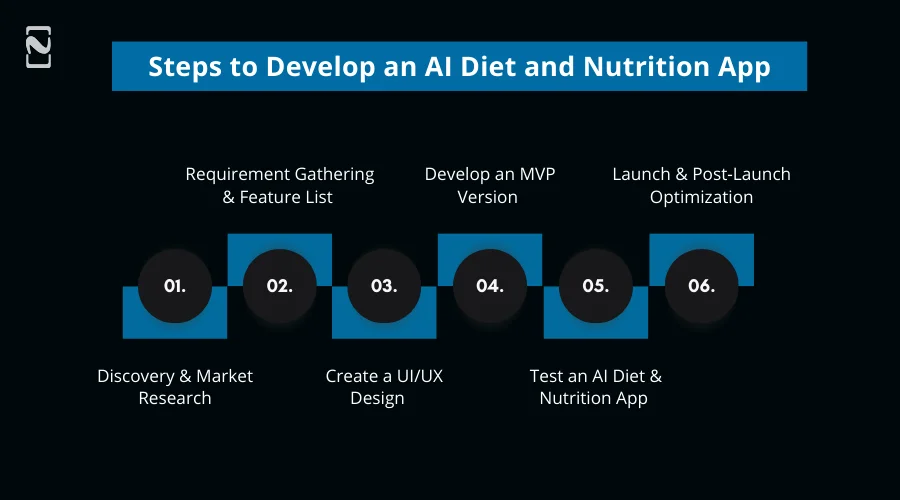
Step 1: Discovery & Market Research
Creating an AI-driven diet and nutrition app begins by thoroughly knowing the target audience and market. You have to conduct deep market research because AI relies on data and user behaviour to deliver value.
Additionally, you also study the existing AI nutrition apps to find their SWOT. Along with that, you have to analyze user reviews to find their pain points. Do not forget to create a user persona.
It helps you understand the target audience’s needs, dietary preferences, and level of tech comfort. This research lays a foundation for features that will solve real issues and deliver true personalized nutrition using AI.
Step 2: Requirement Gathering & Feature List
Now that you know your potential audience, it is time to decide what must-have and AI features your diet app will offer. Not all features need to be in the first version. You have to prioritize what matters most to your users.
It is best to define core nutrition and fitness app features and separate basic functionality from advanced features. Now, align these features with your project objective, like increasing user engagement.
This step makes sure that your AI-powered diet and nutrition app does not become overloaded. It should remain focused on delivering the most impactful AI-driven experiences for users.
Step 3: Create a UI/UX Design
Your app must be user-friendly, since AI can be complex. The fitness app design should make the power of AI feel natural and seamless. It is vital to make intuitive navigation so users can easily get meal plans and suggestions.
Besides, you should integrate AI-assisted food logging functionality through image recognition or barcode scanning. Do not forget to make a visual dashboard that displays progress, personalised recommendations, and predictive insights.
If your UI/UX design is visually appealing and user-friendly, it can build trust and make sure users enjoy interacting with AI.
Step 4: Develop an MVP Version
You should not jump to develop an AI diet and nutrition app with full features. It is vital to start small. You can build an MVP that covers only the must-have functionalities and AI nutrition app features.
The dedicated development team will develop AI algorithms to power meal recommendations and personalized nutrition advice. They integrate basic features like food tracking or nutrient breakdown with ML to adjust recommendations over time.
Now, once MVP is ready, you can test it with a selected real-time user for feedback. This helps you validate AI features and make data-driven decisions to modify your app before the actual launch.
Step 5: Test an AI Diet & Nutrition App
Now, for flawless and smooth working of an app, it is vital to test it. The QA conducts functional mobile app testing on meal recommendations, food recognition accuracy, and personalized diet plans.
Additionally, they can validate AI algorithms to make sure they provide correct, useful recommendations based on user data. Now, test your app on multiple devices for smooth functionality and usability.
Rigorous testing makes sure the AI works as intended and delivers real-time results to users. This can build confidence and bring long-term engagement.
Step 6: Launch & Post‑Launch Optimization
After the initial launch, you have to thoroughly maintain your AI diet and nutrition app based on user feedback. It is crucial to evolve AI nutrition app features with user data and changing preferences.
You can even use analytics tools to track your user behaviour, app performance, and AI feature usage. Additionally, to update your app, you can collect feedback and gradually roll out advanced AI features based on fitness app trends.
If you continuously optimize your AI-driven nutrition app, it stays relevant, engaging, and delivers personalized experiences over time.
Tech Stack for AI Diet and Nutrition App Development
When you develop an AI-driven diet and nutrition app, choosing the right tech stack is critical. The right AI nutrition app tech stack ensures your app runs smoothly and provides high-quality, personalized recommendations. Take a look at the table below.
| Category | Tools and Technologies | Purpose of an AI Diet and Nutrition App |
| Mobile App Development | Swift (iOS), Kotlin (Android), Flutter | You can build a mobile app where users log meals, track calories, and view diet plans. |
| Web Frontend (Admin / Coach Panel | React.js, Next.js | You can create dashboards for admins, nutritionists, or coaches to manage users and plans. |
| Backend Development | Python (FastAPI, Django), Node.js | It handles user data, meal logs, app logic, and communication with AI models. |
| Database (Relational) | PostgreSQL, MySQL | It stores structured data like user profiles, goals, meal history, and subscriptions. |
| Database (NoSQL) | MongoDB | It stores flexible data like food logs, preferences, and activity data. |
| AI / Machine Learning | TensorFlow, PyTorch, Scikit-learn | It builds models for personalized diet plans, calorie prediction, and recommendations. |
| Natural Language Processing (NLP) | OpenAI API, spaCy | It powers chat-based nutrition guidance and text-based food logging. |
| Food Recognition (Image AI) | TensorFlow Lite, OpenCV | It identifies food items from images and helps estimate portions. |
| Nutrition Data APIs | USDA FoodData Central API, Nutritionix API | It fetches accurate calorie and nutrient information for food items. |
| Cloud Hosting | AWS, Google Cloud Platform, Microsoft Azure | It hosts backend services, databases, and AI models securely. |
| Authentication | Firebase Authentication, OAuth 2.0 | It manages secure user login and account access. |
| Payments | Stripe, Apple In-App Purchase, Google Play Billing | It enables subscriptions and premium features. |
| Push Notifications | Firebase Cloud Messaging (FCM) | It sends meal reminders, alerts, and progress notifications. |
| Analytics | Firebase Analytics, Google Analytics | It tracks user behavior, engagement, and feature usage. |
How Much Does it Cost to Build an AI Diet and Nutrition App?
The cost to develop an AI diet and nutrition app ranges between $30,000-$250,000. This is just the average cost estimation. The actual AI nutrition app development cost relies on AI complexity, your project goals, and integrations.
Generally, the cost to make a fitness app falls under 3 levels of complexity. Let’s have a look:
| App Complexity | Cost Breakdown |
| Basic AI nutrition app | $30,000-$100,000 |
| Mid-level AI nutrition app | $100,000-$180,000 |
| Advanced AI diet and nutrition app | 180,000-250,000+ |
Factors affecting the Cost to Develop an AI-powered Diet and Nutrition App:
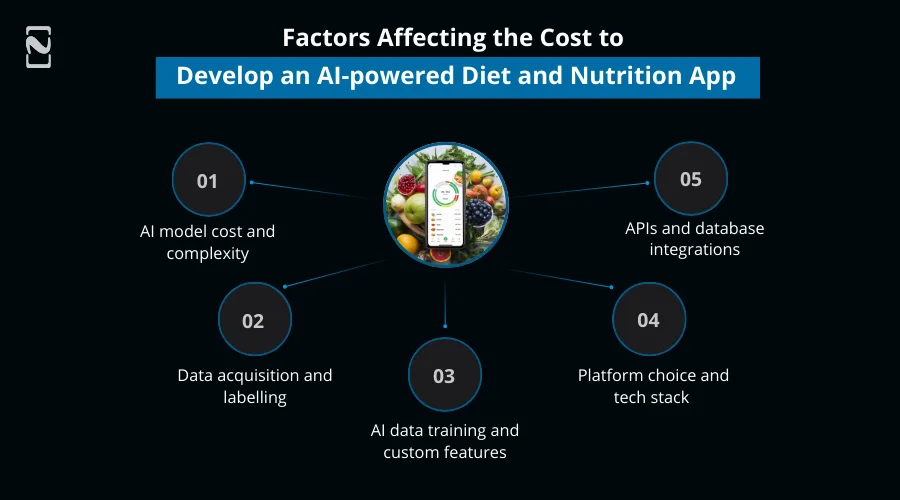
- AI model cost and complexity
- Data acquisition and labelling
- AI data training and custom features
- Platform choice and tech stack
- APIs and database integrations
| Pro Tip: You can start with a simple MVP to validate your AI idea. Once you see user interest, you can gradually integrate advanced AI features. |
How to Monetize Your AI-Driven Diet and Nutrition App?
You can monetize your AI meal planning app or simply AI nutrition app from the common monetization strategies. You have to check out how your competitor’s apps make money. However, we have jotted down some AI nutrition or fitness app monetization strategies that you can take into consideration.
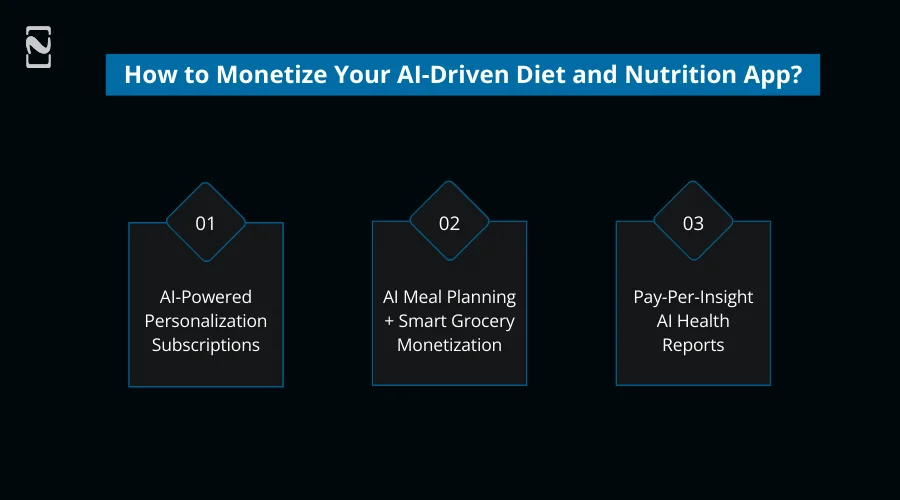
1. AI-Powered Personalization Subscriptions
With an AI-powered personalised subscription model, you can charge for dynamic meals. Users can pay to adjust their habits and goals. The more they use your smart diet app with AI, the better the suggestions get.
When they see real progress and feel your app understands them, they are more likely to stay subscribed for the long term.
2. AI Meal Planning + Smart Grocery Monetization
AI meal planning applications make huge amounts of money by connecting recommendations to grocery purchases. When AI suggests users’ meals based on goals and habits, they can instantly order ingredients through partners.
This can turn an AI meal planning app development into a revenue engine through commissions.
3. Pay-Per-Insight AI Health Reports
Do not give everything in the subscriptions; you can monetize AI-generated nutrition insights as one-time purchases. For example, you can offer metabolic analysis, diet impact predictions, or nutrient deficiency reports.
When users get premium AI outputs, they are more willing to pay for insights they cannot get from generic diet apps.
What Are the Challenges You Face in AI Diet and Nutrition App Development?
Developing an AI-driven diet and nutrition app is exciting, but it comes with several challenges. Let’s look at some of the most significant obstacles and how to tackle them.
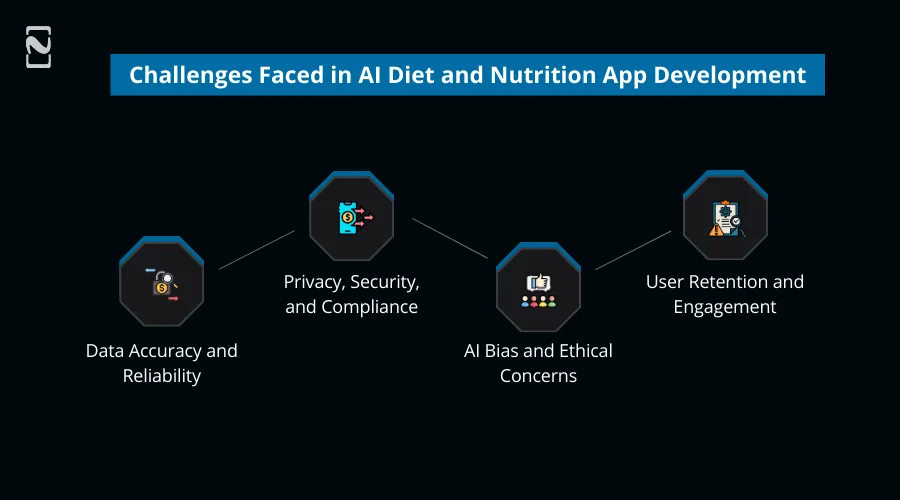
Challenge 1: Data Accuracy and Reliability
Solution: You can integrate reliable third-party APIs and constantly validate food data and AI suggestions for accuracy.
Challenge 2: Privacy, Security, and Compliance
Solution: Mobile app developers ensure your AI nutrition app complies with HIPAA and GDPR regulations. Also, they should invest in secure mobile app encryption for data storage and transfer.
Challenge 3: AI Bias and Ethical Concerns
Solution: You can leverage diverse datasets, test the AI regularly for biases, and provide users with customizable options. This will not give biased results.
Challenge 4: User Retention and Engagement
Solution: You can create dynamic meal plans and adaptive AI features that change with users’ changing health goals. This will be best for user retention and engagement.
What are the Future Trends in AI Diet and Nutrition App Development?
If you feel today’s AI diet and nutrition meal planning app looks futuristic, then tomorrow’s will look even more unimaginable. The AI is really moving fast. But if your business keeps looking ahead, you will be ready to take advantage of the next big thing. Let’s take a deep look at the future nutrition and fitness app trends:
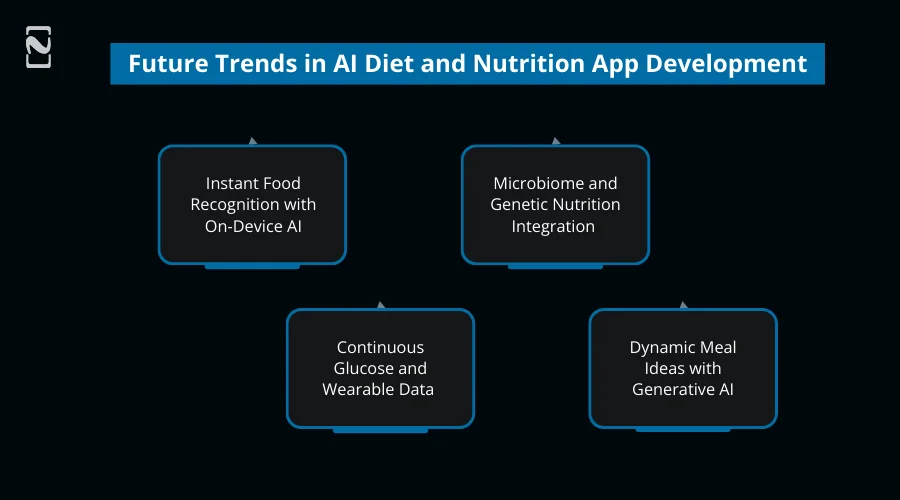
1. Instant Food Recognition with On-Device AI
The future AI food recognition app will process food details directly on users phone or wearable. And this is without depending on cloud servers. It means really fast meal tracking, offline user, and the best privacy. Meal tracking will feel like snapping a quick photo. AI nutrition app development
Business Significance: It makes logging meals fast and easy that increases user retention.
2. Microbiome and Genetic Nutrition Integration
The AI will use the user’s genetic profile and gut microbiome data to recommend meals that fit their unique biology. It does not give general recommendations but creates nutrition guidance that actually works for their body.
Business Significance: It provides users with real outcomes that keep them happy and loyal to your app.
3. Continuous Glucose and Wearable Data
The health trackers will soon do more than count steps. AI in fitness apps will analyze signals from devices like glucose monitors. The fitness trackers will suggest meals based on how the body responds in real-time. Basically, it will act as a personal nutrition coach.
Business Significance: It encourages daily use that boosts user engagement and retention.
4. Dynamic Meal Ideas with Generative AI
Generative AI will create personalized meal options based on what users have at home. For example, your dietary preferences and your favourite cuisines. This will keep the meal planning really exciting and practical every day.
Business Significance: It keeps content interesting, so users stay active and don’t get bored.
Why Choose Nimble AppGenie for AI Personalized Nutrition App Development?
When it comes to AI diet and nutrition app development, Nimble AppGenie, an AI development company, is the right partner that transforms vision into reality.
Additionally, we assist you in deciding what AI to build in-house, what to integrate, and how to scale without overengineering. From choosing the right APIs to training AI models, every decision is made with performance and compliance in mind.
Nimble AppGenie works with startups, wellness brands, healthcare providers, and enterprises to deliver AI-based diet recommendations solutions. This drives engagement, user retention, and real outcomes.
Why Nimble AppGenie Stands Out:
- Hands-on experience in making an AI-driven app
- Personalized solutions designed for users’ needs
- End-to-end development support
- Leverage AI tools, frameworks, and tech stacks
- Clear communication and regular progress updates
Real-World Case Study: DRT App Developed by Nimble AppGenie
Client: DRT – Health & Wellness App
Objective: The goal was to create a smart wellness platform that guides users with personalized health routines, habit tracking, and real-time insights to improve well-being.

Solutions We Offered: We developed DRT, a meditation and wellness app with AI-powered features like behavior tracking, personalized recommendations, progress analytics, and interactive reminders.
Tech Stack Chosen: Adobe XD, HTML 5, Swift 3, MYSQL, AWS
Timeline Taken: 12 weeks
Results:
- 60% increase in daily active users
- 35% improvement in habit completion
- Personalized AI suggestions boosted user retention
- Users reported higher satisfaction with actionable insights
Conclusion
AI nutrition app development is changing users’ approach to healthy living. With personalized meal planning, AI food recognition, and predictive insights, your solution goes far beyond traditional diet trackers.
However, if you choose the right features, tech stack, and development approach, you can build scalable AI-powered nutrition apps that users trust and engage with long-term.
Therefore, if you are ready to turn your dream idea into a smart, AI-driven nutrition solution, it is best to partner with a fitness app development company that can help you move faster and reduce risks.
FAQs
The cost to make an AI diet and nutrition app can start from $30,000 and go beyond $250,000 or more, depending on AI complexity, integrations, and customizations.

Niketan Sharma, CTO, Nimble AppGenie, is a tech enthusiast with more than a decade of experience in delivering high-value solutions that allow a brand to penetrate the market easily. With a strong hold on mobile app development, he is actively working to help businesses identify the potential of digital transformation by sharing insightful statistics, guides & blogs.
Table of Contents
No Comments
Comments are closed.