Free Consultation
 PCI-DSS Compliant
 GDPR Ready
 ISO 27001
 NDA Protected
 AI Services
 AI App Development
 Generative AI Development
 AI Chatbot Development
 AI Integration Services
 AI For Fintech
 AI Financial Assistant Solution
 AI Insurance Agent Development
 Tech Stack
 OpenAI / GPT-4
 Claude / Anthropic
 Gemini / Google AI
 Llama / Open Source
 LangChain / LlamaIndex
 Pinecone / Pgvector
 AWS / Azure AI


 Fintech Solution
 Core Fintech
 Fintech App Development
 Neobank App Development
 eWallet App Development
 Payment Integration
 Lending Software
 BNPL Solution
 BNPL App Development
 Insurance App
 Investment App Dev
 Wealth Management App
 Crypto & DeFi
 DeFi App Development
 Crypto Wallet Dev
 Crypto Exchange Dev
 Trading Platform Dev
 Payments
 Compliance
 RegTech App Dev
 Fraud Detection
 Lending Ecosystem
 P2P Lending Platform
 Mortgage Lending
 Engagement
 Outsourcing Dev


 Mobile Development
 Mobile App Dev
 iOS App Development
 Android App Development
 React Native
 Flutter Development
 Web Development
 Node.js Development
 React.js Development
 Angular Development
 PHP / Laravel
 App Services
 UI/UX Design
 App Maintenance
 By Stage
 MVP Development
 Industry Solutions
 Healthcare App Dev
 Education App Dev
 Travel App Dev
 Real Estate App Dev
 Logistics Software
 Social Media App


 Hire Mobile Developers
 Hire iPhone Developers
 Hire Android Developers
 Hire React Native Devs
 Hire Flutter Developers
 Hire Web Developers
 Hire Node.js Developers
 Hire Angular Developers
 Hire PHP Developers
 Hire Laravel Developers
 How It Works
 Pre-Vetted Developers
 Ready In 48 Hours
 NDA From Day One
 Replace Guarantee

 Company
 About Us
 Portfolio
 Case Studies
 Blog / Insights
 Careers
 Contact Us
 Recognition


 Offices


Key Takeaways:
- To build a B2B escrow payment platform, you should begin with discovery and planning, choosing among build vs buy vs hybrid, design, technology development, security, and testing.
- The key features to include in building a B2B escrow payment platform are milestone-based releases, multi-signature approvals, dispute resolution, recurring billing and hybrid pricing, and automated compliance.
- The overall cost to create a B2B escrow payment varies from $15,000 to $70,000. This cost is further impacted by factors such as complexity of the app, multi-party wallet depth, compliances, security, ERP integration, and fraud detection.
- Connecting with Nimble AppGenie can help in building your B2B escrow payment platform with transparency and following all the legal frameworks.
If you are running a business and are worried about payments and managing your cash flow, B2B escrow payment is for you.
Imagine a platform where businesses can trade with confidence, knowing funds are protected until agreed obligations are fulfilled.
As digital commerce expands across industries, companies increasingly seek a secure, transparent, and automated way for managing their valuable transactions.
This is where the need to build a B2B escrow payment platform in the US arises.
To build this platform, you should know the fundamentals. In this guide to building the B2B escrow payment platform, we will walk you through the different derivatives of concepts, features, and a list of steps and costs.
Without any delay, let’s begin.
What is a B2B Escrow Payment Platform?
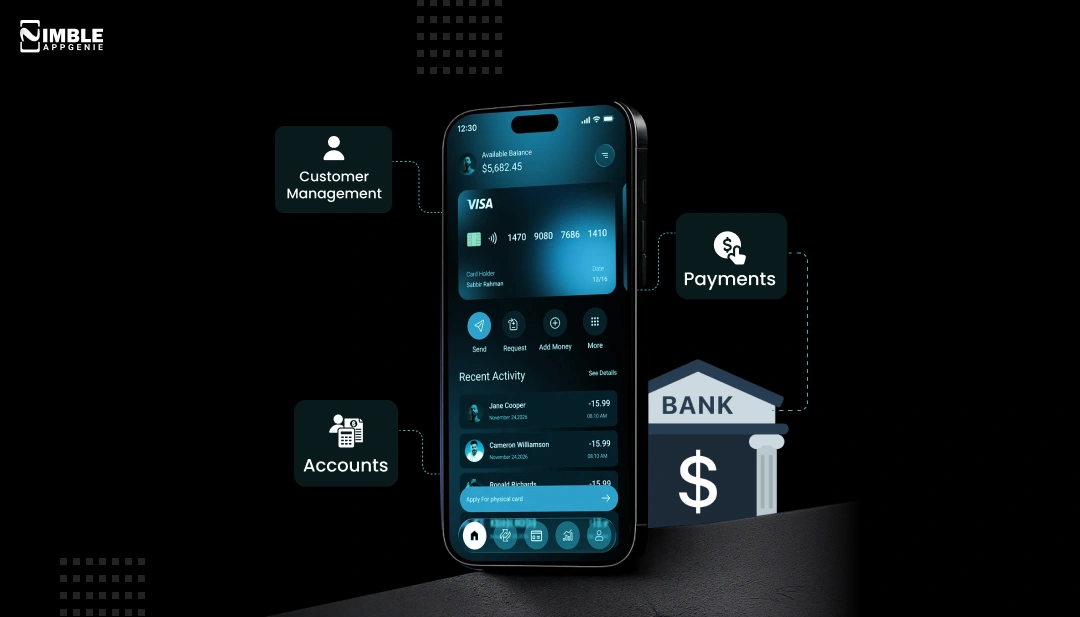
A B2B escrow payment platform is a digital system that uses a neutral third party to hold and secure the business transaction funds until both the payer and the seller fulfill their agreed order terms.
A B2B escrow platform is a service that holds money and sometimes documents, assets, or digital funds for two businesses during the transaction and releases them only when agreed conditions are met.
The key functions of a B2B escrow payment platform are:
- User Verification
- Invoice and purchase order management
- Approval workflows
- Security and fraud prevention
- Cross-border transactions
If you are wondering how a B2B escrow payment platform works, let’s check it out here:
- Step 1: Agreement on Terms: Both parties agree on each other’s terms and conditions.
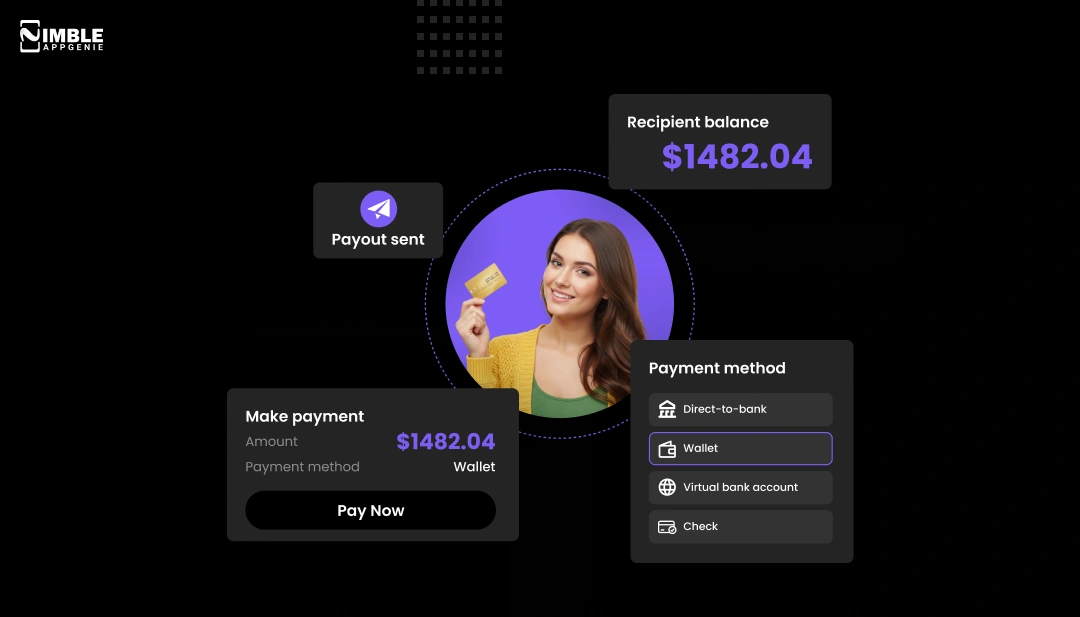
- Step 2: Funding the Escrow: The buyer deposits the required funds in the escrow account.
- Step 3: Fulfillment and Milestones: The seller provides the goods and completes the agreed service milestones.
- Step 4: Inspection and Verification: Now, the buyer inspects the delivery or reviews the completed work against the contract verification.
- Step 5: Fund Release: Once the buyer confirms satisfaction or the inspection window expires, the escrow payment releases the funds to the seller.
With an understanding of the concept and working process, let’s get ahead with the key features in the next section.
Features of a B2B Escrow Payment Platform
With these features, you can capture the functionalities of B2B escrow payments. These features rely on your platform’s goal and the scope of your project.
Here is the list of features of a B2B escrow payment platform:
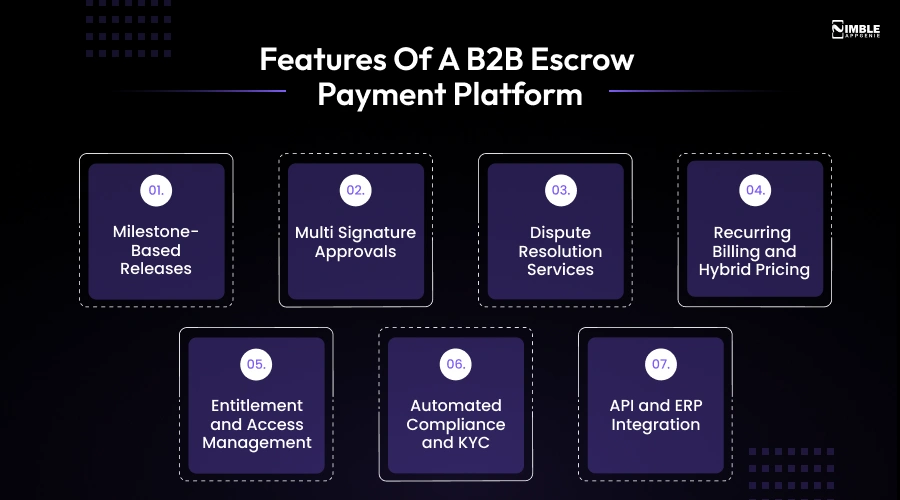
1. Milestone-Based Releases
Milestone-based features of a B2B escrow payment platform are critical because it builds trust and reduce financial risk for both the buyers and sellers during long projects. It helps with easy dispute resolution.
2. Multi-Signature Approvals
Multi-signature approvals are a feature that helps reduce fraud, reduces human errors, and even builds trust. It even prevents fraud and requires two or more people to authorize a transaction before any funds can move out of an escrow account.
3. Dispute Resolution Services
The dispute resolution service is a feature that acts as a neutral third-party process to fairly settle disputes and disagreements over deliverables or timelines before any escrow payment releases.
4. Recurring Billing and Hybrid Pricing
Recurring billing and hybrid pricing are important features of modern B2B Escrow payment platforms because they bridge the gap between traditional, one-time escrow protection and the ongoing, flexible billing needs of the modern business-to-business transaction.
5. Entitlement and Access Management
Entitlement and access management is a critical security and compliance foundation for any B2B escrow platform. It even links the commercial purchases directly to the technical permissions of the platform.
6. Automated Compliance and KYC
Verify business identities using Know Your Customer (KYC) and Anti-Money Laundering (AML) checks. It helps with risk reduction, faster onboarding, regulatory adherence, and secure fund release.
7. API and ERP Integration
API and ERP integration connects to accounting systems and automates complicated financial workflows, as well as syncing transactions directly to the company’s internal records.
Fintech API integration services helps in connecting different software systems, so they can share data and customers can gain maximum benefits.
Here, the majority of fintech startups and enterprises often ask, “How to create a B2B escrow payment platform in the US?”
Let’s evaluate the same in the next section.
How to Build a B2B Escrow Payment Platform in the US?
To create a B2B escrow payment platform in the USA, you should evaluate the requirements of your platform, identify the key features to include in the platform, design the platform as per the users, select the tech stack, and build the platform.
Here are the detailed steps stating how to build a B2B escrow payment platform in the US:
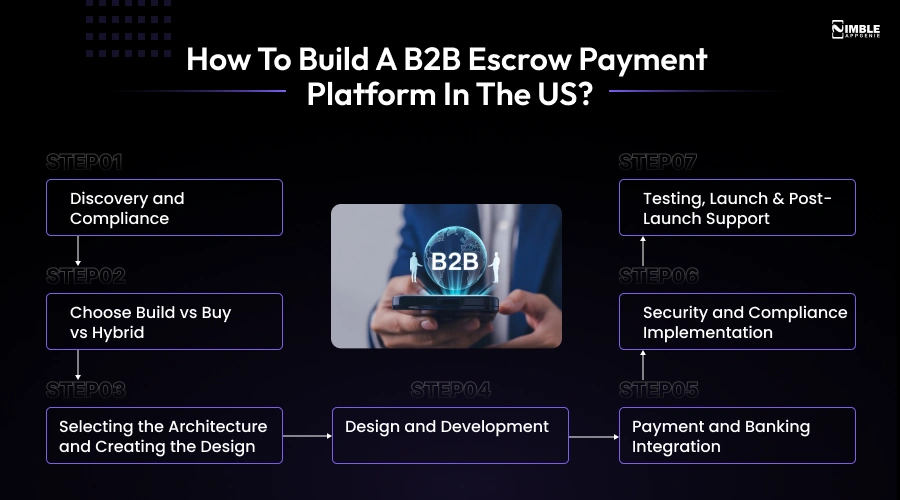
Step 1: Discovery and Compliance
Define the trust model, target states, and licensing path; it is the first step in building the platform because here you define your scope of the app and how it will take shape into the final project.
Here you should identify:
- What is the scope of your project, and the demands of the target audience.
- Also, identify the compliance requirements before you begin with the B2B escrow payment platform.
- This step will avoid any regulatory penalties and help you choose the right fund-holding model and then design a compliant platform.
Step 2: Choose Build vs Buy vs Hybrid
In this step, you should select what can be beneficial for your project and goal: building, buying, or remaining hybrid.
To select among build vs buy vs hybrid, you need to evaluate different parameters:
| Approach | Best For | Choose When… |
| Build | Enterprises with scale & capital | Escrow is core to your product, you have/plan MTL licensing, and you need full customization |
| Buy (white-label API) | Startups validating an idea | You need to launch fast, avoid licensing burden, and escrow is a supporting feature. |
| Hybrid | Growth-stage startups & mid-market firms | You’ve outgrown generic white-label but aren’t ready to become a licensed money transmitter yourself |
Startups should validate with Buy, then should scale into Hybrid, and enterprises should go with building escrow as a core asset.
Step 3: Selecting the Architecture and Creating the Design
In this step of B2B escrow payment platform development, you should select the architecture and design your platform. Here, you can match professional portfolios to your goals, analyze the site, and follow the schematic process.
To design the platform, it is essential to consider:
- Choose a modular, domain-driven architecture
- Design the escrow lifecycle as a state machine.
- Build a double-entry ledger and strong financial controls.
- Prioritize compliance, security, and operational reliability.
Bonus Read: Fintech App Design
Step 4: Design and Development
To design the B2B escrow payment platform in the US, all you need is to obtain a license and identify the technical requirements for your platform. Here, you must map out your business workflows, integration needs, and workflow measures.
This is what you can consider:
- Evaluate the buyer dashboard, seller dashboard, and admin console.
- Opt for the backend, such as fund-holding logic, milestone engine, frontend, and KYB onboarding.
The key architecture that you can include here is:
| Area | Tech / Requirement |
| Frontend | React / Next.js |
| Backend | Node.js / Go |
| Database | PostgreSQL |
| Payments | ACH / Wire + Banking Partner |
| Escrow | Double-entry Ledger |
| KYC/AML | Verification + Fraud APIs |
| Security | MFA, Encryption, RBAC |
| Cloud | AWS / GCP |
| Admin | Transactions, Disputes, Compliance |
| Compliance | US Escrow & Money-Transmission Rules |
This finance tech stacks can vary depending on your project scope, and development process.
Step 5: Payment and Banking Integration
Payment and banking integration is the core operational layer of a US-based B2B escrow platform, which is responsible for programmatically moving funds, segregating liabilities, and verifying that milestone conditions are met before releasing payouts.
This will allow you to:
- Account architecture & fund segregation
- Selecting and integrating US payment rails
- Verification and compliance workflows
- The programmatic escrow lifecycle
Step 6: Security and Compliance Implementation
For building a B2B escrow payment platform in the US, you must structure the core funds flow through a licensed custodial model to avoid direct money transmitter licensing.
You should opt for following mobile app security measures:
- Build your program around the NIST Cybersecurity Framework or NIST 800-53
- Target SOC 2 Type II for enterprise customers.
- Protect identities, accounts, and privileged access.
- Secure payment and sensitive data.
- Implement KYC/KYB, AML, sanctions, and fraud controls.
Step 7: Testing, Launch & Post-Launch Support
Now, you should test the complete platform under different circumstances. To opt for testing, launch, and post-launch support, you need to structure your agreement and project plan into different contracted phases with clear deliverables and service level agreements (SLAs).
This is what you should do:
- Opt for pre-launch fintech platform testing
- Testing must address the complex workflows and any strict regulatory compliance.
- Go for post-launch support for your B2B escrow payment platform.
- Address bugs and adopt continuous monitoring.
Now, let’s check out the overall cost to create a B2B escrow payment platform in the US in the next section.
What is the Cost to Create a B2B Escrow Payment Platform?
The overall cost to build a B2B escrow payment platform can vary from $15,000 to $70,000. This cost varies depending on different factors, such as regulatory compliance, smart UX, and core architecture.
The cost to develop a fintech app may vary significantly from the cost of building a B2B escrow payment platform, as escrow solutions require specialized payment workflows, enhanced security, regulatory compliance, and advanced financial infrastructure.
The cost to make a B2B escrow payment platform can differ from the fintech app development cost because of the features, and factors impacting the same.
Let’s determine all the factors impacting the overall cost to build a B2B escrow payment platform:
| Cost Factor | Impact on Cost | Why |
| Platform Tier (MVP → Mid-tier → Enterprise) | $40K–$80K / $80K–$180K / $180K–$350K+ | Scope of features, dispute engine complexity, multi-party wallet depth |
| Licensing Path | $0 (partner-based) → $50K–$150K+ (own MTL/state licenses) | Building your own license vs. using a licensed escrow-as-a-service partner |
| Compliance Scope | +$15K–$50K/yr | PCI-DSS, SOC 2, KYB/AML tooling, audits |
| Milestone/Dispute Logic | +$15K–$40K | Multi-tranche release rules, evidence workflows, admin arbitration console |
| ERP/Accounting Integrations | +$10K–$30K | QuickBooks, NetSuite, SAP connectors for B2B invoicing/reconciliation |
| Fraud Detection (AI-based) | +$20K–$60K | Custom ML models vs. rule-based checks |
| Multi-Currency / Cross-Border Support | +$15K–$40K | FX handling, international banking rails |
| Banking Partner / FBO Setup | +$5K–$20K | Trust/FBO account structuring with a banking partner |
| Tech Stack & Team Location | Variable (±20–30%) | Onshore vs. offshore/hybrid team, chosen cloud & backend stack |
| Post-Launch Support & Maintenance | 15–20% of build cost/yr | Bug fixes, updates, scaling infrastructure |
Well, if you are ready to proceed with building the B2B escrow payment platform in the USA, you should be worried about which partner to connect with.
Which is the Best B2B Escrow Payment Platform Development Company?
Nimble AppGenie is the best fintech app development company, offering best practices, including fintech design, security audits, API and SDK integration, cloud-based development, and MVP development.
This is what you need to do:
- Proven Technical Expertise: Nimble AppGenie is an experienced app development company that has delivered approx. 350+ apps.
- Niche in Fintech: Nimble AppGenie has niche expertise in offering fintech services. The engineers offer the best fintech solutions. Such as secure mobile banking, investing and wealth tools, RegTech Solutions, flexible checkout financing, and insurance technology.
- Offers Compliance and Security: Nimble AppGenie offers compliance and security measures by enforcing strict KYC rules, Anti-Money Laundering (AML), and fraud prevention.
- Providers Milestone-Based Releases: In B2B escrow payment platform development, one of the important segments is milestone-based releases, where funds are often unblocked in stages or only after pre-agreed conditions such as delivery, inspection, or quality checks.

Conclusion
B2B escrow payment platform helps the businesses to use a third-party to hold their funds, and secure transactions. This platform does not release funds until the seller fulfill their agreed order terms.
Businesses can create a B2B escrow payment platform in the US, by understanding the market, choosing among build vs buy, selecting the architecture, design the platform, opting for security, and test the platform.
To identify the right cost and other factors, one should connect with an expert team of engineers.
FAQs
A B2B escrow payment platform is where business deposits its funds to a neutral third-party platform, that offers them security. The platform do not release funds until their agreed terms are met. Here, first the business deposit funds, the order gets fulfilled by delivering of product, conditions are met, and then products get released.
To create a B2B escrow payment platform in the US, one should begin with market research, choosing the right model, designing the platform, selecting a right architecture, security, testing, and launching the app.
The key features to include in a B2B escrow payment platform in the USA are milestone-based releases, multi-signature approvals, dispute resolution services, recurring billing, entitlement and access management, automated compliances, and API integration.
The overall cost to make a B2B escrow payment platform can vary from $15,000 to $70,000. This cost can vary due to different factors such as MVP, complexity of features, compliances, tech stack, and choice of platform.
Among build vs buy vs integration, you should evaluate the priority of your platform in the US. The enterprises with scale and large capital should go for building the platform, startups should consider buying the platform, while the startups and enterprises should opt for both build and buying simultaneously.

Madan is the Backend Solutions Architect at Nimble AppGenie, specializing in the design of secure, high-concurrency systems that power complex mobile ecosystems. With deep expertise in server-side logic and database management, he ensures every platform is built with enterprise-grade security. In his free time, he is an avid researcher of emerging technologies; he spends his time deconstructing the latest backend frameworks and reading technical papers to ensure our solutions remain at the absolute forefront of industry innovation.