
 Free Consultation
 PCI-DSS Compliant
 GDPR Ready
 ISO 27001
 NDA Protected
 AI Services
 AI App Development
 Generative AI Development
 AI Chatbot Development
 AI Integration Services
 AI Consulting Services
 AI For Fintech
 Financial AI Assistant Solution
 Insurance AI Agent Solution
 Insurance Automation Software Solution
 Tech Stack
 OpenAI / GPT-4
 Claude / Anthropic
 Gemini / Google AI
 Llama / Open source
 LangChain / LlamaIndex
 Pinecone / Pgvector
 AWS / Azure AI


 Fintech Solution
 Core Fintech
 App Development
 Neobank Solutions
 eWallet Solutions
 Lending Software
 Banking Solutions
 BNPL Solution
 BNPL Solutions
 Insurance App
 Wealth Management
 Crypto & DeFi
 Blockchain Development
  Payroll Software
 DeFi Solutions
 Crypto Wallet
 Crypto On/Off Ramp
 Crypto Exchange
 Trading Platform
 Payments
 API Integrations
 Compliance
 Regulations & Compliance
 Fraud Detection
 Lending Ecosystem
 P2P Lending Platform
 Mortgage Software
 Engagement
 Fintech Outsourcing

 Mobile Solutions
  Mobile App Dev
 iOS App Development
 Android App Development
 React Native
 Flutter Development
 Web Solutions
 Node.js Development
 React.js Development
 Angular Development
 App Services
 UI/UX Design
 App Maintenance
 By Stage
 MVP Development
 Industry Solutions
 Healthcare App Dev
 Education App Dev
 Travel App Dev
 Real Estate App Dev
 Logistics Software
 Social Media App

 Mobile Developers
 Hire Developers
 Hire Mobile Developers
 Hire iPhone Developers
 Hire React Native Devs
 Web Developers
 Hire Node.js Developers
 Hire Angular Developers
 Hire PHP Developers
 Hire Laravel Developers
 How It Works
 Pre-Vetted Developers
 Ready In 48 Hours
 NDA From Day One
 Replace Guarantee
 Company
 About Us
 Our Work Process
 Portfolio
 Case Studies
 Blog / Insights
 Careers
 Contact Us
 Awards
 Recognition


 Offices


AI Agent Development Company
AI agents don't just answer questions; they take action. They plan, use tools, and complete multi-step tasks autonomously. From customer support to financial analysis to code review, they manage knowledge work that used to need a person.
Nimble AppGenie is an AI agent development company that creates agents that integrate with your systems, use your data, and deliver real business value in everyday operations.
 150+ AI agents delivered
 15+ industries served
 10+ LLM integrations built
 8+ years in AI development
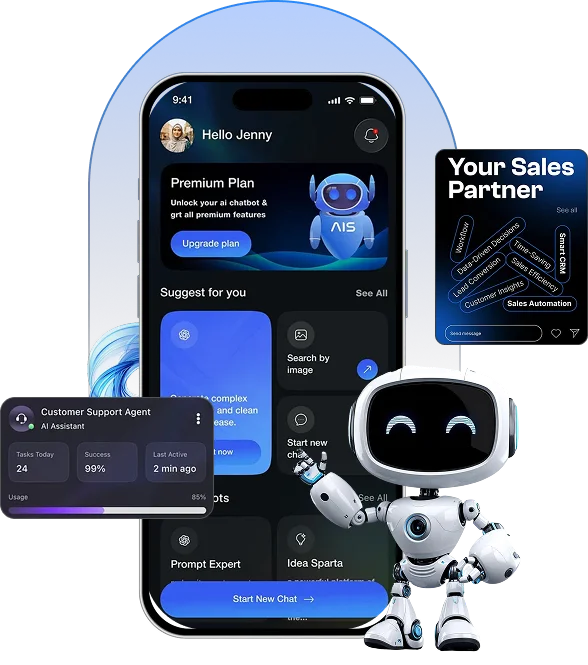
Why Businesses Are Investing in AI Agents Now
AI agents are no longer experimental technology; they are helping businesses reduce manual work, accelerate execution, and unlock new levels of efficiency across customer service, operations, finance, and beyond.
Most companies are not adopting AI agents to outshine their competitors. They are doing it as the math works. Manual knowledge work is costly, slow, and scales badly. AI agents fix all three.
AI agents handle repetitive, rule-based knowledge tasks at scale, like reading documents, triaging requests, writing summaries, and updating records, without adding headcount.
Agents don't take sick days, get tired at the end of the shift, or lose focus. They run 24/7 without error accumulation.
A task that takes a human two hours can run in seconds with the right agent. That gap combines fast across thousands of tasks per month.
You can chain agents together. One agent researches a lead, another drafts the email, another schedules the follow-up, and updates the CRM. Each step runs itself, in sequence, with no manual handoff.
Businesses that build AI-native workflows now are pulling ahead. The ones waiting are falling behind, not because AI is hype, but because their competitors are shipping it.
Our AI Agent Development Services
We don't build demos. Every AI agent we ship is designed around a real workflow, connected to your real data, and deployed to run in the real world.

Custom AI Agent Development
Every business has workflows that don't fit off-the-shelf tools. We build agents from the ground up, starting from a use case, not a template. That means defining which decisions the agent needs to make, what tools it needs to call, what data it needs to access, and how it hands off to humans when required. We work with GPT-4o, Claude, Gemini, Llama, and Mistral, depending on which model best fits the task. The output is an agent that performs inside your systems, not alongside them.

Agentic Workflow Automation
Most automation tools manage one step at a time. Agentic workflows handle the complete sequence. We design systems where the agent plans the task, executes every step using the right tools, manages branching logic mid-run, and delivers the final output, all without a human in the loop for regular cases. That could be a legal document review chain, a financial report generation pipeline, or an outbound sales sequence. If the process has clear inputs and outcomes, we can almost certainly build an agent for it. Learn more about how AI is changing automation.

RAG-Powered AI Agents
Retrieval-Augmented Generation (RAG) allows an AI agent to pull answers from your own databases, documents, and knowledge bases, not from the internet or a model's training data. We build RAG agents that index your content, retrieve the right chunks at query time, and generate accurate answers grounded in your actual data. This is the right approach for underwriting tools, compliance assistants, internal knowledge agents, and customer bots trained on your product docs. The agent remains up to date as your documents change - no retraining required. Read our guide on AI frameworks for RAG and LLM development.

Multi-Agent System Development
A single agent handles one task perfectly. Multi-agent systems manage complex workflows to accomplish different tasks with different expertise. We design and build multi-agent systems where specialized agents work in sequence or parallel - one researches, one validates, one writes, and one publishes. Each agent has a defined scope and a clear role. The system includes an orchestration layer that coordinates the agents, passes states between them, and handles failures seamlessly. Behind the most capable AI automation deployments, this is the architecture that can actually replace complex human workflows, not just help with individual steps.

AI Agent Integration Services
An AI agent is useful only if it can actually read your data and take actions in your existing tools. We manage a full integration layer, connecting your agents to CRMs like HubSpot or Salesforce, internal APIs, databases (SQL, Postgres, vector DBs), third-party platforms, and communication tools like Slack and email. The goal is an agent that doesn't survive in isolation; it works inside the same systems your team already uses. We have built integration for fintech platforms, healthcare systems, SaaS products, and enterprise software stacks. Check out our AI app development services to see what's possible.

Voice AI Agent Development
Voice AI agents are a surging need, especially in customer support, financial services, healthcare intake, and sales. We build AI agents that handle natural, multi-turn voice conversations: taking calls, accumulating information, directing to the right outcome, and escalating to a human when needed. These are not IVR trees. They comprehend context, manage interruptions, and respond in natural language. We use LLM reasoning, speech-to-text, and text-to-speech layers that work together in real-time. The result is a voice agent that behaves and sounds like a trained support rep at a fraction of the cost.
Ready to Build an AI Agent That Delivers Real Business Value?
Discuss your use case with our AI specialists and get expert guidance on architecture, integrations, timelines, and implementation strategy.
Types of AI Agents We Build
Not all AI agents are built for the same purpose. Depending on your goals, the right solution may automate workflows, assist employees, enhance customer experiences, or coordinate complex processes across multiple systems. Below are the AI agent categories we most commonly develop for our clients.

Customer Support AI Agents
Support agents that manage inquiries, pull from your knowledge base, resolve tickets, and escalate edge cases to a human. They work across email, chat, and voice - 24/7, in any language. Unlike scripted chatbots, customer support AI agents understand context and manage multi-turn conversations. Businesses leveraging support agents typically cut first-response times from hours to seconds and diminish ticket volume needing human attention by 60-80%. Want to learn how? Read how AI chatbots work in customer service.

Sales & Lead Generation AI Agents
Agents that find leads, research them, write personalized outreach, schedule follow-ups, and update the CRM - all without your sales team touching it until it's time for the call. We build these with access to tools such as LinkedIn, Apollo, Salesforce, email platforms, and HubSpot. The sales & lead generation AI agent not only drafts messages, but it also tracks replies, keeps the pipeline moving, and adjusts follow-up timing. This is one of the highest-ROI use cases for AI agents in B2B businesses.

Research & Content AI Agents
Agents that research topics, pull details from web sources or internal documents, process the information, and produce structured drafts or reports. Research and content AI agents are useful for market research, content operations, competitive analysis, and internal knowledge management. They work well with a human-in-the-loop review step at the end. The agent handles 80% heavy lifting, and a human adds judgment at the finish line.

Operations & HR AI Agents
Agents that manage internal processes: HR policy Q&A, onboarding workflows, scheduling coordination, document routing, and vendor communication. Operations and HR AI agents connect to project management tools, HRIS, and communication platforms. Operations teams utilize these to diminish back-and-forth on routine requests and free up their time for work that actually requires human judgment. If a process can be documented, there's a good chance it can be automated.

Finance & Data Analysis AI Agents
Agents that read financial documents, extract key metrics (DTI, income, liabilities, risk flags), compare against policy rules, and generate underwriter-ready summaries. We have built these for lending platforms, insurance firms, and fintech companies. They cut document review time from 45+ minutes to under five without reducing accuracy. They are also useful for recurring reporting: pulling data, running calculations, and pushing formatted reports to your team on a schedule.
Key Features of Our AI Agents
Here's the honest answer: most chatbot integrations are one-prompt, one-model, and one-step systems. The agents we create are different across five dimensions.
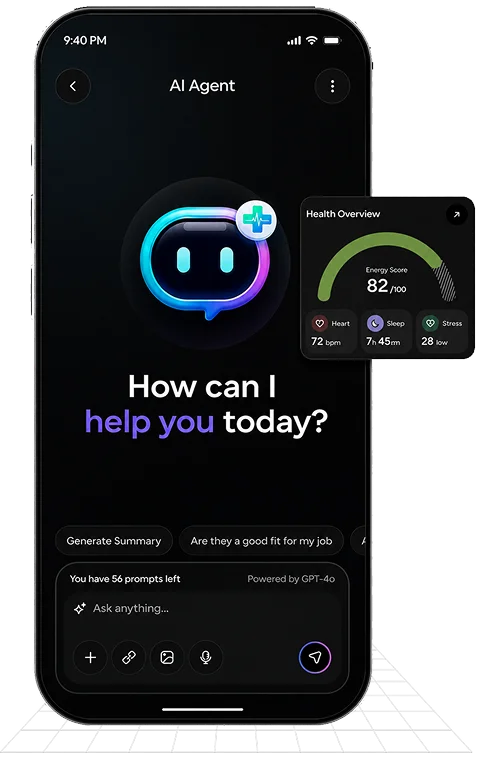
Multi-LLM Architecture
We don't pick one model and force each task through it. Distinct models have distinct strengths - GPT-4o is robust at instruction-following, Gemini Flash is cheap and fast for high-volume tasks, Claude is strong at long-document analysis, and Llama is useful for on-premise deployments where data can't leave your infrastructure. We design agents that route tasks to the right model based on latency, cost, and capability, or use multiple models in the same window. You are not locked into one provider.
Long-Term Memory & Context Management
Most LLM calls are stateless - the model forgets everything once the conversation ends. Our agents use persistent memory layers (mem0, Zep, PostgreSQL + pgvector), so they remember past interactions, workflow context, and user preferences across sessions. This matters for support agents who need to remember a customer's history, internal assistants who learn how your teams work over time, and sales agents who track where a prospect is in the pipeline.
Tool Use & Function Calling
An agent without tools is only a text generator. Our agents can call external APIs, search the web, query databases, read and write files, run code, and trigger actions in third-party platforms. We define clear tool schemas, manage errors and retries, and build the logic that decides when to call a tool vs. when to reason what the agent already knows. Tool use is what makes an agent actually do things - not just talk about them.
Observability & Human-in-the-Loop
What happens when the agent gets something wrong? Every agent we build includes trace logging (LangSmith or Langfuse), so you can see exactly what the agent did, what tools it called, and what decision it made at each step. We also create configurable human-review checkpoints for high-stakes actions - the agent pauses, flags the task, and waits for a human to approve before proceeding. You stay in control without having to monitor every single run.
Security & Data Privacy
Data privacy is not an afterthought. We implement role-based access controls so agents only access the data they need. All data in transit is encrypted. For businesses in regulated industries (healthcare, fintech, and legal), we build on-premise or private cloud deployments so your data never leaves your infrastructure. We have developed AI systems that comply with HIPAA, SOC2, GDPR, and financial regulatory requirements. If your industry has compliance needs, we have likely already built for them.
Found the Right AI Agent Use Case? Let's Bring It to Life.
From strategy and architecture to integration and deployment, we build AI agents that work within your existing systems and processes.
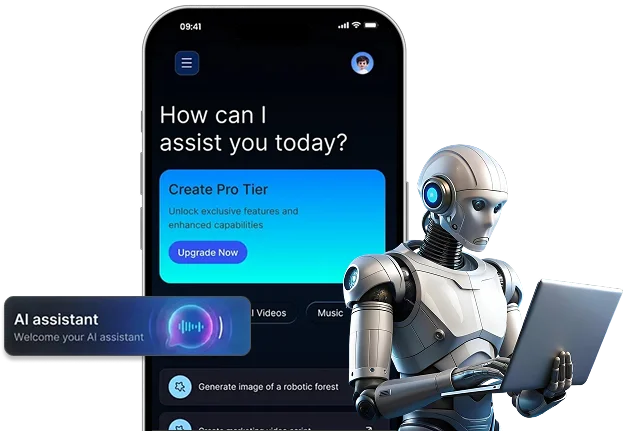
Our AI Agent Development Process
Whether you are building a customer support agent, workflow automation agent, or a complex multi-agent system, success depends on a structured development approach. We follow a proven process that aligns AI capabilities with business goals, minimizes implementation risks, and accelerates time to value.

Discovery & Use Case Definition
We start by mapping the workflow you want to automate. That means understanding the inputs (what triggers the task), the tools and data sources needed, the steps involved, the acceptable error rate, and where a human needs to stay in the loop. We ask hard questions early - like "what does failure look like?" and "who validates the output?", because those decisions shape the entire architecture. This stage typically takes 1–2 weeks.

Architecture Design
Once the use case is clear, we design the agent architecture: which LLM(s) to use, what tools to create, how memory should work, how the agent will be orchestrated (crewAI, LangGraph, AutoGen, or custom), and how it will integrate with your current systems. We produce a technical design document that outlines exactly what we are building and why before we start with the code.

Prompt Engineering & Tool Development
This is where most development companies underinvest. Prompt design is not only about writing a good system prompt. It's a structured engineering process where we define the agent's role, output format, constraints, fallback behavior, and handle edge cases. We do this in parallel with creating the tool layer: writing the API connectors, functional schemas, and database queries the agent will use.

Build, Test & Evaluate
We build AI agents in iterations, not a waterfall. Each sprint produces a testable agent we can evaluate against real inputs from your workflow. We use automated eval frameworks (LangSmith, custom eval suites) to measure accuracy, latency, tool-use success rate, and failure modes. We test edge cases deliberately. You see real outcomes, not just a demo.

Integration & Deployment
We connect the agent to your production environment - your databases, APIs, communication tools, and CRMs. We handle authentication, environment variables, and data access controls. Deployment goes to your infrastructure of choice, such as GCP, AWS, Azure, or on-premise infrastructure. Containerized with Docker, scalable via Kubernetes if the workload demands it.

Optimization & Ongoing Support
AI agent development is not done at launch. Models change, your data changes, and your workflow evolves. We offer ongoing support - monitoring agent performance, updating prompts as models shift, fixing regressions, and adding new capabilities or tools as your needs grow. Most clients see the biggest efficiency gains in the months after launch, not at go-live.
AI Agent Technology Stack We Build On
We build AI agents on open standards and widely adopted frameworks. That means you can switch models, take the codebase in-house if you want to, and swap infrastructure. We make those choices transparent from day one.
We work with all major models and select based on the task
OpenAI
GPT-4o, GPT-4 Turbo - strong general reasoning and instruction following
Anthropic
Claude 3.5 Sonnet, Claude 3 Opus - excellent for long document analysis and nuanced reasoning
Gemini 1.5 Pro, Gemini Flash - good for high-volume, lower-latency tasks
Meta
Llama 3.1, Llama 3.2 - open-source, ideal for on-premise or cost-sensitive deployments
Mistral, Cohere, Groq
for low-latency inference requirements
LangChain / LangGraph
graph-based agent flows with fine-grained control
CrewAI
role-based multi-agent team orchestration
AutoGen (Microsoft)
conversational multi-agent systems
Custom orchestration
for proprietary or highly specialized workflows
Pinecone, Weaviate, Qdrant, ChromaDB
vector storage for RAG
mem0, Zep
persistent agent memory across sessions
PostgreSQL + pgvector
lightweight RAG for teams already on Postgres
Python (FastAPI)
primary agent backend
Node.js
real-time agent interfaces
AWS / GCP / Azure
cloud deployment
Docker, Kubernetes
scalable, containerized agent hosting
LangSmith, Langfuse
trace logging and agent debugging
Weights & Biases
model evaluation and experiment tracking
Grafana, Metabase
custom performance dashboards
Why Choose Nimble AppGenie for AI Agent Development Services
As an AI agent development company, we design intelligent, adaptive systems that improve compliance, drive measurable ROI, and create lasting competitive advantage. Check what distinguishes us from the global AI agent developers.
LLM-Agnostic, Best-Model Approach
We don't have a preferred vendor. We are not a Google Cloud partner or an OpenAI reseller pushing on the stack. We evaluate the best model for every task based on cost, accuracy, your data requirements, and latency. That means you get the right tool for the job - not whatever our commercial partnership incentivizes us to recommend.
Real Systems, Not Proof of Concept
A lot of agencies can build a demo. Fewer can create something that runs reliably in production - managing thousands of requests a day, recovering from API failures, dealing with malformed inputs, and staying accurate as your data changes. We have shipped agents in fintech, SaaS, healthcare, and eCommerce that run in production environments with real business stakes. We know where the failure points are because we have encountered and solved them in previous projects. See how we approach LLM-powered app development cost and architecture.
Deep Integration Expertise
Most AI agent projects don't fail because of the AI; they fail at the integration layer. Connecting an API or a database with inconsistent data formats is where teams get stuck. We have done this across various projects, and we have reusable patterns for the most common integration challenges. We also know when to push back: if your data is not clean enough to support what you want, we will tell you that before you spend money on development. Our AI integration services cover the full stack.
Cross-Industry Experience
We have built AI agents for fintech lenders, SaaS platforms, insurance companies, real estate firms, eCommerce businesses, and healthcare operators. Each industry has different data types, different definitions of "accurate enough", and different compliance requirements. That experience changes how we design systems. A financial services agent needs different guardrails than a content research agent. We don't build one-size-fits-all solutions, and we don't charge you for us to learn your industry on the job. Explore our work across sectors on our AI development services page.
Case Studies
Rather than making general claims, we should show you real work. Here are examples of AI agents we have built and what they actually delivered.
AI Sales Agent for a B2B SaaS Company
Client
A B2B SaaS company had a three-person SDR team struggling to hit outbound volume targets. Manual research, individual email writing, CRM updates, and follow-up scheduling were eating most of their day. They needed to scale without tripling the team.
Solution
We built a multi-step sales agent: it pulled lead data from Apollo, enriched company profiles, drafted personalized outbound emails using context from the company's own messaging framework, pushed updates to their HubSpot CRM, and scheduled follow-ups automatically based on reply signals.
Result
Outbound volume increased 4x within the first 60 days. The SDR team shifted entirely to call-based conversations. The agent handled everything before a call was scheduled. Agent-drafted emails achieved a 28% reply rate, which was higher than the team's previous manual average.
Financial Document Analysis Agent for a Fintech Platform
Client
A fintech lending platform was manually reviewing 100+ borrower financial documents every day. Each review, including extracting income, liabilities, and DTI ratios, and checking them against lending policy, takes an underwriter approximately 45 minutes. Volume was increasing, and the team couldn't keep pace.
Solution
We built an RAG agent trained on their internal lending policy documents. It reads uploaded financial statements, extracts the relevant data points, checks them against policy rules, flags anomalies, and generates a structured underwriter summary, all in under 60 seconds per application.
Result
Review time dropped from 45 minutes to 4 minutes per application. Underwriters now spend their time on edge cases and approval decisions, not data extraction. Throughput tripled without adding headcount. This is exactly the kind of work described in our agentic AI in financial services guide.
What Our Clients Say
Check the results from the live fintech platforms we have worked with. Client names are kept confidential per NDA - results are real.

"We hired Nimble AppGenie to build a document analysis agent for our compliance team. The team understood our regulatory requirements from day one and didn't need much hand-holding. The agent has been running in production for six months without a major failure. That's the bar we set, and they hit it."
Head of Product
Fintech Lending Platform"The integration work is where most AI projects fall apart. Nimble's team handled our legacy CRM connection and built reliable fallbacks for when the API misbehaved. We went live on schedule."
CTO
B2B SaaS Company"We'd tried two other agencies before Nimble. Both delivered demos. Nimble delivered something we actually run in production. There's a big difference."
VP of Operations
Insurance Technology FirmLooking for an AI Agent Development Partner, Not Just a Vendor?
We build AI agents that integrate with your systems, operate reliably at scale, and deliver measurable business outcomes. Let's discuss your requirements and explore the best path forward.
AI App Development Service
FAQs!
Find answers to all your common AI app development queries.

A chatbot responds to a message. An AI agent takes action to complete a goal. When you ask a chatbot, "What's our refund policy?" it answers. When you ask an AI agent, "Process this refund for customer #1042," it reads the order, verifies eligibility, initiates the refund in your system, sends the confirmation email, and updates the CRM all on its own. The key difference is autonomy. Agents plan, use tools, and execute multi-step tasks without someone triggering each step manually. Read more: Generative AI vs Conversational AI vs Chatbot.
It depends on the task. We use GPT-4o, Claude 3.5 Sonnet, Gemini 1.5 Pro, Llama 3.1, Mistral, and others, selecting based on the accuracy, latency, and cost requirements of your specific workflow. Some agents use multiple models across different steps. We don't lock you into one vendor. If you want to understand what goes into that decision, our AI frameworks guide breaks it down clearly.
A focused single-agent build, such as a customer support agent or a document analysis agent, for example, typically takes 6–10 weeks from discovery to deployment. More complex multi-agent systems take 12–20 weeks, depending on integration complexity. The timeline is heavily influenced by how clean your data is, how many systems need integration, and how much stakeholder review happens in between. We give you a realistic timeline estimate at the end of the discovery phase before you commit to the full build.
Yes. Connecting to your existing stack is the core of what we do. We've integrated AI agents with CRMs (Salesforce, HubSpot), ERPs, SQL databases, REST APIs, document storage systems, Slack, email platforms, and a range of industry-specific tools. If your system has an API or a queryable database, the agent can connect to it. If it doesn't, we can discuss what options exist.
That depends on how the system is designed, and we take this seriously. By default, we implement encrypted data in transit, role-based access controls, and scoped permissions so agents only access what they need. For businesses in regulated industries or with strict data residency requirements, we build on-premise or private cloud deployments where your data never passes through a third-party API. We're experienced with HIPAA, GDPR, SOC 2, and financial regulatory requirements.
Yes, and it's one of our more common use cases. Regulated industries have stricter requirements around data handling, explainability, audit trails, and human oversight. We build these requirements in from the start: every decision the agent makes is logged and traceable, human review checkpoints are configurable, and the system architecture keeps sensitive data within your controlled environment. We've deployed AI agents for fintech lenders, insurance companies, and healthcare operations teams. See how we approach fintech specifically.
They do make mistakes, and we design for that. Every agent we build has observability built in, so you can trace exactly what the agent did and where it went wrong. We build configurable confidence thresholds: if the agent isn't sure about something, it flags it for human review rather than proceeding. For high-stakes actions, such as sending emails, making payments, and updating records, we build explicit human-approval gates. And our ongoing support includes monitoring for performance degradation and prompt/system updates when error rates increase.
Success Stories Client Testimonials
Nimble AppGenie is committed to delivering results that satisfy our client’s needs and their business objectives. Here are testimonials from our clients about their experiences of working with us.

Exceptional service tailored to our unique business needs. The team’s expertise brought my idea to life, making to process seamless. Their dedication to quality is commendable. Highly recommended for their professionalism and results.


Uri. S
(Managing Director of Xparking, USA)
“Nimble AppGenie delivered a standout website that has attracted significant traffic. Their collaborative and organized approach made the development process smooth. Their expertise shines in the end product, making them the go-to web development company in London.

Francis Ejiegbu
(CEO of StepbyStepFitness, UK)
We hired Nimble AppGenie for web development services related to our edtech platform, Glu Learning. They integrated well with our team to solve all the problems and deliver remarkable solutions. Their team have great command of both client side and server side technology. We highly appreciate and recommend their services.

Ryan Williams
(CEO of GLU Learning, United Arab Emirates)
"Our journey with Nimble AppGenie is defined by their consistent availability, reliability, and efficiency. As we look towards expansion, I'm confident our partnership will grow even stronger. And we are eagerly anticipating the next chapter with them.

Dr. Christian Herbert Ayiku
(CEO of DafriBank, South Africa)
For the last year, we have been working closely with the Nimble team to develop our app. Nimble has provided consistent customer care, good communication, solutions to issues, and an end product that we're all really happy with.

Daisy Girifalco
(Founder and President of skiMate)
Our Presence

Houston, USA

10685-B Hazelhurst Dr. #24641 Houston, TX 77043, USA


London, UK 
27 Old Gloucester Street, London, WC1N 3AX, United Kingdom

Toronto, Canada
401 Bay Street, Toronto, ON M5H 2Y4, Canada

Dubai, UAE
Central One District C1 Building, Level 1, DWTC District, Dubai, UAE
Accreditations & Technology Partners


Niketan Sharma
CTO, Nimble AppGenie
