


Most businesses know loyal customers are valuable. But very few understand just how valuable. As per Forbes, loyal buyers are 50% more likely to try new products and spend 31% more per purchase. At the same time, companies that focus on user retention see consistent growth with fewer marketing expenses.
Around 94% of consumers are now part of at least one loyalty program, and digital solutions are essential. The loyalty management market is forecasted to grow from $15 billion today to over $41.21 billion by 2032.
That’s why businesses are choosing to develop a loyalty app that keeps customers engaged, rewards repeat purchases, and boosts brand loyalty. A beautifully-designed app can turn casual buyers into long-term advocates.
Thus, in this blog, we will discuss the loyalty app development process along with the types, features, costs, and monetization models that can take your business to new heights.
So, let’s begin!
What is a Loyalty App?
Let’s understand this in simple terms. A loyalty app is a mobile application that rewards customers for shopping with you.
Instead of carrying punch cards or clipping coupons, everything happens in the app. For example, customers earn points, unlock discounts, or get special benefits right on their mobile phone.
A loyalty app is not just about rewards. It’s a tool that helps you:
- Track customer behavior
- Understand buying patterns
- Personalized offers
- Increase repeat visits
Major Types of Loyalty Apps You Can Build
Once you decide to develop a loyalty app, the next big question is simple: what type of loyalty app should you build? Not every business needs the same kind of rewards system.
The right choice depends on your customers, your industry, and how often people interact with your brand. We have jotted down the most common and proven types of loyalty apps you can think about.
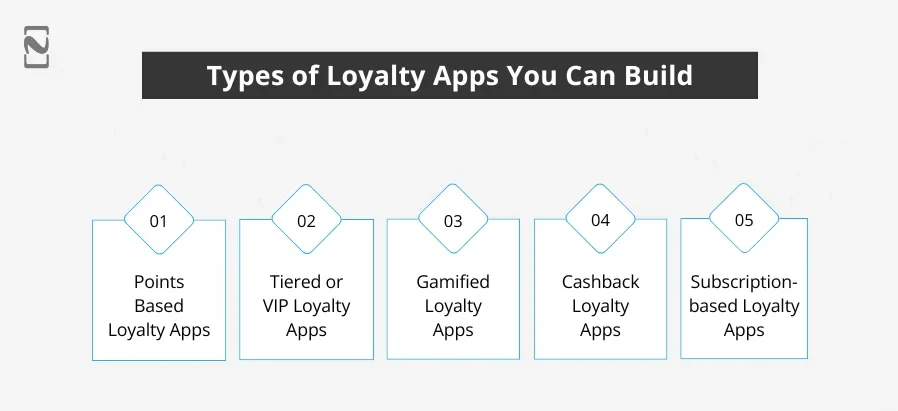
1. Points-Based Loyalty Apps
This is the most popular and easiest type of loyalty app to understand. Customers earn points every time they make a purchase or complete an action. Later, they can redeem those points for discounts, free items, or special rewards.
Why businesses like it:
- Simple for customers to understand
- Easy to manage
- Works well for retail, food, e-commerce, and service businesses
For Example:
Spend $1 → earn 1 point → collect 100 points → get a reward
This type is perfect if you want to encourage frequent purchases without confusing users.
2. Tiered or VIP Loyalty Apps
Tiered loyalty programs reward customers based on how loyal they are. The more they spend or engage, the higher their level and the better the rewards. Common tiers include bronze, silver, gold, or VIP.
Why businesses like it:
- Encourage customers to spend more to reach the next level
- Makes customers feel special and recognized
- Builds long-term loyalty
This model works best for brands with repeat customers. For example, beauty, fitness, and hospitality businesses.
3. Gamified Loyalty Apps
Gamified loyalty applications make rewards fun by adding challenges, milestones, badges, or streaks. Customers don’t just earn rewards. They play for them.
Why businesses like it:
- Increases engagement
- Keeps users coming back regularly
- Makes the experience memorable
This mobile app gamification model is great for younger audiences, fitness apps, learning platforms, and lifestyle brands.
4. Cashback Loyalty Apps
Cashback apps provide customers with a percentage of their spending back as credit or a balance. Instead of points, customers see real money returned, which feels very rewarding and transparent.
Why businesses like it:
- Easy for customers to understand
- Builds trust
- Encourages repeat purchases
Cashback loyalty applications are common in e-commerce, fintech, and subscription-based businesses.
5. Subscription-based Loyalty Apps
In this type of model, customers pay a monthly or yearly fee to access exclusive rewards, discounts, or perks. This is not about occasional rewards. It is about ongoing value.
Why businesses like it:
- Generates predictable, recurring revenue
- Attracts highly engaged customers
- Works well for premium brands
Think of free shipping, special discounts, early access, or exclusive content for members only.
Why Does Your Business Need a Loyalty App?
Many business owners ask the same question: “Do I really need a loyalty app?” Well, the short answer is yes, if you want customers to come back instead of choosing a competitor next time. Let’s look at why loyalty apps work and how real businesses use them to grow.
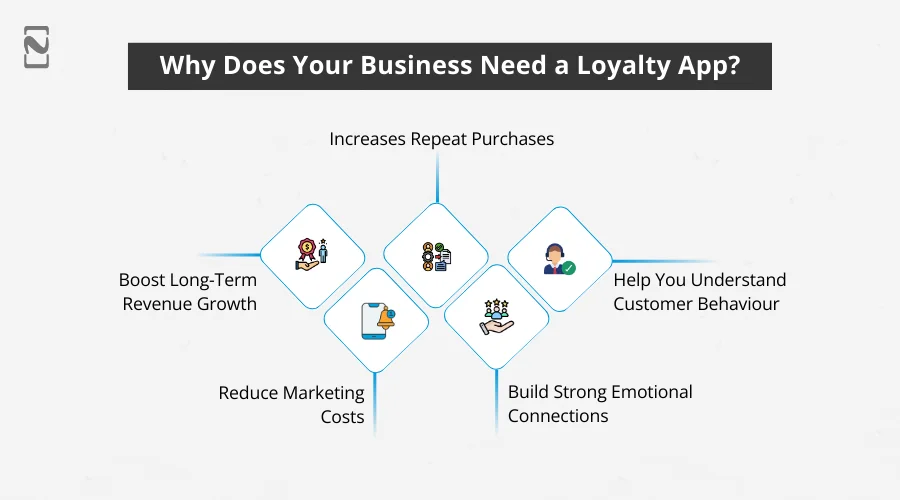
♦ Increases Repeat Purchases
When customers know they will earn rewards, they are more likely to return. For example, Starbucks built one of the most successful loyalty apps in the world. Customers earn stars for every purchase, which they can redeem for free drinks or food.
As a result, 34.6 million active customers choose the Starbucks app again and again instead of competitors. The app also makes ordering and payment faster, removing friction.
For smaller businesses, the same idea works. A café providing a free drink after 10 visits often sees customers choosing it over nearby options. It is simply because rewards feel motivating.
♦ Help You Understand Customer Behaviour
Every interaction inside a loyalty and reward mobile app tells you something useful. For example, Sephora’s Beauty Insider program tracks what customers buy, how often they shop, and what products they like.
Around 80% of Sephora’s transactions are made through this program. This allows Sephora to send personalized offers, product recommendations, and birthday rewards. It makes customers feel understood and valued.
For local businesses, this means knowing:
- What products sell the most
- Which customers visit frequently
- When customers stop coming back
This data helps you make better decisions instead of guessing.
♦ Build Strong Emotional Connections
People stay loyal to brands that make them feel appreciated. For example, Nike uses its apps to reward members with exclusive products, early access, and personalised experiences. Customers do not just buy shoes. They feel part of a community.
Even small businesses can do this by providing:
- Birthday rewards
- VIP-only discounts
- Early access to new products
These small touches create emotional loyalty, not just transactional loyalty.
♦ Reduce Marketing Costs
Instead of constantly spending money on ads, loyalty applications help you reconnect with existing customers. For example, Amazon Prime is essentially a subscription-based loyalty program. Members shop more often because they already feel invested.
Amazon spends less convincing Prime members to return, and they already do. For small and medium businesses, push notifications and personalized offers inside a loyalty app are far cheaper than paid advertising and often more effective.
♦ Boost Long-Term Revenue Growth
Loyal customers are more profitable over time. For example, Retail brands using tiered loyalty programs often see customers spend more just to reach the next reward level. Airlines are a classic example.
Frequent flyers choose the same airline to maintain their status and benefits. When businesses develop a loyalty app, they create a system where customers are rewarded for staying longer and spending more. It naturally increases lifetime value.
Steps to Develop a Loyalty App
To build a loyalty app, you should follow the step-by-step process below.
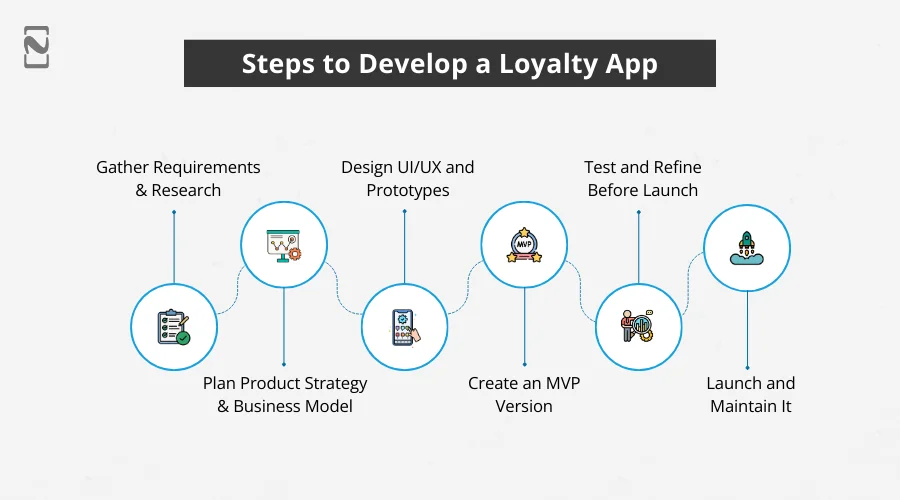
Step 1: Gather Requirements and Research
First of all, you start with mobile app market research and understand your project goals and target audience. Our expert team helps in analyzing what the loyalty app must do, who will use it, and what problems it solves for customers.
Besides, you should include competitor research and outlining must-have features so the rest of the development has a solid foundation and direction.
The more insight you gain about user preferences, habits, and pain points, the better your loyalty app can meet their expectations and boost engagement.
Step 2: Plan Product Strategy and Business Model
Once the requirements are clear, you can craft a strategy that converts casual buyers into loyal customers. Also, you should decide how rewards will work, how the app fits into your business, and what success looks like.
This is also where you establish how your loyalty app will make sense financially and support long-term engagement. Do not forget to map clear goals and KPIs at this stage. This ensures that every feature and campaign contributes to growth and retention.
Step 3: Design UI/UX and Prototypes
Now your loyalty and reward app starts taking visual shape. Designers create a wireframe that shows how users move through the app and what they see on each screen. These prototypes are tested with real users to check clarity and usability before any code is written.
This ensures a pleasant experience. A thoughtful design focuses on visual appeal that keeps the brand identity consistent. Also, this motivates users to interact regularly with the app.
Step 4: Create an MVP Version
With the designs approved, you can start to build an MVP app. It will help you test your project idea with the real users. The development team begins coding the must-have features like login, reward tracking, and integrations with your systems.
The backend work ensures data is stored securely, while the frontend brings the user experience to life. Once you test your loyalty app development MVP with real users, you can add more features later.
You can implement it to make the app fully functional and ready to scale as the user base grows.
Step 5: Test and Refine Before Launch
Before you release your loyalty and reward app to the public, it is important to test it thoroughly on different devices and with real users. This mobile app testing phase catches bugs, smooths out user flows, and ensures rewards and notifications work as expected.
Once you collect user feedback, it will help you polish the loyalty app for a reliable customer experience at launch. Testing also ensures performance under peak usage, so the app can handle growth without crashes or slowdown. It is key to keep users engaged.
Step 6: Launch and Maintain It
Once your loyalty and rewards app is rigorously tested, you can launch the app. But this is not the end, the work continues. You should track user engagement, analytics, and app performance to understand what is working and what needs improvement.
Based on real usage data, you can update features, introduce fresh rewards, and refine messaging so your loyalty program stays relevant and keeps customers returning.
Mobile app maintenance and ongoing updates, seasonal campaigns, and user feedback loops help the app grow with customer expectations and sustain long-term brand loyalty.
Key Features Your Loyalty & Rewards App Must Have
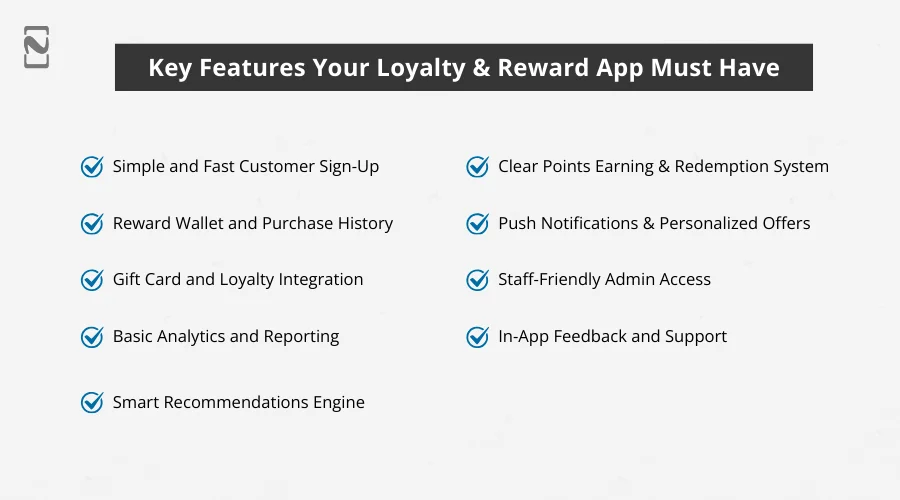
When businesses plan to develop a loyalty app, one common mistake is trying to add too many features at once. The truth is, a loyalty app doesn’t need to be complicated to work well.
It just needs the right features. The ones customers use and understand. So, let’s have a look at the must-have features that you must integrate into your application.
1] Simple and Fast Customer Sign-Up
If signing up feels like work, users will quit before they start. Your loyalty app should allow users to join in seconds using an email, phone number, or social login. The fewer steps, the better.
Users should be able to start earning rewards almost immediately. A seamless onboarding experience increases adoption. It also makes sure users do not abandon the app after downloading it.
2] Clear Points Earning and Redemption System
Users should never wonder how many points they have or how to use them. The app must clearly show points earned, available rewards, and how close users are to the next benefit.
Redemption should be simple and instant. There are no confusing rules or hidden conditions. Transparency builds trust and keeps users engaged over time.
3] Reward Wallet and Purchase History
A built-in digital wallet helps users to track their rewards, points, vouchers, and past transactions in one place. This creates confidence and minimizes customer support issues.
When users can see what they have earned and redeemed, they feel more in control and more motivated to continue using the app.
4] Push Notifications and Personalized Offers
Push notifications keep your brand visible without being intrusive. You must use them wisely to send reward reminders, special offers, or expiring points alerts.
Personalized messages based on customer behavior work far better than generic promotions. When notifications feel relevant, they are more likely to open the app and take action.
5] Gift Card and Loyalty Integration
You should allow users to use gift cards together with loyalty points. This flexibility improves the checkout experience and increases usage. They appreciate having multiple ways to redeem value, and businesses benefit from higher redemption rates and repeat visits.
6] Staff-Friendly Admin Access
Your employees should be able to quickly look up users, apply rewards, or fix simple issues. If staff struggle to use the system, users will feel it. A staff-friendly backend ensures smoother operations and a better in-store or service experience.
7] Basic Analytics and Reporting
You don’t need complex dashboards, but you do need visibility. The app should show basic insights like active users, most-used rewards, and repeat customers. These help businesses improve offers, understand customer behavior, and make better decisions.
8] In-App Feedback and Support
You should give users a simple way to leave feedback or get assistance to build trust. Whether it’s a quick rating or a support message, this feature shows them that their opinion matters. It helps you fix problems early.
9] Smart Recommendations Engine
A smart recommendation feature suggests products or rewards based on a user’s purchase history, preferences, and behavior.
For example, if a user frequently buys coffee, the app can offer a personalized free pastry or combo deal. This keeps the app relevant, encourages more spending, and makes them feel understood.
Cost to Develop a Loyalty App
The loyalty app development cost typically ranges from $25,000 to $180,000 or more. The cost can vary based on your app complexity, feature choices, tech stack, platform you choose, and associated costs. Understanding these factors helps you plan your budget.
Let’s take a look at the table for better understanding.
| App Complexity | Cost Breakdown |
| Basic Loyalty app | $25,000-$70,000 |
| Intermediate loyalty app | $70,000-$130,000 |
| Complex loyalty app | $130,000-$180,000+ |
These are rough estimates. The exact cost to develop a loyalty app depends on your unique business needs, chosen features, and development approach. So, it is advisable to follow these tips to reduce the loyalty mobile app development cost:
- Start with an MVP to test your idea without overspending.
- Focus on core features first, then expand as your app proves its value.
- Use analytics to identify which features drive engagement before investing in new functionality.
How to Monetize Your Loyalty and Rewards App?
After developing a loyalty and rewards app, it can also become a revenue-generating platform for your business.
So, you need to follow several mobile app monetization strategies to monetize your loyalty app while keeping customers engaged and happy. Let’s check out each one of them and choose the right one.
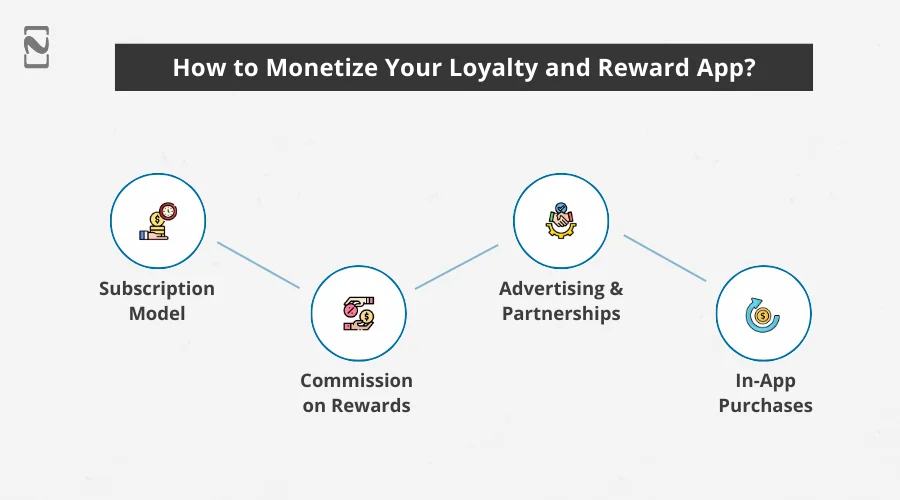
► Subscription Model
You can charge users and businesses a monthly or annual fee for premium features. For example, Starbucks Rewards could offer early access to new drinks or special promotions for subscribers. This provides a steady income and encourages regular app use without forcing all users to pay.
► Commission on Rewards
The next app monetization model is commission on rewards. You can earn a small commission when users redeem rewards from partner brands. For instance, a coffee shop app partnering with a bakery could get a cut when a free pastry is claimed. This increases revenue while expanding reward options.
► Advertising & Partnerships
You can partner with brands to show ads or sponsored rewards in the app. For example, a grocery app could promote a detergent brand and offer users extra points. This brings in revenue while giving users valuable offers.
► In-App Purchases
You should allow users to buy extra points, VIP perks, or special rewards. For example, a restaurant reservation system could allow users to purchase extra points to get a free meal along with a seat faster. This encourages engagement and generates extra revenue.
Common Challenges of Loyalty App Development & How to Solve Them
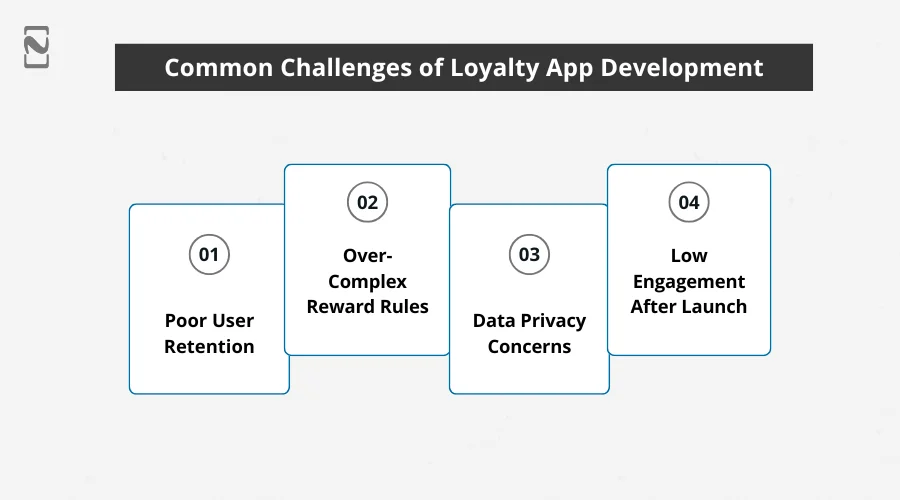
Loyalty apps face usability, engagement, retention, and trust issues. The following points outline common challenges and practical solutions to simplify rewards, boost engagement, retain users, and protect customer data.
So, let’s have a look at the challenges you might face while developing a loyalty and reward app.
-
Poor User Retention
A well-designed mobile app can even lose users over time due to poor user retention in mobile apps. For instance, a restaurant app may see customers redeem a reward and then abandon it.
How to fix it:
You should update rewards frequently and provide seasonal or milestone promotions. Also, you can show users their progress toward rewards, like 2 more visits for a free coffee. If you highlight achievements, it motivates users and keeps them coming back.
-
Over-Complex Reward Rules
Many loyalty and rewards apps fail because their reward systems are too complicated. Users may get confused if points expire too fast or the rules for redemption are not clear. For instance, a cafe app that needs multiple steps to claim a free drink may frustrate users.
How to fix it:
You can keep rewards simple and transparent. Also, show points and progress clearly, use simple redemption rules, and send reminders. A simple system can increase usage and help users stay engaged.
-
Data Privacy Concerns
Users are cautious about sharing personal information. If an app is unclear about its data usage, users may avoid it. For instance, a mobile application asking for unnecessary permissions may lose trust.
How to fix it:
You can use secure data architecture and comply with privacy regulations like GDPR compliance. Also, clearly explain what data is collected and how it is used. Transparency builds trust and encourages users to share their preferences and engage with personalised rewards.
-
Low Engagement After Launch
Users often download a loyalty or rewards app, but use it after a few days. For instance, a retail app that does not notify users about new rewards may see low activity.
How to fix it:
You can send push notifications, reminders about used points, or limited-time offers. Besides, you can also add light gamification, like challenges or badges. This can encourage users to interact regularly.
A regular engagement makes sure your loyalty app becomes part of users’ routines, boosts loyalty, and repeat purchases.
How Can Nimble AppGenie Help Develop a Loyalty App?
Creating a loyalty and reward app goes beyond digital rewards. It’s about creating meaningful customer experiences that boost repeat visits, build brand relationships, and increase lifetime value.
Nimble AppGenie helps businesses achieve this with thoughtfully designed loyalty solutions. As an experienced mobile app development company, Nimble AppGenie develops a robust loyalty app that balances simplicity, engagement, and performance.
Our expert team focuses on intuitive reward journeys, personalized interactions, and secure data handling. Each app is built to match customer behavior, business objectives, and future growth plans.
We will assist you:
- Create easy-to-understand loyalty programs that customers enjoy using
- Develop high-performance apps with top-notch UI design
- Boost engagement through personalized offers and smart notifications
- Track customer behavior with analytics-driven insights
Case Study: Customer-Centric Loyalty Application
Client Profile:
A regional food and beverage brand came to us and wanted to move from physical cards to a digital loyalty app that could repeat visits and offer customer insights.
Business Problem:
The brand struggled with low customer retention, limited visibility into customer behaviour, and ineffective one-size-fits-all promotions.
Solution:
- We designed a simple point-based reward system
- Our team has added progress tracking and milestone rewards
- Our developers have integrated push notifications and personalized offers
- We have implemented analytics for customer behavior insights
Measurable Impact:
- 74% increase in repeat customer visits
- 52% growth in loyalty app adoption
- Higher engagement through targeted promotions
- Improved customer retention and brand loyalty
Conclusion
If you want your customers to keep coming back, it is time to develop a loyalty app. By providing points, cashback, or special rewards, you can make shopping more rewarding and keep users engaged.
A well-designed loyalty app helps you understand customer behaviour, improve their experience, and build stronger connections. Even small businesses can benefit from a simple, easy-to-use loyalty app that encourages repeat visits and long-term loyalty.
Thus, you can take assistance from a dedicated development team and start today your dream reward app solution. It can help your brand grow, stand out from competitors, and turn casual buyers into loyal advocates.
FAQs
To build a loyalty program app, you need to follow the steps below:
- Do market research
- Plan product strategy
- Design the UI/UX
- Develop the MVP app
- Test and launch the app

Niketan Sharma, CTO, Nimble AppGenie, is a tech enthusiast with more than a decade of experience in delivering high-value solutions that allow a brand to penetrate the market easily. With a strong hold on mobile app development, he is actively working to help businesses identify the potential of digital transformation by sharing insightful statistics, guides & blogs.
Table of Contents
No Comments
Comments are closed.