


In a Nutshell:
- The social media vs social networking difference lies in purpose, where social media focuses on content sharing and social networking focuses on human connection.
- In social media vs social networking, social media follows a one-to-many content model, while social networking supports two-way and group communication.
- The difference between social media and social networking is also visible in success metrics, as social media values reach and social networking values engagement.
- When comparing social media with social networking platforms, social media reaches a wide public audience, while social networking targets specific people or communities.
- Understanding social media vs social networking helps businesses choose the right platform based on visibility goals or relationship building.
- Nimble AppGenie delivers the best social media app development services focused on creating easy-to-use platforms that support long-term growth for businesses and startups.
Scroll through your phone for a few minutes, and you will probably jump between watching a short video, liking a post, replying to a message, and maybe even joining a group discussion.
All of this feels like “social media,” but not everything you do online falls into the same category. This is where the confusion between social media and social networking begins.
In 2025, more than 4.8 billion people worldwide will use social platforms, spending an average of 2 hours and 24 minutes every day scrolling, watching, and interacting.
Over 90% of businesses now rely on these platforms to reach customers, and nearly 70% of marketers say networking-based platforms help them build stronger relationships.
These numbers show how deeply used these platforms are in everyday life, but they also highlight that not all platforms serve the same purpose. Some are built to spread content as far as possible, while others are designed to bring people closer through conversations and communities.
Thus, if you are planning to develop a social platform, knowing social media vs social networking is just about a conceptual difference. It directly impacts how your platform is built and used. In this blog, we will see the major differences between social media and social networking.
So, let’s begin
Current Market Statistics of Social Media
Before understanding social media vs social networking, it is vital to first know social media app statistics. It will help you know the current market conditions of the social media industry.
- In 2025, there were more than 5.24 billion social media users globally, and that is more than half of the global population.
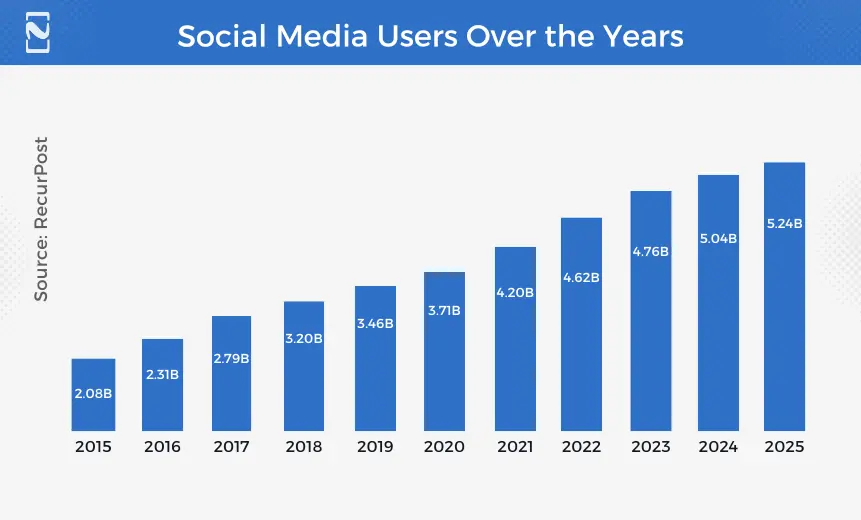
- On average, individuals spend around 2 hours and 24 minutes per day on social media.
- In the USA alone, the social platform has around 253 million users. This makes it one of the largest markets in the world.
- More than 90% of businesses use just social media to reach their customers or target audience.
- More than 50% of consumers discover new brands through social platforms.
- Nearly 70% of marketers say that social networking platforms help them build stronger relationships with their audience.
From these numbers, it’s clear that social platforms are powerful platforms for both people and businesses. So, if you are planning to develop a social media platform, it is vital to first thoroughly understand it and then invest.
What Is Social Media?
Social media refers to online platforms used to make, share, and distribute engaging content to a large audience. In simple words, social media is about sharing content like videos, photos, articles, or posts, so it can reach many people.
The main focus is on what is being shared rather than who is seeing it. Social media works on a one-to-many communication model, where one person or brand publishes content, and many others consume it.
The major social media app features are:
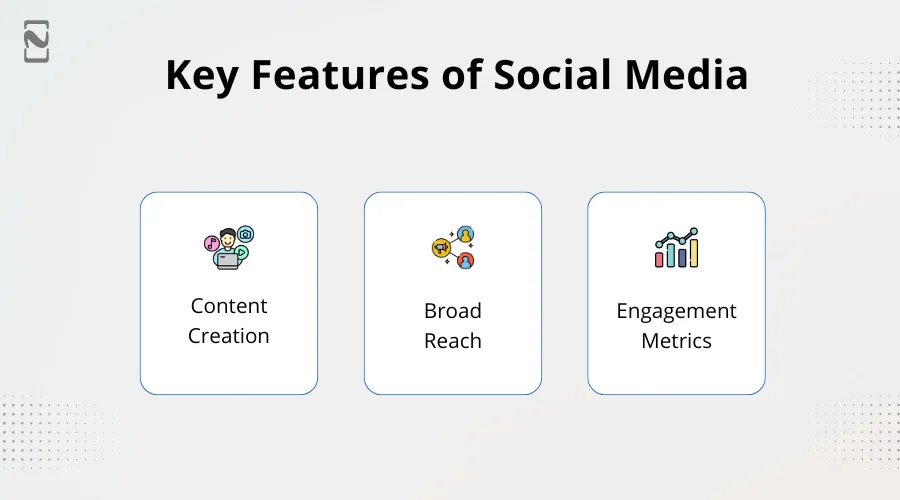
- Content creation
- Broad reach
- Engagement metrics.
For instance, YouTube allows content creators to upload videos that can reach millions of people globally. However, TikTok makes short-form content go viral in minutes.
Although users can interact through likes and comments, the main focus of social media is visibility and content sharing, not personal connection.
Knowing social media clearly is the first step in differentiating it from social networking. It focuses more on people and relationships rather than just content.
What is Social Networking?
Social networking is the use of online platforms to build connections, communicate, and interact with each other. Social media is mostly about sharing content, but social networking is completely about connecting with people.
It is less about broadcasting posts to a large audience and more about forming connections, joining communities, and having conversations with others. Apps like LinkedIn, Reddit, and Quora are the best examples of social networking.
You can think of it like an online space where people come together, whether for friendship, professional purposes, or shared interests. Unlike social media, which is a one-to-many approach, social networking is usually two-way or multi-way.
Users just do not post content and wait for people to see it; you interact, respond, and build meaningful connections. These platforms allow people to create profiles, add friends or contacts, join groups, and participate in discussions.
Key features of social networking:
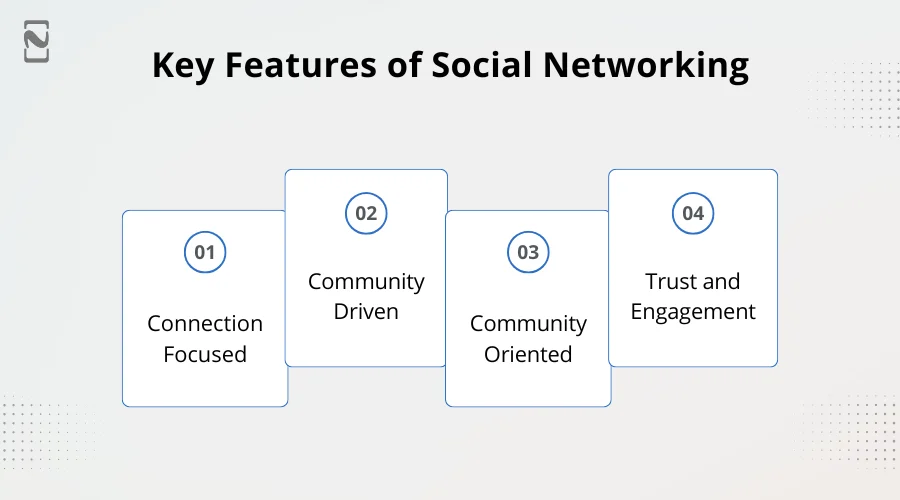
- Connection-focused
- Community-driven
- Community-oriented
- Trust and engagement
Social Media vs Social Networking: Major Difference
Now that we have looked at social media and social networking separately, it is easier to see how they differ. While these two terms are often used interchangeably, they serve different purposes and operate in distinct ways. So, let’s have a look at the social media vs social networking comparison.
| Elements | Social Media | Social Networking |
| Main purpose | Share content with a large audience | Build relationships and communicate |
| Communication style | One-to-many | Two-way or multi-way |
| Audience | Often public or broad | Often, personal connections or communities |
| Metrics of success | Views, likes, shares, engagement on content | Strength of relationships, messages, and active connections |
| User activity | Posting, creating content, broadcasting | Messaging, commenting, interacting, networking |
| Examples | YouTube, Instagram | Linkedin, whatsapp |
How Is Social Media Different from Social Networking: A Detailed Look
Social media and social networking are closely related, so it is easy to confuse them. However, their core purpose, user behavior, and impact are quite different. It is vital to know the social media vs social networking differences in detail if you are planning to launch a social platform. Let’s have a look:
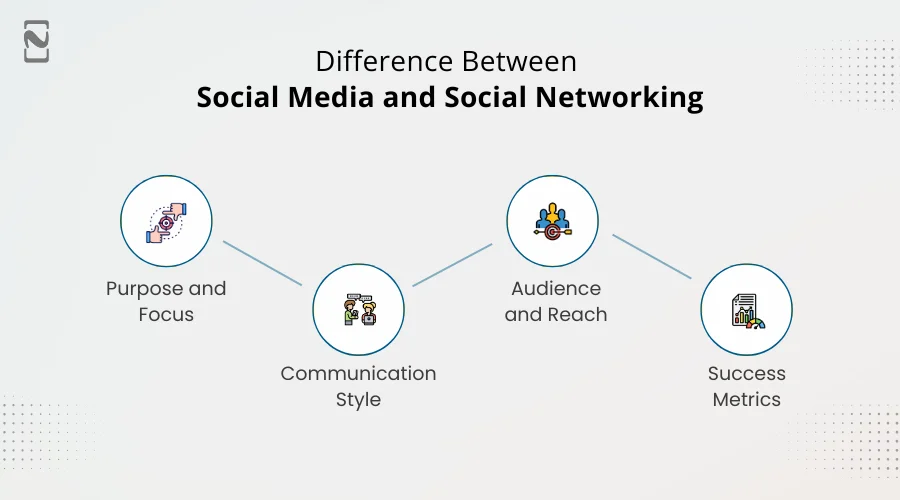
1. Purpose and Focus
The main difference is what each platform is designed for:
- Social Media: The main goal is content creation and distribution. Users post videos, photos, blogs, or status updates to reach a large audience. The focus is on sharing information, entertainment, or opinions. Interaction with others is secondary; it exists, but it is mainly around the content itself.
For example, on apps like TikTok, creators post short videos that can go viral. Millions can watch a video without interacting with the creator personally. The goal is reach, visibility, and engagement with content.
- Social Networking: The main goal is building relationships and maintaining connections. It is about communication, collaboration, and trust. Users interact with others by messaging, commenting, joining groups, or participating in communities. Here, the focus is on the people, not the content.
For example, on LinkedIn, professionals connect with colleagues, mentors, and industry experts. They may share posts, but the primary purpose is to network, exchange knowledge, and maintain professional relationships.
| Key takeaway: Social media = content. Social networking = relationships. |
2. Communication Style
Another major difference is how people interact. Let’s have a look:
- Social Media: Mostly one-to-many communication. A user posts content, and many others view it, like it, or share it. Interaction happens mostly as reactions to the content (comments, likes), not deep conversations.
For example, posting a video on YouTube or a photo on Instagram is mainly about letting people see your content. You might respond to comments, but the main communication is from you to the audience.
- Social Networking: Primarily two-way or multi-way communication. Users message each other, reply to comments, engage in discussions, or participate in group chats. The interaction is direct, personal, and ongoing.
For example: WhatsApp groups, Facebook Groups, or Slack communities are centered around conversation and discussion rather than broadcasting content.
| Key takeaway: Social media communicates from one to many; social networking communicates between many people. |
3. Audience and Reach
The next difference between social media vs social networking is audience and reach. Let’s have a look:
- Social Media: It often aims for a large, public audience. Anyone can see content, whether they know you or not. Reach is measured by likes, shares, views, and impressions.
For example, a viral TikTok can reach millions of users globally, even if they have no connection with the creator.
- Social Networking: Usually, it targets a particular audience or network, like friends, colleagues, community members, or interest-based groups. Reach is measured by meaningful engagement and connections rather than the number of views.
For example: On LinkedIn, your posts mostly reach your connections and their networks, not the entire internet.
| Key takeaway: Social media focuses on broad exposure, while social networking focuses on targeted relationships. |
4. Success Metrics
You can check the social media and social networking differences from the success metrics. Take a look:
- Social Media Metrics: You can check the likes, shares, comments, video views, followers, impressions, and engagement rate for success. This shows how well your content is performing in terms of visibility and audience reach.
For example, a post on Instagram may go viral means social media success, but may not help you make new, meaningful connections.
- Social Networking Metrics: You can check the success metrics of social networking platforms by connection strength, number of messages exchanged, group participation, collaboration, or number of meaningful interactions. Success is measured by relationship quality, not content popularity.
For example, a discussion in a Facebook Group may lead to long-term friendships or business partnerships. This shows social networking success.
| Success on social media = reach and engagement; success on social networking = meaningful interactions. |

What Are the Similarities Between Social Media and Social Networking?
Although social media and social networking are not the same, they do have some similarities. That is why people sometimes get confused. Let’s look at the main ways they overlap.
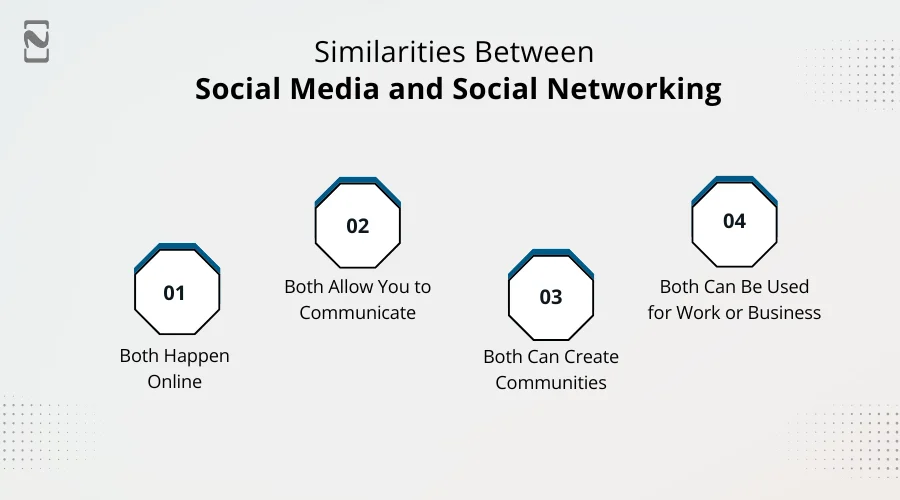
1] Both Happen Online
This one is obvious but essential. Both social media and social networking happen on the internet. You need a mobile phone, computer, or tablet to use them.
No matter if you are posting on TikTok, sharing a photo on Instagram, or chatting on WhatsApp, everything is online.
2] Both Allow You to Communicate
Both social media and social networking platforms allow people to talk to each other, but in slightly different ways. On social media, you may comment on a post or like a video.
On social networking, you send messages, reply in a group, or join discussions. Either way, you are connecting with people, just in different ways.
3] Both Can Create Communities
If the main goal is different, no worry. Both platforms can bring people together. Social media hashtags, Facebook groups, and forums help people find others with the same interests. The difference is small but real. Social media communities form around people and relationships.
4] Both Can Be Used for Work or Business
You can use social media and social networking for personal reasons or for work. A brand can post a product video on Instagram and get likes and shares. The same brand can use LinkedIn to talk directly to clients, connect with partners, or answer questions.
Is Social Networking Part of Social Media?
You might be thinking, if social media and social networking are different, does one belong to each other? Well, the answer is yes. Social networking is a part of social media.
You can take social media as a broad umbrella. Under that umbrella, two main things happen: sharing content and connecting with people.
Social networking focuses mostly on the connection part. For example, messaging, joining groups, interacting with others, and building relationships. But many social media platforms combine both.
For instance:
- On Facebook, you can post videos, images, or updates for everyone to see, and at the same time, you can message a friend, join groups, or chat in communities.
- On Instagram, you can share photos or reels to reach thousands of people, but you can also send private messages to friends and comment on their posts.
Not every networking app is considered social media. Apps like WhatsApp or Slack are mostly about communication. There is very little public content-sharing. So, social networking can exist within social media, but social media is not always networking.
Examples of Social Media vs Social Networking Platforms
It is easier to understand with real-life examples of social media and social networking platforms. Let’s have a look at the table:
| Platform | Main Function |
| Facebook Groups | Social Networking |
| Social Networking | |
| Social Networking | |
| Social Media + Networking | |
| YouTube | Social Media |
| TikTok | Social Media |
Some best chatting apps do both, like Instagram or Facebook. They allow you to share content and connect with people at the same time. Others focus on just one thing: YouTube or TikTok is content-first, while LinkedIn or WhatsApp is people-first.
The main takeaway is simple: social media is about sharing content, social networking is about connecting with people, and many platforms allow you to do both.
Which Is Better: Social Media or Social Networking?
Neither is better. The right choice depends on your goals. If your goal is to share content, get visibility, or reach a large audience, social media is usually the better option.
Apps like TikTok, YouTube, and Instagram are designed to help content travel fast. This is best for creators, influencers, brands, and businesses that want attention and exposure.
On the other hand, if your goal is to build relationships, communicate, or grow a network, social networking works better. Apps like X, LinkedIn, WhatsApp, or Facebook groups are more personal. This is useful for professionals, service-based businesses, and communities.
In real life, most people do not choose just one. They use both together. For example, a business might use Instagram to share content and attract attention, and they use LinkedIn or WhatsApp to build real connections with customers. The key is knowing why you are using a platform before deciding which one to focus on.
Why Choose Nimble AppGenie to Build a Social Media App?
Developing a social media platform is not just about writing code. That’s where the right social media app development company makes a real difference. At Nimble AppGenie, we would closely interact with clients from the very beginning.
Instead of jumping straight into development, our expert team takes time to understand your idea, your audience, and what kind of experience you want users to have.
No matter whether your app is more focused on content sharing, community building, or private networking, we assist in shaping the platform in a way that feels natural to users. What really sets Nimble AppGenie apart is our practical approach.
We do not just build features because they look good on paper. We focus on features people actually use. The goal is to make the social media app easy to use from day one, even for first-time users. Besides, performance and social media app security are also treated seriously.
Social apps deal with a lot of user data and daily activity, and Nimble AppGenie designs platforms that can handle growth without slowing down. Thus, if you are planning to design a social media app, contact Nimble AppGenie right away.
Final Thoughts: Social Media vs Social Networking!
Social media and social networking may look similar, but they are used for different reasons. One focuses more on sharing content, while the other is about connecting with people. Once you understand this difference, it becomes easier to choose the right platform and use it in a smarter way.
Today, platforms are changing fast. AI in social media is shaping how content is shown, how people connect, and how apps suggest posts, videos, and friends. At the same time, new social media trends are pushing platforms to mix content, communities, and real conversations in one place.
So, if you are someone planning to build a social app, knowing how social media and social networking work will help you stay ahead. The best platforms are the ones that balance content, connection, and real user experience.
FAQs

Niketan Sharma, CTO, Nimble AppGenie, is a tech enthusiast with more than a decade of experience in delivering high-value solutions that allow a brand to penetrate the market easily. With a strong hold on mobile app development, he is actively working to help businesses identify the potential of digital transformation by sharing insightful statistics, guides & blogs.
Table of Contents
No Comments
Comments are closed.