


In a Nutshell:
- Mubert app development is the best business idea, as demand for AI-generated, royalty-free music is growing quickly among creators and brands.
- To build an app like Mubert, you need must-have features like an AI music generator, mood and genre selection, licensing clarity, API integration, and easy export options.
- The AI music app development process should include market research, MVP launch, AI model setup, testing, and gradual scaling to control risk and cost.
- The cost to develop an app like Mubert can be around $25,000 to $250,000+, depending on AI complexity, infrastructure, and feature set.
- A Mubert-like AI music app makes money through subscriptions, pay-per-track credits, commercial licensing, and freemium upgrades.
- Success in AI music generator app development depends on strong AI performance, scalable cloud setup, clear licensing, and a focused product strategy.
- Nimble AppGenie can help you ensure the custom AI music app has smooth performance, scalable infrastructure, secure licensing, and a clear path from MVP to full launch.
Creating original music for videos, games, or apps takes time, skills, and expensive tools. Many startups and creators struggle to find affordable music that is unique, royalty-free, and ready to use anytime.
Hiring composers or buying licenses can slow projects and increase costs. This is why AI music generator apps like Mubert are becoming popular among music enthusiasts.
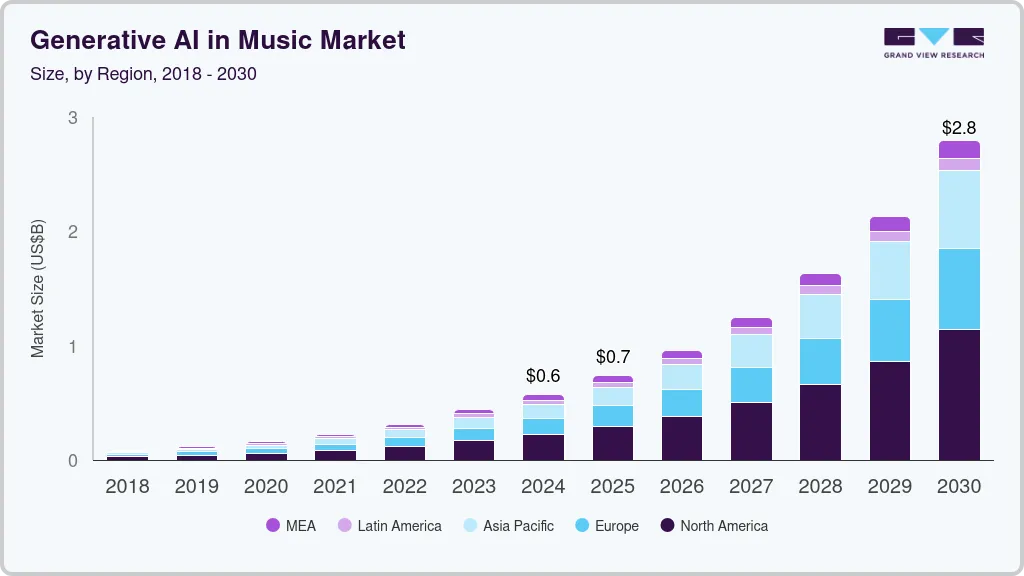
AI-generated music is growing fast as more businesses look for automatic sound creation. The global generative AI music market is forecasted to hit$3 billion by 2030, growing at over 29.5% annually, showing strong demand for growing AI music solutions.
Thus, whether you are a music tech entrepreneur or an AI music startup founder planning to develop an app like Mubert, this guide will explain everything you need to know. We’ll cover the technology behind these apps, essential features, development steps, and estimated costs.
By the end, you’ll understand how to build a business-ready application like Mubert that meets the growing demand for AI-generated music.
So, let’s begin!
What is a Mubert App?
Mubert is an AI-powered music generator app that creates unlimited, royalty-free music in real time. Unlike traditional music platforms that offer pre-recorded tracks, Mubert uses AI to compose music on the fly based on user preferences.
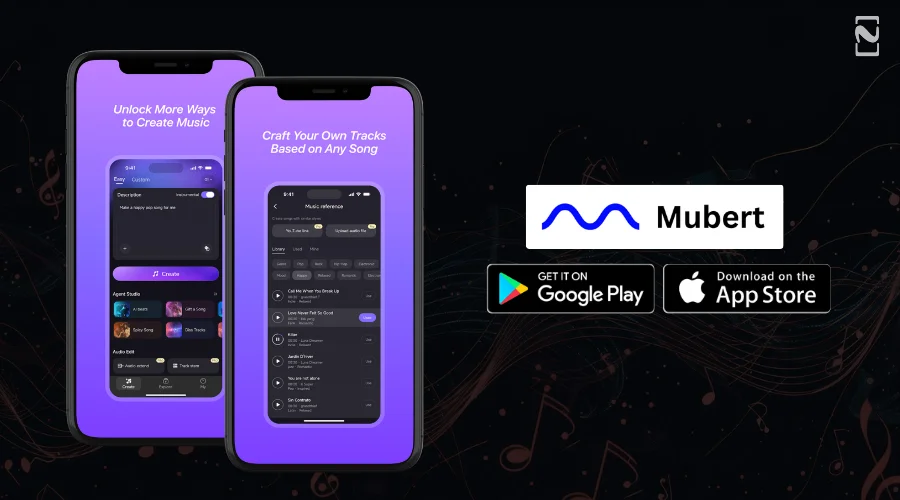
The text-to-music app is popular among content creators, developers, and businesses because it solves two major problems. The high cost of producing original music and the time it takes to create custom tracks.
Mubert also allows integration with other platforms through the best music APIs. This allows businesses to embed AI-generated music directly into apps. This makes it a scalable solution for businesses that need constant, high-quality music.
| App | Availability | Downloads | Rating |
| Mubert | iOS & Android | 500K + | 4.3/5 |
Why Build AI Music-Generator Apps Like Mubert: Research & Analysis?
Businesses now prefer generating music instantly instead of hiring composers or buying expensive licenses. This growing demand for affordable and customizable soundtracks is driving the rise of AI music generation apps like Mubert across creators, brands, and digital platforms.
Let’s check out the music app market statistics below:
- The market size of generative AI in music apps is forecasted to reach $2,794.7 million by 2030. Also, it can rise with a CAGR of 30.4% from 2024 to 2030.
- AI can generate music 20 times faster than humans, and AI is adopted by more than 30.6% of artists for mastering tracks.
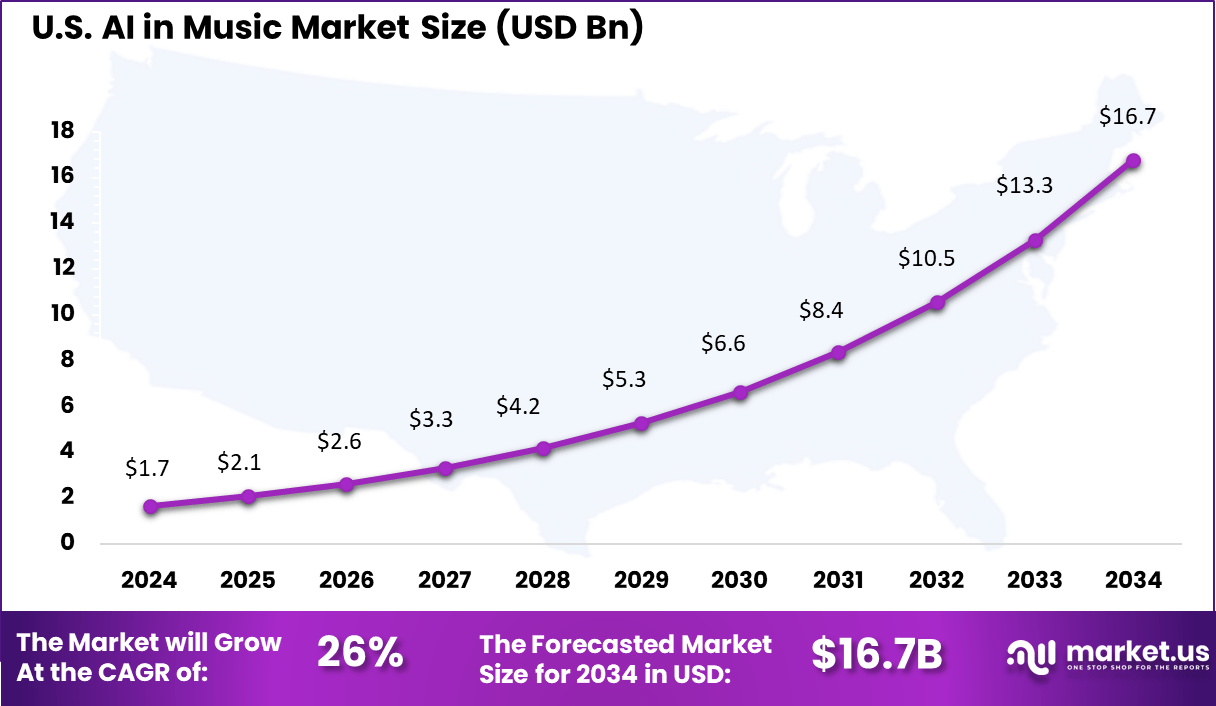
- The US alone market size of AI music apps is forecasted to hit $16.7 billion by 2034 with a CAGR of 26%.
- Around 50-60% of GenZ and millennials reported that they listen to 2.5-3 hours of AI music in a week.
- Around 60% of musicians are already leveraging AI to create music.
The AI music industry is going to explode in the coming years. Now is the time to make an AI music generator app like Mubert for huge growth and become the next industry leader.
Must-Have Features to Develop an Application Like Mubert
To develop an AI music generator app like Mubert, certain features are essential. These music app features ensure that the app can create high-quality, royalty-free music and support you in delivering music at scale.
When you add these must-have features, it will help your app meet user expectations and stand out in the growing market for AI-generated music.
| Feature | Why It Matters |
| AI Music Generator | Core functionality: ensures unlimited, unique, royalty-free tracks without hiring composers. |
| Genre & Mood Selection | Helps businesses and creators get the right music for their content quickly. |
| Loop & Continuous Play | Essential for apps, games, or live streams that need seamless music. |
| Customizable Tempo & Key | Provides flexibility to match music to videos, apps, or user preferences. |
| Download & Export Options | Enables easy integration into apps, games, or media projects. |
| Royalty-Free Licensing | Removes legal hurdles, making the app safe for businesses and creators. |
| API Integration | Expands app usability and opens business opportunities through SaaS or B2B models. |
| User Profiles & History | Improves user experience and encourages engagement and retention. |
| Offline Mode | Useful for mobile apps or users with limited connectivity. |
| Analytics & Usage Stats | Helps businesses optimize content and understand user preferences. |
Advanced Features For Mubert AI Music Generator App Development
Beyond the must-haves, it is vital to add advanced features that can make your Mubert generative AI music app stand out. This can open new monetization opportunities, attract a wider audience, and give your app an edge over basic Mubert AI music generators.
Let’s have a look at the advanced features that you can integrate into the Mubert-like app.
| Feature | Why It Matters |
| AI Remix & Collaboration | It allows users to remix tracks or collaborate on music that boosts engagement and creativity. |
| Mood/Emotion Detection | It automatically generates music based on the video or content’s mood that saves time for creators. |
| Voice/Melody Input | Users can hum a tune or give a melody, and the AI creates full tracks around it. |
| Multi-Language Support | It expands the user base globally and makes the app accessible to more creators. |
| Live Music Streaming | It supports real-time music generation for live events or streaming platforms. |
| Smart Recommendations | It suggests tracks based on user behavior, preferences, or project type. |
| Advanced Audio Effects | It adds effects like reverb, filters, or mixing tools for professional-quality tracks. |
| Cloud Sync & Backup | It stores creations online so users can access them anywhere and never lose data. |
| Subscription & Monetization Tools | It allows in-app purchases, premium features, or licensing options for revenue. |
| Integrations with DAWs | It allows export to professional Digital Audio Workstations, useful for advanced creators. |
How to Build an AI Music Generator App Like Mubert?
To build an app like Mubert, you need to follow a structured process from idea validation to deployment. Each stage affects your custom AI music app development cost, timeline, and scalability.
Below is the exact Mubert-like app development process you must follow for a robust solution.
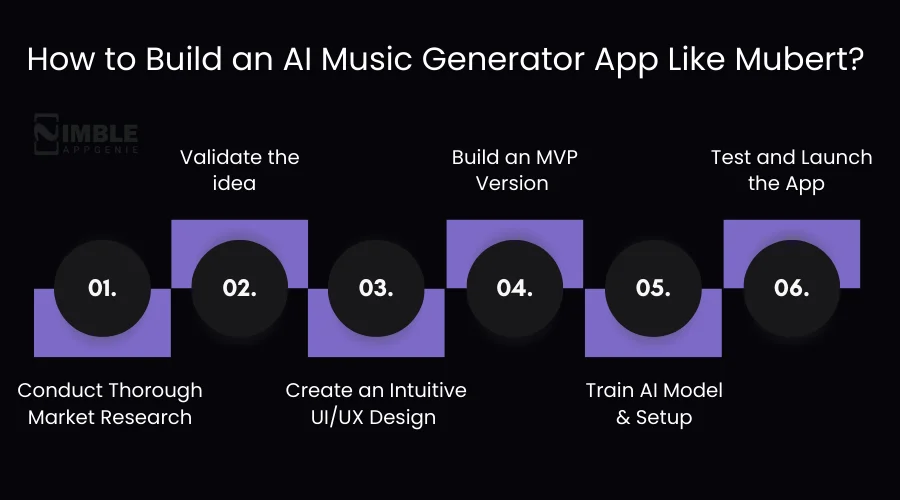
1. Conduct Thorough Market Research
Before you develop an app like Mubert, it is vital to rigorously do market research on who will actually pay for generative AI music. You can analyze your top competitors like Mubert, AIVA, and Soundraw to understand their pricing tiers, licensing terms, and music quality gaps.
Additionally, you can directly speak with YouTubers, podcasters, and agencies about their struggles, like copyright safety, repetitive tracks, or high licensing fees.
Detailed research reduces financial risk and helps you position your Mubert-like AI music generator app correctly from the beginning.
2. Validate the idea
After research, you can test your music app idea before full investment. It helps you know whether there really is a demand for your idea. Now, create a landing page that explains your text-to-song generation app concept and run small ad campaigns to measure interest.
After that, you can collect emails and feedback from potential target audiences. Also, you can provide early access to estimate willingness to pay. This stage confirms whether your monetization model makes sense.
When you validate an idea, it prevents overspending and gives clarity on expected Mubert AI music app cost and feature priorities before actual development.
3. Create an Intuitive UI/UX Design
Now, you can design a visually appealing and intuitive UI/UX for a bespoke Mubert-like solution. The dedicated development team can map how users move from selecting a music style to downloading the final track. It is vital to keep the generation steps minimal and clear.
Additionally, you can offer instant previews and transparent licensing labels. Also, if you test prototypes with real creators, it ensures simplicity. A clean interface increases subscription conversions and reduces churn. Even strong AI cannot compensate for a confusing music app design, so usability must remain a priority.
4. Build an MVP Version
Now, do not start with a full-fledged application like Mubert; just build an MVP app with only must-have features. Your first version should allow users to select mood, genre, and duration, generate music, preview tracks, and download them with clear usage rights.
Additionally, you should avoid advanced mixing tools or complex dashboards in the starting or in the MVP version. This MVP can help you test your output quality and user engagement.
Once you get the desired results, you can develop an app like Mubert with a full-fledged version and features. A lean MVP reduces development complexity and shortens the timeline. It helps you refine your product before scaling into a full-fledged Mubert AI music generator app development.
5. Train AI Model & Setup
In this stage, you can decide whether to train a custom deep learning model or fine-tune an existing framework. You can leverage properly licensed datasets to avoid legal exposure and focus on originality, speed, and variation in text-to-song generation.
Additionally, you can optimise the processing time of an AI model so users do not wait long for results. The AI audio engine determines the credibility of your AI music generator app development like Mubert, so performance tuning and repeated testing are critical at this stage.
6. Test and Launch the App
Lastly, you can do performance testing to evaluate generation speed under multiple user requests. Run copyright similarity checks to reduce legal risk. Also, test your monetization model to ensure payments and access rights work correctly.
Additionally, you can invite a small group of beta users to provide honest feedback about music quality and usability. If you perform early mobile app testing, it helps you refine weak areas before public release.
Now, you can launch a Mubert-like app in phases instead of going fully public immediately. It is best to start with limited access in the beginning and monitor prompt-based music generation time, server load, and subscription behavior.

Tech Stack for AI Music App Development Like Mubert
The tech stack you select plays a significantly direct role in how secure, stable, and scalable your app becomes. For Mubert-like AI music app development, the technology stack should support seamless integration and strict data-protection requirements.
Let’s have a look at the tech stack that is used to develop an application like Mubert.
| Layer / Component | Technology / Tools |
| Frontend (Mobile App) | React Native, Flutter, Swift (iOS), Kotlin (Android) |
| Backend | Node.js, Python, Ruby on Rails |
| AI & Machine Learning | TensorFlow, PyTorch, MusicLM, OpenAI Jukebox |
| Cloud / Hosting | AWS, Google Cloud, Azure |
| Database | PostgreSQL, MongoDB, Firebase |
| Audio Processing | Librosa, FFMPEG, JUC |
| Streaming / CDN | AWS CloudFront, Google Cloud CDN, Wowza |
| Push notifications | Firebase Cloud Messaging, OneSignal |
| Security | OAuth 2.0, JWT, SSL/TLS, Encryption |
| Payment & Licensing | Stripe, PayPal, and Commercial Music Licensing APIs |
| Analytics | Google Analytics, Mixpanel, Amplitude |
How Much Does It Cost to Build an App Like Mubert?
The cost to build an app like Mubert can be around $25,000 – $250,000 or more. This is just a ballpark estimate depending on the app’s features, AI complexity, and platform choice.
A simple MVP app can cost less compared to a full-fledged app with advanced AI that costs much more. So, basically, the cost to develop a music app depends on your project requirements.
If you plan your budget carefully upfront, it can save costs, avoid surprises, and make sure the AI music mobile app delivers a great experience for users.
Let’s have a look at the table below of the Mubert app development cost.
| App Complexity | Cost Breakdown |
| Basic Mubert-Like App | $25,000 – $80,000 |
| Medium Mubert-Like App | $80,000 – $150,000 |
| Full-fledged Mubert-Like App | $150,000 – $250,000+ |
Factors Affecting the Mubert App Development Cost:
- AI app complexity
- Backend & Cloud Integration
- Audio Streaming & Licensing
- Lyric-to-melody integration
- AI features integrations
- Security and compliance
- Development team location
If you want to reduce the cost to develop an app like Mubert, you can begin with an MVP, including:
- Basic user registration and login
- Simple AI music generation with limited tracks
- Playlist creation and sharing
- Basic cloud storage
This approach allows you to test the concept, collect user feedback, and improve the AI gradually without spending heavily on full-scale development. However, it is best to consult with an experienced AI app development company that can give a more precise estimate tailored to your needs.
How to Monetize a Mubert-Like AI Music App?
To monetize your Mubert-like app, you can charge users for subscriptions to access premium features. This allows them to pay per track when they need music occasionally, or offer a free version with paid add-ons to convert casual users into paying customers.
Let’s have a look at how Mubert-like music apps make money.

► Tiered Subscription Plans
You can offer multiple subscription levels—basic, pro, and premium—giving users access to higher-quality tracks, commercial rights, or unlimited prompt-based music generation. This lets you convert casual users into paying customers while earning more from professionals.
► Credit-Based Pay-Per-Track System
You can charge users per track using a credit system. This works well for creators or businesses who only need music occasionally, so you earn from every track without forcing a subscription.
► Commercial Licensing For Businesses
You can license AI-generated tracks to brands, media agencies, or app developers. Companies pay to use your music legally in videos, ads, or projects, giving you a high-value revenue stream beyond regular users.
► Freemium With Premium Add-Ons
You can attract users with a free version and upsell advanced features like exclusive genres, multi-track projects, or custom AI styles. This grows your user base while gradually turning free users into paying subscribers.
What are the Challenges of Creating an App Like Mubert and their Solutions?
Even if you have the right budget and features, a Mubert mobile app development can run into problems if common challenges are not handled early.
Below is a simple look at the most common issues you face while developing an app like Mubert, along with their possible solutions.

♦ Building an Efficient AI Model
Developing an AI that can generate music in real time is technically complex. Training the AI requires large datasets, powerful GPUs, and careful tuning to ensure it produces varied and high-quality tracks without slowing down the app.
How to fix this:
You can leverage pre-trained models where possible, optimize generative audio algorithms for speed, and test frequently to balance performance with quality.
♦ Integrating AI With the App Backend
Connecting the AI engine with the mobile app can be challenging. The backend must handle requests, process AI computations, and return generated music quickly, all while maintaining reliability.
How to fix this:
Developers can use a robust backend framework (like Node.js or Python), cloud computing for heavy AI processing, and APIs to efficiently communicate between the app and AI engine.
♦ Handling Large Music Data and Storage
AI models and generated tracks require a lot of storage. Managing large datasets and ensuring smooth retrieval and playback without slowing down the app is one of the key music app development challenges.
How to fix this:
You can use cloud storage (AWS, Google Cloud) and efficient databases, compress audio files without losing quality, and implement caching for frequently used tracks.
♦ Ensuring Cross-Platform Compatibility
App developers need the app to work seamlessly on iOS, Android, and sometimes web platforms. Differences in device hardware, audio capabilities, and OS restrictions can make development tricky.
How to fix this:
You can use cross-platform frameworks like React Native or Flutter, test extensively on multiple devices, and optimize audio processing for each platform.
Why Choose Nimble AppGenie For AI Music App Development?
Let’s be real — creating an AI audio generation application like Mubert is not just a standard app project.
You are dealing with AI model performance, GPU-heavy processing, cloud costs, music data pipelines, licensing structure, and user experience, all at once. If one layer is weak, the whole app struggles.
At Nimble AppGenie, a leading music streaming app development company, we do not treat this like just another mobile app development. We start with clarity.
What exactly are you building, background music for creators? Commercial licensing platform? API-based music engine? The answer changes the AI architecture, infrastructure cost, and monetization logic.
We do not just develop features. But we help you define the right MVP so you do not overspend on unnecessary AI complexity and features.
Additionally, our expert team works on:
- AI model integration and optimization
- Scalable backend and cloud setup
- Secure payment and licensing flows
- Clean, fast user interface creators actually enjoy using
Generative AI audio applications like Mubert fail when they ignore infrastructure or licensing details. But we plan those from day one and not after launch. And we create with scale in mind.
If your music application grows from 100 users to 50,000, the AI system should handle it without collapsing or exploding your server bill.
However, if you are serious and want to develop an app like Mubert that performs well, scales properly, and makes commercial sense, then you need a team that understands both AI systems and product strategy. That’s where Nimble AppGenie fits in.
Real-Time Case Study: Nujaxx — by Nimble AppGenie
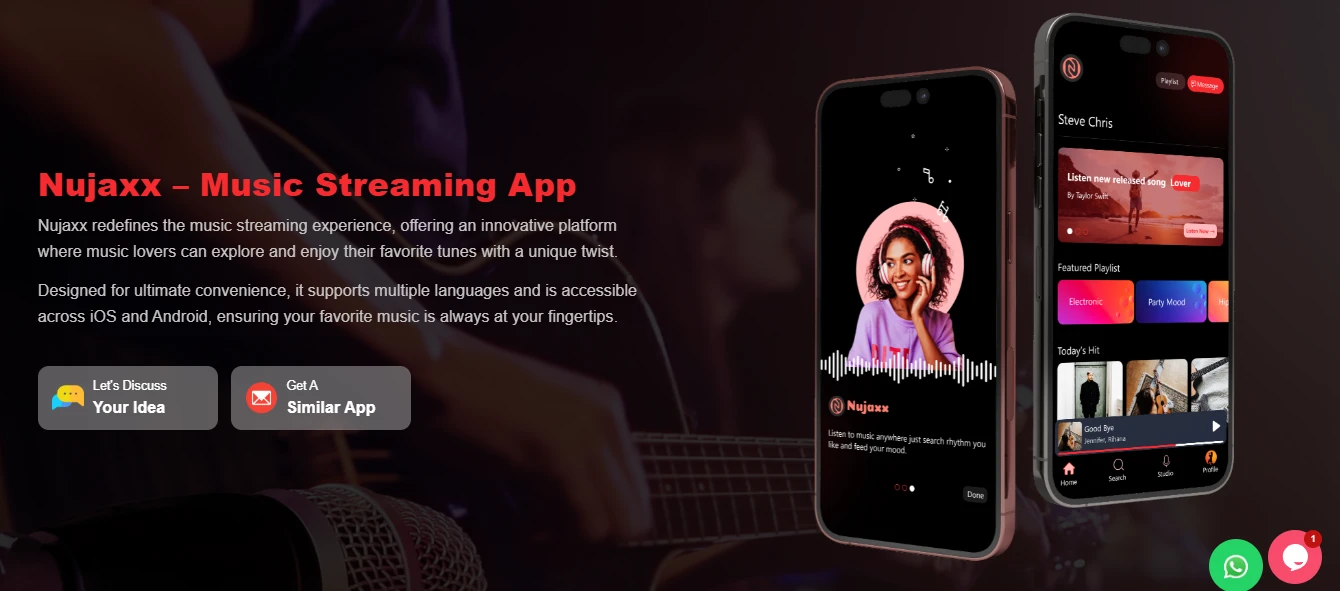
Client: Music Streaming Startup
Project: Cross-platform music platform – Nujaxx
Duration: 3 Months
Objective: Create a differentiated music streaming product that increases user engagement and strengthens artist participation.
The Business Problem
Nujaxx was entering a crowded music streaming market. Competing directly with large platforms on catalog size wasn’t realistic. The real goal was differentiation — create stronger artist–listener interaction and build a reward-driven engagement model.
They needed more than streaming. Also, they needed user retention. At the same time, the product had to launch quickly, stay technically stable, and be ready for user growth across iOS and Android.
Strategic Approach
Instead of building everything at once, the focus was on high-impact features: personalized discovery, structured artist profiles, and a voucher-based reward system designed to keep users active.
The backend was planned for smooth streaming performance while also supporting vendor-side content control. This ensured artists could manage uploads and engagement without operational friction.
Business Outcome
Nujaxx launched with a clear market position. It is not just another streaming app, but an engagement-focused music platform. The voucher system encouraged repeat usage, and artist dashboards simplified content management.
Also, the scalable architecture allowed growth without technical setbacks. The result was a product built not just to stream music, but to build a community around it.
For Mubert-like app development, Nimble AppGenie is an accurate choice for building a scalable AI music generation platform.

Conclusion
If you have an idea and want to develop an app like Mubert, the opportunity is real, but so is the complexity. This is not just about adding an AI model and launching a music app.
It requires the right balance of AI training, cloud infrastructure, licensing clarity, user experience, and a solid monetization plan.
The founders who succeed in this space are the ones who start focused. They validate the idea, launch with a clear MVP, manage AI processing costs early, and build with scale in mind from day one.
AI in music apps is not a future idea anymore. Creators, startups, and brands are already using it to save time and reduce production costs.
Therefore, if you plan carefully and develop it right, you are not just trying to create an AI music generator app like Mubert; you are creating a product that can actually compete in a growing market.
FAQs

Niketan Sharma, CTO, Nimble AppGenie, is a tech enthusiast with more than a decade of experience in delivering high-value solutions that allow a brand to penetrate the market easily. With a strong hold on mobile app development, he is actively working to help businesses identify the potential of digital transformation by sharing insightful statistics, guides & blogs.
Table of Contents
No Comments
Comments are closed.