


Key Takeaways:
- To build a meal-kit delivery app like HelloFresh, you need a subscription-based system that manages meal selection, recurring payments, delivery scheduling, and inventory in one platform.
- A successful meal-kit app development depends on three core systems working together: customer app, admin panel, and delivery/logistics management.
- Must-have meal-kit delivery app features include subscription automation, meal customization, analytics dashboards, and real-time tracking that directly impact user retention and operational efficiency.
- The cost to develop a meal-kit delivery app like HelloFresh usually ranges from $25,000 to $200,000+, depending on scalability, integrations, and feature complexity.
- Meal-kit delivery apps like HelloFresh make money through subscription plans, premium meal upgrades, add-ons, and cross-selling.
Every day, you might be asking yourself: “How do I turn my meal-kit delivery idea into a real, money-making app?” Well, most startup owners fail because they underestimate the challenges behind an app like HelloFresh.
It’s not just about delivering meals, it’s about managing subscriptions, coordinating delivery, tracking inventory in real time, and keeping your customers coming back week after week. Get any of these wrong, and your app could crash under orders, or worse, your users could leave.
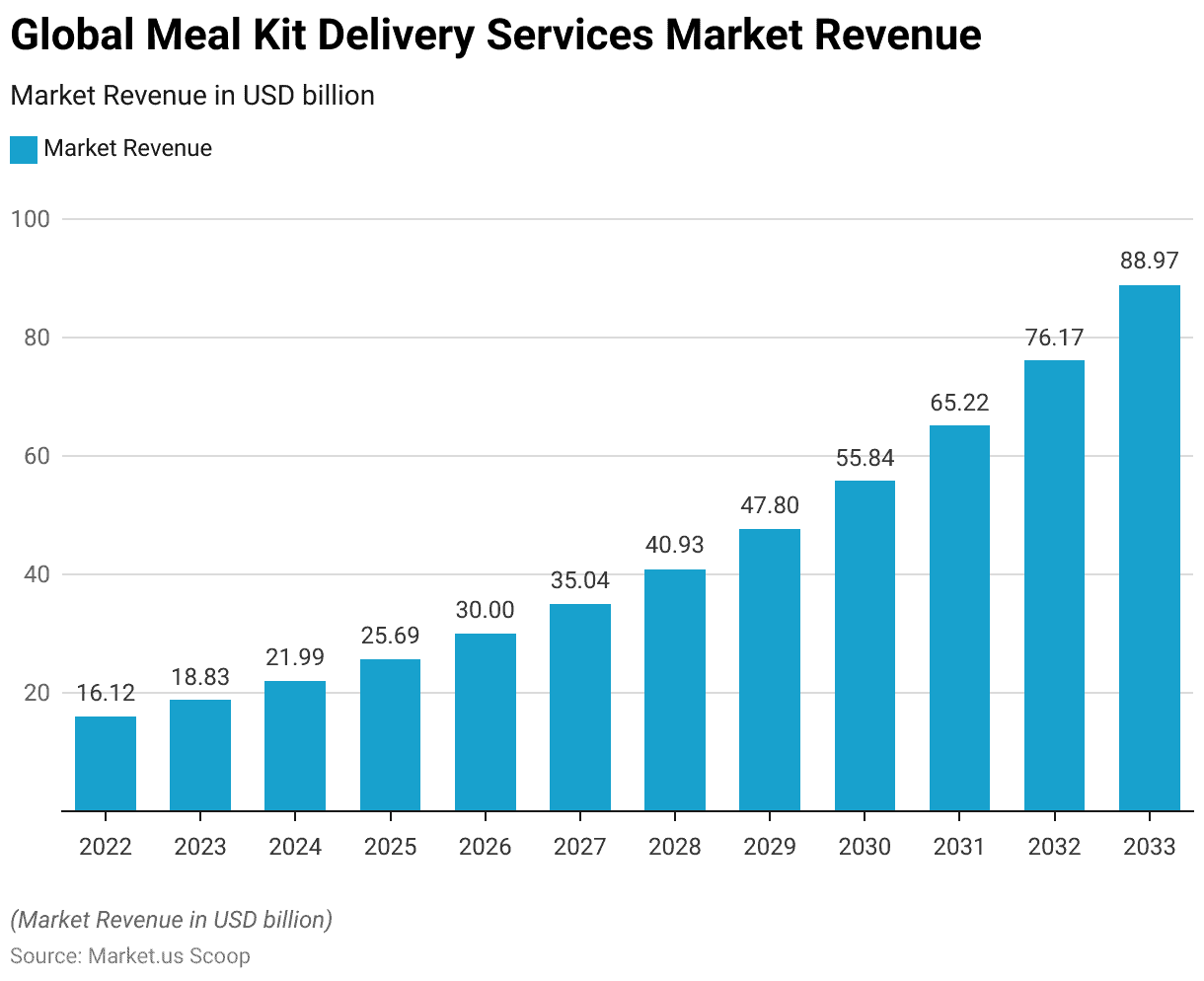
However, the opportunity is huge. In 2024, the worldwide meal-kit delivery market reached $32.8 billion in 2024, and is forecasted to reach $77.6 billion by 2033. People want convenience, personalised meals, and flexible subscriptions. That’s a gap you can fill.
Thus, if you are planning to build a meal-kit delivery app like HelloFresh, you need to know the real business behind such apps.
In this guide, you will learn everything about how to build a custom subscription-based meal-kit delivery app like HelloFresh. At the end, you can make the right decisions before you start building.
So, let’s begin!
What is the HelloFresh App & How Does Its Business Model Work?
HelloFresh is a subscription-based meal-kit delivery app that connects users with weekly meal plans, recipes, and pre-portioned ingredients.
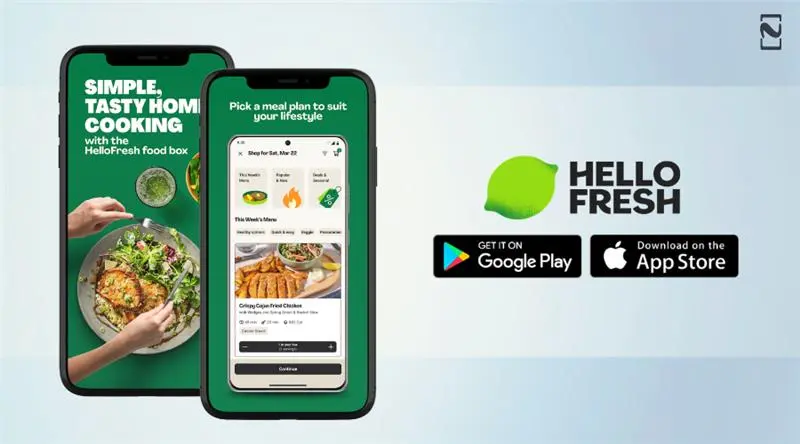
It is one of the best meal planning apps or meal-kit delivery apps. Here’s what makes it tick and what you need to focus on if you want to replicate its success:
- Subscription System: Users select a weekly or monthly plan and choose the number of meals and servings. This predictable recurring revenue is the backbone of your business. You just need to design your online meal kit ordering system to manage subscriptions smoothly. This can include skip, pause, and cancellation options.
- Meal Customization & Personalization: HelloFresh allows customers to pick meals based on preferences, dietary restrictions, or family size. If you ignore personalization, your user retention rates will drop.
- Operational Integration: Behind the scenes, the app coordinates inventory, delivery slots, and meal prep logistics. This efficiency allows the HelloFresh-like app to minimize waste and maximize profit.
- Revenue Streams: Beyond subscriptions, HelloFresh generates income through add-ons, premium meal options, and occasional partnerships with brands.
When you break down this meal kit delivery app business model, you can see where to focus your HelloFresh app development instead of just copying features blindly.
Why Invest in a Meal Kit Delivery App Development in 2026?
The meal-kit delivery market is exponentially increasing, and these figures show why you should seriously consider making your own app.
- In 2025, the global meal-kit industry was valued at $20.16 billion in 2024, it is forecasted to hit $65.67 billion in 2031.
- In North America alone, around 17% households have subscribed to meal-kit services at least once.
- Sales of meal-kit delivery apps will increase by 2032 due to the adoption of subscription-based loyalty programs.
- Around 38% of consumers, from Gen Z to Baby Boomers, say quick meal preparation is a key factor when choosing a meal service, while over 46% prioritize planning their meals.
- HelloFresh has 8 million active users in 15 countries.
- The worldwide meal-kit delivery apps revenue is forecasted to reach 88.97 billion by 2033.
By analyzing these market statistics, it’s clear that if you build a food subscription app like HelloFresh correctly, you can tap into a rapidly growing market, secure predictable revenue, and scale efficiently.
Key Features Required to Build an App Like HelloFresh
When you decide to build a meal-kit delivery app like HelloFresh, you need to focus on features that directly impact user retention and revenue. Meal-kit subscribers care about convenience, flexibility, and a smooth weekly experience.
If you miss even one core feature, it can hurt retention and reduce your recurring revenue potential. We have created a table of must-have features for meal kit delivery app development.
Customer App Features
1. Registration & Profile Management
Allows users to create accounts and manage preferences.
Why it matters: Let’s you capture user info for subscriptions and personalized recommendations.
2. Meal Browsing & Customization
Users can explore meal options and customize their selections.
Why it matters: Provides users control over meal choices, boosting retention and satisfaction.
3. Subscription Management
Enables users to manage recurring meal plans easily.
Why it matters: Essential for recurring revenue; users can skip, pause, or cancel plans easily.
4. Secure Payment Integration
Integrates safe and seamless payment gateways.
Why it matters: Ensures trust and smooth checkout to reduce churn.
5. Delivery Scheduling
Let’s users choose convenient delivery times.
Why it matters: Optimizes user convenience and helps with operational planning.
6. Push Notifications
Send reminders, offers, and updates.
Why it matters: Keeps users engaged with reminders, promotions, and meal updates.
Admin Panel Features
1. Menu & Recipe Management
Enables quick updates of meal plans and seasonal menus.
2. Order & Subscription Control
Let’s you manage recurring orders and avoid delivery errors.
3. Inventory Tracking
Reduces waste and ensures you meet weekly demand efficiently.
4. Analytics Dashboard
Provides insights to optimize subscriptions, deliveries, and revenue.
5. Customer Management
Helps resolve issues quickly and maintain high retention.
Delivery & Logistics Features
1. Real-Time Order Tracking
Keeps both you and the customer updated, improving transparency.
2. Route Optimization
Reduces delivery time and operational costs.
3. Delivery Status Updates
Improves customer experience and reduces support queries.
When you integrate these must-have meal-kit delivery features into your app, you will keep users engaged and maximise your revenue potential.
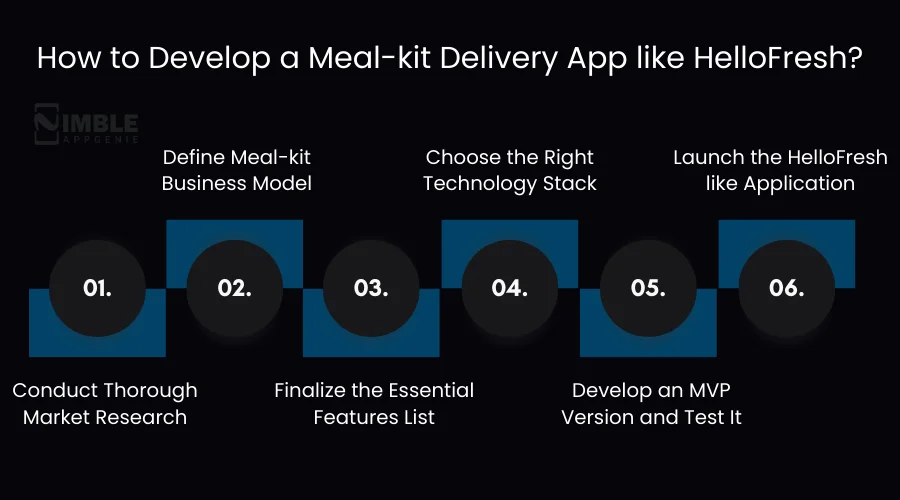
How to Develop a Meal-kit Delivery App like HelloFresh?
To create a meal-kit delivery app like HelloFresh, you need to develop a system that connects user subscriptions, rotating weekly menus, real-time ingredient planning, automated billing cycles, and location-based delivery coordination into one reliable digital product.
Let’s check out the HelloFresh app development process.
Step 1: Conduct Thorough Market Research
To make a meal-kit delivery app like HelloFresh, you have to start with thorough market research. Now, find out who your target customers are, their food habits, spending habits, and delivery preferences.
You can rigorously analyze the HelloFresh structure, like weekly menus, subscription plans, and customer retention strategy. Additionally, you should analyze competitors’ reviews to know the pain points of customers, such as delivery delays, etc.
Besides, you can check supply chain feasibility in your chosen region. This will help you solve pain points and reduce development risk before investing in design and coding.
Step 2: Define Meal-kit Business Model
Now, you clearly define how your subscription system will work. You can decide on meal frequency like weekly, bi-weekly, pricing tiers, portion sizes, cancellation rules, and delivery cut-off timing.
A HelloFresh-like app relies on recurring billing and flexible plan management. Additionally, you can map the entire subscription journey from meal selection to recurring payment and delivery confirmation.
The mobile app developers require this structure or blueprint to build the correct backend logic. Without a clear revenue and subscription model, your meal planning and recipe delivery app may need major technical changes later.
Step 3: Finalize the Essential Features List
Now, convert your meal-kit delivery idea into structured app requirements. Your meal-kit delivery app should include must-have features like user registration, meal browsing, dietary filters, subscription management, skip-week option, etc.
Besides, you also have an admin panel that should manage menus, pricing, inventory, and user analytics. Now, document every workflow clearly, like weekly menu updates and order cut-off rules.
This document guides the dedicated development team and prevents feature confusion. It is vital to do clear planning at this stage, control costs, and keep the project aligned with business goals.
Step 4: Choose the Right Technology Stack
To build a meal-kit delivery app like HelloFresh, you have to choose the technology that supports recurring subscriptions and real-time data updates. But first, you need to decide which type of app you want, native or cross-platform.
Now, choose a backend that manages subscription billing, order processing, and inventory logic efficiently. Also, you can use cloud hosting for scalability during high-traffic periods like weekly menu releases.
Besides, you have to integrate the secure payment gateways for various payment options. The right technology foundation makes sure your HelloFresh-like app runs smoothly as user numbers grow and weekly orders increase.
Step 5: Develop an MVP Version and Test It
Now, you have to build an MVP app that covers only the must-have features that a basic meal-kit delivery app has. It is just to test your idea with the real audience.
Before you launch the MVP, you need to add features like meal selection, recurring payments, delivery scheduling, etc. After that, you can test the complete workflow and check whether it has any errors.
Subscription accuracy is critical in meal-kit apps because errors directly affect logistics and customer trust. Careful testing at this stage prevents operational issues when scaling the platform.
Step 6: Launch the HelloFresh-like Application
Lastly, you can launch the meal-kit delivery app in a limited region. But you have to follow the app store’s guidelines. It is vital to regularly monitor subscription sign-ups, cancellation rates, delivery success, and customer feedback.
Now, find out the friction points in meal selection or payment flow and improve them quickly. Once logistics, inventory, and software systems operate smoothly together, you can expand to additional cities.
Tech Stack for HelloFresh-like App Development
Choosing the right mobile app tech stack is critical when you develop a meal-kit delivery app like HelloFresh.
The right combination ensures your app can handle subscriptions, manage inventory, track deliveries, and scale as your user base grows. Let’s take a look at the technology stack that you must take into consideration.
| Component | Technologies |
| Customer Mobile App (iOS & Android) | React Native or Flutter |
| Web App or Admin Panel | React.js or Angular |
| Backend or Server | Node.js + Express.js or Django |
| Database | PostgreSQL or MongoDB |
| Payment Gateway Integration | Stripe, PayPal, Razorpay |
| Email or SMS Notifications | SendGrid, Twilio |
| Analytics & Monitoring | Google Analytics, Mixpanel, Sentry |
| Delivery & Logistics | Google Maps API, Mapbox, Postmates API (optional) |
| Push Notifications | Firebase Cloud Messaging |
| Cloud Hosting & Storage | AWS (EC2, S3, RDS), Google Cloud, Microsoft Azure |
How Much Does It Cost to Build an App Like HelloFresh?
The cost to develop a meal-kit delivery app like HelloFresh typically ranges from $25,000 to $200,000, depending on app complexity, features, platform choice, and so on. But before you decide to build an app like HelloFresh, you need clarity on investment.
The recipe subscription app is more complex than a normal food delivery app due to recurring subscriptions, inventory handling, delivery coordination, and customer retention systems. Let’s have a look at the HelloFresh mobile app development cost breakdown.
| App Complexity | Cost Breakdown |
| MVP Version (Single city) | $25,000 – $50,000 |
| Medium HelloFresh-like app | $50,000 – $150,000 |
| Scalable HelloFresh-like platform | $150,000 – $200,000+ |
Additionally, if you are a startup founder, launching with a focused MVP in one city keeps your risk lower while testing demand.
As you scale into multiple locations and add automation, your cost to develop a meal planning app like HelloFresh increases due to infrastructure, integrations, and performance optimization.
The biggest on-demand HelloFresh app development cost drivers are subscription complexity, real-time delivery tracking, inventory systems, and cloud hosting setup.
The more automation and scalability you need, the higher the HelloFresh subscription food delivery app development cost.
How to Monetize a Meal-Kit Delivery App like HelloFresh?
You can monetize your meal planner app like HelloFresh through recurring subscriptions and add-on purchases.
Most successful meal-kit platforms combine multiple app monetization models instead of relying on just one. We have jotted down the common ways to monetize your meal preparation delivery service app.
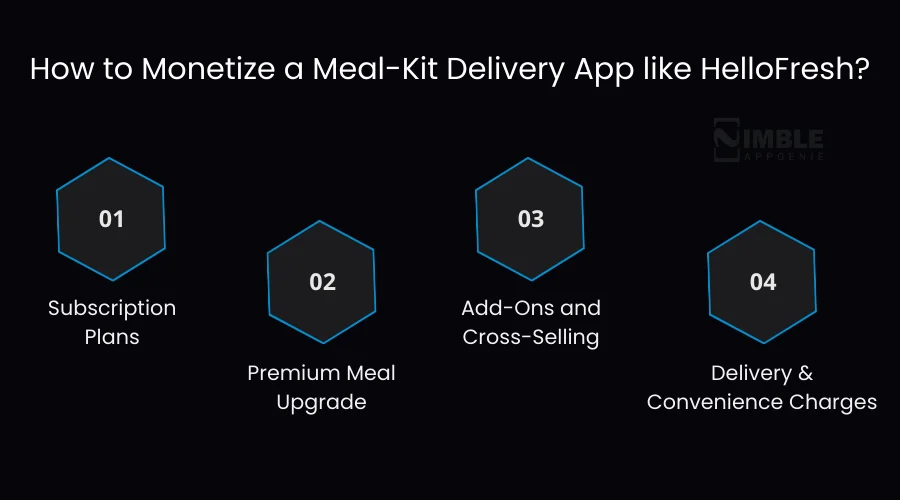
1] Subscription Plans
As a meal-kit delivery business, your main profit will come from a weekly or monthly subscription. Your target audience can choose the preferred meals and pay automatically.
This provides you with a predictable cash flow, better demand forecasting, and good operational control compared to one-time orders.
2] Premium Meal Upgrade
The next way to earn money is a premium meal upgrade. You can position certain meals as premium options like organic, diet-specific, or chef-designed recipes.
When you charge slightly more for these plans, you can increase margins without changing your core logistics or subscription structure.
3] Add-Ons and Cross-Selling
Your custom meal delivery app development like HelloFresh, may provide extras like desserts, snacks, beverages, or breakfast kits during checkout. These small add-ons increase average order value and improve profitability without requiring major operational changes.
4. Delivery and Convenience Charges
If you operate in multiple locations, it is best to add structured delivery fees to help balance logistics costs. This protects your margins while allowing flexible delivery slots for customers who prefer convenience.
Meal-Kit App vs. Food Delivery App: Key Differences
Meal-kit delivery apps like HelloFresh are built around subscription-based meal planning and ingredient delivery, while food delivery apps focus on on-demand restaurant ordering.
The difference affects how the meal box delivery app is developed, how logistics work, and how revenue is generated. Let’s look at the table given below.
| Factor | Meal-Kit Delivery App | Food Delivery App |
| Business Model | Subscription-based meal planning and ingredient delivery | On-demand restaurant food ordering |
| Ordering Frequency | Weekly or scheduled subscriptions | Instant or same-day ordering |
| Inventory Management | Required for ingredients and meal kits | Not required (restaurants manage inventory) |
| Delivery Type | Scheduled delivery slots | Real-time delivery |
| Customer Commitment | Medium to long-term subscription | One-time purchases |
| Revenue Model | Subscriptions, add-ons, premium meals | Commission from restaurants and delivery fees |
| Operational Complexity | High (inventory + logistics + subscriptions) | Moderate (delivery coordination only) |
| User Goal | Cook meals at home with prepared ingredients | Order ready-to-eat food |
| Example | Hellofresh | Uber Eats or Deliveroo |
Thus, creating a meal planner application like HelloFresh usually needs good backend systems, subscription management, and logistics planning compared to a typical food delivery application.
Challenges in On-Demand HelloFresh-Like App Development (With Solutions)
When you plan to build a meal-kit delivery app like HelloFresh, the biggest challenge is not coding the interface. The real difficulty is building a system that connects menu planning, supplier purchasing, warehouse packing, weekly subscriptions, and last-mile delivery, all inside one synchronized flow.
If even one part fails, it affects the entire weekly cycle. Below are the HelloFresh mobile app development challenges founders face and how to solve them properly.
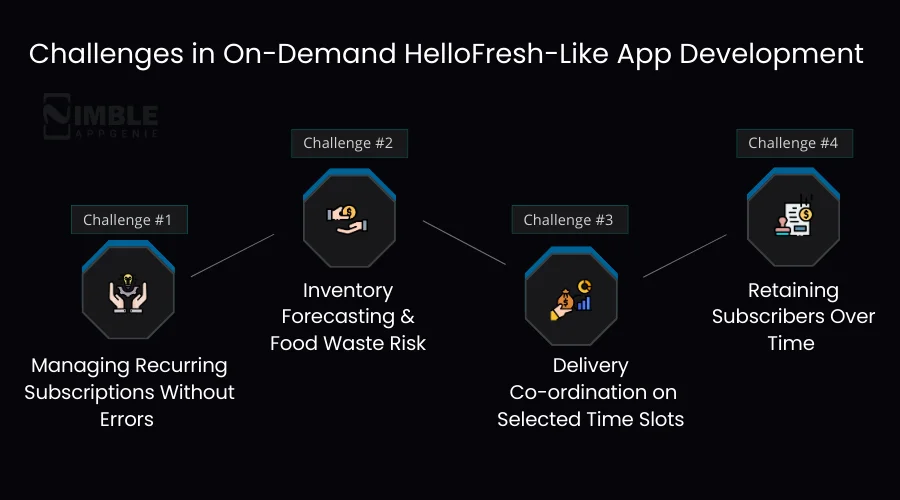
1. Managing Recurring Subscriptions Without Errors
The main challenges you will face during HelloFresh meal kit delivery app development are managing weekly subscriptions, skipped deliveries, plan changes, and failed payments. It is also without breaking the user experience. Also, small billing errors can cause huge churn.
How to fix this:
You can build a strong subscription management system with automated billing cycles, retry logic for failed payments, and flexible pause or skip options for users.
2. Inventory Forecasting and Food Waste Risk
Pre-positioned ingredients delivery businesses should predict ingredient demand very accurately. If you overestimate demand, it will lead to food waste. However, underestimating causes delivery delays and poor customer experience.
How to fix this:
You can easily use demand forecasting depending on subscription data, weekly menu selections, and historical order patterns to optimize inventory purchasing. This can also reduce the food waste risk.
3. Delivery Co-ordination on Selected Time Slots
Unlike food delivery applications, your meal planner apps like HelloFresh, depend on scheduled deliveries. Additionally, handling the routes, delivery windows, and driver coordination becomes really complex when your business grows.
How to fix this:
The mobile app developers can integrate route optimization features and delivery scheduling systems that can automatically assign drivers and optimize delivery paths.
4. Retaining Subscribers Over Time
Users’ churn is common in subscription-based applications. Users may cancel if meal options feel repetitive or subscriptions become inflexible.
How to fix this:
You can add personalization, easy meal swapping, loyalty rewards, and reminder push notifications to keep users engaged and subscribed longer.
How Nimble AppGenie Can Help You Build a Meal-kit Delivery App?
When you plan to develop a meal-kit delivery platform, the biggest challenge you’ll face is turning the idea into a working product. That’s where Nimble AppGenie comes in with practical product thinking, not just development.
As an on-demand app development company, Nimble AppGenie helps you create a custom meal planner app that works smoothly in real-world delivery operations. We focus on things that matter most for this type of platform, like managing meal plans and recurring orders.
Thus, if you want to build a meal-kit delivery app like HelloFresh, the approach starts with understanding how your kitchen operations, packaging workflow, and delivery network will connect with the app.
From there, our team will create a system where admins can manage menus easily, and users can customize meals without any confusion. Instead of making a one-size-fits-all solution, we prioritize meal-kit delivery app development that fits your business model.
Why Nimble AppGenie stands out:
- Proven experience building scalable meal-kit applications
- Custom subscription features for meal businesses
- End-to-end app development support
- Reliable post-launch support and maintenance
- User-friendly interfaces increase customer retention
Conclusion
Developing a meal-kit app needs combining a good business model with top-notch app development planning. In this guide, we covered the core steps to build a meal-kit delivery app like HelloFresh with proper cost estimation and budget.
When subscription management, delivery coordination, and menu customization work together, your dream meal planning solution becomes very easy for customers to use every week.
For your food businesses, your goal is to launch a high-performing product first and then improve it based on user behavior.
You just have to follow the right development approach and planning, and your meal-kit delivery app can grow into a consistent subscription-based revenue channel over time, as demand increases steadily.
FAQs
The time to create an app like HelloFresh can take 3–6 months. However, planning features carefully can reduce delays and costs.
You can integrate features like subscription management, meal customization, secure payments, delivery tracking, an admin panel, analytics, push notifications, and user management.
Yes, you can focus on a single city first to optimize subscriptions, delivery, and retention before scaling regionally.
The meal-kit delivery application makes money through subscription plans, add-ons, cross-selling, premium meal upgrades, delivery, and convenience charges.

Niketan Sharma, CTO, Nimble AppGenie, is a tech enthusiast with more than a decade of experience in delivering high-value solutions that allow a brand to penetrate the market easily. With a strong hold on mobile app development, he is actively working to help businesses identify the potential of digital transformation by sharing insightful statistics, guides & blogs.
Table of Contents
No Comments
Comments are closed.