


Key Takeaways:
- Airbnb connects travelers with hosts, offering property rentals without owning real estate, earning through commission-based marketplace fees.
- The vacation rental app market is projected to reach $119B by 2030, making 2026 an ideal time to build an Airbnb-style platform.
- Airbnb app makes money through commission-based marketplace, subscription, or service fees, making it scalable without owning properties.
- To develop an app like Airbnb, conduct market research, define a business model, create a roadmap, plan features and design, develop, test, and launch it.
- The must-have features for a travel booking app to succeed include property listings, a booking system, secure payments, reviews, in-app chat, and host dashboards.
- Airbnb-like app advanced features are AI property recommendations, dynamic pricing, fraud detection, and automated payouts, which boost user experience and revenue.
- The Airbnb app development tech stack involves Flutter, React Native, Node.js, cloud hosting, payment gateways, maps integration, and analytics tools.
- The cost to build an app like Airbnb can be around $25,000 (MVP) to $250,000+, with challenges like booking logic, scalability, security, and user trust that need careful planning.
High commissions, limited control over pricing, strict platform policies, and zero ownership of customer data these may already be affecting your vacation rental business.
You work hard to attract guests, but a large share of your revenue goes to third-party platforms. At the same time, customer expectations have changed. They now expect instant booking, verified reviews, flexible cancellations, and a smooth mobile experience.
Managing all of this while protecting your margins is becoming difficult. This gap between rising customer expectations and traditional rental operations is driving strong demand for digital vacation rental platforms.
If you are a property owner, hospitality operator, or travel startup, this may be the right time to build an app like Airbnb and create your own controlled marketplace.
The worldwide vacation rental market size is forecasted to reach $119 billion by 2030 with a CAGR of 3.7%. The short-term rentals continue to grow as travelers shift from hotels to flexible stays.
This continued growth is creating opportunities not only for large global platforms but also for niche and regional rental apps that serve specific audiences more effectively. However, building such a platform requires the right strategy from the beginning. But, fret not!
In this guide, we will discuss how to develop an app like Airbnb that covers key features, types, tech stack, challenges, monetization, and the real cost involved, so you can make the right investment decision.
So, let’s begin!
What is an Airbnb App?
Airbnb is a two-sided vacation rental app that connects property owners with travelers while generating revenue through commissions or service fees. Instead of owning properties, the app allows hosts to list their properties and manage pricing, availability, and bookings.
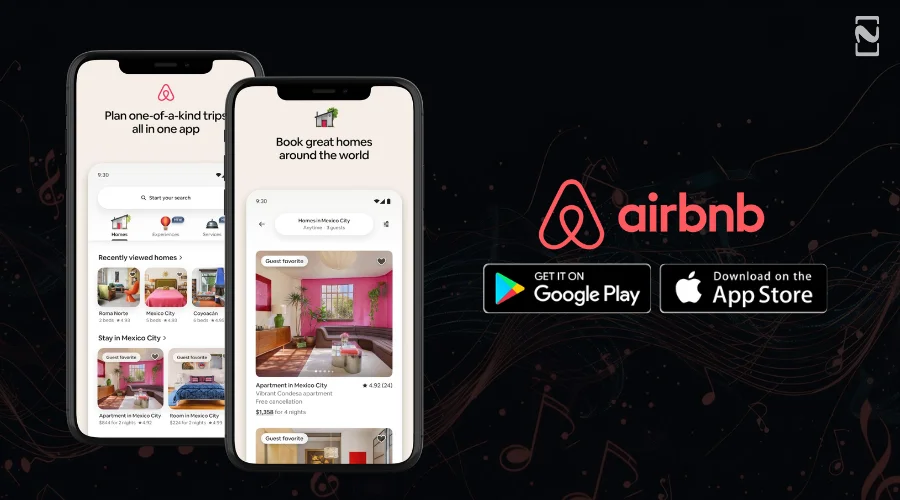
Being one of the best travel apps, customers can search, compare, and book stays securely through the app. From discovery to payment and reviews, it handles the entire transaction cycle. For your business, this business model provides three major benefits:
- Property without ownership: You do not need to own a property. Hosts offer the supply.
- Commission-based revenue: The app earns a percentage on every booking.
- Scalable operations: With the right technology, the marketplace can expand into different regions.
Why Develop a Travel App Like Airbnb in 2026?
2026 presents the best business case if you are planning to enter the travel and hospitality space. Here are the travel app statistics and three data-backed reasons why to build an app like Airbnb that makes strategic sense.
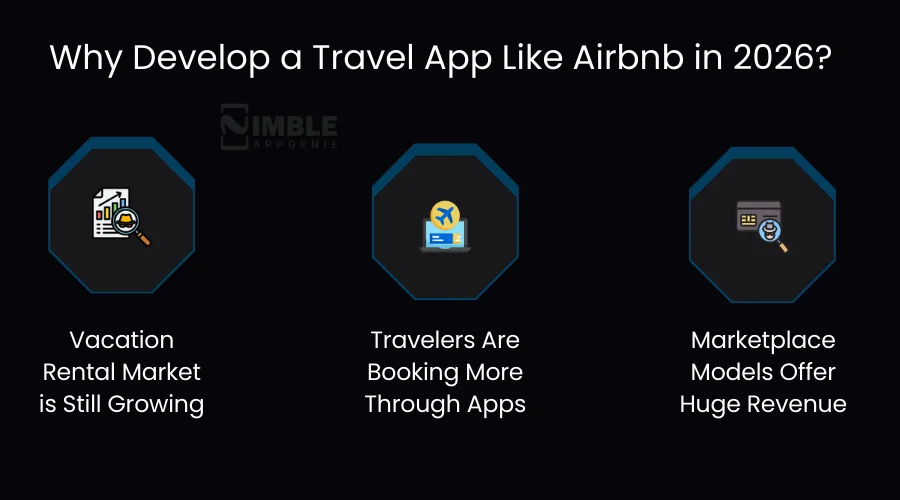
1. Vacation Rental Market is Still Growing
The market size of vacation rentals is forecasted to hit $119 billion by 2030. Short-term rentals will continue to grow due to travelers’ preference for flexible stays, larger spaces, and local experiences.
Additionally, Airbnb alone generated revenue in the December quarter of $2.778 billion in 2025. This shows that the marketplace model is not only extensible but also highly profitable when you execute it correctly.
This could be the best opportunity for your travel startup. Regional and niche rental platforms are growing in segments such as luxury villas, remote work stays, and long-term furnished rentals.
2. Travelers Are Booking More Through Apps
The usage of smartphones is literally dominating the travel industry. As per HospitalityNet, around 50% of hotel and travel bookings are now completed through smartphones. Travelers expect instant booking confirmation, secure digital payments, and verified reviews.
Therefore, if your travel booking business does not provide a seamless mobile booking experience, you will lose customers. This behavioral shift creates a necessary demand to develop a travel app with smart features.
3. Marketplace Models Offer Huge Revenue
Airbnb works on a commission-based structure. It typically charges hosts and guests a service fee on every booking. This asset-light model allows travel apps to scale without owning properties. Airbnb is raising its commission to 15.5% in December 2025. Marketplace businesses are attractive because:
- You do not need to invest in real estate inventory.
- Revenue increases as transactions increase.
- Expansion into new cities or niches is tech-driven.
With growing demand for flexible stays and digital-first booking experiences, 2026 is the best time for property owners, hospitality brands, and startups to develop a travel app like Airbnb and build a controlled, commission-based marketplace.
What are the Types of Airbnb-Like Apps You Can Build?
You can make an app like Airbnb, but it is vital to understand that you do not have to copy it. The opportunity today lies in choosing the right niche and business model.
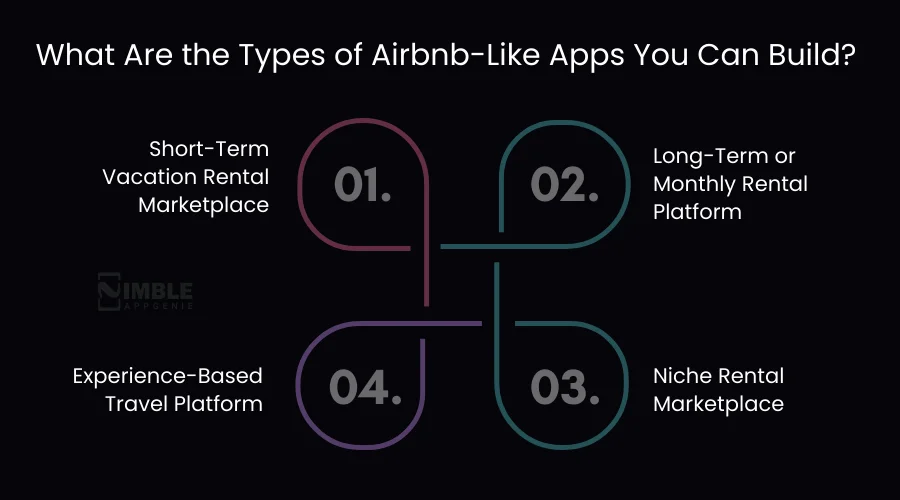
Let’s have a look at the main types of travel rental apps you can build:
1. Short-Term Vacation Rental Marketplace
This is the classic Airbnb-style model. Hosts list apartments, villas, or holiday homes. Guests book for a few days or weeks. The platform earns commission per booking. It is best for:
- Property aggregators.
- Travel startups.
- Regional tourism businesses.
Revenue model:
- Commission per booking (usually 10–20%)
2. Long-Term or Monthly Rental Platform
This model focuses on remote workers, students, corporate housing, and relocation stays. With remote work increasing globally, demand for furnished long-term rentals is rising. This niche has less competition compared to short-term vacation stays.
Revenue model:
- Commission
- Subscription from property owners
- Listing fees
3. Niche Rental Marketplace
Instead of targeting everyone, you focus on a specific audience. These include luxury villa rentals, pet-friendly stays, wellness retreats, adventure tourism stays, and eco-friendly accommodations. Niche platforms often grow faster because they solve a specific need better than large marketplaces.
Revenue model:
- Commission-Based.
- Listing Fees.
- Value-Added Services.
4. Experience-Based Travel Platform
Airbnb expanded into “Experiences” — activities hosted by locals. You can build a platform that allows local tour guides, activity providers, and event organizers to list and sell experiences.
Revenue model:
- Commission per booking.
- Featured listing fees.
Key Features for Travel App Development like Airbnb
When you build an app like Airbnb, features are not just technical add-ons. They decide how smoothly your marketplace will run and how well it will generate bookings and revenue.
Since it is a two-sided platform, you must build strong systems for guests, hosts, and admins. Below are the 3 different panels of Airbnb-like travel app features tables that you must take into consideration.
1. User Panel
| Features | Why It Matters |
| Easy Registration & Login | Reduces drop-offs and increases signups |
| Advanced Search & Filters | Helps users quickly find suitable stays |
| Property Details Page | Builds trust and supports booking decisions |
| Real-Time Availability | Prevents double bookings and confusion |
| Instant Booking Option | Increases conversions |
| Secure Payment Integration | Builds trust and protects transactions |
| Multiple Payment Options | Expands customer reach |
| In-App Chat | Reduces booking hesitation |
| Ratings & Reviews | Improves credibility and transparency |
| Wishlist | Increased return visits |
| Push Notifications | Keeps users informed and engaged |
| Booking History | Improves retention and repeat bookings |
2. Host Panel
| Features | Why It Matters |
| Host Verification | Prevents fraud and builds trust |
| Add/Edit Property | Enables inventory growth |
| Availability Calendar | Avoids scheduling conflicts |
| Pricing Management | Maximizes host revenue |
| Booking Management | Gives operational control |
| Earnings Dashboard | Provides financial clarity |
| Automated Payouts | Improves host satisfaction |
| Guest Review Option | Maintains platform safety |
3. Admin Panel
| Features | Why It Matters |
| User Management | Controls platform activity |
| Listing Approval System | Maintains quality standards |
| Commission Settings | Direct revenue control |
| Payment Monitoring | Prevents financial risks |
| Dispute Management | Protects brand reputation |
| Analytics Dashboard | Tracks business growth |
| Promo & Coupon Control | Drives user acquisition |
| Multi-Currency Support | Enables global expansion |
| Content Moderation | Prevents misuse and fraud |
What are the Advanced Features to Add in an App Like Airbnb?
Basic features help your travel app function, but advanced features help it compete. If you plan to create an app like Airbnb in a crowded market, you need more than listings and bookings.
Advanced features improve user experience, increase booking conversions, reduce manual work, and help you scale faster. Adding the right advanced features can directly impact revenue, retention, and long-term platform growth. Let’s have a look:
| Advanced Features | Why It Matters |
| AI-Based Property Recommendations | It personalizes search results based on user behavior, which improves engagement and increases booking conversion rates. |
| Dynamic Pricing Engine | It automatically adjusts prices based on demand, seasonality, and occupancy to help hosts maximize revenue and stay competitive. |
| Smart Search with Advanced Filters | It reduces search time and improves user satisfaction by helping guests quickly find relevant properties. |
| Map-Based Property Discovery | It allows users to explore listings visually by location, which increases booking confidence and decision speed. |
| AI Chatbot & 24/7 Support | It handles common queries instantly, reduces support costs, and improves overall user experience. |
| Fraud Detection & Identity Verification | It protects the platform from fake listings, payment fraud, and trust issues that can damage brand reputation. |
| Automated Payout & Escrow System | It secures transactions by holding funds until booking confirmation, ensuring trust between hosts and guests. |
| Loyalty & Rewards Program | It supports repeat bookings and improves customer retention, lowering acquisition costs over time. |
| Advanced Analytics & Reporting Dashboard | It provides real-time insights into bookings, revenue, occupancy rates, and user behavior to support data-driven growth decisions. |
How to Build an App like Airbnb?
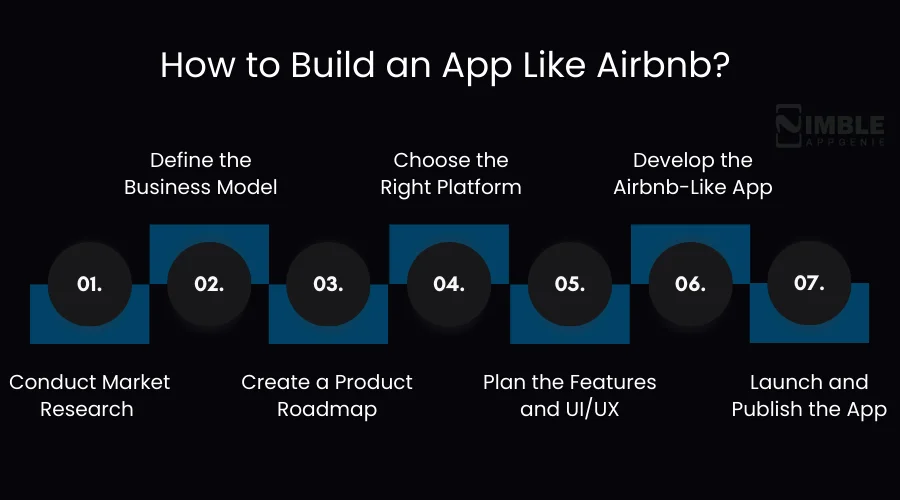
Well, to build an app like Airbnb, you need to conduct market research, define a business model, create a product roadmap, choose a platform, design the UI/UX, develop & test the app, and launch it.
The process includes:
-
- Conduct Market Research
- Define the Business Model
- Create a Product Roadmap
- Choose the Right Platform
- Plan the Features and UI/UX
- Develop an Airbnb-Like App
1. Conduct Market Research
The first step in how to build an app like Airbnb is conducting detailed market research. This helps you understand real user demand and identify opportunities in the vacation rental market.
You can start by analyzing the pain points users face when booking or hosting accommodations. Airbnb became successful because it solved a real problem in the travel industry.
It is vital to focus on questions such as:
- What challenges do travelers face while booking accommodations?.
- Do hosts struggle with listing properties or managing bookings?.
- Are there issues related to pricing, limited stay options, communication, or trust?.
- Can a better mobile experience improve the booking process?.
After identifying the problems, analyze competitors in the vacation rental app development space. Airbnb alternatives apps like TripAdvisor, Trivago, and Booking.com, provide valuable insights into how rental marketplaces operate.
When evaluating competitors, examine:
- Their booking process.
- Core features and functionalities.
- Pricing and commission models.
- Market positioning and strengths.
This research will help you identify gaps in the market and define a USP for your platform. Finally, validate your idea by collecting feedback from users. Early feedback ensures your travel booking marketplace platform like Airbnb, aligns with real users’ needs.
2. Define the Business Model
A clear revenue strategy is essential when planning one of the best hotel booking apps. Your business model determines how the platform generates income while delivering value to both hosts and travelers.
You can start by understanding the value exchange within your marketplace:
- Hosts gain visibility and booking opportunities.
- Travelers gain access to unique and flexible accommodation options.
- Once this value exchange is clear, you can define the revenue model for your platform.
Common monetization strategies used in Airbnb-like travel booking app development include:
- Charging a service fee per booking.
- Taking a commission percentage from hosts.
- Offering premium listing promotions.
- Providing additional services like cleaning, insurance, or property management
Defining the business model early helps guide product decisions and ensures the platform grows in a financially sustainable way.
3. Create a Product Roadmap
A product roadmap outlines how your Airbnb-like travel booking app will be developed and expanded over time. Start by listing all the features you want your platform to include. Then divide them into two categories:
- Core features (must-have)
- Advanced features (future updates)
For a property rental marketplace application like Airbnb, the essential features typically include:
- User registration and profile management.
- Property listing and management.
- Search and filtering functionality.
- Booking and payment system.
- Messaging between hosts and guests.
- Reviews and ratings
After identifying the essential features, define your MVP. The MVP focuses only on the most important features required to launch the platform quickly. Once the app is live, additional features can be added based on user feedback and market demand.
4. Choose the Right Platform
Selecting the right platform is an important decision when planning Airbnb travel booking app development. Instead of launching on every platform at once, many startups begin with a single platform such as iOS or Android.
Another effective approach is cross-platform development, which allows developers to build applications for both platforms using a shared codebase.
When choosing the platform, consider factors such as:
- Where your target users are most active.
- Device usage trends in your target market.
- User purchasing behavior and spending patterns.
Starting with one platform helps reduce development complexity and allows your team to focus on building a stable and high-quality Airbnb-like vacation rental app.
5. Plan the Features and UI/UX
A well-designed user experience is essential for successful vacation rental app development like Airbnb. Both hosts and travelers should find the platform easy to use.
Before you build an App Like Airbnb, you can start by defining the core workflows of the application, including:
- Creating and managing property listings.
- Searching for available accommodations.
- Booking stays and making payments.
- Managing reservations and communication.
Once the workflows are defined, the design team can create the interface and overall experience. Important UI/UX elements in travel booking app development like Airbnb, include:
- Simple onboarding for hosts and guests.
- Advanced search with filters and map views.
- Clear property listing pages with pricing and images.
- Smooth booking and payment flows.
- Host dashboards for managing listings and reservations.
Design prototypes are often created at this stage to test the user experience before development begins.
6. Develop an Airbnb-Like App
Once the design and feature requirements are finalized, the development phase begins. You can build an MVP version first with core features and then move ahead with the full-fledged app.
It will help you test your idea in the market. The current development process usually includes two major components.
a) Backend Development
The backend handles the core functionality of the platform, including:
- User authentication and profile management.
- Property listing management.
- Booking and calendar systems.
- Payment processing and host payouts.
- Messaging and notification systems.
b) Frontend Development
The frontend is the interface users interact with. It includes a mobile or web application where travelers search for properties, and hosts manage their listings.
During hotel booking app development like Airbnb, developers also set up cloud infrastructure to ensure the platform can handle increasing users and bookings as it scales.
7. Launch and Publish the App
After development and testing are complete, the final step is launching the platform. Before releasing the application, teams perform final testing to ensure that key features work properly, including:
- Booking functionality.
- Payment processing.
- Messaging between hosts and guests.
- Overall app performance.
Once testing is complete, the mobile application is submitted to the Google Play Store and Apple App Store. This process requires preparing store assets such as:
- App icons and screenshots.
- App descriptions and keywords.
- Privacy policies and required permissions.
After approval, the application becomes available to users. At this stage, the focus shifts to attracting hosts, acquiring users, and improving the platform based on feedback and user behavior.
What are the Tech Stacks Required to Develop an App like Airbnb?
The technology you choose will decide how well your Airbnb-like app works for guests, hosts, and admins. It keeps bookings, payments, and messages running smoothly and makes sure the travel app is secure, allowing your platform to grow without issues as more users join.
The table below shows the mobile app tech stack that you can use to build a travel app like Airbnb.
| Layer | Technology Options | Why It Is Used |
| Frontend (Web) | React.js / Next.js | Builds fast, scalable, and SEO-friendly web interfaces |
| Frontend (Mobile) | Flutter / React Native | Enables cross-platform app development for iOS and Android |
| Backend | Node.js / Django / Ruby on Rails | Handles business logic, APIs, and booking operations |
| Database | PostgreSQL / MySQL | Manages structured data like users, bookings, and payments |
| Cloud Hosting | AWS / Google Cloud / Azure | Provides scalable infrastructure and high availability |
| Payment Integration | Stripe / PayPal / Razorpay | Enables secure online transactions |
| Maps & Location | Google Maps API / Mapbox | Supports location search and map-based property discovery |
| Authentication | Firebase Auth / OAuth | Manage secure user login and verification |
| Notifications | Firebase Cloud Messaging / Twilio | Send push notifications and SMS alerts |
| DevOps & CI/CD | Docker / GitHub Actions | Ensures smooth deployment and version control |
| Analytics | Google Analytics / Mixpanel | Tracks user behavior and booking performance. |
How Much Does it Cost to Build a Travel App like Airbnb?
The cost to build an app like Airbnb can range between $25,000 to $250,000+ depending on the features, complexity, and technology you choose. Different levels of development serve different business needs, from testing the market to building a full-fledged app.
A simple version that allows user search, book, and pay, and hosts manage listings, can be around $40,000–$60,000. But if you want advanced features and mobile apps for iOS and Android, then the cost to develop a travel app like Airbnb can rise to $150,000 – $250,000+.
Here’s a breakdown of approximate Airbnb app development costs and what each version includes:
| App Version | Approximate Cost | Features Included |
| Basic MVP | $25,000 – $60,000 | Property listing, search, bookings, payments, reviews |
| Advanced App | $60,000 – $150,000 | Everything in MVP + in-app chat, push notifications, host dashboards, analytics, iOS & Android apps |
| Full-Featured Platform | $150,000 – $250,000+ | Multi-currency payments, dynamic pricing, an admin panel, enhanced security, and high scalability |
These are just ballpark estimates. The actual cost to build a travel app like Airbnb depends on your project requirements. It is best to consult with experts who have thorough expertise in creating custom travel apps.
What Factors Affect the Cost to Develop an App like Airbnb?
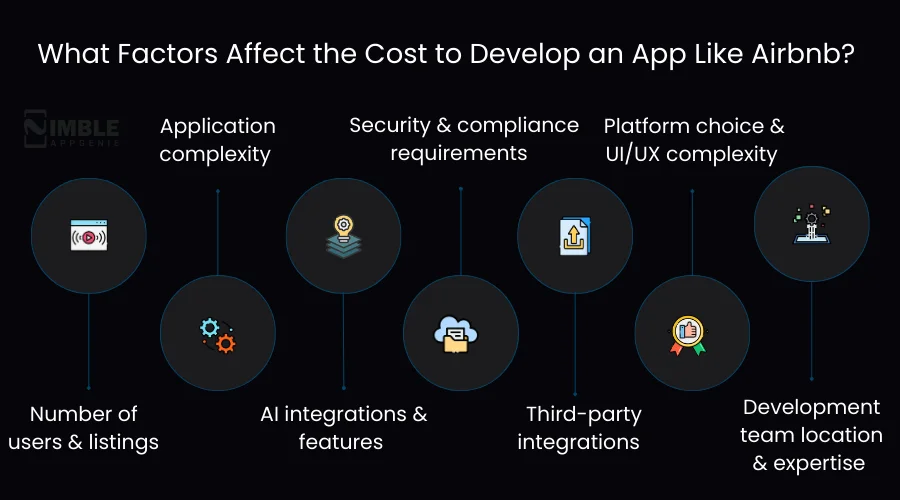
The factors that affect the cost of developing an app like Airbnb are-
- Number of users and listings.
- Application complexity.
- AI integrations & features.
- Security and compliance requirements.
- Third-party integrations.
- Platform choice and UI/UX complexity.
- Development team location and expertise
Thus, investing in the right features and tech from the start makes your app secure, scalable, and capable of competing in the crowded vacation rental market.
Effective Monetization Strategies for an App like Airbnb
Knowing how your travel application like Airbnb, will generate revenue from day one is crucial. Your app is a marketplace, so money comes from every transaction, service, or feature you control.
Let’s take a look at the main ways your Airbnb-like travel apps make money.
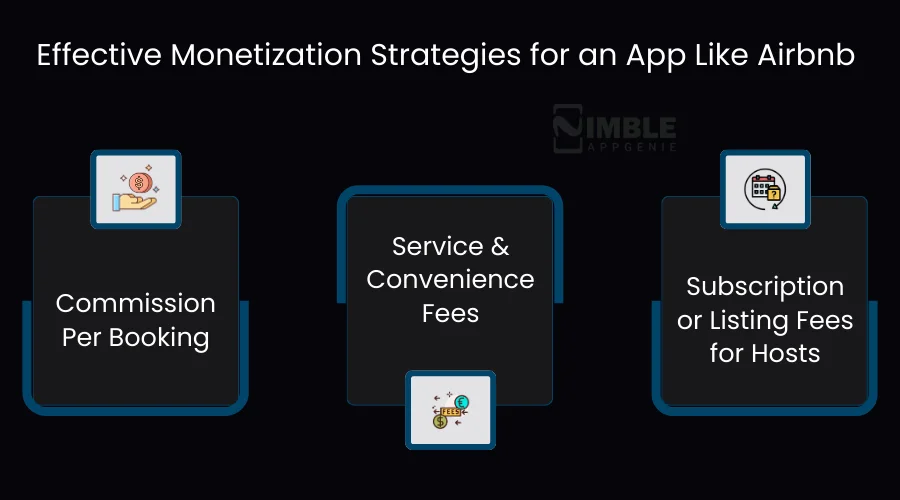
1. Commission Per Booking
This is the most common monetization model. You can charge a small percentage on every booking. It is usually 10–20% from hosts and sometimes a smaller fee from guests.
Why it matters: This creates a fixed revenue stream from every transaction. For example, Airbnb earned over $9 billion in revenue in 2023 using this model. Even small vacation rental apps can generate major income if bookings grow consistently.
2. Service & Convenience Fees
You can charge extra for premium services like instant bookings, last-minute reservations, or boost support. Customers will pay a small service fee for convenience.
Why it matters: It increases revenue without requiring new properties. It also improves your travel app’s cash flow while giving users perceived added value.
3. Subscription or Listing Fees for Hosts
Hosts can pay a monthly or yearly subscription to list multiple properties, or pay a fee for featured listings that get higher visibility.
Why it matters: Subscription fees provide predictable, recurring revenue, and featured listing fees incentivize hosts to engage actively with your online travel booking platform.
Key Challenges in Building an App Like Airbnb and Their Solutions
What challenges do businesses face when building an app like Airbnb? When you start vacation rental app development, you often encounter several technical and operational challenges.
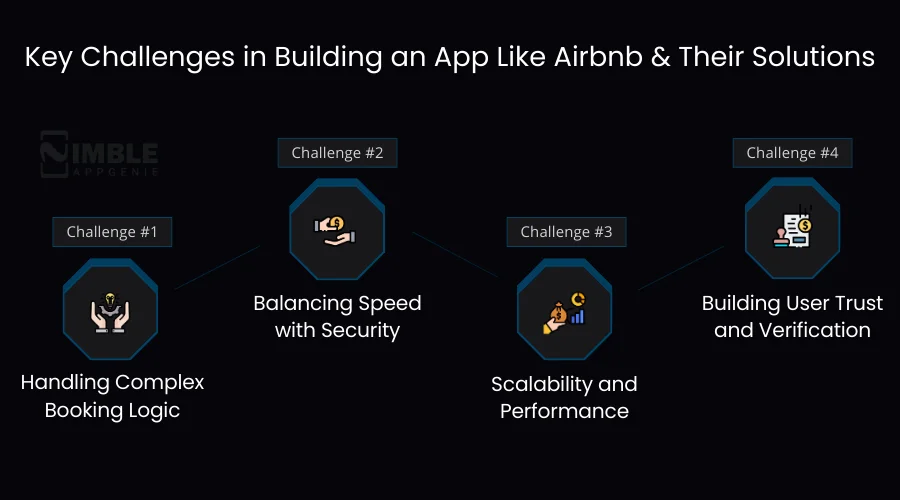
Understanding these challenges early helps businesses plan better during travel booking app development, like Airbnb, and design a platform that can scale.
Let’s look at the common challenges you might face while creating a travel booking app, along with practical solutions.
1. Handling Complex Booking Logic
Challenge:
One of the biggest challenges in short-term rental app development is managing booking availability. Guests often expect instant booking, while hosts may have custom rules or overlapping availability. Without proper management, this can lead to double bookings or cancellations.
Solution:
You can implement smart booking systems that include:
- Real-time calendar synchronization.
- Automated conflict detection.
- Instant booking options with host rules.
Thorough app testing of booking app workflows ensures smooth and reliable reservations.
2. Balancing Speed with Security
Challenge:
Users expect a fast and smooth app experience, but features like payment processing, identity verification, and booking confirmations can slow down performance.
Solution:
During property Airbnb-like app development, developers can optimize performance by:
- Using trusted payment gateways.
- Implementing secure authentication systems.
- Applying efficient backend architecture.
This helps maintain strong security without compromising app speed.
3. Scalability and Performance
Challenge:
As the platform grows, the number of users, listings, bookings, and messages increases. Without proper infrastructure, the app may slow down or crash during peak usage.
Solution:
To support growth in Airbnb vacation rental app development, developers should design scalable systems using:
- Cloud-based infrastructure.
- Microservices architecture.
- Load balancing systems.
Planning scalability early ensures the platform can support thousands of users smoothly.
4. Building User Trust and Verification
Challenge:
Trust is critical in any Airbnb-like marketplace. Guests need to feel safe booking a property, and hosts want assurance about who is staying in their homes. Fake profiles and fraudulent listings can damage the platform’s credibility.
Solution:
Trust can be improved by implementing:
- Identity verification (KYC).
- Secure ID checks.
- User reviews and ratings.
- Verified host profiles.
These features help create a trustworthy environment for both hosts and guests.
Addressing these challenges early helps you successfully build scalable platforms during travel app development, like Airbnb.
Why Choose Nimble AppGenie to Make an App like Airbnb?
Choosing the right development partner matters when planning to build an App Like Airbnb because the product is not just a mobile app; it’s a two-sided marketplace that must work smoothly for both hosts and travelers.
Nimble AppGenie approaches this kind of project with a clear focus on how rental platforms function in the real world. As a recognized travel app development company, we help you structure the core parts of the app from the beginning.
Instead of treating it like a standard app project, our team focuses on how these systems connect so the marketplace runs reliably as activity grows.
Another reason is our emphasis on usability. Hosts need simple apps to manage properties and reservations, while travelers expect a fast and intuitive booking experience.
By combining marketplace understanding with practical product development, Nimble AppGenie helps you turn a rental platform idea into a stable and scalable application ready for real users.
Conclusion
Building an app like Airbnb is essentially about creating a marketplace that works smoothly for property owners and travelers. That’s why the development process usually focuses on a few critical areas.
For example, a reliable booking system, clear property listings, secure payments, and a review system that builds trust between users. If any of these parts are poorly designed, your app quickly becomes difficult to use.
Therefore, if you are planning to build an App Like Airbnb, your goal should not be just to replicate Airbnb’s features but to build a solution that solves a specific market need. It’s about offering better host tools and simplifying the booking experience.
When the product is built around these real user needs, the platform has a much better chance of gaining traction in the market. Are you ready to move ahead? Let’s connect!
FAQs

Niketan Sharma, CTO, Nimble AppGenie, is a tech enthusiast with more than a decade of experience in delivering high-value solutions that allow a brand to penetrate the market easily. With a strong hold on mobile app development, he is actively working to help businesses identify the potential of digital transformation by sharing insightful statistics, guides & blogs.
Table of Contents
No Comments
Comments are closed.