

 Free Consultation
 PCI-DSS Compliant
 GDPR Ready
 ISO 27001
 NDA Protected
 AI Services
 AI App Development
 Generative AI Development
 AI Chatbot Development
 AI Integration Services
 AI Consulting Services
 AI For Fintech
 AI Financial Assistant Solution
 AI Insurance Agent Development
 Tech Stack
 OpenAI / GPT-4
 Claude / Anthropic
 Gemini / Google AI
 Llama / Open Source
 LangChain / LlamaIndex
 Pinecone / Pgvector
 AWS / Azure AI


 Fintech Solution
 Core Fintech
 App Development
 Neobank Solutions
 eWallet Solutions
 Lending Software
 Banking Solutions
 BNPL Solutions
 BNPL Solutions
 Insurance App
 Wealth Management
 Crypto & DeFi
 Blockchain Development
  Payroll Software
 DeFi Solutions
 Crypto Wallet
 Crypto On/Off Ramp
 Crypto Exchange
 Trading Platform
 Payments
 Compliance
 Regulations & Compliance
 Fraud Detection
 Lending Ecosystem
 P2P Lending Platform
 Mortgage Software
 Engagement
 Fintech Outsourcing

 Mobile Development
 Mobile App Dev
 iOS App Development
 Android App Development
 React Native
 Flutter Development
 Web Solution
 Node.js Development
 React.js Development
 Angular Development
 App Services
 UI/UX Design
 App Maintenance
 By Stage
 MVP Development
 Industry Solutions
 Healthcare App Dev
 Education App Dev
 Travel App Dev
 Real Estate App Dev
 Logistics Software
 Social Media App

 Hire Mobile Developers
 Hire iPhone Developers
 Hire Android Developers
 Hire React Native Devs
 Hire Flutter Developers
 Hire Web Developers
 Hire Node.js Developers
 Hire Angular Developers
 Hire PHP Developers
 Hire Laravel Developers
 How It Works
 Pre-Vetted Developers
 Ready In 48 Hours
 NDA From Day One
 Replace Guarantee
 Company
 About Us
 Our Work Process
 Portfolio
 Case Studies
 Blog / Insights
 Careers
 Contact Us
 Awards
 Recognition


 Offices


Key Takeaways:
- AI-powered wearable technology for health and fitness tracks activity, sleep, heart rate, oxygen, and stress that turn data into clear insights for users.
- Must-have features of a wearable include continuous activity tracking, heart rate monitoring, sleep tracking, real-time alerts, stress monitoring, and multi-device support.
- Building an AI-powered wearable app involves choosing the right devices, defining app features, integrating AI, ensuring smooth real-time syncing, and testing thoroughly.
- The cost to develop an AI wearable app ranges from $30,000 to $250,000+, depending on complexity, AI features, and the number of devices supported.
- The monetization strategies of wearable apps can include AI-based subscriptions, in-app programs, freemium upgrades, or enterprise partnerships.
Wearable technology is no longer just a gadget trend. It has become a main tool for businesses to connect with users and improve health outcomes. Devices like smartwatches, fitness bands, and heart rate monitors help people track steps, workouts, sleep, and overall health.
For businesses, these devices are more than tracking tools. When combined with AI-powered insights, they can deliver personalized fitness programs, predict user needs, and increase engagement.
As the market for wearable technology for health and fitness is at its peak. Experts predict it will cross $176.77 billion by 2030. People are becoming health-conscious, and businesses want to meet that demand with smarter solutions.
Whether you are a startup, gym, healthcare provider, insurance company, or wellness brand, you should invest in wearable-based solutions.
But how to integrate wearable technology for health and fitness? This complete guide will show you how to build an AI-powered wearable app, covering its uses, technologies, costs, and ways to monetize these solutions.
So, let’s begin!
What Is Wearable Technology in Health and Fitness?
Wearable technology for health and fitness means electronic devices that people wear on their bodies to monitor health, activity, and overall wellness. These devices can track steps, heart rate, calories burned, sleep patterns, blood oxygen, and more.
Additionally, they use built-in sensors to collect data and connect to mobile apps or cloud platforms. This allows users and businesses to see insights in real time.
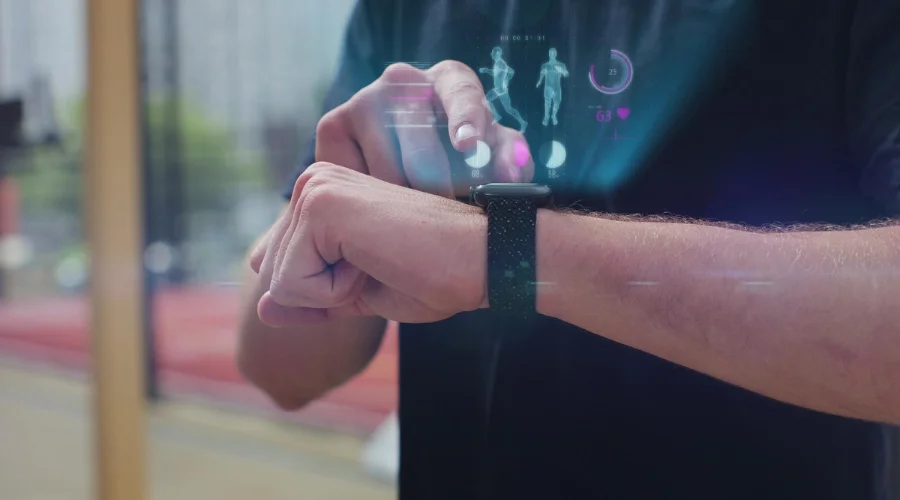
The common examples are smartwatches, fitness bands, heart rate monitors, sleep trackers, and medical-grade devices used in clinics or hospitals.
Some advanced wearables also track stress levels, hydration, or ECG readings. It provides detailed health insights that go beyond basic activity tracking.
Market Statistics of Wearable Technology and Adoption
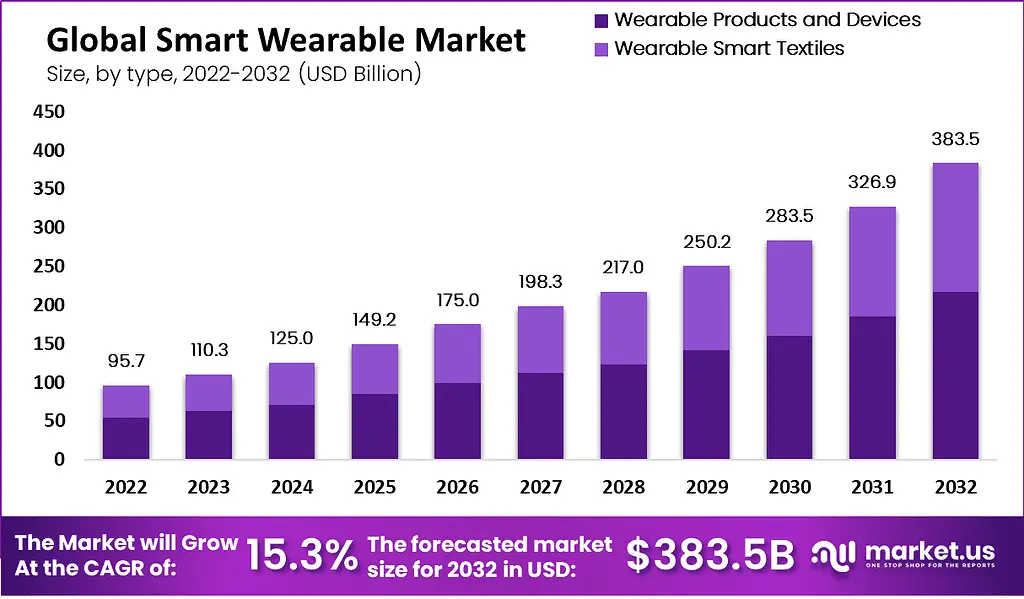
The worldwide market size of AI wearable technology is forecasted to hit 310.56 billion by 2033. Europe and Asia-Pacific countries saw a major growth in the AI wearable industry. The worldwide smart wearable market is forecasted to hit 383.5 billion by 2032.
In 2024, shipments of health and wellness wearable devices reached about 400 million units. The fitness and wellness market is projected to grow at an average annual rate of 11.2% between 2026 and 2035.
In 2025, wrist-wear products held the largest share of the market, making up 49%. Meanwhile, eyewear and head-wear products are expected to see faster growth, with a projected annual rate of 14.3% from 2026 to 2035.
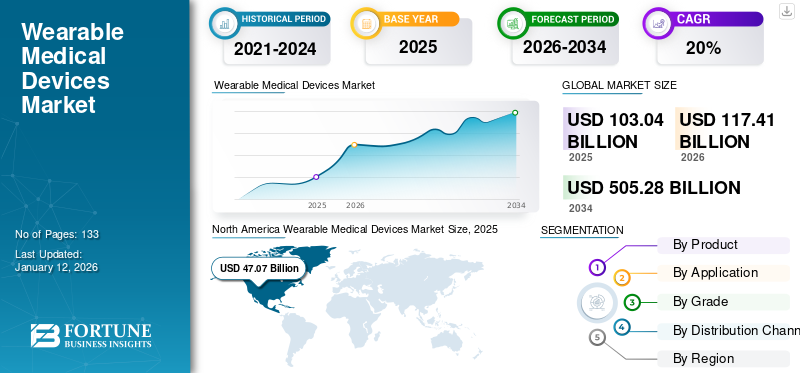
Gen Z is rapidly increasing its adoption, which is 45.2%, and is projected to overtake Gen X in user numbers by 2028. Wearable technology in healthcare is projected to reach 505.28 billion by 2034.
What is the Role of AI in Wearable Technology?
AI is what makes wearable technology truly valuable for businesses. It turns raw health and fitness data into meaningful insights. This helps companies to improve user experience, engagement, and decision-making. Let’s take a look at the impact of AI in wearable fitness technology.
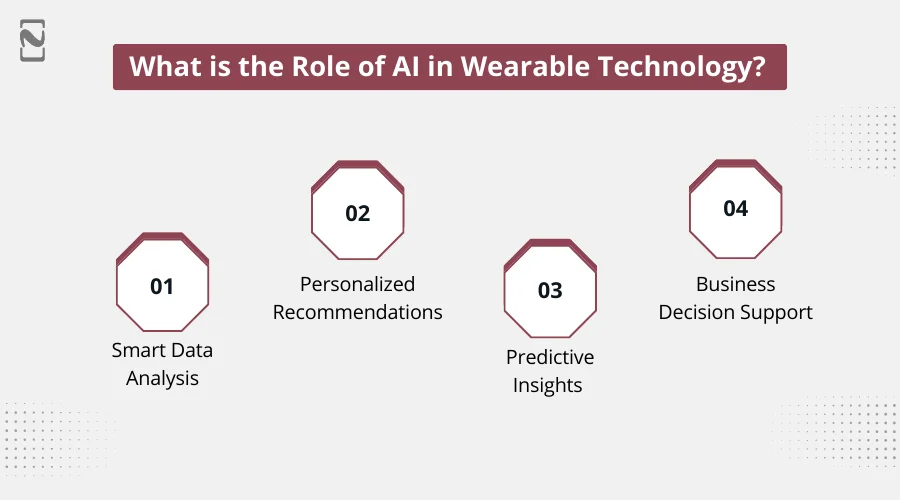
1] Smart Data Analysis
AI can quickly look at all the data from wearables, like steps, sleep, and heart rate. It finds patterns and trends so businesses don’t have to check each number manually. This makes it easier to see how users behave and what they need.
2] Personalized Recommendations
AI helps apps give advice that fits each user. For example, a fitness app can suggest workouts based on what the user already does, or a wellness app can send alerts if something seems off. This keeps users interested and coming back.
3] Predictive Insights
AI can spot possible health or fitness issues before they get serious. Businesses can use this to offer early warnings, tips, or programs to help users stay healthy. It builds trust and shows the company cares.
4] Business Decision Support
AI helps businesses make smarter choices. Companies can see overall trends, improve services, plan marketing, and find new fitness app ideas for wearable-based products or programs. It turns data into actions that grow the business.
What Are the Types of AI-Powered Health and Fitness Wearables?
Choosing the right wearable device is key to creating effective health and fitness solutions. Here are the different types of wearables you can integrate into your fitness solution to add value to your business:
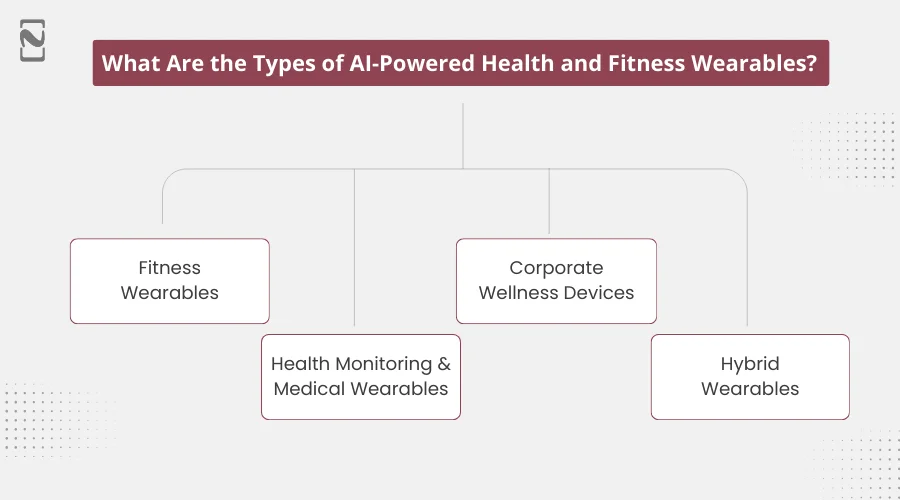
1. Fitness Wearables
The fitness wearable health devices can track activity, steps, workouts, and calories. The gyms, fitness applications like Fitbit or freeletics, and wellness brands use them to monitor user progress.
This offers users AI-driven workout suggestions and improves engagement. Also, businesses can collect data to design personalized programs and loyalty initiatives.
2. Health Monitoring and Medical Wearables
The wearable devices for health monitoring track heart rate, sleep, oxygen levels, or ECG readings. These are vital for healthcare providers and remote monitoring services.
You can use AI insights to provide early alerts, reduce hospital visits, and offer subscription-based remote health monitoring, wearable medical devices, and technology programs.
3. Corporate Wellness Devices
The corporate wellness devices are used by companies to improve employee health. These devices track stress, activity, and wellness habits.
Businesses can run wellness challenges, offer rewards, and reduce long-term healthcare costs while using AI to deliver personalized tips and recommendations.
4. Hybrid Wearables
Some devices combine fitness, health, and wellness tracking in one platform. This is ideal for businesses running multiple programs.
For example, gyms with corporate wellness clients or healthcare apps targeting both fitness and medical monitoring. AI can integrate all data into actionable insights for decision-making and better user outcomes.
Business Use Cases of AI-powered Wearables
AI-powered wearable technology for health and fitness offers businesses real opportunities to build, integrate, and scale solutions that improve services and generate revenue. Let’s take a look at the wearable technology use cases in healthcare and fitness.
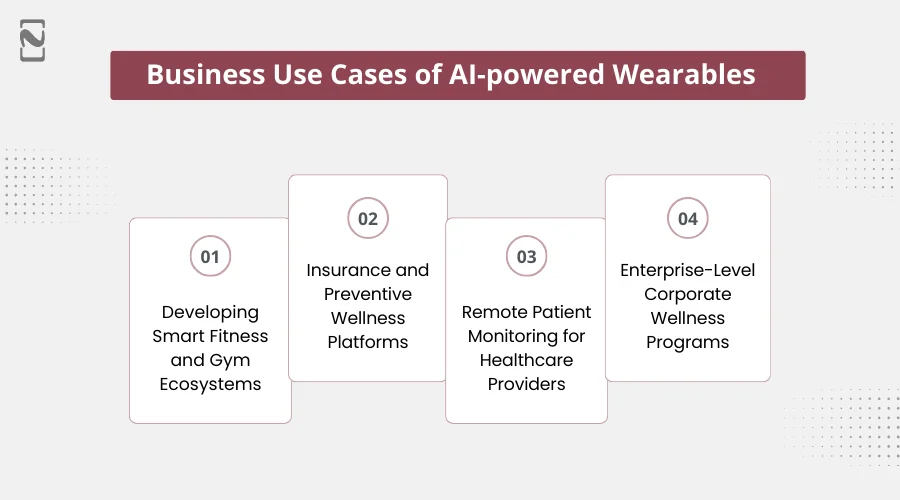
► Developing Smart Fitness and Gym Ecosystems
Fitness businesses can use wearables to collect detailed activity data from users in real time. By integrating this data with AI-powered mobile apps like Strava, businesses can offer highly personalized workout plans and detect performance patterns.
It can also predict when a user might drop off. The wearable integration with mobile apps requires secure APIs, cloud data handling, and continuous syncing between devices and apps, ensuring accuracy and reliability.
► Insurance and Preventive Wellness Platforms
Insurance companies can integrate wearable data into wellness programs to reward healthy behavior. AI algorithms analyze compliance, activity trends, and health indicators to dynamically adjust premiums, suggest interventions, or trigger reward programs.
Technically, this requires connecting wearables to policy management platforms, ensuring data privacy, and building dashboards that translate complex data into business-ready insights.
► Remote Patient Monitoring for Healthcare Providers
Hospitals and telehealth providers can link wearable devices to remote patient monitoring apps. AI can process heart rate, sleep, oxygen levels, and activity trends to identify early warning signs.
Integrating wearables into EMR systems allows seamless monitoring, automated alerts, and actionable insights for doctors, making remote care scalable and proactive rather than reactive.
► Enterprise-Level Corporate Wellness Programs
Large corporations can implement wearable-based wellness solutions that tie into HR and employee management systems. AI-driven insights provide personalized health recommendations, detect workplace stress trends, and inform program adjustments.
Integration is complex: it involves syncing multiple device types, securing sensitive employee data, and building reporting tools for management to track ROI and engagement.
Key Wearable-Driven Features in AI Health and Fitness Applications
AI-powered wearable apps depend heavily on the features supported by wearable devices. These features come directly from the sensors inside wearables and form the foundation of health and fitness solutions.
You have to understand these wearable-driven features that can help you in planning fitness app development, device integration, and long-term scalability. The table below highlights the most important wearable features and explains how businesses can use them in real-world health and fitness solutions.
| Wearable Feature | What are Wearable Tracks? | How Do Businesses Use It? |
| Continuous Activity Tracking | Steps, movement, workouts, calories | Businesses use this data to design personalized fitness plans and measure user engagement |
| Heart Rate Monitoring | Resting and active heart rate | Helps businesses detect health trends and offer alerts, wellness plans, or preventive programs |
| Sleep Tracking | Sleep duration and sleep quality | Allows companies to provide recovery insights and improve overall user wellness programs |
| Oxygen Level Tracking (SpO₂) | Blood oxygen levels | Used by healthcare and wellness businesses for early risk detection and remote monitoring |
| Stress Monitoring | Stress levels using heart rate patterns | Enables businesses to offer stress-management and mental wellness features |
| Real-Time Health Alerts | Sudden changes in vitals or activity | Helps businesses deliver timely alerts and build trust with users |
| Wearable-to-App Sync | Data transfer from device to app | Makes it possible for businesses to build dashboards, reports, and long-term insights |
| Multi-Device Support | Data from different wearable brands | Allows businesses to scale solutions without being locked to one device |
How to Build an AI-Powered Wearable App?
Developing an AI-driven wearable application is about solving a real problem and not just connecting a device with it.
Every step should focus on how wearable data will be used, how it supports business goals, and how it can scale later. Here is the step-by-step process to develop an AI-powered wearable app.
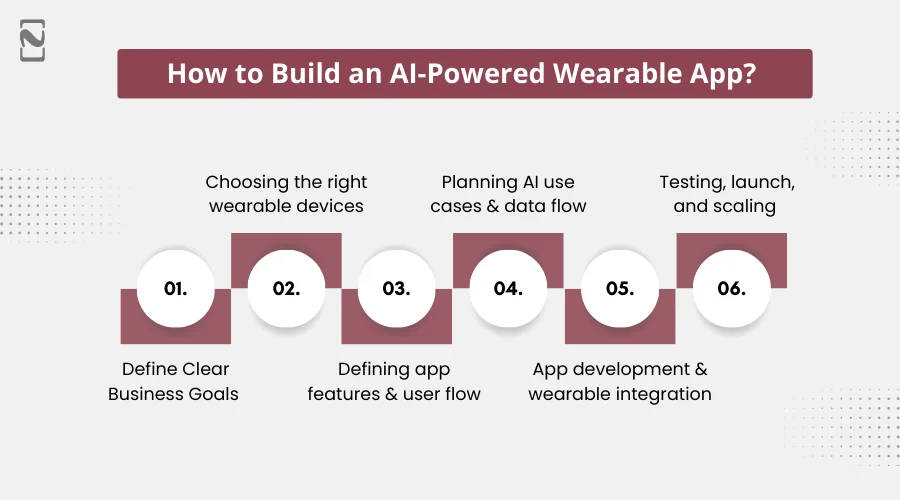
Step 1: Define clear business goals
First of all, you should start by being clear about what the app is meant to do. This could be improving fitness app engagement, tracking health patterns, or supporting wellness programs.
You should have a clear goal that can help you decide which wearable data matters and which features are required. Without this stage, the wearable app development becomes shattered, and the app loses focus.
Step 2: Choosing the right wearable devices
Now, choose the wearable devices depending on what users already use, not what looks popular. Some users prefer smartwatches, while others use basic fitness bands. So, do not go over popularity, go for usage.
Additionally, check what sensors the device offers and how reliable the data is. When you select the right device in advance, it saves time, cost, and rework later.
Step 3: Defining app features and user flow
After choosing the wearable device, you can plan how users will move through the wearable fitness app and what information they will see first. Wearable data should be easy to understand, not confusing.
You should keep the fitness app design flow simple, which can help users stay engaged and make your app feel useful instead of confusing or cluttered. Additionally, you should plan out the core features first, and later you can add the advanced features.
Step 4: Planning AI use cases and data flow
Now, decide how AI will help make sense of wearable data. This could be identifying activity patterns or highlighting unusual health changes.
After that, plan where the data comes from, how it is processed, and what the user finally sees. AI should explain data, not complicate it.
Step 5: App development and wearable integration
This is the main stage where you build an AI-powered wearable app and connect it properly with wearable devices. Just make sure data syncs smoothly and updates regularly.
Poor integration leads to missing or incorrect data, which users notice quickly. Stability is really very important, and it matters more here than adding too many features.
Step 6: Testing, launch, and scaling
Lastly, do not forget to test the AI-powered wearable app using real wearables and real users. Also, check if the data is accurate and easy to understand.
Once your app is tested, you can launch the app. Also, watch how users interact with the app and improve slowly. If you want to scale your work, it is best when the core experience is already stable.
Technologies Used in AI-Powered Wearable App Development
When you develop a wearable application, technology is not something you integrate later. You have to think in advance about what you are integrating and why. The right fintech technology choices decide how smooth the app feels and how easy it is to grow later.
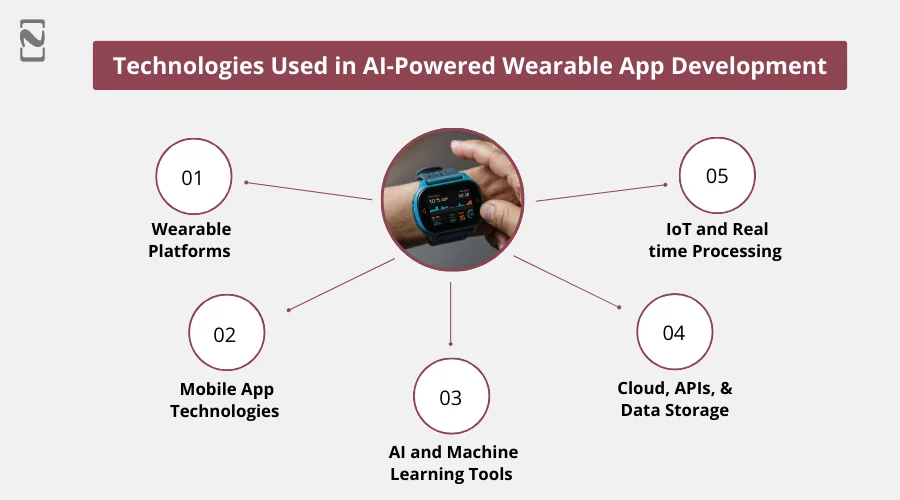
1. Wearable Platforms
You should integrate your wearable app with the platforms users already trust and use it. For example, Apple Watch, Wear OS, and Fitbit give access to health and activity data through their SDKs.
These platforms manage sensor data, permissions, and syncing. If you use the official wearable platforms, it makes your app more stable and avoids data accuracy issues.
2. Mobile App Technologies
Your wearable data requires a mobile application to make sense. You can build separate applications for iOS and Android.
However, if you want faster wearable fitness app development, then it is best to use the cross-platform tools. The wearable application is where users see insights, reports, and alerts, so it should be fast, simple, and easy to navigate.
3. AI and Machine Learning Tools
AI technologies and tools help turn raw wearable data into useful information. You can leverage the ML models to find patterns, trends, and unusual changes. This is where your app becomes smart. The goal is not complex AI, but clear insights that users can understand and act on.
4. Cloud, APIs, and Data Storage
Wearable data needs to be stored and processed somewhere safe. Cloud platforms assist in managing large data volumes and keep everything in sync. APIs connect the wearable, app, and AI systems. Without a strong cloud setup, real-time data and scaling become difficult very quickly.
5. IoT and Real-time Processing
Wearables are part of larger connected systems. IoT technology assists in processing data as it comes in, not hours later. Also, real-time processing is vital for notifications, health warnings, and activity updates. IoT wearable app development makes the wearable app feel responsive and useful, not slow and outdated.
How Much Does it Cost to Build an AI-Powered Wearable Health and Fitness App?
The AI wearable app development cost can range between $30,000 and $250,000 or more. This cost is just a ballpark estimate; the actual cost depends on the app’s complexity, AI integrations, features, and scalability.
A basic wearable app costs less because it tracks basic activity and connects to one device. As soon as you integrate more wearable technology for health and fitness, deeper health data, and AI features, the cost goes up.
Let’s now check out the table of the cost to develop an AI wearable app below.
| App Complexity | What the App Includes | Estimated Cost |
| Basic App | Step tracking, activity data, one wearable, simple insights | $30,000 – $60,000 |
| Mid-Level App | Sleep tracking, heart rate, multiple wearables, basic AI insights | $60,000 – $150,000 |
| Advanced App | Real-time alerts, deep AI analysis, dashboards, enterprise features | $150,000 – $250,000+ |
These are just rough estimates, it can change based on a few vital things. However, if you support more wearable devices, it can increase the development time. Besides, AI features also influence the wearable app development cost if they run in real time.
Moreover, your app design, cloud usage, and testing with real devices add to the total budget. So, it is best to get in touch with an AI development company for an estimated quote.
Monetization Models for AI Wearable Health and Fitness Apps
When you build an AI wearable health and fitness app, one big question comes up early: how will this app make money? The good thing is that wearable apps give ongoing data, which makes long-term earning easier
if you plan it well. Here, we will see the different wearable fitness app monetization strategies that you can take into consideration.
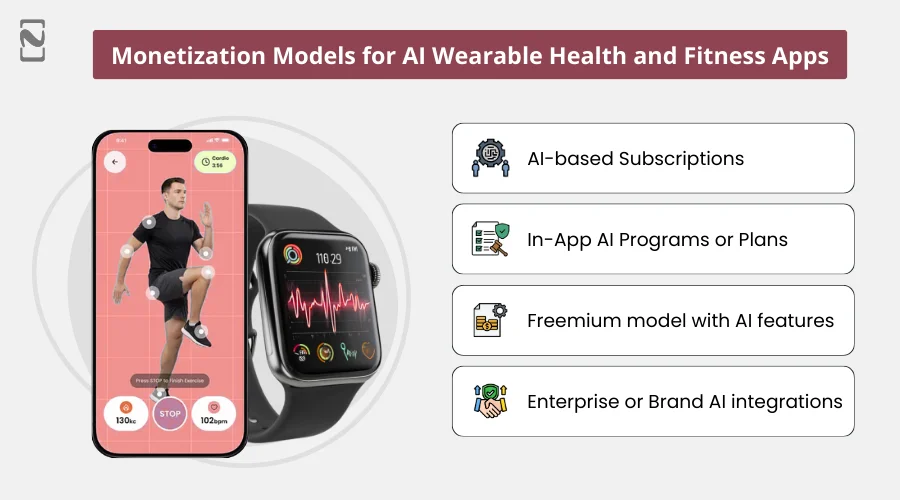
♦ AI-based Subscriptions
You can charge users for access to AI-driven insights like personalized workout suggestions, predictive health notifications, and progress forecasts. Users can pay because the AI gives them guidance they cannot get from basic tracking alone. This is the best way to earn money from your wearable app.
♦ In-App AI Programs or Plans
You can simply sell AI-curated programs like adaptive fitness routines or preventive health plans based on user data. The wearable app uses AI to adjust recommendations over time. This gives users dynamic, personalized guidance they are willing to pay for.
♦ Freemium model with AI features
The best way to monetize your app is a freemium model. You can offer a free version for basic data collection. Users can easily unlock AI fitness app features like activity patterns analysis, sleep improvement tips, or stress prediction for paid users. AI makes the upgrade feel valuable and necessary.
♦ Enterprise or Brand AI integrations
You can collaborate with gyms, wellness programs, or health services to provide AI insights for their clients. You can charge for access to dashboards, predictive reports, or AI-driven challenges that improve engagement and outcomes.
What Are the Challenges of Integrating Wearable Technology for Health and Fitness?
Integrating healthcare wearable technology with mobile applications and AI is not always easy. You might face many challenges while integrating it. Below are the main challenges and possible solutions you must check out.
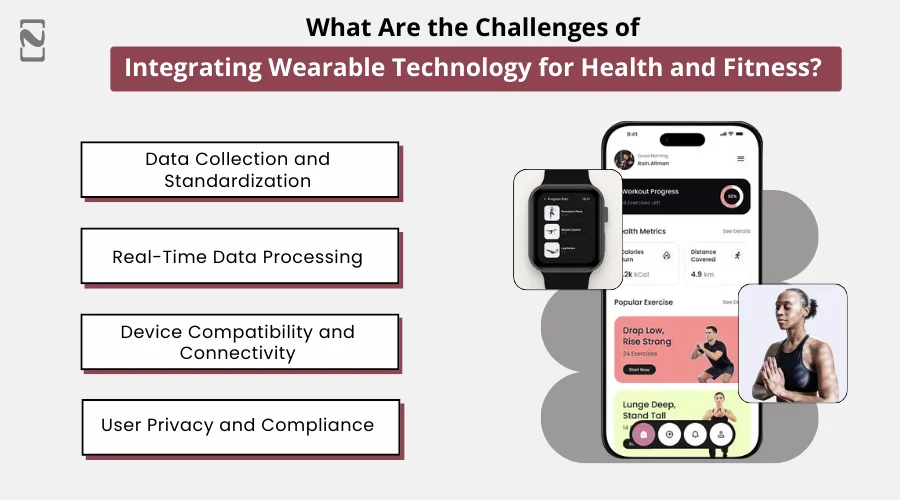
1] Data Collection and Standardization
Challenge: Different wearables measure data in different ways and formats. If you integrate all wearable technology for health and fitness into one single application, it can be messy and confusing.
Solution: You can use standard data formats and APIs, and preprocess data before feeding it to AI. This makes sure accurate and consistent insights on different devices.
2] Real-Time Data Processing
Challenge: Wearables generate constant streams of data. AI needs to process it fast for notifications and suggestions.
Solution: You can build a backend that can manage real-time data with efficient cloud processing. Also, if you prioritize the main metrics, the system will not overload.
3] Device Compatibility and Connectivity
Challenge: Not all wearables work the same way, and syncing can fail due to different Bluetooth protocols or device software.
Solution: You have to test your wearable mobile app with multiple devices, use stable SDKs, and implement robust error handling for syncing issues.
4] User Privacy and Compliance
Challenge: Wearables collect sensitive health information, which may fall under regulations like HIPAA or GDPR.
Solution: Developers can encrypt all data, get clear user consent, and design the system to comply with local laws. AI should use data responsibly without risking privacy violations.
Future Trends of AI Wearable Fitness Technology
AI and wearable technology are rapidly changing in health and fitness. These future wearable fitness app trends show where applications are moving next and what people now expect from wearable technology solutions for businesses.
Let’s have a look at the future wearable technology trends in health and fitness.
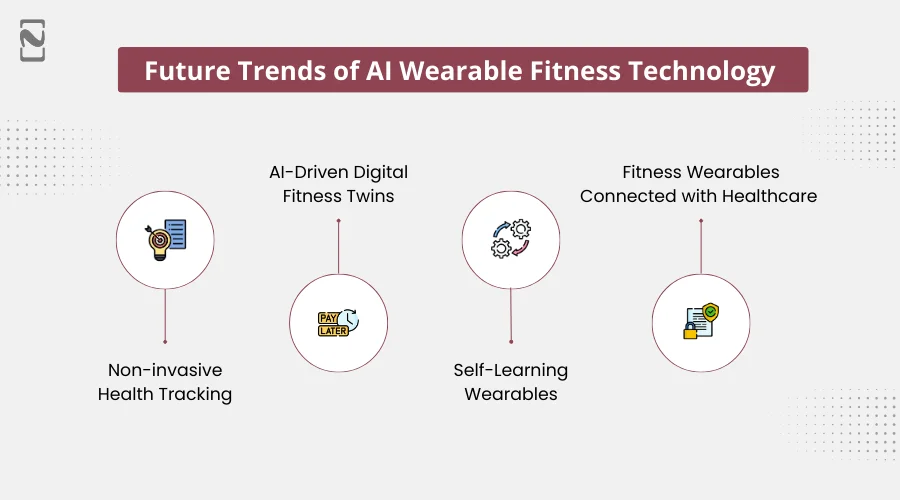
Non-invasive Health Tracking
In the future, wearables will quietly notice when the body is getting tired, stressed, or pushed too hard. AI will catch small changes in advance and warn users before they feel pain or burnout. This will make fitness more about prevention and not fixing problems later.
• AI-Driven Digital Fitness Twins
People would not need to enter buttons or start workouts. Wearables will understand what the body is doing on their own. AI in fitness apps will figure out activity, effort, and recovery automatically, so users can focus on living, not tracking.
• Self-Learning Wearables
AI will learn how a person’s body reacts over months and years. As users age, change jobs, or face stress, fitness guidance will adjust naturally. Plans would not feel copied or fixed anymore. They will grow with the person.
• Fitness Wearables Connected with Healthcare
Fitness data will start helping doctors understand long-term habits. AI will turn everyday movement and recovery data into useful health signals. Wearables would not replace doctors, but they will become part of health decisions.
How Nimble AppGenie Can Help With AI Wearable Technology Integration?
If you are planning to integrate AI wearable technology in fitness apps, then Nimble AppGenie is the right partner. As a leading fitness app development company, we help you map wearable data to clear fitness goals, so the app does not collect purposeless data.
We also help connect your app with wearable platforms and make sure the data comes in clean and usable. This avoids common issues that often cause users to stop using the application.
Once data is stable, AI is applied to solve real fitness issues. The focus stays on insights that users can act on. After launch, we help adjust AI logic and wearable connections as users grow and devices change. This keeps the app accurate, useful, and trusted over time.
Why Nimble AppGenie Stands Out:
- Expertise in AI-powered wearable fitness app integration
- Handles real-time wearable data with precision and reliability
- Designs personalized AI insights for workouts and health
- Scalable solutions supporting multiple devices and platforms
- Ongoing support for updates, maintenance, and optimization
Conclusion
AI-powered wearable technology for health and fitness apps is changing. You can use it to provide smarter insights, better engagement, and personalized experiences. Investing in a wearable AI app now helps track health trends, prevent issues early, and keep users motivated.
It is best to work with the right dedicated development team to ensure smooth device integration, accurate AI insights, and long-term app reliability.
With careful planning, AI and wearables can turn a regular fitness app into a powerful tool that truly helps users improve their health and reach their goals.
FAQs
AI identifies patterns in your activity, sleep, and heart rate, and predicts potential health issues. It provides personalized recommendations for workouts and recovery.
The cost to make an AI-powered wearable app can be around $30,000-$250,000. This can vary based on app complexity, AI features, and supported devices.
Most modern devices can be connected based on the app’s functionalities and data requirements.
The time to develop an AI-driven wearable app can be between 3 and 8 months or more. This can fluctuate based on the app’s intricacy, customizations, and tech stack.

Richard Thomas is the Lead Architect at Nimble AppGenie, where he oversees the design and development of scalable, secure, and high-performance digital solutions. With deep expertise in software architecture, cloud infrastructure, and system integration, he plays a key role in transforming complex business requirements into robust technical frameworks. When he’s not architecting systems, he enjoys exploring emerging technologies and staying ahead of industry trends.
Table of Contents




No Comments
Comments are closed.