


Key Takeaways
- The digital payment and P2P app market is expanding rapidly, with contactless transactions projected to reach $10 trillion by 2027, highlighting the opportunity for startups and fintech companies to launch apps like Cash App.
- Core and advanced features—including digital wallets, P2P transfers, investment options, AI-powered fraud detection, and multi-currency support are critical for user engagement, retention, and competitive advantage.
- Building a Cash App clone requires robust security measures and regulatory compliance, including PCI DSS, KYC/AML, end-to-end encryption, and biometric authentication, to ensure safe, reliable digital transactions.
- A full-featured peer-to-peer payment app typically takes 4-9 months and costs between $40,000-$250,000+, depending on feature complexity, platform choice, and third-party integrations.
- Leveraging emerging trends such as AI-based fraud detection, blockchain, and cryptocurrency integration can make a Cash App-like app scalable, innovative, and competitive in the rapidly evolving fintech ecosystem.
The surge of mobile payment platforms has digitally transformed how people send, receive, and manage money. By 2027, contactless payment transactions are expected to reach $10 trillion, up from $4.6 trillion in 2022, highlighting the increasing demand for secure and convenient digital payment solutions.
Among the leading peer-to-peer payment apps, Cash App stands out for its widespread adoption, enabling instant transfers, stock investing, digital wallet services, and cryptocurrency trading, all within a single mobile interface.
In 2028, the Cash App users are predicted to grow, reaching 64.5 million, up from 54.9 million in 2025.
Cash App’s success has created a strong demand for similar platforms, encouraging startups, fintech companies, and financial institutions to develop apps that offer fast transactions, advanced security, and seamless banking integration.
In this guide, we will explain how to develop an app like Cash App, including the technology stack, key features, estimated cost to build a secure digital payment platform, and development process.
What is Cash App and How Does It Work?
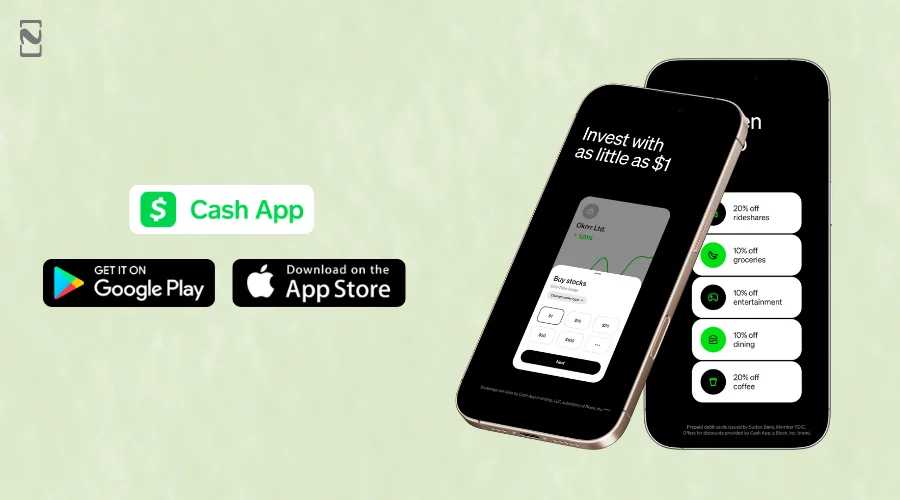
Cash App is a leading peer-to-peer (P2P) payment application developed by Block, Inc. Using the app, users send and receive money instantly, invest in stocks, manage a digital wallet, and trade cryptocurrencies, all from a single mobile platform.
With millions of active users, Cash App has set a standard for modern digital payment solutions and serves as a benchmark for fintech startups building similar apps.
Core Functionality of Cash App
Cash App offers distinct financial services that go beyond simple money transfers:
- Peer-to-peer payments: Instantly send or receive money using a $Cashtag, phone number, or email.
- Wallet management: Store funds securely in the app and manage balances.
- Bank account integration: Link bank accounts or debit cards for deposits, withdrawals, and payments.
- Cash Card: A debit card linked to the app for direct purchases or ATM withdrawals.
- Investing & Cryptocurrency: Buy and sell stocks or Bitcoin directly through the platform.
- Security & Notifications: Real-time alerts, encryption, and authentication protect user transactions.
How Does Cash App Work?
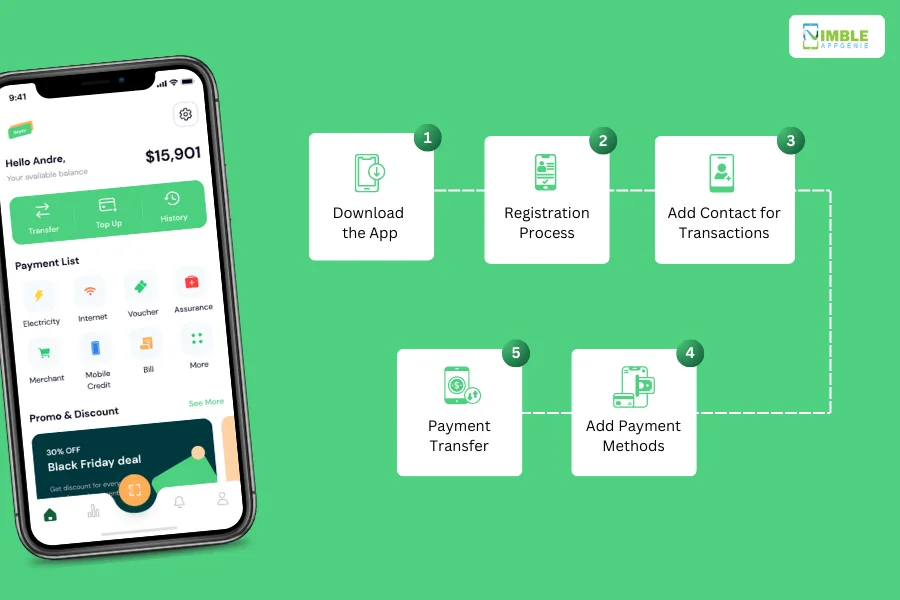
- Sign Up & Link Accounts: Users register on the app and connect a bank account or debit card.
- Send or Receive Money: Using a $Cashtag, phone number, or email, funds are transferred instantly.
- Spend or Withdraw: Users can spend money via the Cash Card, transfer funds to their bank, or invest in stocks/crypto.
- Secure Transactions: Multi-layer security, encryption, and fraud detection ensure safe and reliable payments.
By combining complete financial features, ease of use, and robust security, Cash App has become a go-to P2P payment app, motivating many companies to build similar fintech platforms that offer flawless digital payments and integrated financial services.
Payment App Market Size, Growth, and Industry Statistics
The global payment technology market is predicted to expand because of the increasing adoption of digital wallets and peer-to-peer payment platforms.
The key drivers of the robust industry growth are fintech innovation, contactless payments, and smartphone penetration.
- The global digital payment market is anticipated to reach $361.30 billion by 2030 at a CAGR of 21.4%.
- The US mobile payment market is expected to expand notably, reaching a value of $5.66 trillion by 2032.
- North America is expected to be the second-highest market share holder, having well-crafted payment methods and a notable number of key players with headquarters in the country.
- According to MasterCard’s survey, globally, 79% of consumers opted for contactless payments to maintain cleanliness and safety.
- BFSI (Banking, Financial Services, and Insurance) to attain speedy growth and boost revenue share of 21.43% in 2026, indicating that payment technology offers promising opportunities for the industry.
These statistics unveil the rapidly expanding digital payment industry, fostering remarkable opportunities for enterprises and startups looking to build payment platforms like Cash.
Why Should Businesses Build an App Like Cash App?
As the statistics show, businesses are increasingly investing in payment apps to offer smooth financial services, enhance customer experience, and grab a huge market share of the swiftly scaling digital payments market.
Below are some key reasons why businesses should consider during Cash App clone development:
1. Expanding Digital Payment Market
As we discussed, the increasing growth of mobile payments and contactless transactions has surged the demand for secure, convenient payment platforms.
Businesses entering the market can benefit from a huge and consistently growing user base.
2. Multiple Revenue Streams
Payment apps generate revenue via distinct channels like premium services, transaction fees, investment services, cryptocurrency trading, and card payments. These varied revenue models make payment platforms more profitable.
3. Increased Customer Engagement
Mobile payment applications keep users well-connected to a brand through notifications, frequent transactions, and financial services. This continuous interaction boosts customer engagement and loyalty.
4. Faster and Convenient Transactions
Apps like Cash App enable users to send and receive money promptly. Businesses that provide such smooth financial services can notably improve user convenience and experience.
5. Competitive Advantage in Fintech
Building a feature-rich payment app assists businesses in creating a robust presence in the fintech industry and competing with leading platforms like Venmo and PayPal.
6. Opportunities for Innovation
Payment apps enable companies to integrate advanced technologies, like AI-powered fraud detection, biometric authentication, personalized financial services, and blockchain payments.
What are the Core Features Required for Cash App Clone Development?
Building an app like Cash App is not enough; you should ensure seamless peer-to-peer payments, user engagement, and security.
Include the following core features for your app:
| Core Feature | Description | Why It’s Important |
| User Registration & Authentication | Secure signup using email, phone number, or social accounts with multi-factor authentication. | Ensures only legitimate users access the app and protects sensitive financial data. |
| Digital Wallet | Allows users to store, send, and receive money within the app. | Core for P2P transactions; provides convenience and instant fund access. |
| Bank Account & Card Integration | Link debit/credit cards or bank accounts for easy deposits and withdrawals. | Essential for smooth transfers and broader financial functionality. |
| Peer-to-Peer (P2P) Money Transfers | Send or receive money using $Cashtag, phone number, or email. | The primary functionality that defines the app’s usability and value. |
| Cash Card / Debit Card | A physical or virtual debit card connected to the wallet for spending. | Offers flexibility for payments and withdrawals, increasing user engagement. |
| Investing Features | Buy and sell stocks, ETFs, or cryptocurrencies directly in the app. | Provides additional revenue streams and keeps users engaged within the platform. |
| Instant Notifications & Alerts | Real-time updates for transactions, balances, and security events. | Enhances trust and keeps users informed of account activity. |
| Security & Fraud Prevention | End-to-end encryption, fraud detection, KYC/AML compliance. | Critical for regulatory compliance and building user trust. |
| Bill Payments & QR Payments | Ability to pay bills or scan QR codes to make payments. | Expands app utility beyond P2P transfers. |
| Transaction History & Reports | View past transactions, generate reports, and track spending. | Provides transparency and helps users manage finances effectively. |
| In-App Chat & Support | Customer support chat or helpdesk integrated within the app. | Improves user experience and resolves issues quickly. |
| Multi-Currency & International Transfers | Support for multiple currencies and cross-border payments. | Expands app reach and user base globally. |
Advanced Features to Include in a Cash App Clone
After incorporating the core features, you can also add advanced features to boost engagement, improve user experience, and make your app stand out in the competitive fintech market.
| Advanced Features | Description | Why It’s Important |
| AI-Powered Fraud Detection | Uses machine learning and pattern analysis to detect suspicious transactions in real-time. | Extends basic security, prevents fraud, and builds user trust. |
| Personalized Offers & Rewards | Provides cashback, discounts, or loyalty programs tailored to individual users. | Increases engagement, retention, and encourages frequent app use. |
| Advanced Analytics & Insights | Offers intelligent spending trends, budgeting recommendations, and financial insights. | Helps users manage finances more effectively and adds value beyond basic transaction history. |
| Automated Savings & Recurring Payments | Allows users to schedule payments, automate bill payments, or set recurring investments. | Enhances convenience and keeps users actively engaged with the app. |
| Enhanced Crypto & Investment Features | Enables crypto wallets, recurring stock purchases, or fractional shares. | Attracts investors and differentiates the app from competitors. |
| Social & Community Features | Features like bill splitting, group requests, or social payment sharing. | Improves user interaction and adoption through social functionality. |
| Advanced Multi-Currency & Cross-Border Options | Real-time currency exchange rates, global wallets, and automatic currency conversion. | Expands global reach and makes the app useful for international users. |
Advanced features are optional and are added post-launching the core MVP to increase engagement, revenue, and global usability.
Step-By-Step Process – How to Build a Payment App Like Cash App?
A peer-to-peer payment app like Cash App development needs a strategic approach covering planning, design, security, technology, and compliance.
Below is a step-by-step payment app development process to help you understand the roadmap from idea to launch.
Step 1: Market Research & Competitor Analysis
- Identify your target audience and their needs.
- Analyze competitors like Cash App, Venmo, PayPal, and Zelle.
- Determine unique value propositions, such as AI fraud detection, crypto support, or social payment features.
Why it matters: Thus, you can ensure your app handles the real user issues and outshines competitors.
Step 2: Define Core Features and MVP
Decide on essential features for the minimum viable product (MVP):
- User registration & authentication
- Bank/card integration
- Digital wallet & P2P transfers
- Security & compliance (KYC/AML)
- You can add optional advanced features later, such as AI-powered fraud detection, crypto trading, or personalized rewards.
Why it matters: An MVP launch reduces development cost and validates your app idea with real users.
Step 3: UX/UI Design
- Create wireframes, prototypes, and app flows.
- Focus on simple navigation, minimal clicks, and intuitive dashboards.
- Include branding elements and design for both Android and iOS.
Why it matters: A smooth UX keeps users engaged and motivates repeat usage.
Step 4: Choose Technology Stack
- Frontend: React Native / Flutter for cross-platform apps.
- Backend: Node.js, Python (Django), or Java.
- Database: PostgreSQL, MySQL, or MongoDB.
- Payment Gateway: Stripe, PayPal, or custom banking API integrations.
- Security: SSL, AES encryption, tokenization, 2FA. (We will get deeper into the technology stack later in this post.)
Why it matters: The right technology ensures scalability, performance, and security.
Step 5: Development
- Implement frontend and backend functionalities.
- Integrate core features first; add advanced features in iterations.
- Use APIs for banking, KYC/AML compliance, and third-party services.
Why it matters: Structured development minimizes bugs and ensures faster time-to-market.
Step 6: Testing & Quality Assurance
- Perform unit testing, integration testing, and beta testing.
- Test security, payment processing, and transaction accuracy.
- Incorporate user feedback from beta testers for improvements.
Why it matters: QA ensures security, reliability, and user trust, which is critical for fintech apps.
Step 7: Deployment & Launch
- Publish the app on the Google Play Store and Apple App Store.
- Monitor server performance, transactions, and security in real-time.
- Launch marketing campaigns to drive downloads and adoption.
Why it matters: Proper deployment and marketing are vital for app visibility and user acquisition.
Step 8: Post-Launch Maintenance & Updates
- Regularly update the app with new features, bug fixes, and security patches.
- Monitor user behavior and analytics to optimize functionality.
- Scale infrastructure as the user base grows.
Why it matters: Continuous improvement keeps users satisfied and ensures long-term growth.
Tip: For fintech apps, compliance, security, and scalability should be integrated from day one rather than added later.
Development Timeline to Build an App Like Cash App
The time for P2P payment app development depends on factors like security requirements, feature complexity, regulatory compliance, and third-party integrations.
On average, p2p payment app development can take 4 to 9 months, depending on the project’s scope.
Below is a typical development timeline for creating a peer-to-peer payment app.
| Development Stage | Estimated Timeline |
| Market Research & Planning | 1 – 2 Weeks |
| UI/UX Design | 2 – 3 Weeks |
| Backend & Frontend Development | 8 – 14 Weeks |
| Payment Gateway & API Integration | 3 – 5 Weeks |
| Testing & Quality Assurance | 3 – 4 Weeks |
| Deployment & App Store Launch | 1 – 2 Weeks |
| Post-Launch Maintenance & Updates | Ongoing |
Key Factors That Affect Development Time
Several factors can impact the timeline when you build a payment app:
- Number of features (basic wallet vs advanced investment features)
- Third-party integrations, including banking APIs and payment gateways
- Security and compliance requirements such as KYC, AML, and encryption
- Platform choice (Android, iOS, or cross-platform development)
A well-planned development process helps businesses launch a secure and user-friendly payment application that can compete with platforms like Cash App.
Recommended Tech Stack to Develop an App Like Cash App
Businesses should choose the right technology stack to build a payment app like Cash App.
The tech stack determines the app’s security, scalability, performance, caliber to support high-volume financial transactions.
Below is a commonly used technology stack for developing a Cash App-like peer-to-peer payment platform.
| Development Layer | Recommended Technologies |
| Frontend (Mobile App) | Swift (iOS), Kotlin (Android), React Native, Flutter |
| Backend Development | Node.js, Python (Django/Flask), Ruby on Rails, Java (Spring Boot) |
| Database | PostgreSQL, MySQL, MongoDB |
| Cloud Infrastructure | AWS, Google Cloud Platform (GCP), Microsoft Azure |
| Payment Gateways & APIs | Stripe, PayPal API, Plaid, Square |
| Authentication & Security | OAuth 2.0, Multi-Factor Authentication (MFA), Biometric Authentication |
| Data Encryption | SSL/TLS, AES-256 Encryption |
| Real-Time Notifications | Firebase Cloud Messaging, Twilio |
| Analytics & Monitoring | Google Analytics, Mixpanel, Datadog |
| Compliance & Identity Verification | Jumio, Onfido, Trulioo (for KYC/AML compliance) |
How Much Does It Cost to Develop an App Like Cash?
Building a peer-to-peer payment app similar to Cash App can cost between $40,000 and $250,000 or more, depending on the complexity and functionality included.
The cost to develop an app like Cash App depends on several factors, including technology stack, the number of features, security requirements, and development team location.
As payment applications demand regulatory compliance, secure transactions, and advanced integrations, the cost of developing a payment app can vary immensely based on the project’s scope.
| App Complexity | Estimated Cost |
| Basic Payment App (MVP) | $20,000 – $40,000 |
| Moderate Payment App | $40,000 – $60,000 |
| Advanced Fintech App | $60,000 – $250,000+ |
Factors that Affect the Development Cost
Several elements can influence the final fintech app development cost:
- Number of features such as cryptocurrency trading, investment services, or multi-currency support
- Platform choice, whether the app is built for Android, iOS, or both
- Security and compliance requirements, including KYC, AML, and fraud detection
- Third-party integrations, such as banking APIs and payment gateways
- Development team location and expertise
Security and Compliance Requirements for a Payment App Like Cash App
Digital wallet app development needs security and regulatory compliance.
As payment apps handle sensitive financial data and transactions, businesses should implement powerful security measures and comply with applicable financial regulations to safeguard user information and prevent fraud.
A secure infrastructure protects transactions and fosters trust among financial institutions and users.
Key Security Measures for Payment Apps
1. End-to-End Encryption
Encrypt the entire data transmitted between payment gateways, servers, and users to protect sensitive details from unauthorized access.
2. Two-Factor Authentication (2FA)
Adding an extra security layer is essential, where you ask users to verify their identity utilizing a one-time password, authentication apps, or biometric authentication.
3. Biometric Authentication
Enable facial recognition or fingerprint to log in, which provides secure and convenient access to the app.
4. AI-Powered Fraud Detection
Leverage machine learning algorithms to recognize unusual transaction patterns and avoid fraudulent activities in real time.
5. Tokenization
During transactions, replace sensitive card information with secure tokens to diminish the risk of data breaches.
Important Compliance Standards
Payment apps should follow various regulatory and compliance standards based on the operating region.
- PCI DSS Compliance – Ensures secure handling of credit card and payment information.
- KYC (Know Your Customer) – Verifies user identity to control identity theft and financial fraud.
- AML (Anti-Money Laundering) Regulations – Helps detect and prevent illegal financial activities.
- GDPR Compliance – Shields user data privacy for customers in the European Union.
Implementing security measures and compliance standards ensures payment applications stay reliable, secure, and legally compliant, enabling businesses to offer safe financial services while protecting users from data breaches and fraud.
Monetization Strategies for an App Like Cash App
Payment apps like Cash App generate revenue through several streams, allowing startups and fintech firms to create profitable platforms.
Businesses must understand these strategies to maximize ROI while offering value to users.
Key Monetization Models
1. Transaction Fees
The primary revenue source that most payment apps choose. They charge a small percentage on peer-to-peer transfers or payments.
2. Premium Subscriptions
This monetization model provides advanced features like higher transaction limits, investment tools, and instant transfers for a monthly or annual subscription.
3. Card Services
Using debit or virtual card, merchant payments linked to the wallet, and ATM withdrawals, revenue is generated in this model
4. Crypto & Stock Trading Commissions
Generate income when users buy, sell, or trade cryptocurrencies and stocks directly through the app.
5. Partnerships & Affiliate Programs
Collaborate with merchants or financial services to provide offers, cashback, or referral rewards, earning a commission on each transaction.
6. Advertisement
Display non-intrusive ads for promotions or financial services, generating an additional revenue stream without affecting user experience.
Monetization in fintech is about creating sustainable value loops that benefit your business and users.
Tip: Businesses can start with core monetization methods, like transaction fees and card services, in the MVP, then introduce premium subscriptions and trading commissions as the user base grows.
Key Challenges in Developing an App Like Cash App
Building a Cash App-like peer-to-peer payment platform is not as simple as it seems; it involves multiple technical, regulatory, and operational challenges.
Businesses should overcome these challenges to build a user-friendly digital payment application.
For that, they should focus on regulatory compliance, reliable infrastructure, and security to develop fintech platforms that outshine leading payment apps like Cash App and Venmo.
Below are some of the major challenges faced during payment app development, with solutions to overcome them.
| Challenge | Solution |
| Regulatory Compliance | You should implement strong compliance frameworks such as KYC (Know Your Customer), AML (Anti-Money Laundering), and PCI DSS standards. Partner with identity verification providers to simplify compliance processes. |
| Security and Fraud Prevention | Use end-to-end encryption, biometric authentication, multi-factor authentication (MFA), and AI-powered fraud detection systems to safeguard financial data and prevent unauthorized access. |
| Banking and Payment API Integration | Integrate reliable financial APIs such as Plaid, Stripe, and PayPal to ensure flawless banking connectivity and secure payment processing. |
| Handling High Transaction Volumes | Build the app on a scalable cloud infrastructure like AWS or Google Cloud and use a microservices architecture to support high-volume real-time transactions. |
| User Trust and Data Privacy | Businesses should implement strong data protection policies, transparent privacy controls, and secure data storage systems to build user confidence in the platform. |
| Cross-Platform Performance | Use frameworks like React Native or Flutter and conduct extensive testing to ensure smooth performance across iOS, Android, and web platforms. |
Implement the right technologies and compliance measures to create reliable fintech apps that deliver smooth digital experiences and foster lasting user trust.
How Nimble AppGenie Can Help Develop an App Like Cash App?
As a trusted payment app development company, Nimble AppGenie has delivered true results for global clients by developing custom digital wallet and e‑wallet platforms that manage transactions, multi‑currency support, and user‑centric design.
Real‑Time Case Study: PayByWallet – A Digital Wallet Solution
Client / Project Name: PayByWallet
Industry: Fintech / Digital Payments
Challenge / Goal:
- Enable instant peer-to-peer transfers
- Multi-currency support for global users
- Ensure high-level security and regulatory compliance
Solution Provided by Nimble AppGenie:
- Developed a secure digital wallet platform with real-time P2P transfers
- Integrated bank APIs and payment gateways for smooth transactions
- Added fraud detection, KYC, and AML compliance
- Built Android and iOS apps using Flutter for fast cross-platform deployment
Results / Impact:
- 3 months launch timeline with full functionality
- 50,000+ transactions handled in the first month
- 99.9% transaction success rate
- 20% reduced operational costs through automation
Key Takeaways:
- Nimble AppGenie can build secure, scalable, and feature-rich Cash App clones.
- Quick time-to-market without compromising security
- Supports multi-currency, investment, and wallet features for global users
Why Choose Nimble AppGenie for Your Payment App
- End‑to‑End Fintech Expertise: From onboarding, design, and compliance planning to integration, launch, and ongoing support, Nimble AppGenie covers the full app development life cycle.
- Security & Compliance‑First Approach: The team of app developers implements essential security standards like PCI DSS, KYC & AML compliance, and robust encryption for secure financial data handling.
- Custom Feature Integration: Whether it’s AI‑powered fraud detection, multi‑currency wallets, investment modules, or real‑time dashboards, the fintech app development company creates future‑ready payment apps.
- Cross‑Platform Development: Using modern frameworks such as React Native and Flutter, the company builds high‑performance apps for both Android and iOS.
By partnering with Nimble AppGenie, businesses can leverage real success examples to build not only secure and scalable payment solutions but also fintech apps that deliver high user engagement and market differentiation.
Conclusion
The digital payments industry continues to grow rapidly, driven by apps like Cash App that simplify peer-to-peer transfers, digital wallets, and investment options.
For startups and fintech businesses, building a Cash App-like app offers an opportunity to capture a share of this expanding market.
By focusing on core and advanced features, robust security, smooth user experience, and regulatory compliance, you can create a payment app that meets user expectations while standing out in a competitive landscape.
Leveraging market insights, development best practices, and emerging trends like AI-powered fraud detection and cryptocurrency integration can ensure your app is future-ready and scalable.
FAQs
Yes, it is legal to build a Cash App clone as long as your app does not copy proprietary code or trademarks. You must comply with financial regulations, including KYC (Know Your Customer), AML (Anti-Money Laundering), and PCI DSS standards to operate legally.
Common technologies include:
- Frontend: React Native, Flutter, Swift (iOS), Kotlin (Android)
- Backend: Node.js, Java, Python, Ruby on Rails
- Database: PostgreSQL, MongoDB
- Cloud & DevOps: AWS, Google Cloud, Azure
- Security: PCI DSS-compliant frameworks, encryption libraries, and tokenization services
Essential APIs include:
- Payment gateway APIs (Stripe, PayPal, Visa, Mastercard) for transactions
- Banking APIs for deposits and withdrawals
- KYC/AML verification APIs for user authentication
- Notifications APIs (SMS, email, push notifications)
On average, developing a secure and feature-rich payment app takes 4-9 months, depending on the scope, complexity, platform choice (Android/iOS), and integrations. An MVP with core features can be built in 3-4 months.
- Use cloud infrastructure for reliability and scalability
- Implement a microservices architecture for flexible feature expansion
- Optimize security and compliance as the user base grows
- Integrate analytics tools to monitor transactions and user behavior
- Continuously update features and adopt emerging fintech trends like AI fraud detection or blockchain payments
Peer-to-peer payment apps are highly secure when they use:
- End-to-end encryption
- Two-factor and biometric authentication
- Tokenization of card and transaction data
- Fraud detection systems using AI and machine learning
- Compliance with PCI DSS, KYC, and AML regulations is essential for legal and secure operations.
The cost to develop an app like Cash ranges from $40,000 to $250,000+, depending on the number of features, security and compliance requirements, platform choice (Android, iOS, and cross-platform), and third-party integrations like banking and payment APIs.

Niketan Sharma, CTO, Nimble AppGenie, is a tech enthusiast with more than a decade of experience in delivering high-value solutions that allow a brand to penetrate the market easily. With a strong hold on mobile app development, he is actively working to help businesses identify the potential of digital transformation by sharing insightful statistics, guides & blogs.
Table of Contents
No Comments
Comments are closed.